A better route for repeat trailer parts
The workshop was building trailer frames, cross members, drawbar sections and support pieces from tube, angle and channel. The old process needed measuring, marking, sawing and grinding for each batch, which left too much variation between parts and too much time spent dressing edges before assembly.
The brief was practical. Cut the repetitive tube parts at consistent length, hold position on the machine without slip, and keep the cutting path tidy enough for bolt-up and welding work. The yard in Alrode also had the usual pressures of a busy fabrication site: mixed material sizes, narrow staging space and a steady flow of work that could not stop for a long setup cycle.
- Client type: trailer fabricator
- Town: Alrode, Gauteng
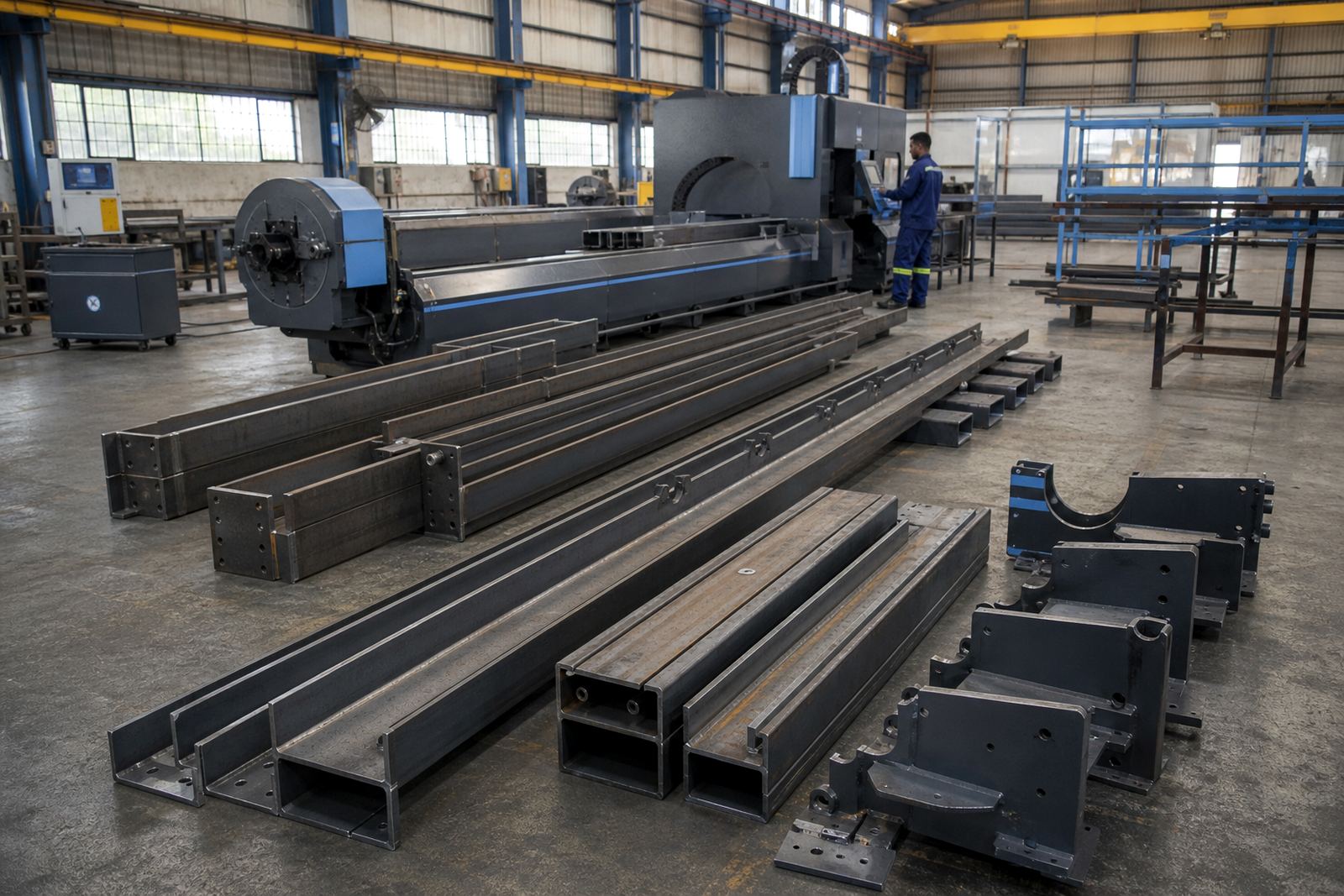
- Work: chassis tubes, braces, cross members and related profile parts
- Material mix: round, square, rectangular tube plus angle and channel
Machine choice and cut requirements
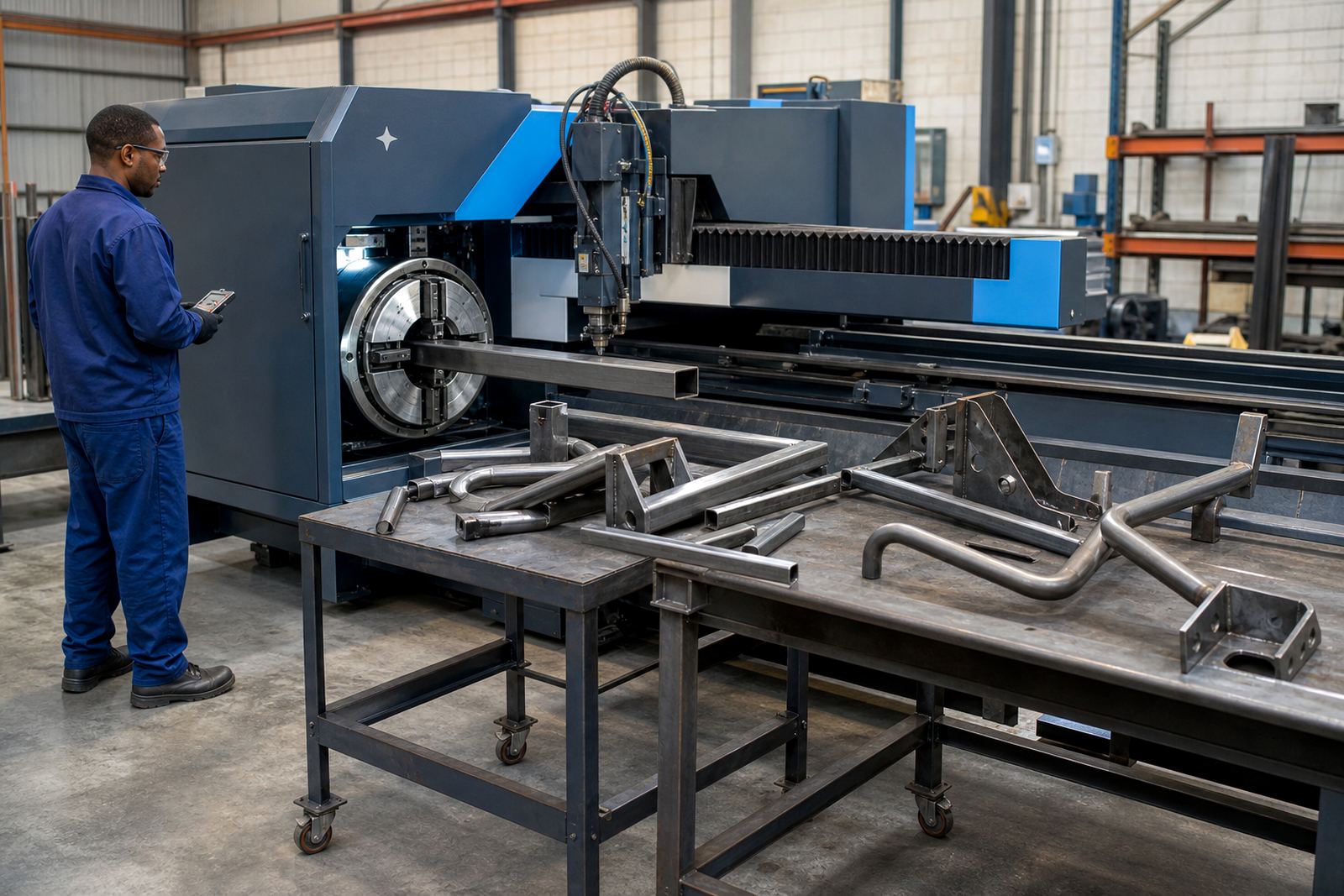
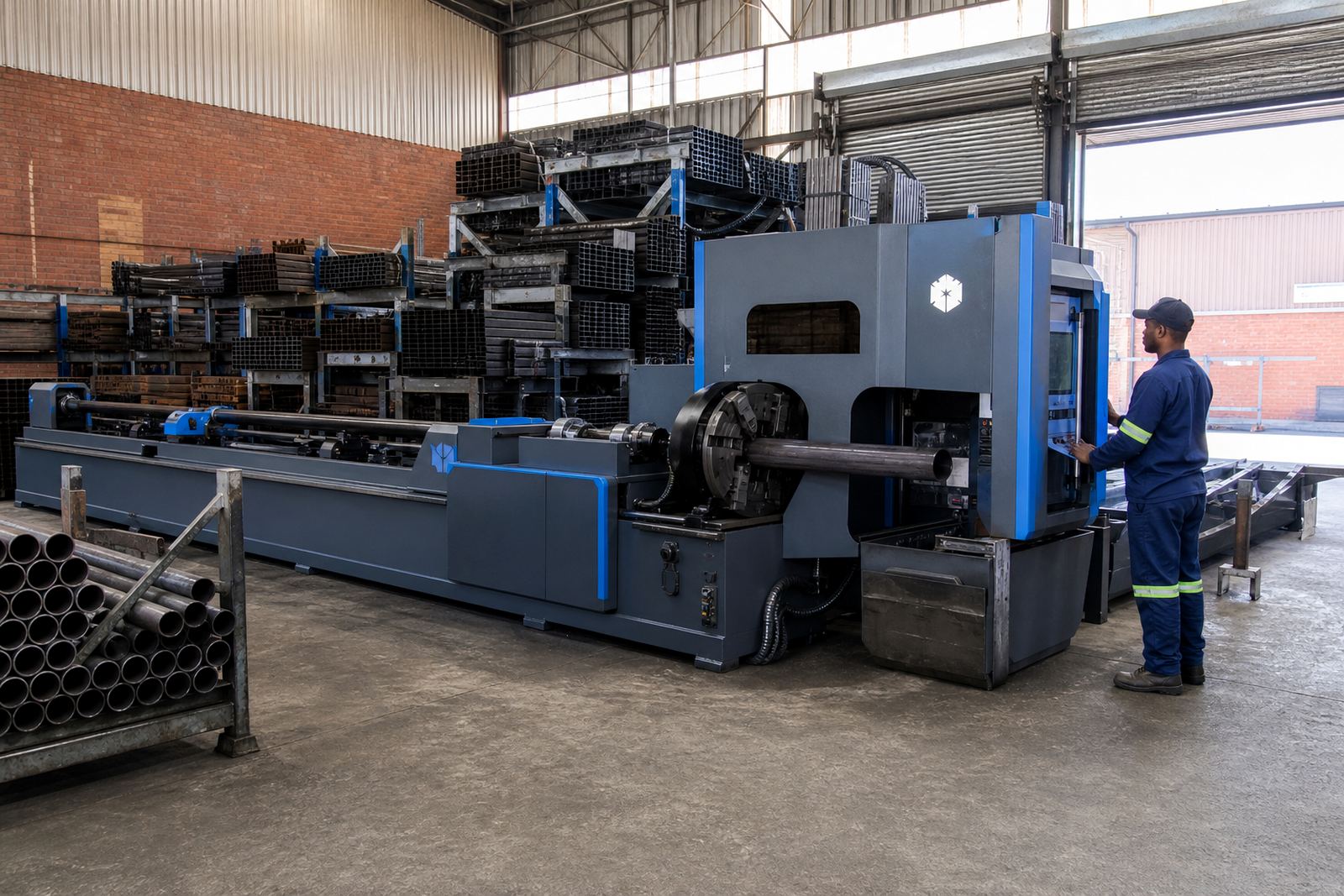
We supplied a fibre laser tube and profile cutting machine set up for the shop’s main tube work. The machine configuration was chosen around repeatable batch cutting rather than one-off hand work, with tube support, rotary handling and programmed cutting paths for common trailer sections. This let the team load stock, run one pattern and keep part sizes consistent from first piece to last across a batch.
For this kind of trailer work, chucks matter. The tube needs to sit firmly while still being moved cleanly through the cut sequence, especially where square and rectangular sections must hold orientation for slots, holes and mitres. The setup also covered bevel cutting where the joint detail needed a weld-prep edge rather than a straight cut face.
- Tube handling for round, square and rectangular sections
- Profile cutting for angle and channel
- Chuck grip suited to repetitive batch work
- Bevel head option for selected joint details
Sorting the layout before the machine arrived
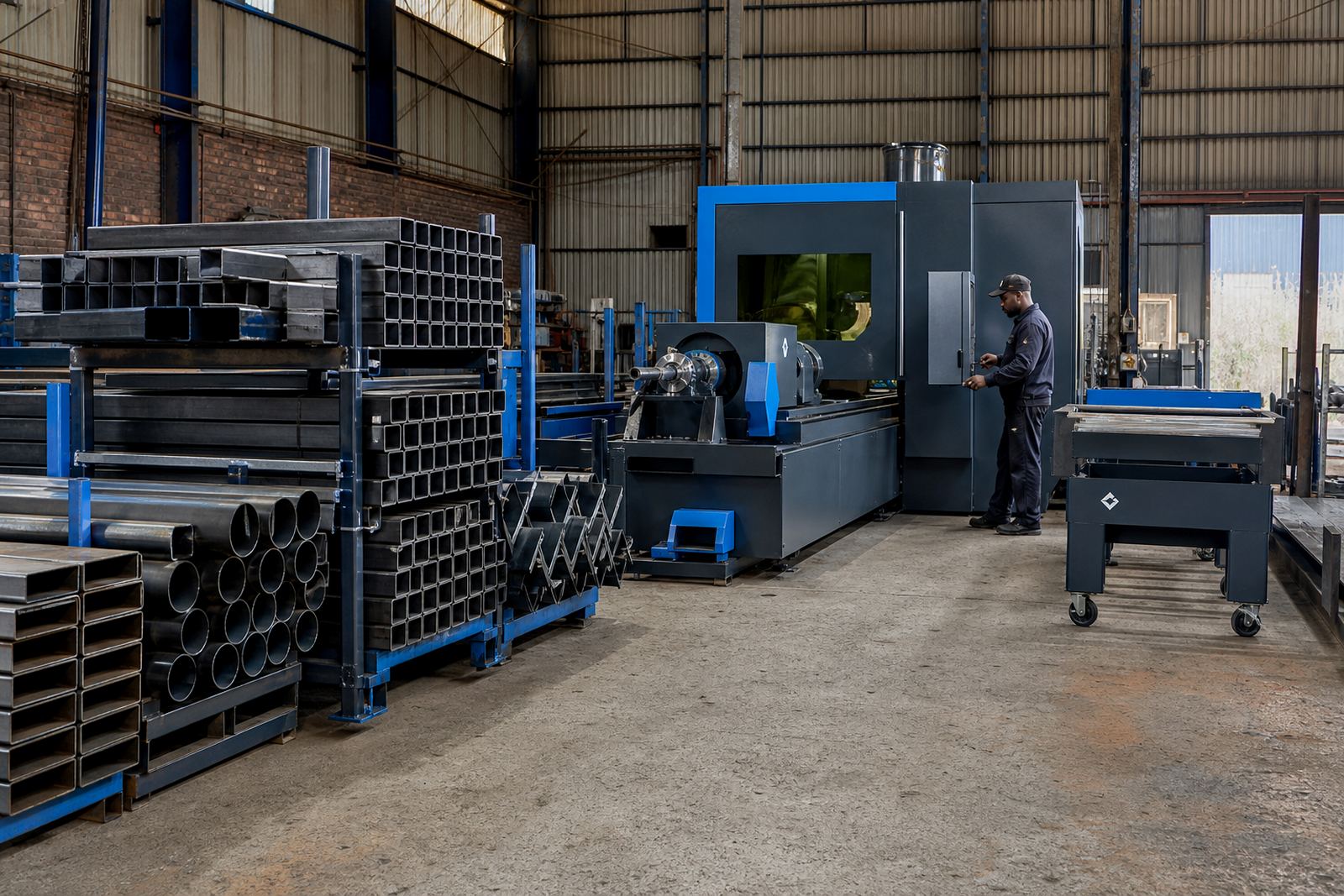
The site visit focused on the floor space, entry path and the handover area around the machine. In a trailer shop, tube racks, welding bays and material staging can crowd together fast, so the machine position had to allow safe loading, clear offload space and a clean route for finished parts moving to the next operation. We also checked the main material sizes used on the trailer range, because the stock mix drives how the nesting strategy is built.
Because the shop wanted a proper production change rather than a cosmetic upgrade, the software side was handled at the same time as the physical placement. Nesting files had to suit the repetitive part families, with hole positions, slot geometry and lead-ins arranged to reduce waste and cut cleanly on the common tube lengths. That reduced the need for manual correction later in the job.
- Delivery rigging planned around access in Alrode
- Machine position matched tube flow through the shop
- Nesting layouts built for repeated trailer part families
- Safe clearances set around loading and unloading areas
Installation, gas setup and first cut work
The installation covered machine placement, levelling, guarding checks, tube handling alignment and assist gas setup. For trailer parts, gas choice and pressure settings affect edge finish, dross control and the amount of cleanup after cutting. We set the system for the material ranges used on the job, then worked through sample cuts on the main part families until the fit-up points were practical for welding.
The first run focused on real production parts rather than test shapes only. That meant the team could see how slots lined up, how the holes behaved on the tube sections and how the cut face looked on parts that would go straight to the jig. A few nesting adjustments were made during setup to improve material use and keep the parts flowing in the order the fabricators needed them.
- Machine installation and commissioning on site
- Assist gas setup for production cutting
- Sample cuts on actual trailer components
- Fine tuning of nesting and part order
Training for the people running the job
The workshop team needed more than a machine handover. They needed to know how to load tube safely, keep the chuck area clean, check alignment and handle common part changes without wasting stock. Training covered operator routines, nesting basics, cut sequencing and the checks that matter before a batch starts. Leanne Mabuza handled the training flow with the machine users, while the installation and applications teams stayed involved on the technical side.
We also covered bevel calibration and the small control habits that keep repeat jobs stable. On trailer work, a slight shift in part positioning can affect fit-up across the whole assembly, so the people at the machine had to understand where to look first when a cut pattern did not behave as expected.
- Operator training on the trailer parts they cut daily
- Nesting training for repeat batch parts
- Chuck alignment checks for consistent loading
- Bevel calibration for selected welded joints
What changed after the changeover
Once the new process settled, the shop had a cleaner route for its repeated chassis parts. Tube batches could be cut with fewer marking steps, and the fit-up at assembly was more consistent because the dimensions were coming off the machine rather than from hand layout. That also cut down on rework where parts needed trimming before they could move to welding.
The most visible gain was in shop rhythm. Stock could be prepared in batches, cut in a planned order and sent straight into the assembly sequence. The result was less handling between steps and a more controlled path for the common trailer sections. For a fabricator working with regular frame parts, that shift matters more than a single flashy machine feature.
- More consistent trailer chassis parts
- Less marking out and edge cleanup
- Better fit-up at weld stage
- More controlled batch flow through the shop
Key facts
| Project | Laser-cut tube and profile batch work for a trailer fabricator |
|---|---|
| Town | Alrode, Gauteng |
| Tube range | Round, square and rectangular tube |
| Profiles | Angle and channel |
| Machine functions | Tube handling, chuck grip, bevel cutting, nesting workflow |
| Services delivered | Site Assessment, Delivery Rigging, Machine Installation, Commissioning, Operator Training, Nesting Training, Assist Gas Setup |