The brief from Pretoria East
The job came from a Pretoria East metal fabricator making exercise equipment frames for a local product line. Their tubes had to hold tight hole spacing across multiple lengths, with clean ends for welding and enough consistency for batch work without extra marking on the shop floor.
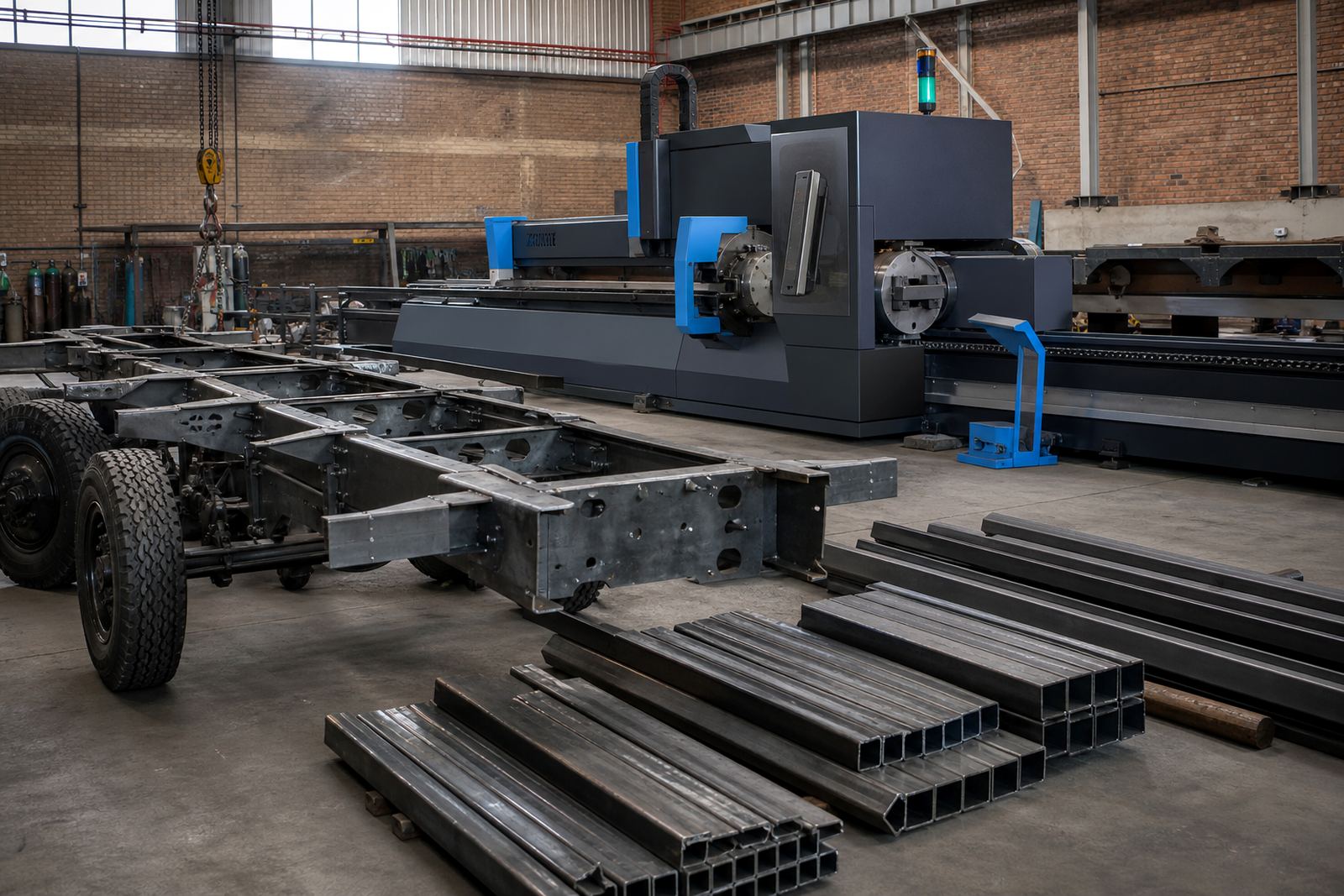
The material mix leaned toward round, square and rectangular mild steel tube, with a few profiles that needed angle cuts where frames turned or met at a brace. The team wanted a fibre laser tube machine that could handle repeatable slotting, accurate hole positions and a steady cutting rhythm for small production runs.
- Tube types: round, square and rectangular sections
- Profile work: angle and channel members where the frame layout needed them
- Key issue: repeat hole positions across every batch
- Finish requirement: clean edges for welding and assembly
Machine layout and cutting setup
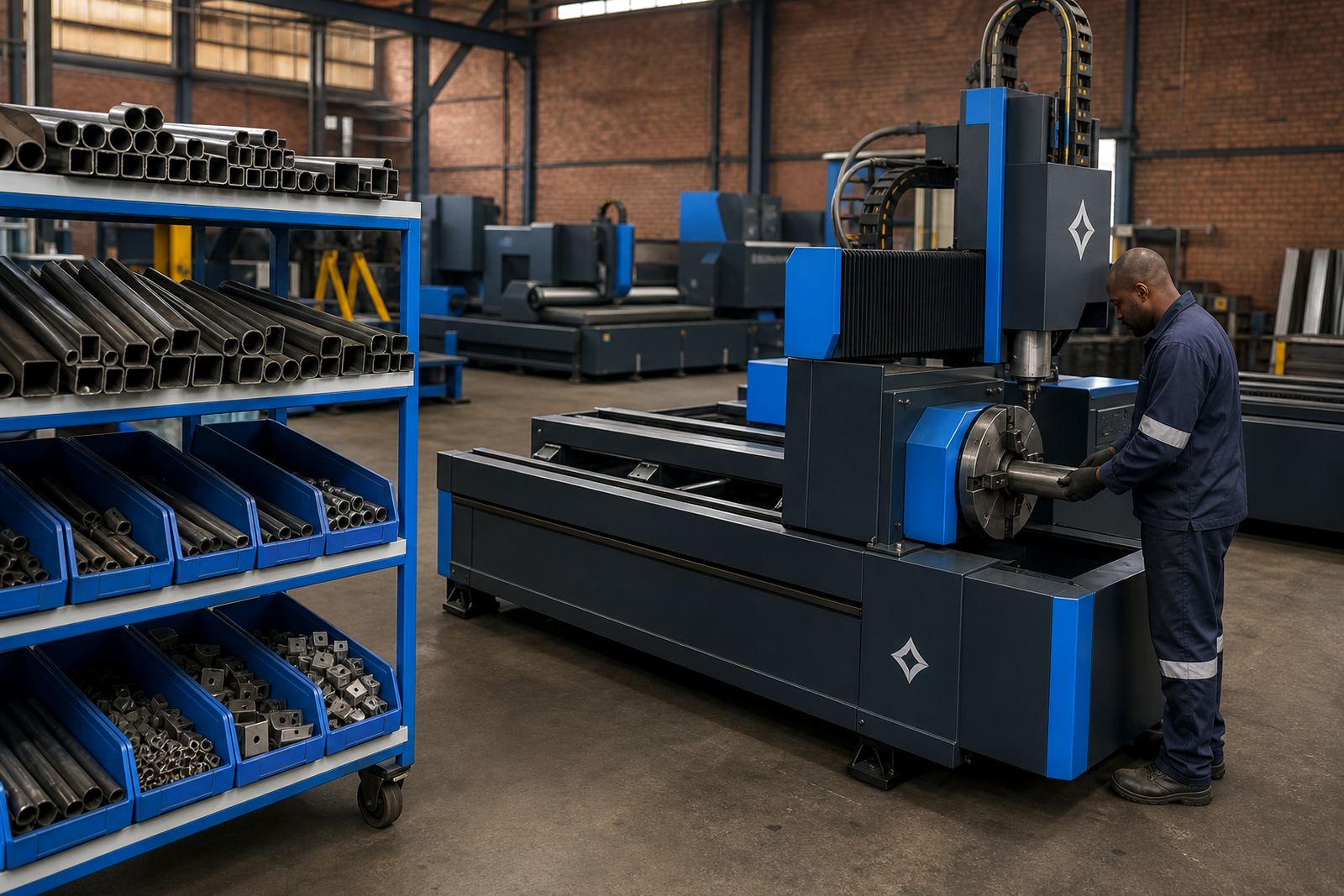
We supplied and commissioned a fibre laser tube and profile cutting machine with a chuck arrangement suited to repeat clamping on mixed tube sizes. The setup was planned around short changeovers, because the fabricator had a number of frame variants moving through the same shift and could not afford long resets between sizes.
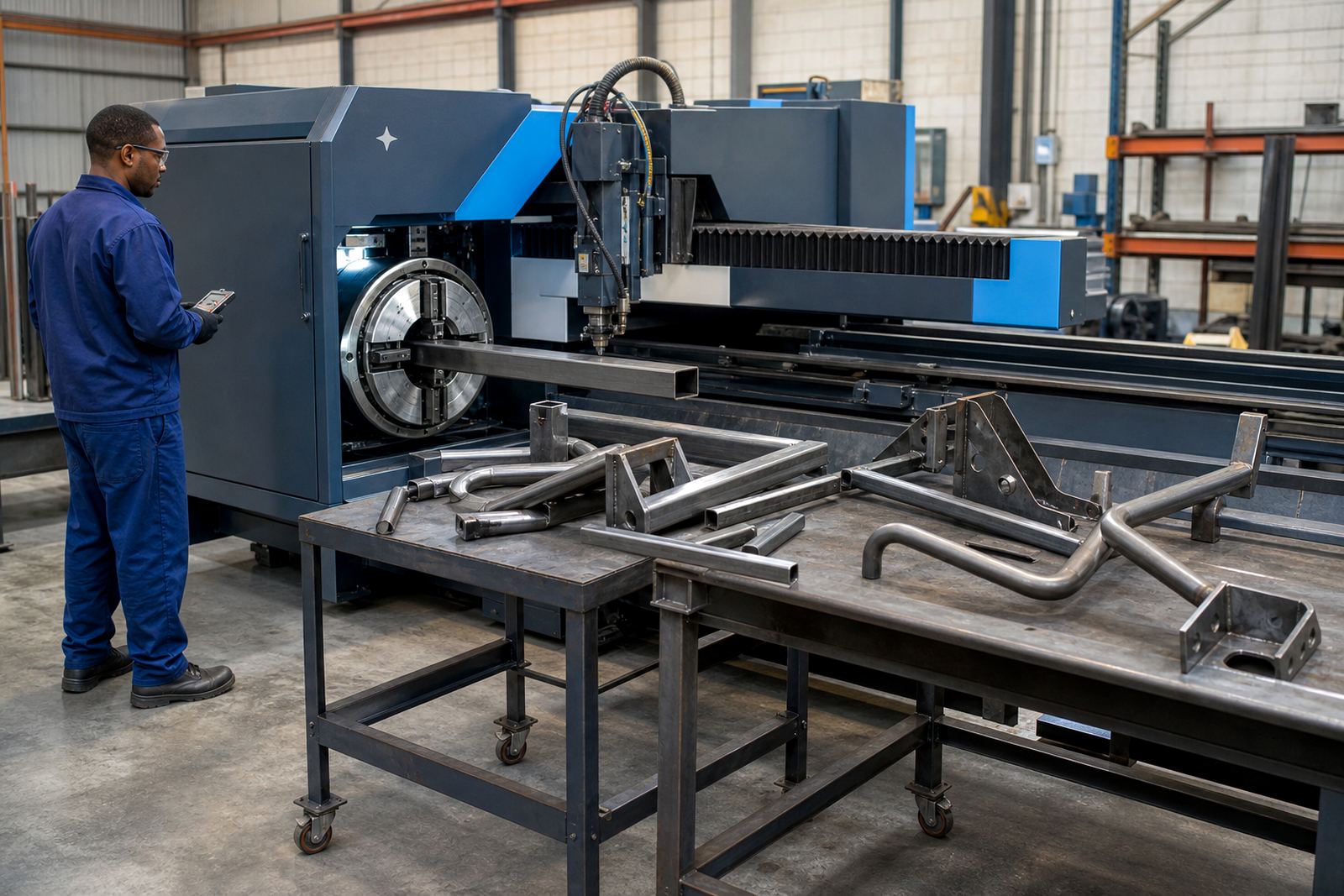
For the more involved joints, bevel cutting was set up where it improved fit-up at the weld. That helped the welders land parts without heavy rework, especially on tube ends meeting angled braces. The nesting software was used to place parts tightly along the stock length while keeping hole positions aligned to the drawing. Careful nesting matters on tubular gym frames, because one poor layout can ripple into several lost metres of material.
- Machine set for mixed tube and profile work
- Chuck alignment checked for consistent grip and rotation
- Bevel head used on selected joints needing weld preparation
- Nesting adjusted to reduce offcuts and keep hole spacing true
Site work and operator training
The installation was handled on site in Pretoria East, including machine positioning, rigging, levelling and final commissioning. The shop floor had enough room for raw tube intake, cut part sorting and a clear path to welding benches, so the layout was matched to that flow instead of forcing the staff to work around the machine.
Operator training covered tube loading, part checking, program selection and the practical side of assist gas setup. We also spent time on safe handling around the cutting zone, because tube machines behave differently from flat-sheet equipment and need proper awareness of rotation, clamping and part drop points. The training coordinator worked with the production team on a short, repeatable method for first-off checks before a batch was released.
- Rigging and machine positioning completed on site
- Operator training included tube loading and part verification
- Assist gas settings discussed for cut quality and edge condition
- Safe part removal and guarding awareness covered during handover
Project timing in weeks
From the initial assessment through to handover, the work was completed within four weeks. The first week was used for the site assessment, checking access, floor space and the material sizes the client wanted to run. The second week covered final machine placement and commissioning, while the third and fourth weeks were spent on operator training, nesting practice and first production runs.
That pace worked well for a manufacturer that already had welding, finishing and assembly in place. The tube laser was introduced as a production step, not as a new workshop on its own, so the handover had to fit into the existing workflow and keep the movement of material sensible from intake to finished frame.
What changed on the shop floor
Once the cut programme and clamping sequence were settled, the team had better control over hole positions and frame repeatability. The welders received parts that lined up more cleanly at the joints, which reduced the time spent opening holes or correcting ends before assembly. For a gym frame product, that kind of consistency matters because the fit of one member affects the next member in the sequence.
The client also gained more confidence in running mixed jobs through the same machine. A single setup could move between tubular frames, profile pieces and selected bevel cuts without losing the reference points needed for repeat production. That made planning easier for the production manager, especially when a batch had to be split across different frame sizes.
- Repeat hole positions held across the run
- Less hand correction needed before welding
- Cleaner fit-up at angled and joined sections
- Better control over mixed frame variants
What we would apply to a similar job
On another gym frame project in Pretoria or anywhere else in South Africa, we would start with the tube sizes, hole pattern and weld sequence before locking the machine programme. That keeps the process practical from the first cut, especially when the product line includes more than one frame length or brace arrangement.
We would also keep the training close to the actual parts being made, not just general machine steps. Operators learn faster when they are checking the same hole positions and end profiles they will use in daily work. For mixed tube production, that hands-on approach saves time later and gives the workshop a cleaner way to plan production, maintenance and part sorting.
- Confirm the tube range before setting the nesting plan
- Match clamping positions to the actual frame range
- Use one reference method for hole spacing checks
- Build training around the client’s own parts
Key facts
| Project | Pretoria East gym frames |
|---|---|
| Client type | Metal fabricator producing tubular exercise equipment |
| Material types | Round, square and rectangular tube, plus selected angle and channel |
| Cutting method | Fibre laser tube and profile cutting |
| Special features | Repeat hole positions, bevel cuts, nesting software, chuck alignment |
| Timeline | 4 weeks from assessment to handover |