A mounting job with mixed section sizes
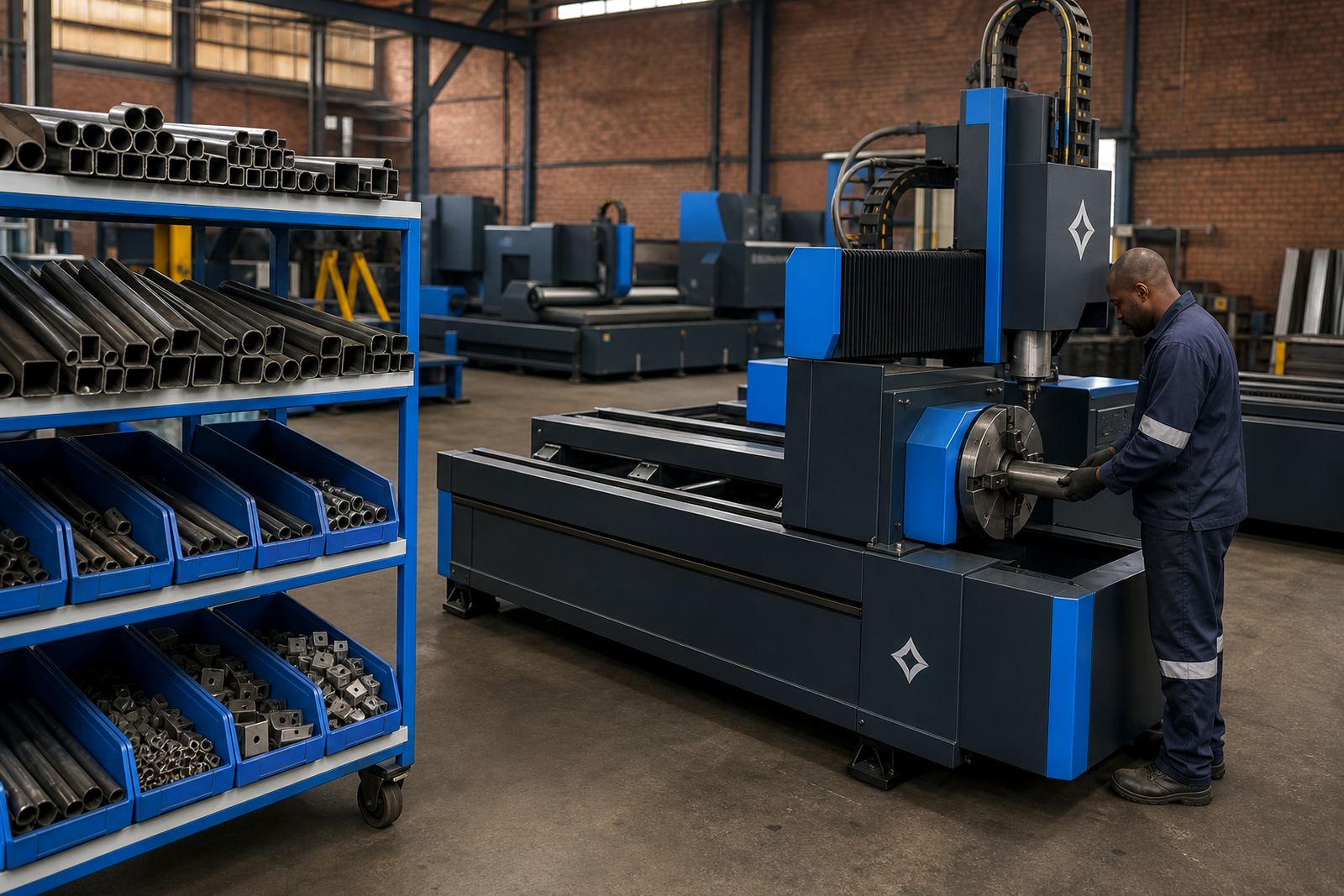
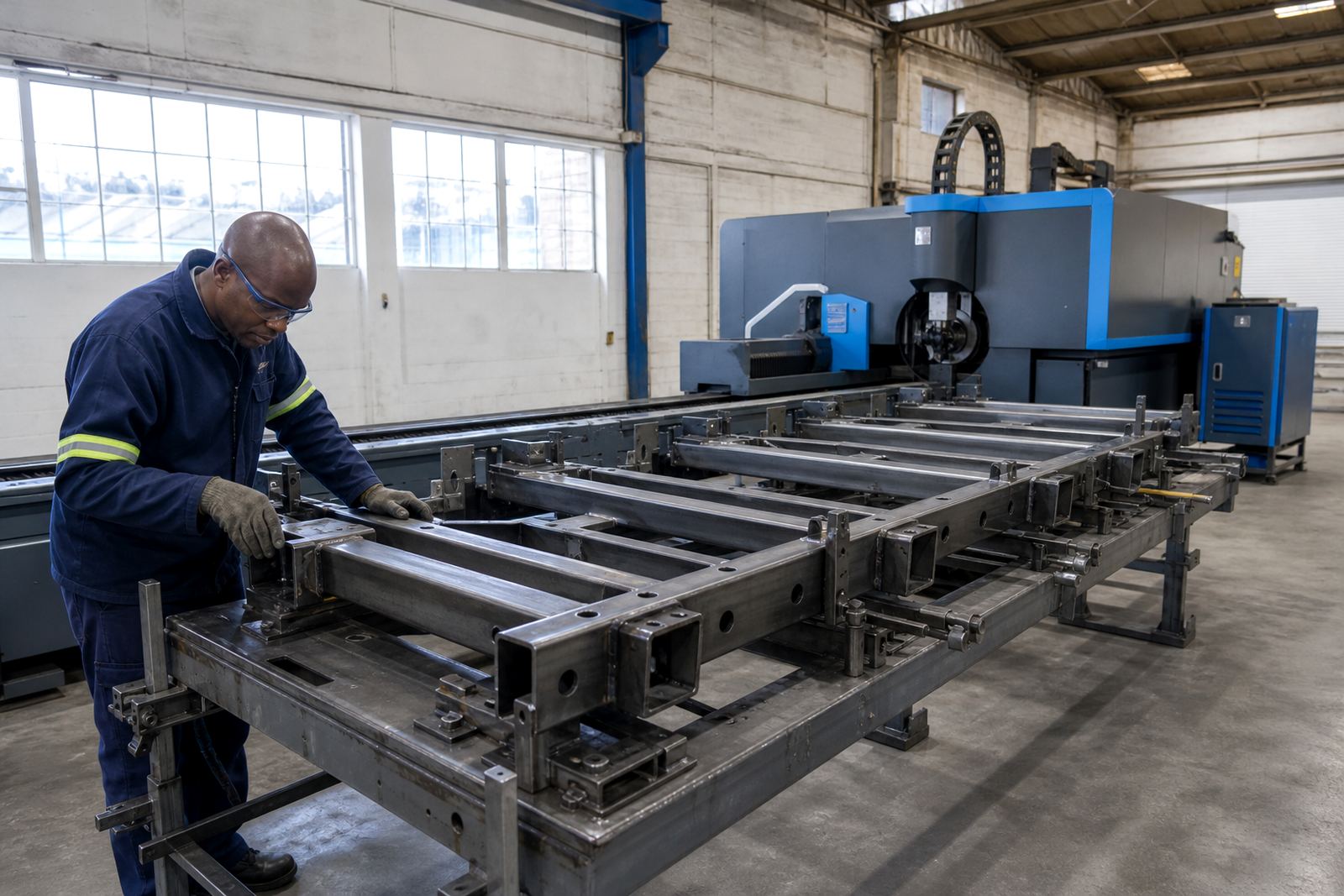
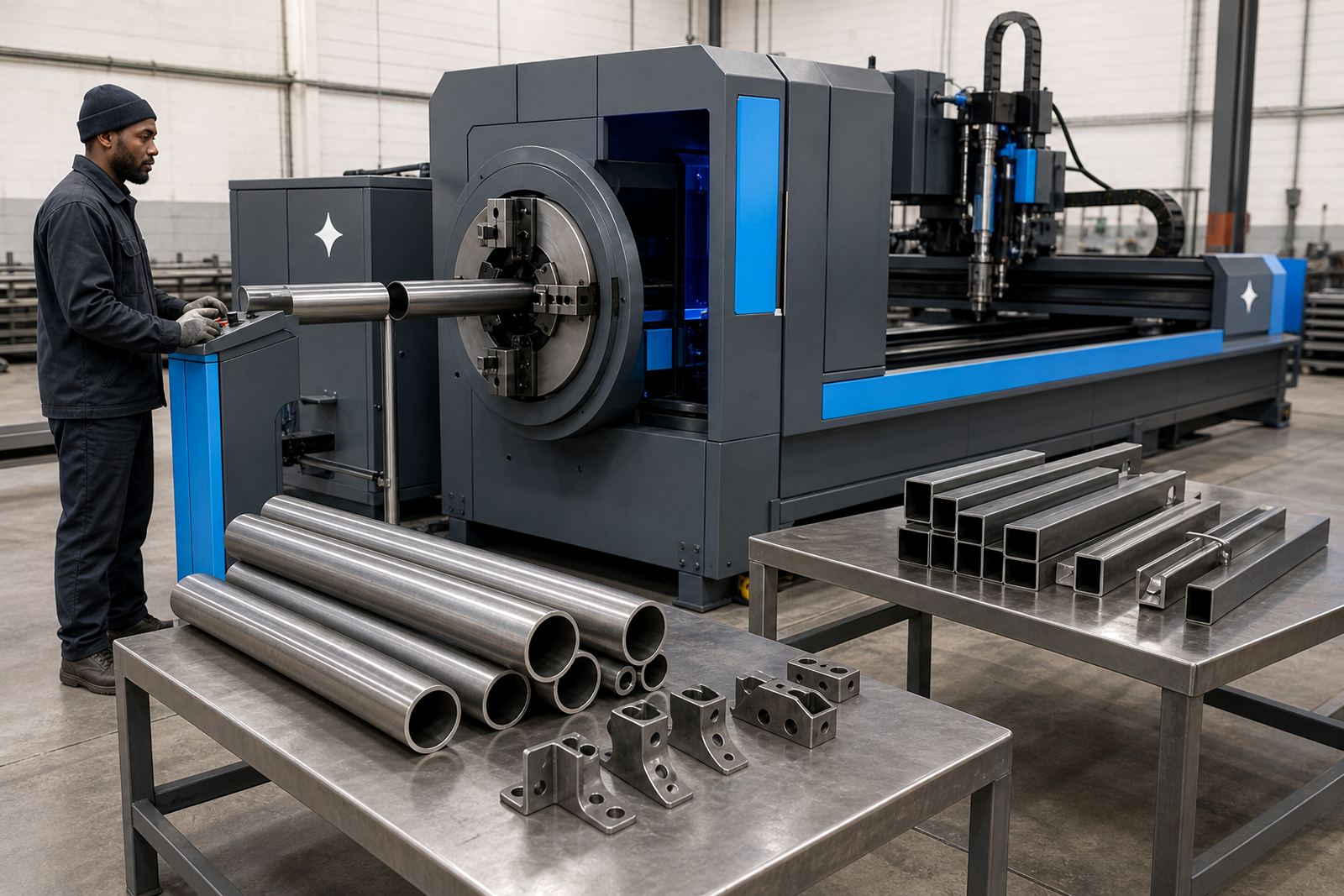
The project came from a metal fabricator in Montague Gardens that was supplying support components for mounting structures used in the solar sector. The parts were not decorative, and they had to land in the right place first time because the fit-up affected the rest of the fabrication sequence. The job mixed round tube, square tube, rectangular tube and channel, with some angle pieces folded into the same production run.
The brief asked for cleaner edge quality than a saw-and-drill process could deliver, plus tighter repeatability on hole positions, mitres and end profiles. The workshop also wanted one machine set-up that could handle short runs and batch work without constant changeover, which matters when you are working through different frame sizes, brackets and support arms on the same contract.
- Material mix: mild steel tube, channel and angle
- Section range: round, square and rectangular tube
- Typical work: support brackets, mounting members and joining pieces
- Production need: accurate repeat cutting with stable nesting
Workshop limits that shaped the machine choice
Montague Gardens brings its own practical constraints. Space is tight in many industrial units, so the machine footprint had to make sense in a working shed with storage, loading access and safe movement around the bed. The customer also needed a layout that would suit finished parts leaving the machine area in an orderly flow, not scattered around the floor. Coastal air is also part of the picture in that part of Cape Town, so exposed surfaces and services need proper care.
The tube machine specification had to support accurate clamping, steady rotation and controlled feed through the chuck system. For the more complex joints, a bevel head was included for angled cuts where weld prep mattered. The operator wanted nesting software that could handle mixed section lengths, reduce offcut waste and keep the job list clear enough for day-to-day use by the team on the floor.
- Layout concern: compact footprint for a working fabrication bay
- Cutting need: straight cuts plus bevel prep on selected parts
- Control need: nesting that suits mixed batch lengths
- Environment note: corrosion management for a coastal industrial area
What we supplied and set up
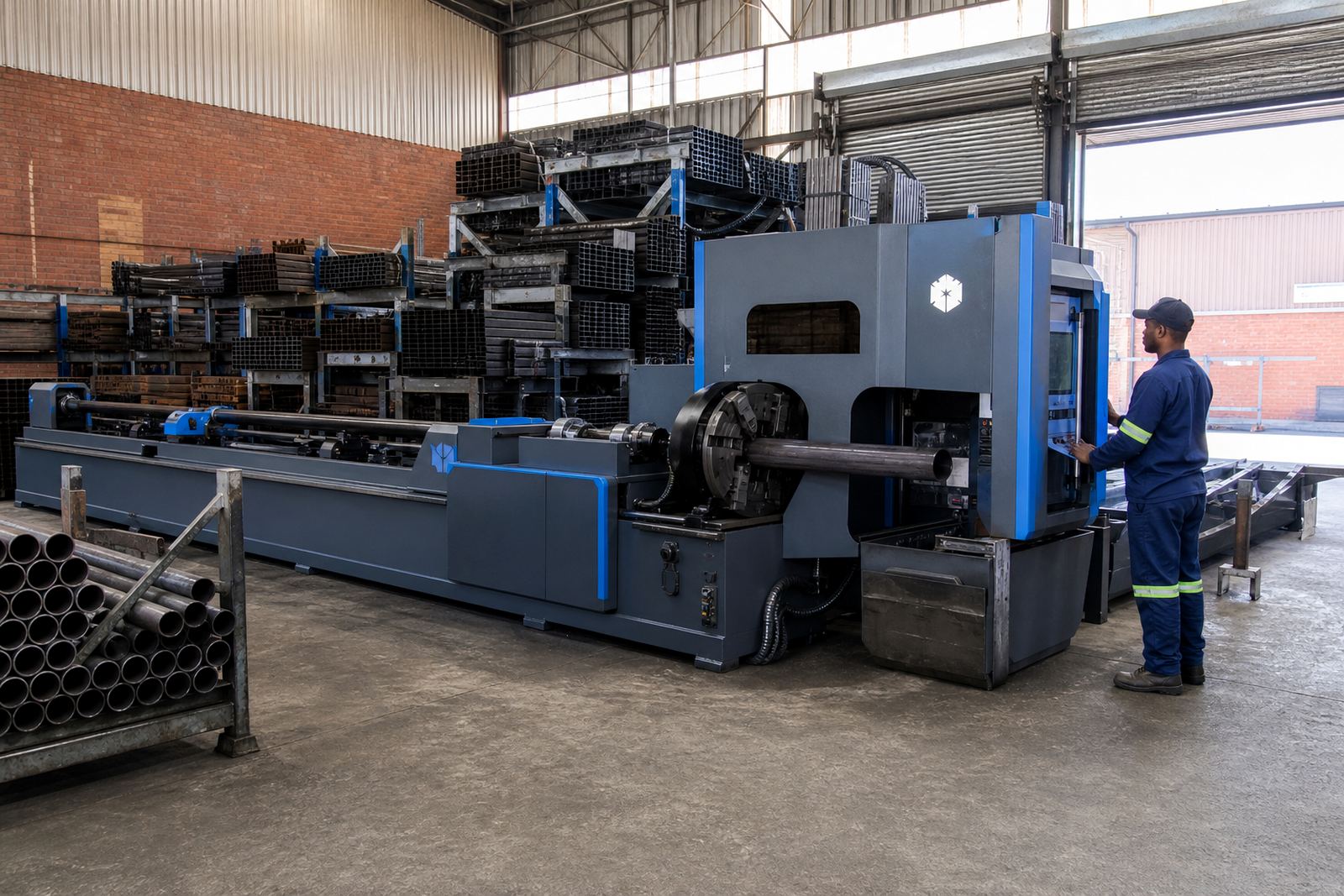
We supplied a fibre laser tube and profile cutting machine suited to the range of sections in the brief, together with the supporting systems needed to make it work on a production floor. That included machine delivery, rigging into position, installation, commissioning and operator training. The setup also covered assist gas planning, safe loading practice, chuck alignment and the use of nesting software for the production mix.
The machine was configured for tube and profile work across support components, with attention given to repeatability on drilled features, slot profiles and end cuts. The bevel head was set for the angles needed on selected joints, while the chuck setup was checked to reduce slip and improve consistency over longer sections. Safety controls and guarding were reviewed with the team so operators understood the working zones and the correct sequence for loading and unloading.
- Machine type: fibre laser tube and profile cutting system
- Included functions: chuck alignment, bevel calibration and assist gas setup
- Support supplied: installation, commissioning and operator training
- Software focus: nesting for mixed section lengths and batch parts
The project path over four weeks
The work ran over four weeks from site assessment through to handover of the machine ready for workshop use. The first stage covered space planning, delivery access and floor position, followed by rigging and machine placement. After that came mechanical checks, gas setup and alignment of the chucking system. Once the machine was live, training shifted from basic operation to the real production routine the fabricator needed for the solar support parts.
Training was not left at button-pushing. The operator team worked through loading sequence, nesting preparation, cut order, cut quality checks and safe handling of finished parts. A second layer of training covered the kinds of maintenance that keep a tube machine in shape, including cleaning, inspection of wear points and the checks that help keep cut quality stable over time. The workshop also received guidance on how to spot a cut issue early, before a batch moves too far down the line.
- Week 1: site assessment and production planning
- Week 2: delivery rigging and machine installation
- Week 3: commissioning, chuck alignment and gas setup
- Week 4: operator training and nesting practice
What changed in the workshop
Once the machine was in production, the fabricator had a cleaner route from flat drawings to cut components. Tube ends, slots and joint profiles no longer needed the same level of secondary marking and manual correction, which helped the team keep parts aligned for downstream welding and assembly. The nesting package also reduced unnecessary offcuts, so the workshop could use stock lengths more carefully.
Another visible change was consistency across repeated parts. When mounting structures are built in batches, the first few pieces can look fine while the rest drift slightly if the process is not controlled. The laser process gave the team a steadier result on hole spacing, mitres and matching pairs, which mattered when the parts had to line up on site. That made the job easier for the fitter, and less frustrating for the workshop foreman.
- Cleaner cut edges with less hand finishing
- More consistent repeat parts across the batch
- Better stock use through nesting control
- Less rework before welding and assembly
What we would apply to a similar job
Site assessment would carry the same weight before the machine lands in the workshop for this kind of fabrication work in Montague Gardens. The placement, loading side and offload route all matter once production starts, and it is easier to sort that out early than after steel is already in the bay. We would also keep the operator training tied closely to the actual parts being made, because that is where the useful habits get set.
For tube and profile work in Cape Town’s industrial areas, our maintenance routine stays plain and disciplined. The machine needs routine checks on alignment, chuck condition, lens care, gas flow and the state of the cutting head. When those items are handled properly, the fabricator gets steadier output and a better chance of keeping the machine busy instead of chasing avoidable faults.
- Plan the floor layout before rigging day
- Train on the actual part family in production
- Keep a written maintenance routine at the machine
- Review assist gas settings when material changes
Key facts
| Project | Montague Gardens solar support components |
|---|---|
| Client type | Metal fabricator |
| Material range | Round tube, square tube, rectangular tube, angle and channel |
| Machine scope | Fibre laser tube and profile cutting |
| Project duration | 4 weeks |
| Services used | Site Assessment, Delivery Rigging, Machine Installation, Commissioning, Operator Training, Nesting Training, Assist Gas Setup, Chuck Alignment, Bevel Calibration |