The workshop brief in Isando
The job came from a metal workshop in Isando that fabricates conveyor support components, brackets and matching tube parts for plant work. Their older cutting method was leaving too much hand finishing, and the team needed better repeatability for parts that must fit first time on site.
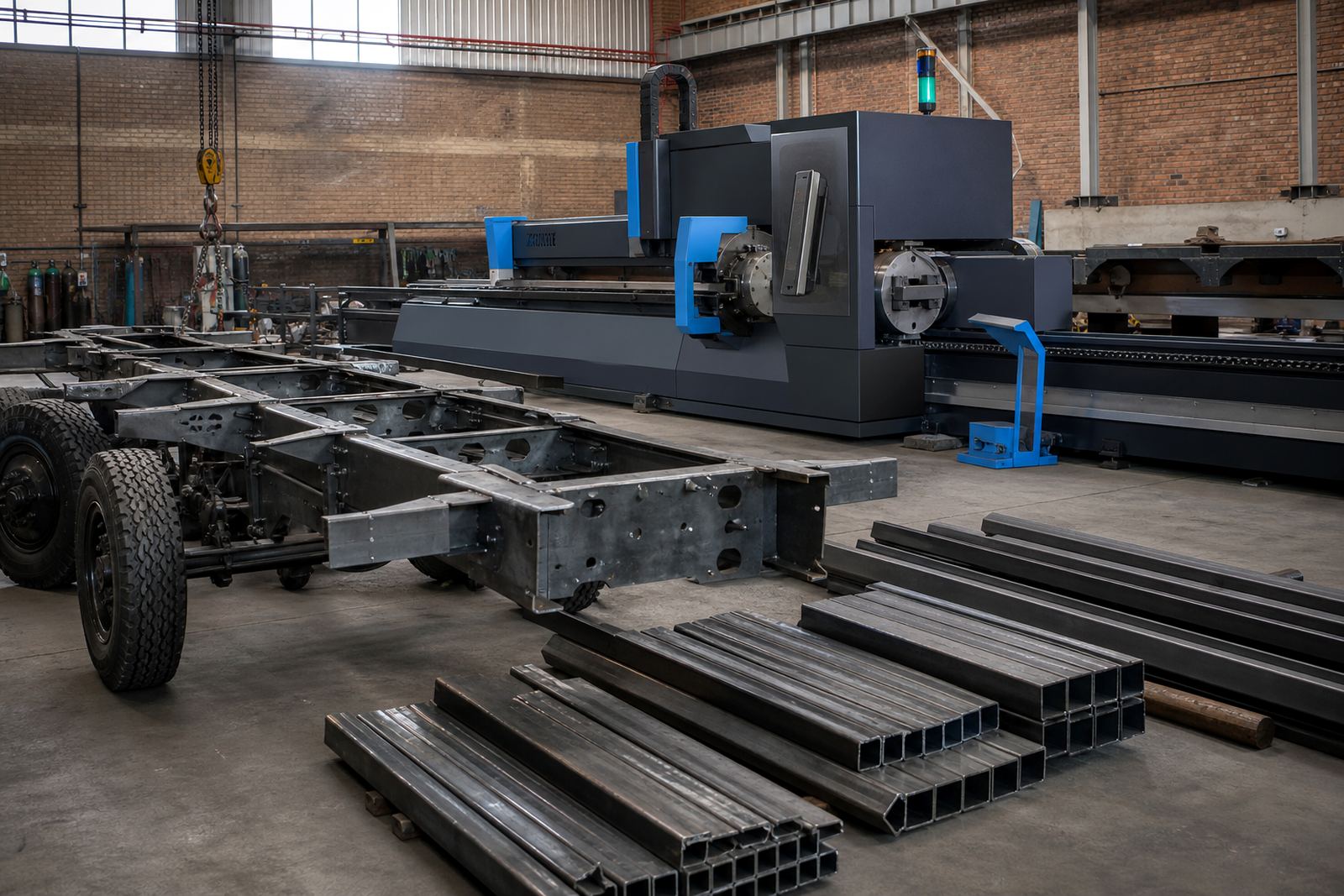
The brief covered round tube, square tube, rectangular tube, angle and channel. The workshop also wanted a setup that could handle short production runs and recurring jobs without changing the whole production flow every time. Tube nests had to stay tidy, because mixed jobs were being cut from the same stock and there was little room for waste.
- Repeated bracket sets with matching hole positions
- Conveyor support sections cut from tube and profile stock
- Cleaner edge quality for parts that still needed welding
Machine choice and cutting layout
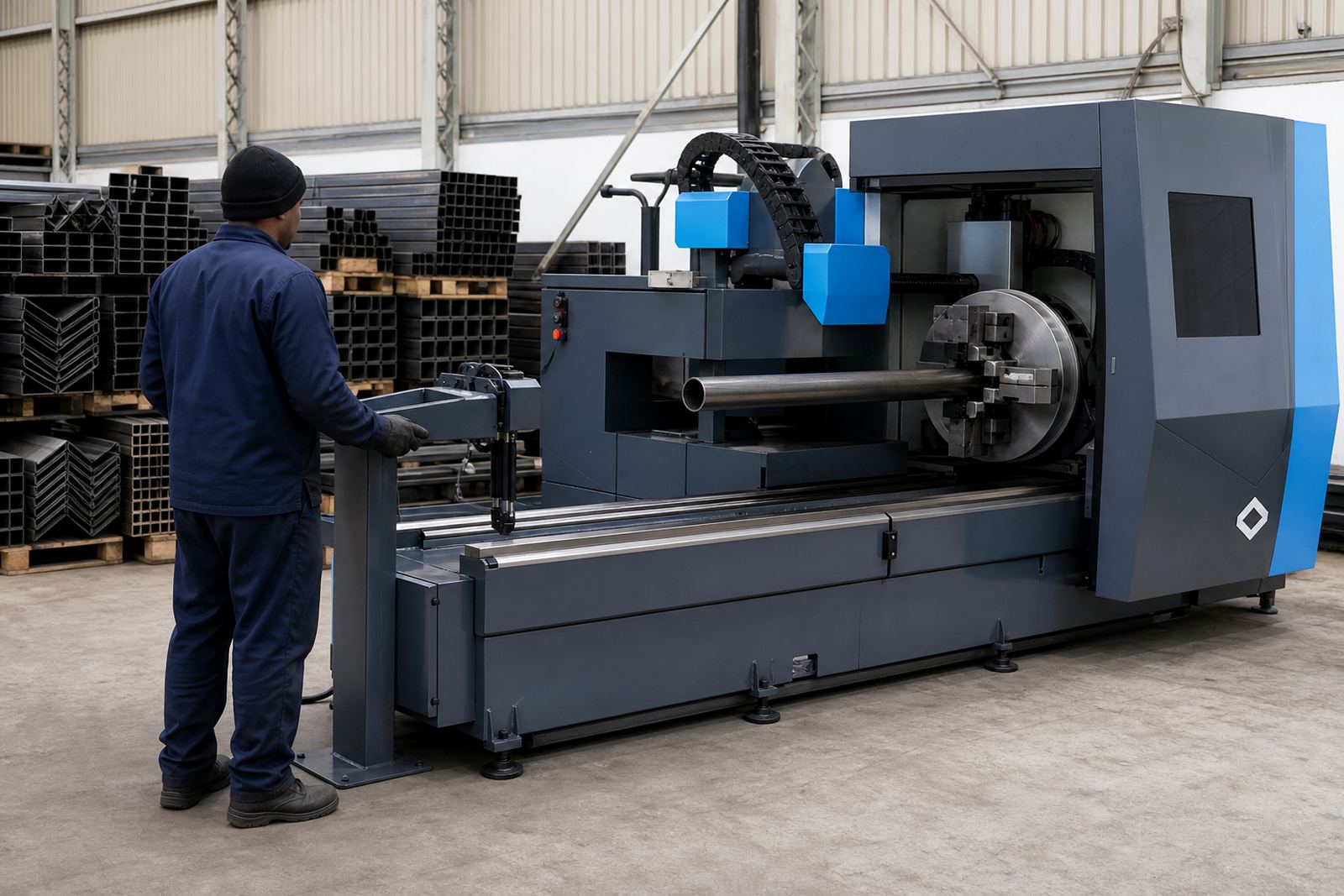
We supplied a fibre laser tube and profile cutting machine with a chuck arrangement suited to holding different section shapes securely during cutting. The setup included nesting software for arranging jobs across the available lengths, plus an assist gas setup for the cut quality required on mild steel work.
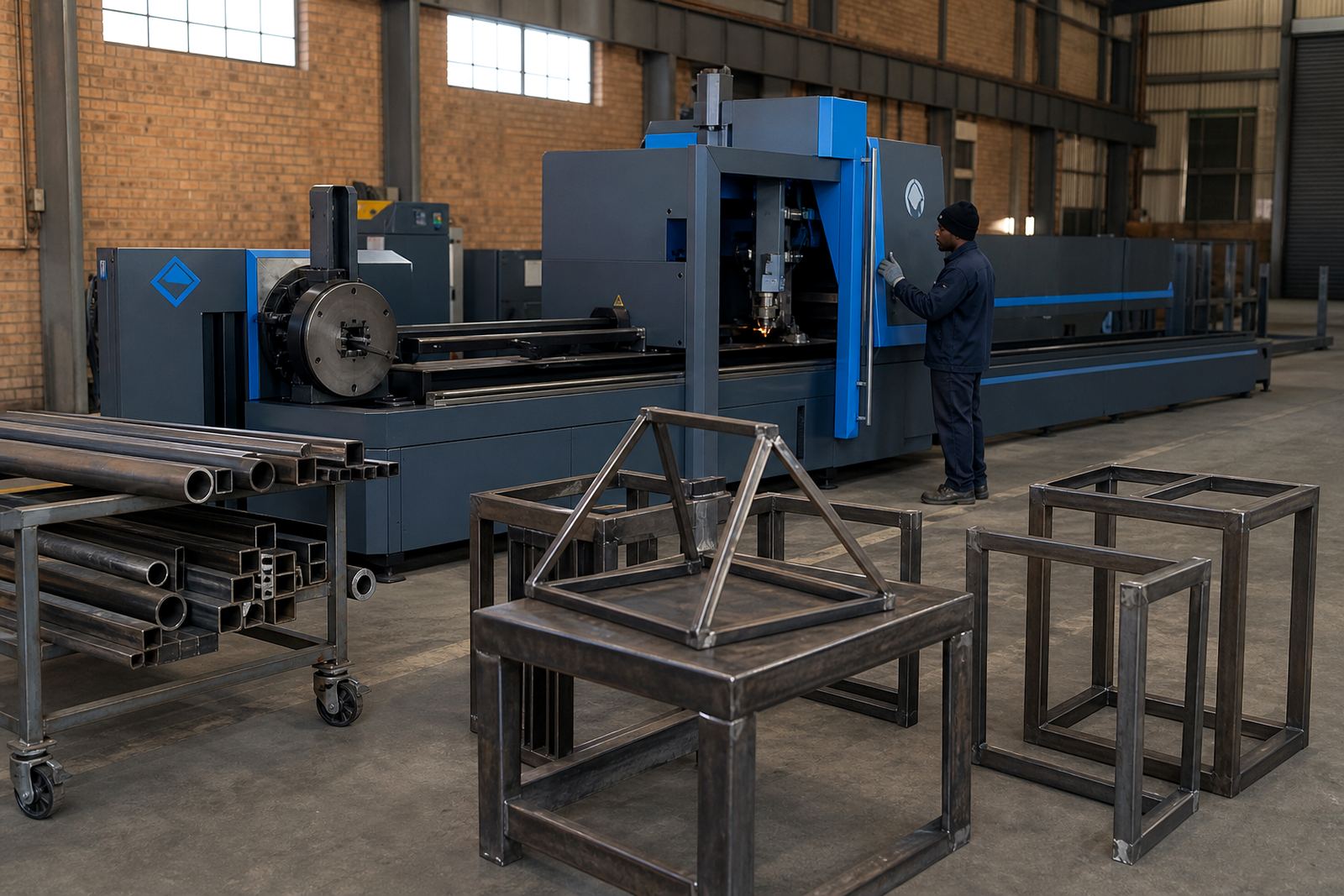
For the Isando team, the value was in control. They could load a batch of similar parts, set the cut order and keep the process consistent from one run to the next. The machine was also set up with safety guarding, part handling points and clear access around the cutting zone so the operators could work in a clean sequence.
- Round, square and rectangular tube cutting
- Angle and channel profiling for support work
- Chuck alignment checked during installation
- Assist gas setup matched to workshop use
Access, rigging and installation at the plant
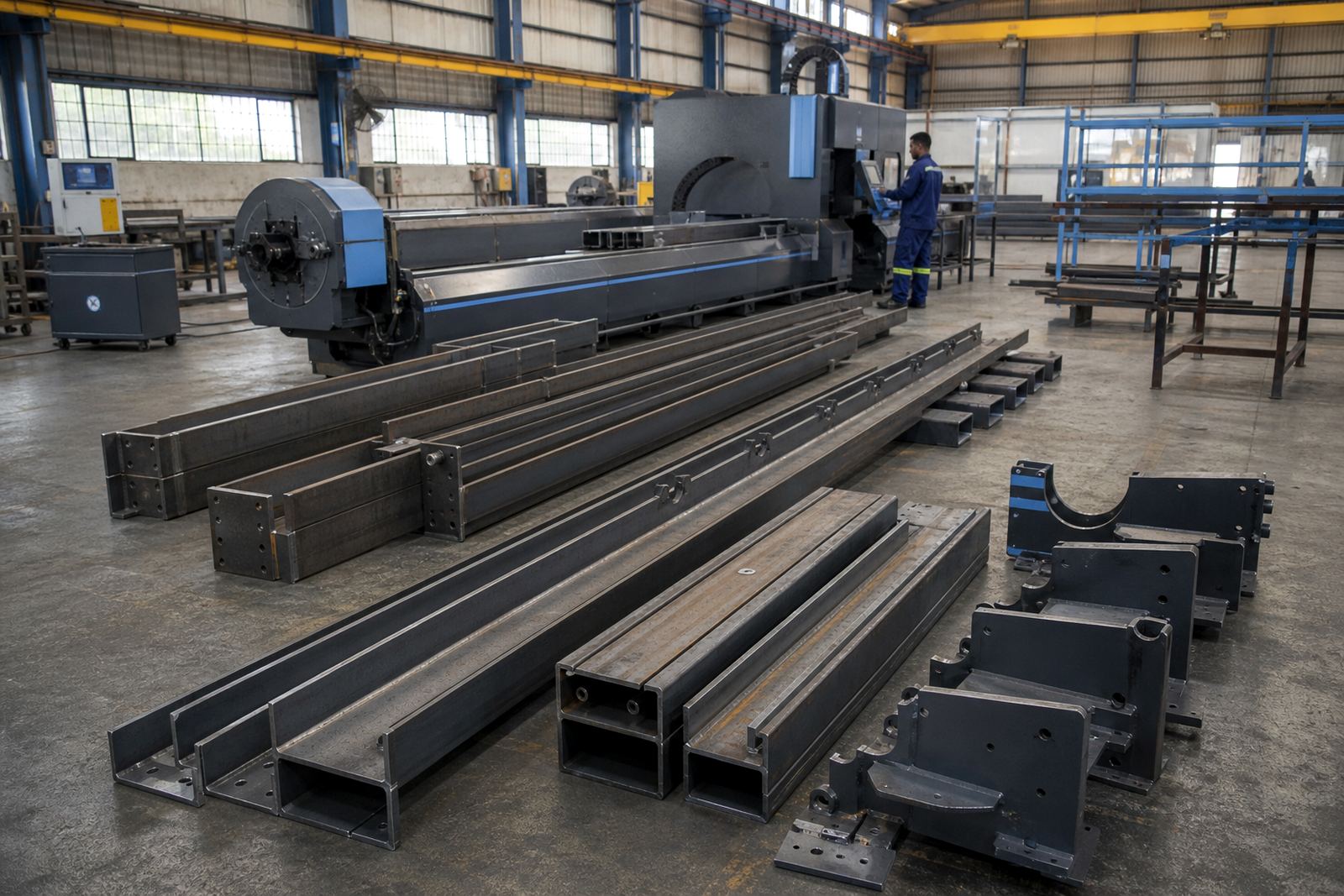
The site had the usual Isando constraints: busy yard movement, limited staging space and a production floor that could not be blocked for long. Delivery rigging had to be planned carefully so the machine could be placed without disrupting nearby fabrication work. Sibusiso Bhengu led the installation, with the machine positioned for safe loading, operator access and maintenance clearance.
Once the machine was in place, the team handled levelling, connection checks and the first mechanical alignment. The chuck alignment and bevel head calibration were completed during commissioning, then test cuts were run on tube and profile stock to confirm fit and edge quality. The workshop wanted practical setup, not a lab exercise, so the finishing pass focused on the parts they actually make every week.
- Delivery rigging into a busy industrial yard
- Machine levelling and commissioning on site
- First cuts checked on conveyor support parts
Training for the day shift team
Leanne Mabuza handled operator training and nesting training with the people who would run the machine daily. The aim was to keep the workflow plain: load material, select the correct programme, confirm the cut order and check the completed parts against the drawing before moving on to the next batch. The operators also worked through safe loading and unloading of tube lengths, with attention to clamp positions and part drop-out control.
The workshop asked for enough training to manage repeated bracket sets without calling in outside help for every small change. That included using nesting software to reduce offcuts, adjusting pierce points where needed and reading the cut sequence so similar jobs could be grouped sensibly. A few practical notes were left with the team for common setups, because the same parts were being made in runs rather than as one-off pieces.
- Operator training on loading, setup and part removal
- Nesting training for repeat bracket runs
- Practical notes for mixed tube and profile jobs
The first production weeks
The first three weeks were used for commissioning, test pieces and production runs under normal workshop pressure. Pieter Visser checked the machine in use, watched the cut quality on different section sizes and made fine adjustments where the team wanted tighter fit on bracket tabs and support holes. The bevel head settings were reviewed on the parts that needed welded edges, while the assist gas flow was confirmed for stable cut faces.
By that stage, the workshop had moved from test batches to full production use. Parts were being grouped in cleaner nests, the operators were handling repeat jobs with less guesswork, and the weld shop received profiles that needed less grinding before assembly. The team also had a clearer maintenance routine for the chuck faces, guides and daily cleaning points.
- Timeline: 3 weeks to install, commission and settle into production
- First runs focused on conveyor support brackets and matching tube parts
- Daily and weekly maintenance checks were set out for the main service points
What the Isando team gained on the shop floor
The most visible change was consistency. Brackets that used to need trimming were coming off the machine closer to final size, and the conveyor support sections were fitting into assemblies with less correction at the welding table. The workshop could also work through a wider mix of tube shapes in the same shift, which helped when one contract called for square tube and the next needed angle or channel.
For a fabrication business in a busy industrial area, that kind of repeatability matters. It keeps the job moving, reduces handling between processes and gives the fitters parts they can use without a lot of rework. Michael Dlamini and the LaserTube team kept the technical side practical, with remote diagnostics available if the operators needed help on settings or cut behaviour after the handover.
- Cleaner fit on repeated bracket sets
- Less hand finishing before welding
- Better use of mixed tube and profile stock
What we would apply to a similar conveyor job
Site layout comes first, followed by delivery route planning, machine commissioning with the actual parts to be run, and operator training on the exact nests they will use. That approach suits conveyor work because the parts are rarely all the same shape, and small alignment errors can create larger problems later in assembly.
We would also keep the maintenance notes practical from the start, with chuck cleaning, gas checks, cut face inspection and bevel calibration built into the weekly routine. For workshops in Johannesburg, Pretoria and the other major centres, that keeps the machine useful for both short jobs and repeated production runs.
- Start with real production parts, not sample shapes only
- Build the nesting library around repeat work
- Keep alignment and cleaning checks on a fixed routine
Key facts
| Project type | Industrial conveyor fabrication workshop |
|---|---|
| Town | Isando, Johannesburg |
| Material types | Round tube, square tube, rectangular tube, angle and channel |
| Machine supplied | Fibre laser tube and profile cutting machine |
| Core setup | Chuck alignment, bevel head calibration, assist gas setup |
| Timeline | 3 weeks from installation to settled production use |