The Benoni workshop and the shift in cutting method
The client was a fittings workshop in Benoni that builds shop display frames, hanging rails, shelf supports and steel surround members for retail fit-outs. Their old process depended on manual marking, cut-off saws and a lot of rework when tube lengths drifted or corners landed out of square.
They wanted a machine that could handle round, square and rectangular tube, plus angle and channel used in light framing. The brief was not only to cut parts, but to tighten the whole flow from drawing to finished kit. That meant better nesting, cleaner cut edges and a process the workshop crew could trust under day-to-day production pressure.
Space inside the workshop was tight, so the machine footprint and handling path mattered. The floor had to allow for incoming stock, offcut movement and safe loading around the chuck area. The team also needed a setup that could manage mixed jobs, where a retail run and a custom display order might sit in the queue together.
What the brief had to cover before the machine arrived
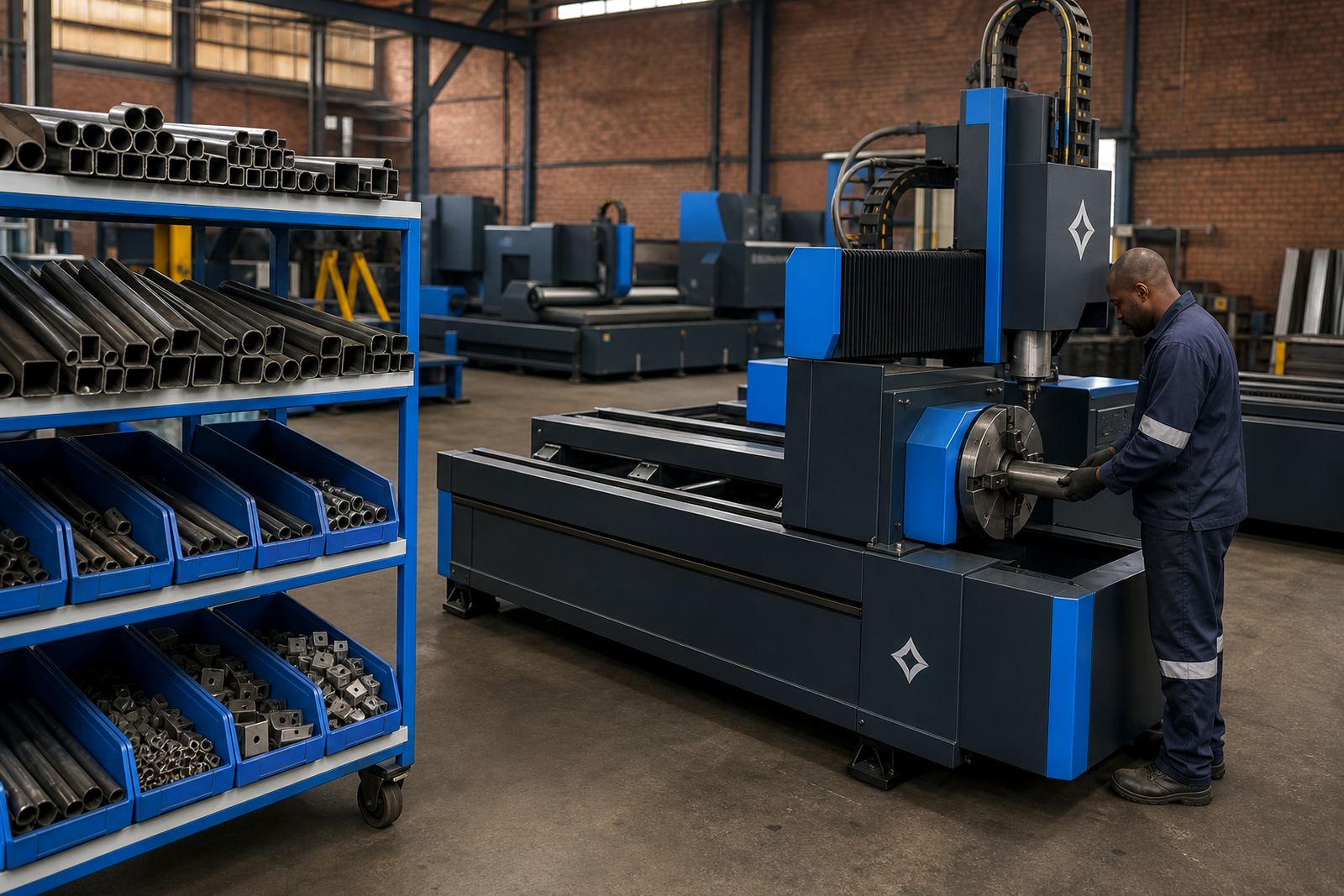
The workshop wanted a machine that could process thin-wall tubing without crushing it in the clamp, while still holding heavier sections securely. The cutting head had to support straight cuts and angled work, because several fixture frames use mitres and prepared joints. They also asked for practical nesting software that could group parts by length, reduce offcuts and keep the next batch ready without guesswork.
- Tube and profile cutting for round, square and rectangular sections
- Angle and channel processing for light framing members
- Chuck support for stable clamping and accurate feed movement
- Bevel head capability for angled edge preparation where required
- Assist gas setup for cleaner cut edges and reduced dross
- Safety guarding, interlocks and operator-access controls around the cutting area
Because the job mix changed often, the workshop also needed training that covered job setup as well as day-to-day operation. That included loading sequence, nesting logic, scrap tracking and how to keep cut quality consistent when switching between section sizes. The request was practical rather than flashy, with attention on parts that fit first time and frames that line up without extra dressing.
Installation week and the first production run
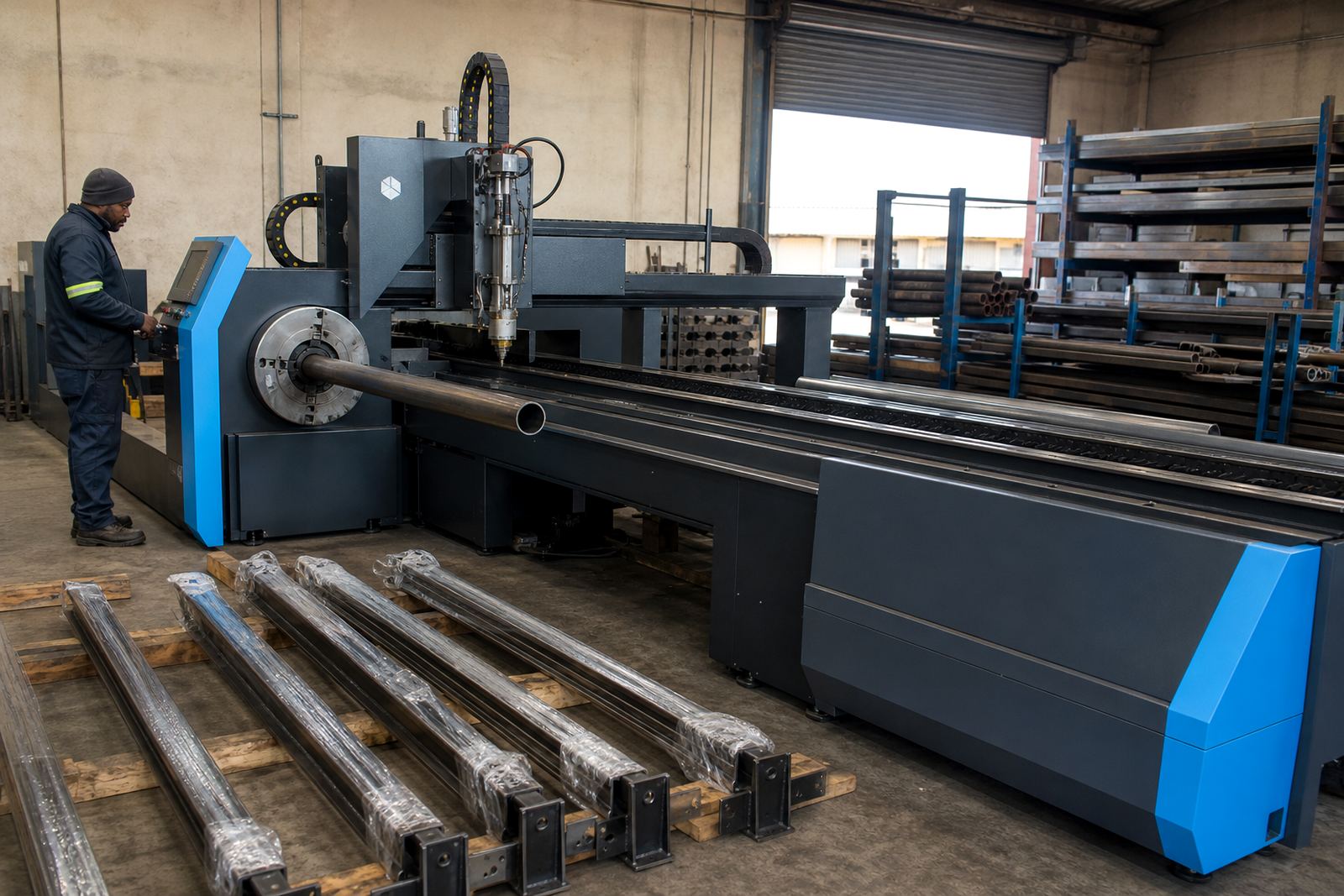
We delivered the machine, rigged it into position and completed installation in one planned sequence. The crew checked floor alignment, service clearances and the loading side before commissioning started. Sibusiso Bhengu handled the installation lead on site, while Pieter Visser supported the service checks and machine handover.
Commissioning included chuck alignment, bevel calibration and assist gas setup for the section types the workshop used most often. We tested the machine on sample tube, channel and angle, then worked through the first production nests with the client team. The early cuts showed where a small change in clamping pressure or feed length could save time later in the run.
- Site assessment and access planning at the Benoni premises
- Delivery rigging through a constrained workshop entrance
- Machine installation and commissioning on the production floor
- Operator training and nesting training for the cutting team
- Initial cut verification on sample retail fixture parts
The first production week focused on repeat parts for display frames and support rails. As the crew gained confidence, they moved from simple straight cuts to more varied part sets with marked orientation and grouped nests. That shift cut down on hand-measured errors and reduced the time spent checking each part before assembly.
How the nesting changed the order of work
The biggest change was not just the cut quality, but the way jobs were planned. Nesting software let the team place parts across stock lengths with fewer gaps, which helped them use more of each tube and profile bar. For a workshop doing retail fixtures, that mattered because orders often combine short support pieces, longer uprights and odd bracket lengths in the same schedule.
Leanne Mabuza led the nesting training so the operators could load drawings, assign material sizes and check the cut order before starting a run. The workshop learned how to group jobs by section type and reduce changeovers between tube sizes. That made the daily handover cleaner, especially when several fittings jobs were lined up for the same week.
Michael Dlamini and Anika Kajee stayed close to the project brief on the commercial side, making sure the machine fit the workshop's production mix rather than forcing the mix around the machine. The result was a setup that could handle repeat retail work and custom fixture pieces without splitting the process into separate cutting paths.
Results seen on the Benoni fixture line
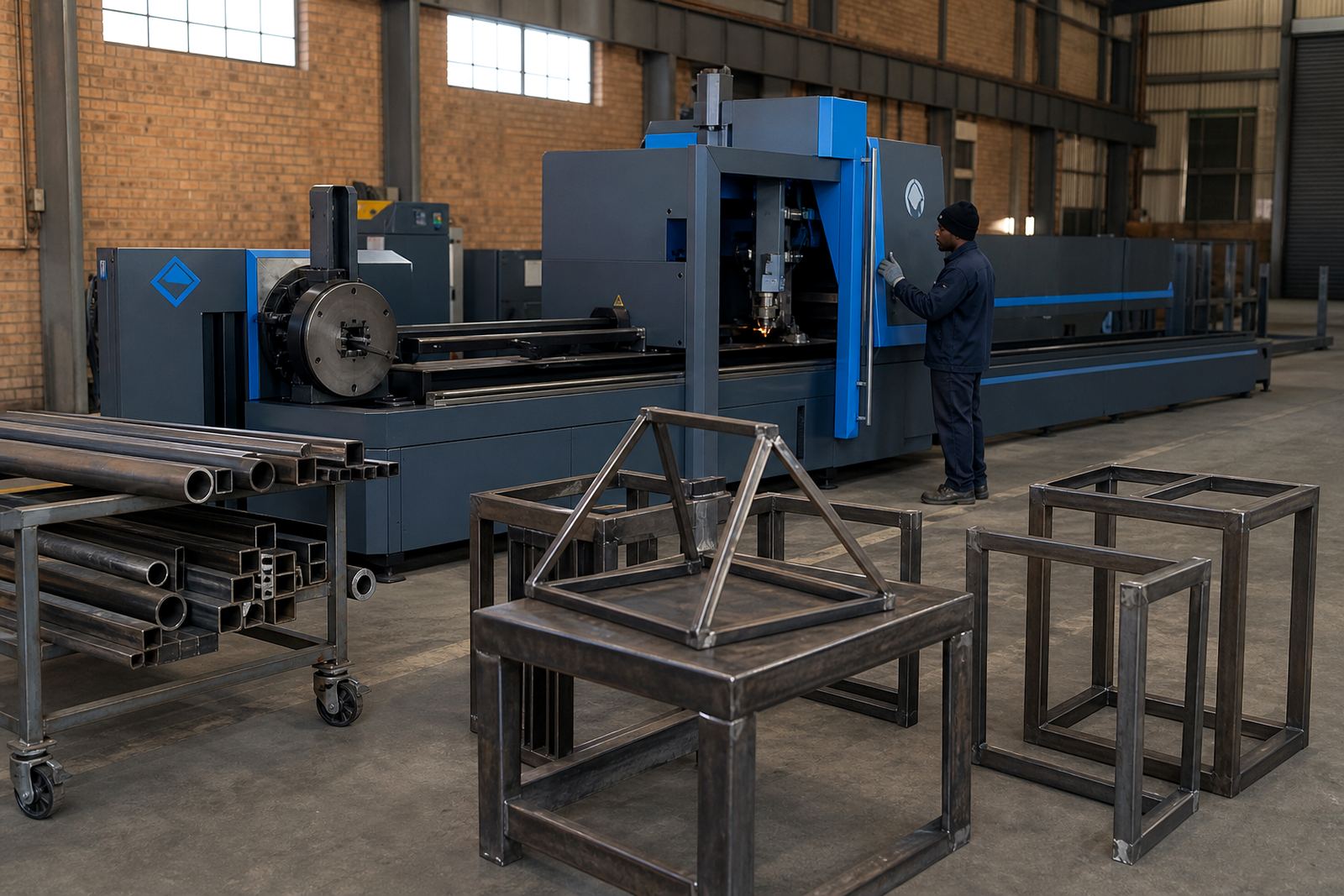
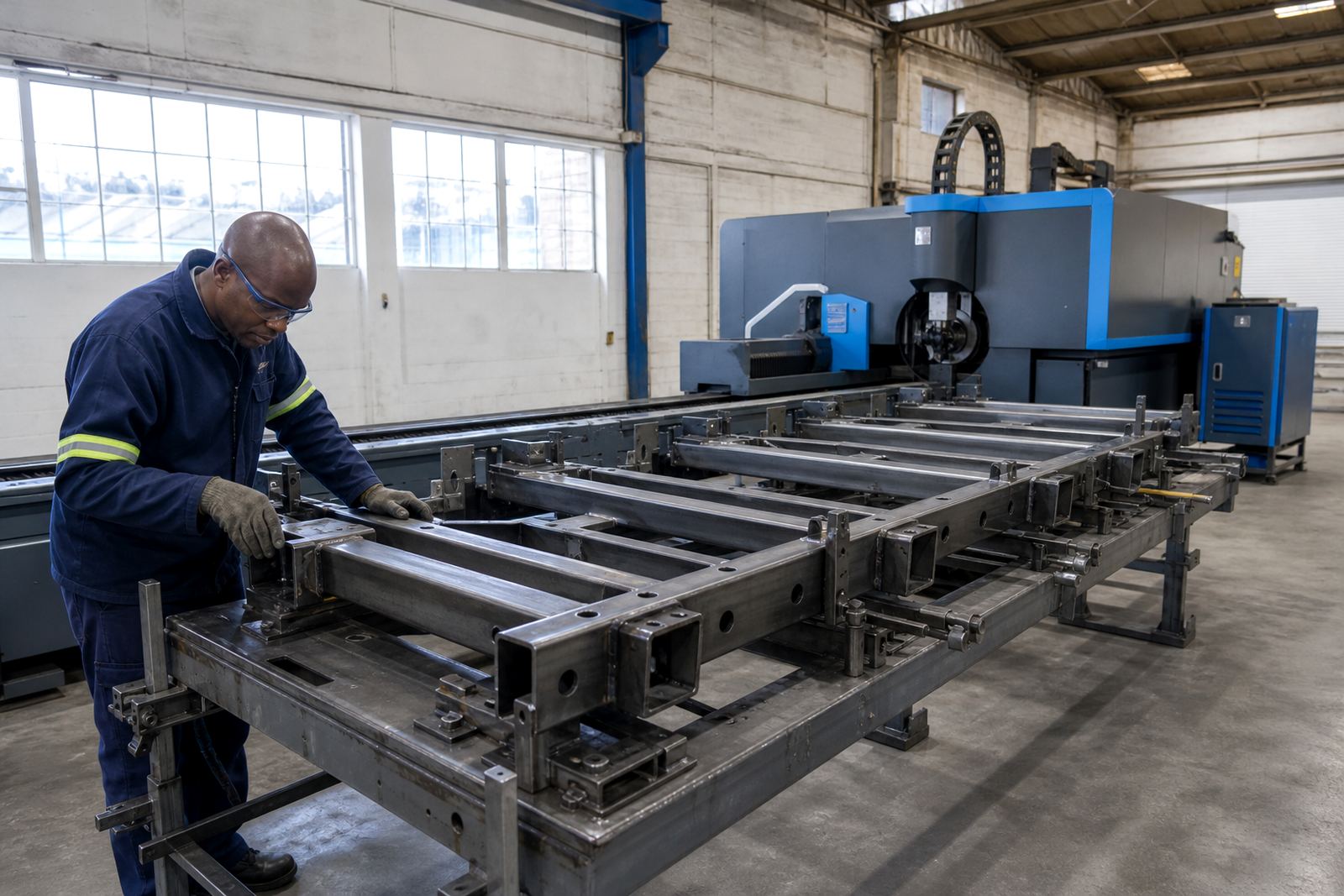
After the first production runs, the workshop had a clearer process for turning drawings into cut parts. The edges were cleaner, the joints lined up better and the assembly crew spent less time adjusting frames before welding. The move to laser-ready nests also reduced the amount of marking out on the floor, which freed the team for assembly and finishing work.
Repeatability improved in a practical way as well. Once the operators understood clamp settings, gas flow and cut sequencing, the same fixture parts could be produced with steadier dimensions across separate batches. That helped the client keep retail work moving through the workshop without the usual stop-start feel that comes with manual tube processing.
- Better part fit on display frames and support members
- Less rework from off-square cuts and inconsistent lengths
- Cleaner nesting across mixed retail fixture orders
- More predictable handover from cutting to assembly
- Improved use of stock lengths and offcuts
The machine is now part of the workshop's standard production flow. It handles common display fixture sections, plus the profile members used in supporting frames and brackets. For the client, the main value was not only speed, but a process that looked more orderly from the first drawing through to finished assembly.
What we would bring to another Benoni retail fixtures project
The same approach would suit any fittings workshop that cuts mixed tube and profile work for shopfitting or display systems. We would still start with the actual part mix, the floor layout and the stock lengths used most often. That gives a better fit between the machine, the cutting path and the workshop's real rhythm.
For a comparable job, we keep training tied to live production parts, not generic samples. That helps the crew learn what matters in their own drawings, including chuck handling, gas settings, bevel use and nesting choices. It also keeps the machine useful to the people who have to run it every day, not only during handover.
For Benoni and the surrounding industrial area, this kind of setup works well where retail fixtures, display hardware and light fabrication overlap. The machine gives the workshop a cleaner route from material to finished frame, and that is where the value sits. Not in the noise around the equipment, but in the parts that fit and the jobs that move through without friction.
Key facts
| Project location | Benoni, Gauteng |
|---|---|
| Client type | Retail fittings workshop |
| Sections processed | Round tube, square tube, rectangular tube, angle and channel |
| Machine scope | Fibre laser tube and profile cutting with chuck support and bevel head capability |
| Services delivered | Site assessment, delivery rigging, installation, commissioning, operator training and nesting training |
| Timeline | Planned over several weeks from assessment through first production runs |