Jet Park frame parts with less rework at fitting
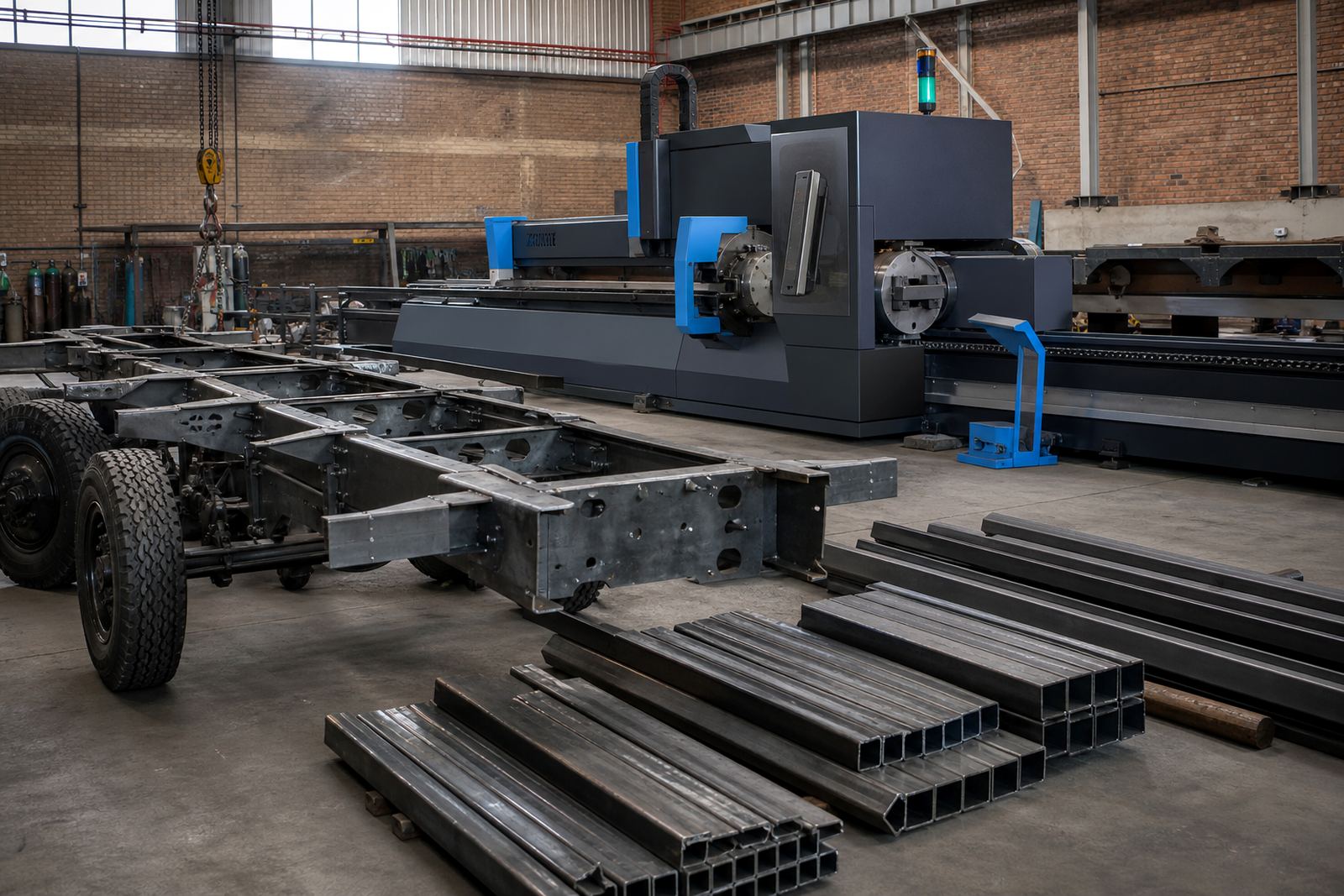
The client was a body builder working in Jet Park, where chassis sub-assemblies and framed sections move through fabrication, fit-up and final assembly in the same week. Their team needed square and rectangular tube parts for medium-duty frames, plus a few matching angle and channel sections for bracing and mounting points. The old cutting method left too much clean-up at the joints, and holes had to be chased by hand when parts landed on the assembly table.
The brief was straightforward but demanding. Parts had to fit first time, hold consistent lengths, and stay square enough for production welding without repeated trimming. Tube wall thickness varied across the job, so the cutting method also had to handle different wall sizes without distorting the ends or leaving heavy burrs. In a body-building shop, that matters because a small error in one tube can throw off the whole frame.
The machine set-up behind the job
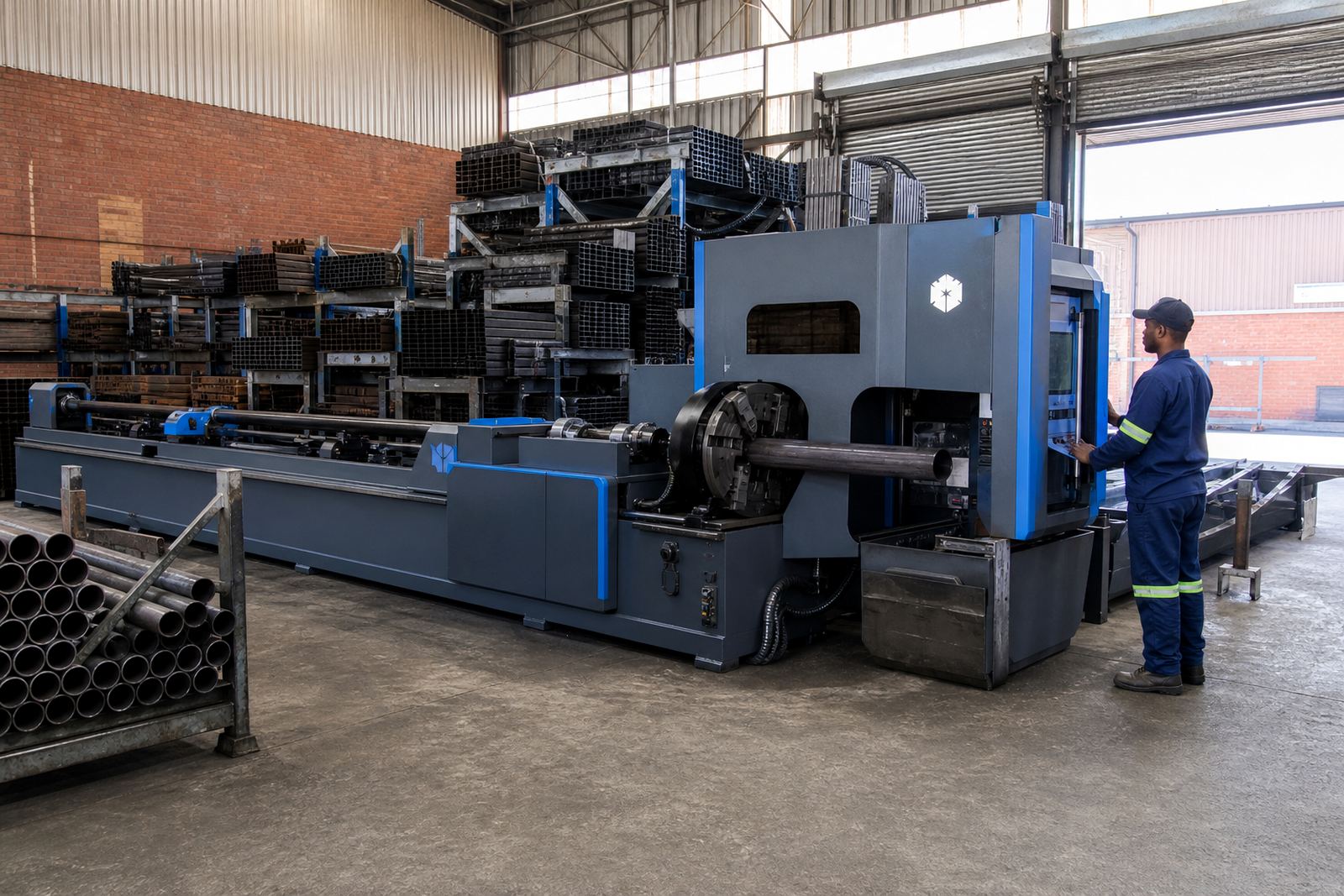
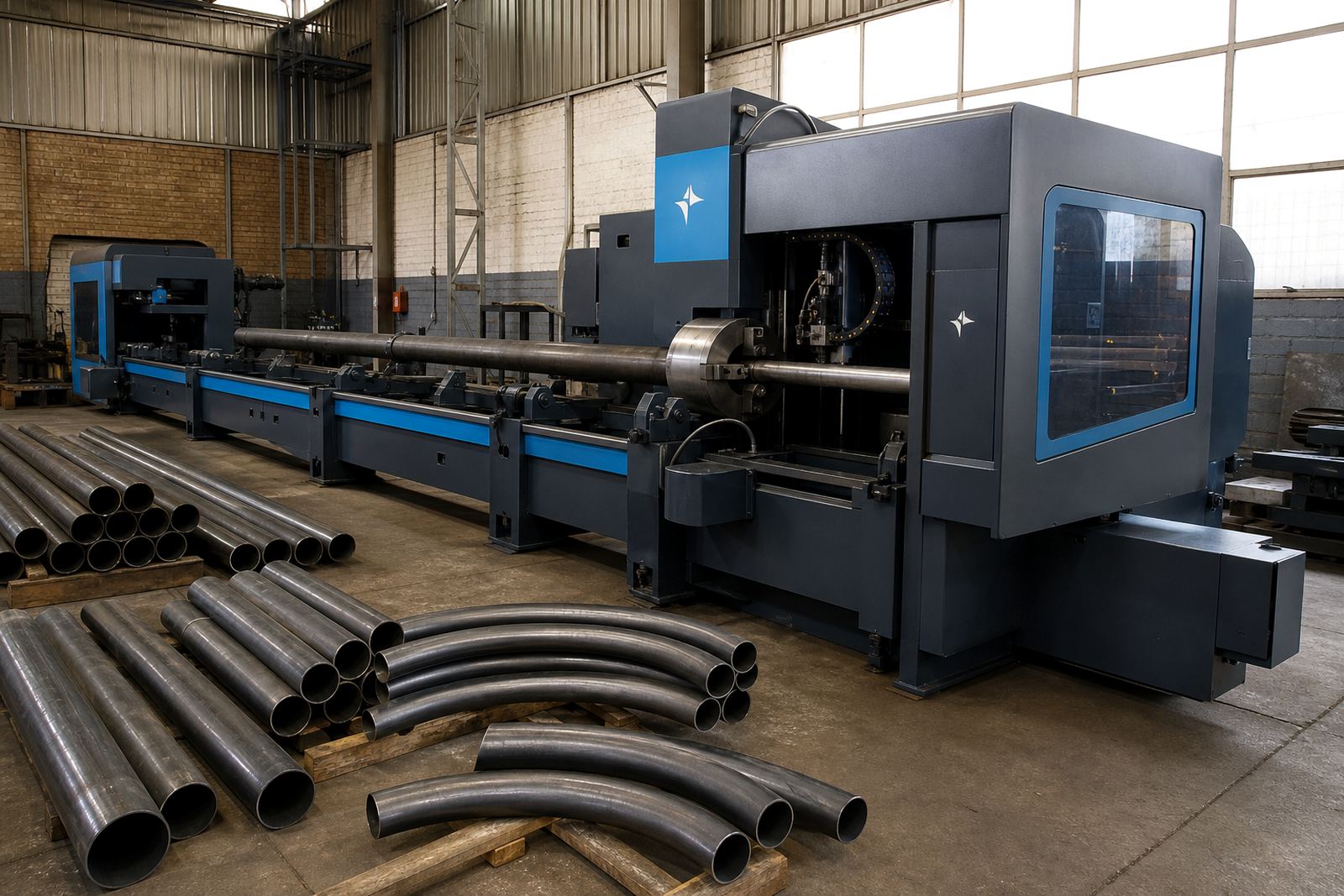
We specified a fibre laser tube and profile cutting machine set up for round, square and rectangular tube, with the ability to handle open profiles such as angle and channel as well. The machine used a multi-chuck arrangement to hold long sections securely while feeding through the cutting zone. That mattered for the Jet Park job because the parts ranged from short brackets to longer frame members, and the chuck grip had to stay steady through each cut path.
- Tube and profile cutting for round, square, rectangular, angle and channel sections
- Chuck arrangement for secure clamping and controlled rotation
- Bevel head for angled edge preparation where weld access was needed
- Nesting software for material layout and part planning
- Assist gas setup for clean cutting on the specified material range
- Safety guarding, interlocks and extraction coordination for the workshop layout
The nesting software was part of the value on this project. The client wanted better use of stock lengths and fewer offcuts lying around the cutting bay. By laying out parts in a tighter sequence, the operator could group similar jobs, reduce manual handling and keep the cut list easier to follow during a busy production run.
Installation in a working Jet Park workshop
The workshop in Jet Park was already active, so installation had to happen around live production areas and material movement. Access points, lifting routes and machine positioning were checked before delivery rigging started. The floor layout mattered because tube loading, cut part offload and operator access all had to fit into a compact bay without blocking the rest of the workshop.
Our team handled delivery rigging, machine installation and commissioning on site. During set-up, we checked chuck alignment, bevel calibration and assist gas setup before the machine was handed over for production work. The aim was to get the machine running against the actual part list the customer needed, not only against a sample sheet. That way the first production runs reflected the real frame work, not a test piece that looked easier than the job itself.
The workshop also needed safe handling around long stock and finished cut parts. Tube lengths can swing awkwardly during loading if the loading table and support points are not arranged properly, so we paid close attention to handling paths and the operator position at the machine. That reduced the chance of damaged ends and kept the cut area more orderly.
Training for operators and setters
Once the machine was mechanically and electrically ready, the handover moved into operator training and nesting training. The client needed more than button pushing. Their team had to understand how to load profiles correctly, set up jobs from the nesting software, choose the right gas for the material, and keep an eye on cut quality as wall thickness changed from one batch to the next.
- Machine start-up and shutdown routines
- Loading square and rectangular tube without twisting the stock
- Using nesting layouts for material yield and job sequencing
- Basic cut quality checks at the kerf, edge and hole position
- Safe handling around cut parts with sharp ends and hot edges
Because the site worked with medium-duty frames, the team also spent time on bevel cuts and fit-up. A small angle on the edge can help with weld access, but only if the bevel is consistent. If the bevel varies, the fitter ends up correcting the parts by hand, which defeats the point of moving to fibre laser cutting in the first place.
Project timing and production handover
From the first site assessment to production handover, the full project took four weeks. The first week was used for measuring the workshop, checking handling space and confirming the part mix. The second week covered delivery, rigging and placement. The third week was spent on installation, commissioning and machine checks. The final week focused on operator training, nesting practice and running the customer through their own tube and profile list.
That schedule suited the Jet Park site because it let the client prepare material flow, welding bays and storage areas while the machine work moved ahead. It also gave the operators time to get familiar with the control flow and part sequencing before the production load increased. A rushed handover would have left them with a machine on the floor but no clean process behind it.
Results on the frame line
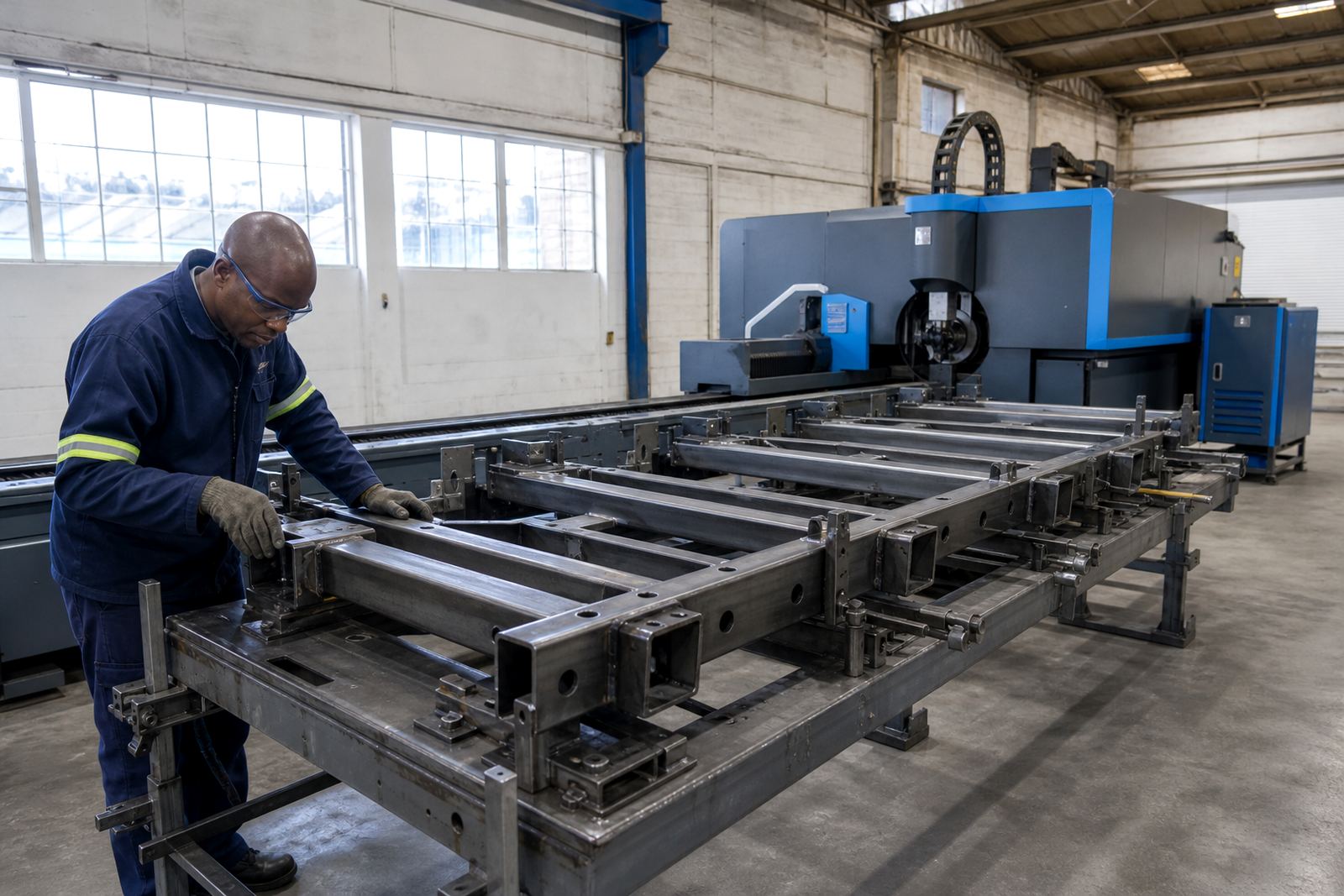
Once the machine was in production, the client saw cleaner tube ends, more consistent hole placement and less time lost to grinding at fit-up. The square and rectangular sections sat better in the frame jigs, and the angle and channel pieces matched the rest of the assembly more closely. That made the weld sequence easier to manage because the parts aligned without repeated correction.
For a body builder, those gains are practical. Better part fit means less fitting strain, less scrap from miscut lengths, and less pressure on the welding table when jobs stack up. It also helps when the workshop has to move from one frame size to the next during the same week. The machine can switch between short parts, longer rails and matched profiles without losing the cutting pattern.
What would be done again on a similar Jet Park job is the same careful sequence: measure the handling space first, confirm the material range, build the nesting plan around real production parts, and train the operators on the jobs they will actually cut. That keeps the installation tied to the workshop, not to a theoretical machine layout.
Key facts
| Client type | Body builder |
|---|---|
| Project location | Jet Park, Gauteng |
| Part type | Square and rectangular tube for medium-duty frames |
| Secondary profiles | Angle and channel sections |
| Machine scope | Fibre laser tube and profile cutting |
| Services included | Site assessment, delivery rigging, installation, commissioning, operator training, nesting training, chuck alignment, bevel calibration, assist gas setup |