The brief from a coastal balustrade workshop
The job came from a balustrade fabricator in Durban North working on stainless and mild steel railing assemblies for homes and commercial terraces near the coast. Their fitters wanted tighter control over tube lengths, cleaner connection points and fewer hand finishing steps at assembly.
The workshop was handling round tube, square tube, rectangular tube and some angle with channel sections for support frames. Their old cutting method left too much variation at the ends, so each pack of parts needed checking before it could move to welding.
What the workshop needed from the cut files
The parts list called for consistent cope details, slot and tab features, and accurate hole positions for bolts and brackets. They also wanted the nesting plan arranged to reduce offcut waste, while keeping the cut edges tidy enough for fast tack-up on the bench.
- Tube sizes ranged from slim handrail stock to heavier support members
- Connection features had to line up across repeated balustrade bays
- Cut ends needed good squareness for easier welding and jigging
- Some parts required bevel work for stronger joint preparation
- Job packs had to stay organised for site and workshop handling
Machine setup and process changes we supplied
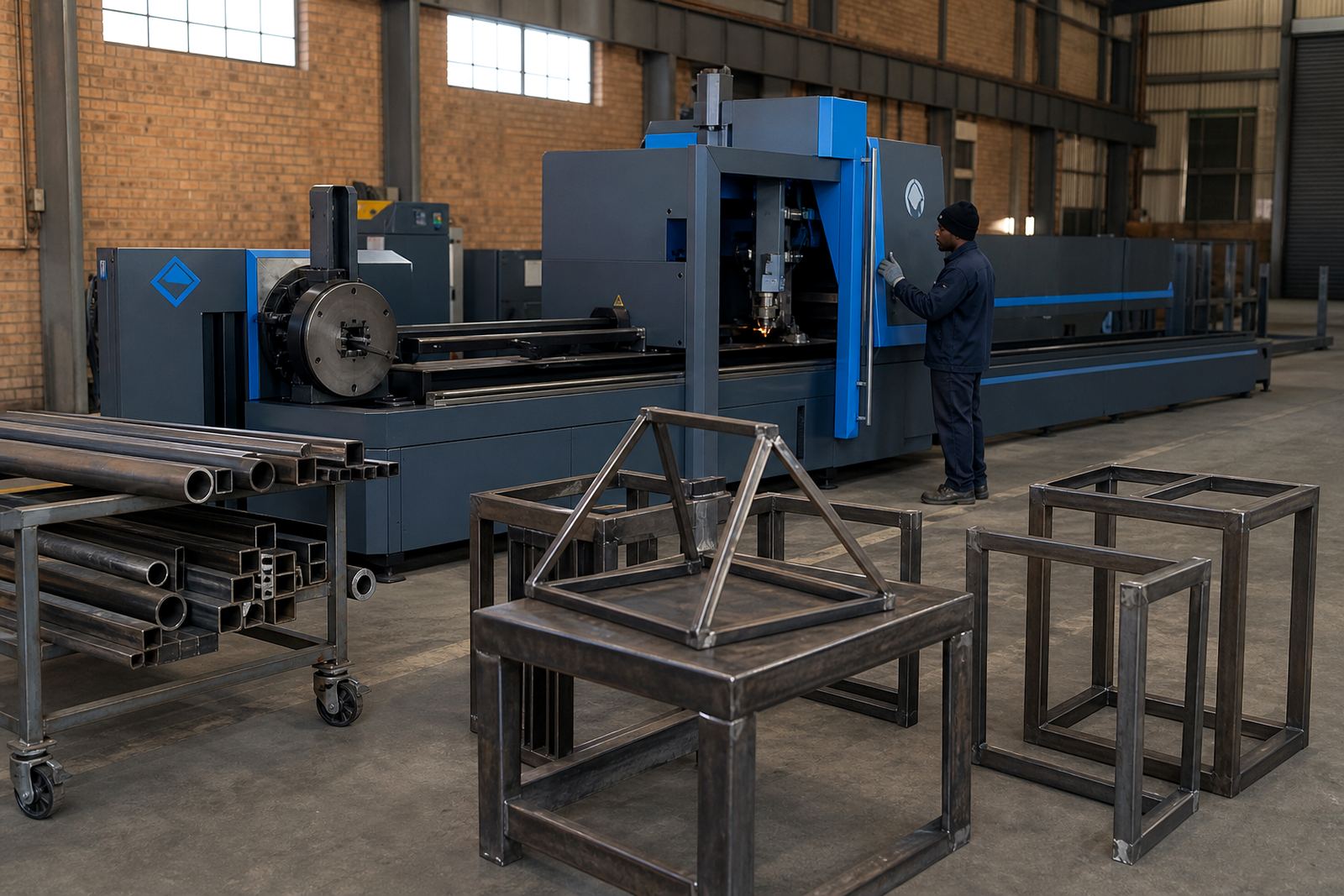
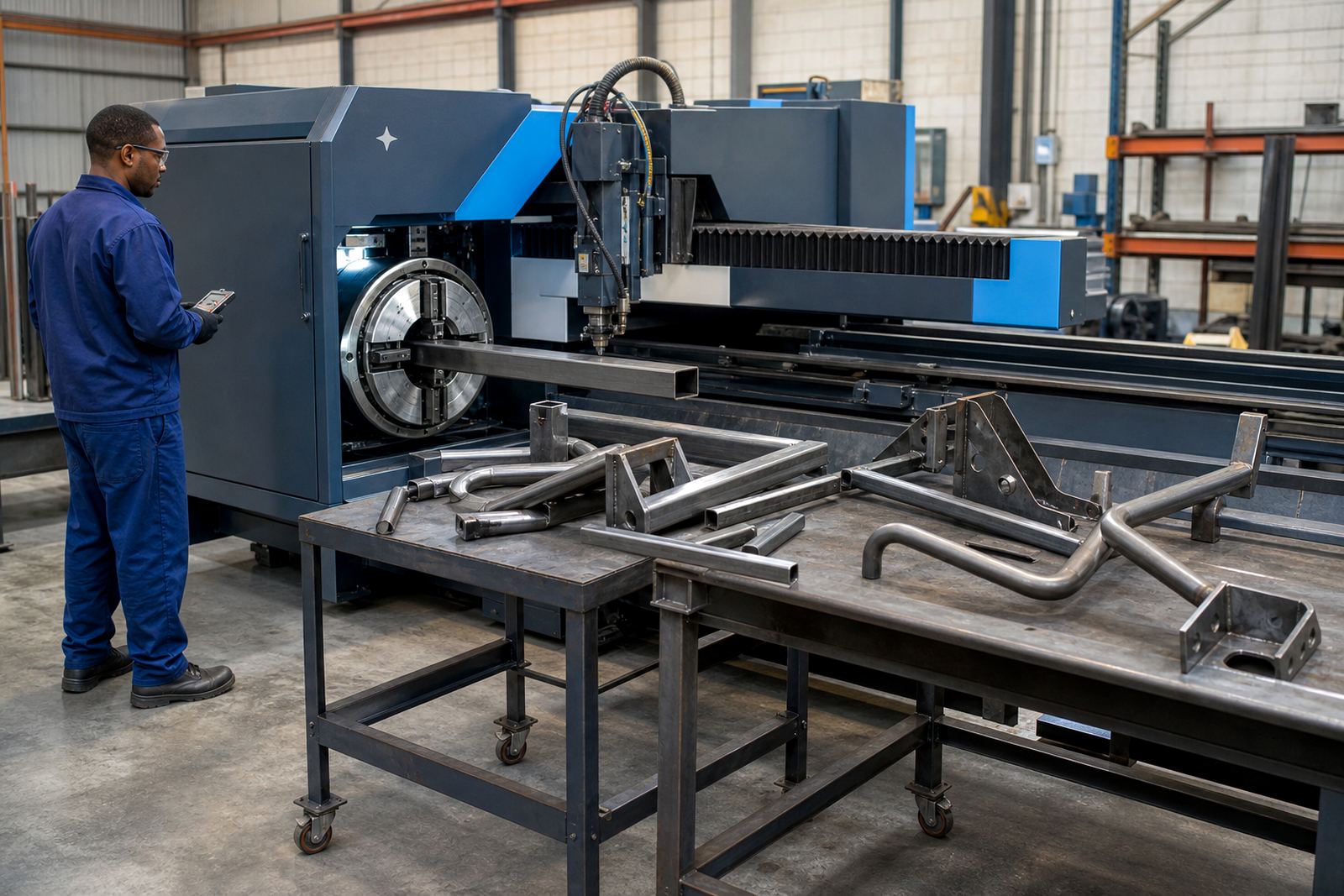
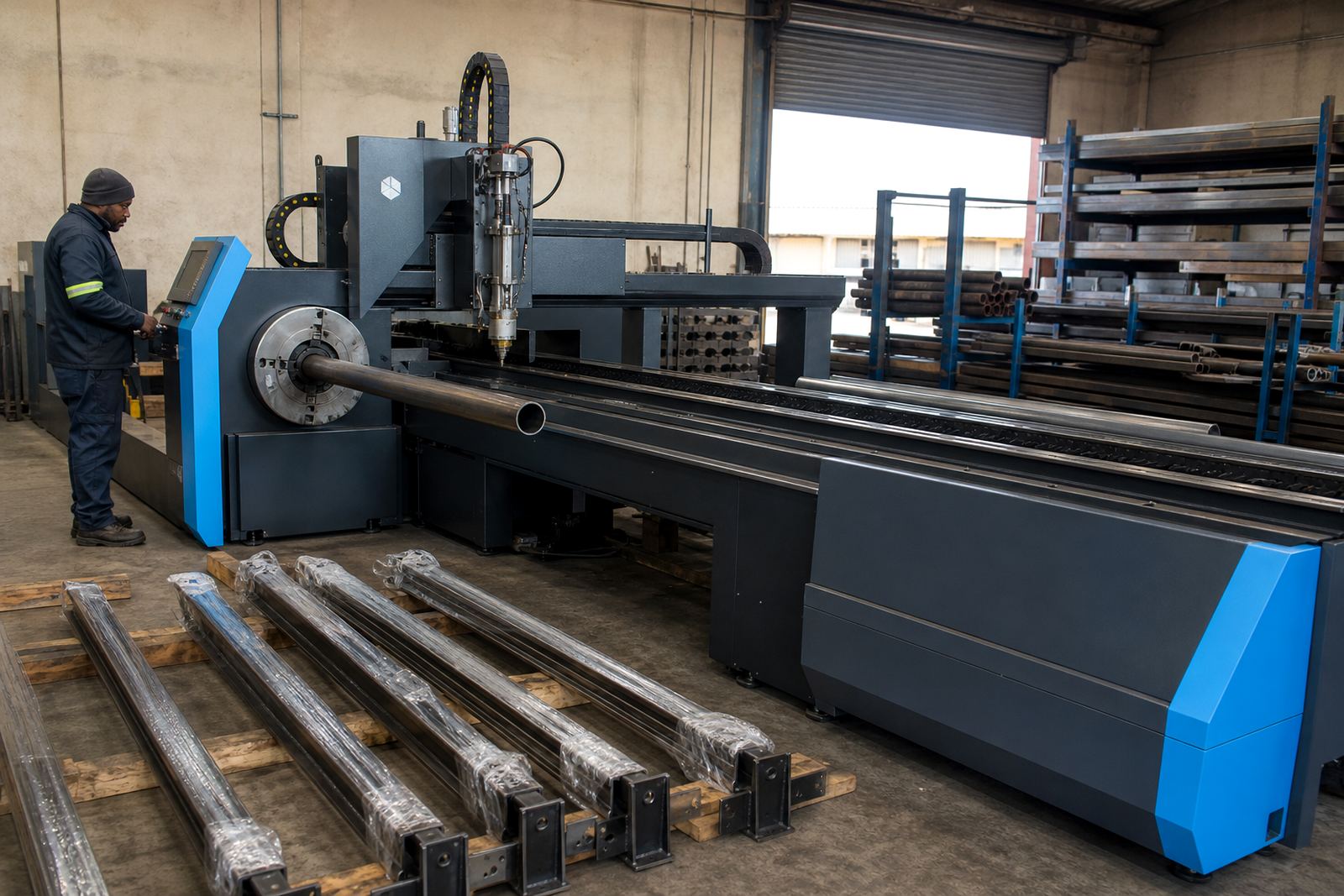
We supplied a fibre laser tube and profile cutting machine fitted for round, square and rectangular tube, plus angle and channel sections. The machine was set with a chuck arrangement suited to the stock lengths they were using, so the tube could stay stable through rotation and cutting.
For the balustrade work, we configured nesting software to group similar parts and keep the material usage practical. The team also had bevel head functions available for joint prep, along with assist gas setup for the material thicknesses on the order sheet. Safety guarding, extraction checks and operator procedures formed part of the handover, along with chuck alignment and calibration checks before production started.
Installation in Durban North and the workshop handover
The installation team delivered the machine, placed it in the workshop, levelled it and carried out commissioning checks. Sibusiso Bhengu handled the installation sequence, while Ayanda Mashaba worked through the application settings with the fabricators and checked sample parts against the balustrade drawings.
Leanne Mabuza covered operator training, with a focus on loading tube, reading the nesting plan, checking cut features and keeping the machine safe during normal shifts. Pieter Visser handled service checks during the handover and made sure the machine was ready for production use before the first job pack moved through. The workshop is near a coastal zone, so we also spoke through routine cleaning and protection around salt-laden air and fine steel dust.
Timeline and job sequence
From assessment through to production sign-off, the job took three weeks in total. The first week focused on site assessment, layout planning and confirming the tube sizes, while the second week covered delivery rigging, installation and basic commissioning.
- Week 1: site assessment and production review
- Week 2: delivery rigging, installation and machine checks
- Week 3: operator training, nesting training and first production runs
By the end of that sequence the workshop had a repeatable cutting process for balustrade sections, with less rework at the weld benches and better part sorting for each job pack.
What changed in the parts room and at the weld benches
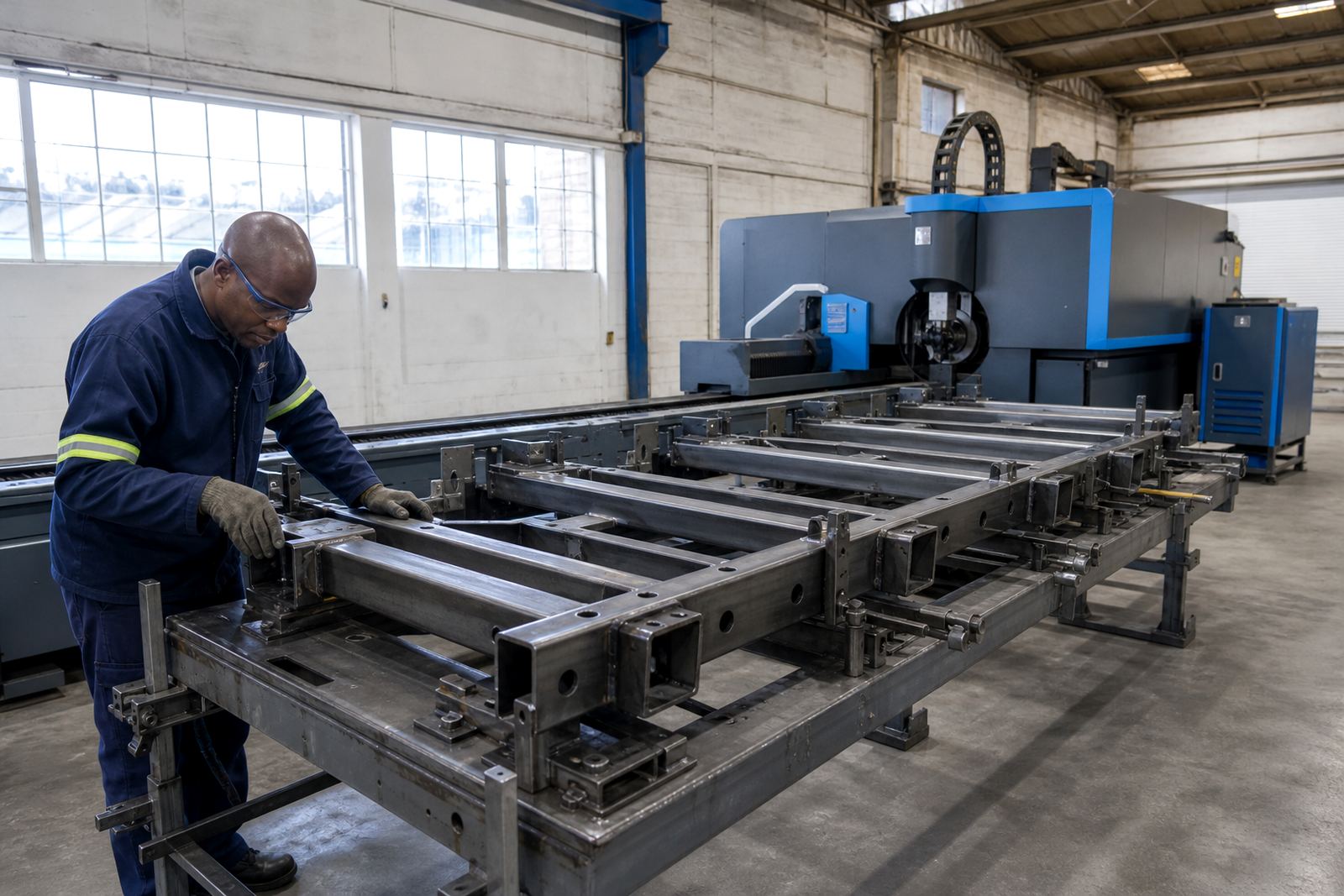
The immediate change was consistency. Tube ends matched the drawings more closely, and the join faces needed less filing before assembly. The workshop could cut several balustrade bays in the same layout, then move them through welding with fewer fitment checks between steps.
The team also found that accurate hole locations and cleaner profile cuts made it easier to keep brackets and connection plates in line. That mattered on a coastal balustrade job, where neat joins and straight runs are visible and the finished work has to sit well in front of glass, wall returns and stair sections.
What we would apply to a similar balustrade job
Durban coastal balustrade workshops would follow the same assessment, machine setup and training sequence, with extra time spent on the first nesting patterns and the tube sizes used most often. That early tuning helps the shop settle the cut sequence and the part labelling before the main production run starts.
We would also keep a close eye on chuck alignment, gas settings and bevel calibration whenever the material mix changes. In a fabricator with both site work and workshop assembly, those checks save time at the weld bench and help the finished balustrades stay tidy from the first section to the last.
Key facts
| Project | Durban North balustrades |
|---|---|
| Client type | Coastal balustrade workshop |
| Material forms | Round tube, square tube, rectangular tube, angle and channel |
| Machine type | Fibre laser tube and profile cutting machine |
| Services used | Site assessment, delivery rigging, installation, commissioning, operator training, nesting training, assist gas setup |
| Timeline | Three weeks from assessment to production handover |