Seasonal frame work in the Free State
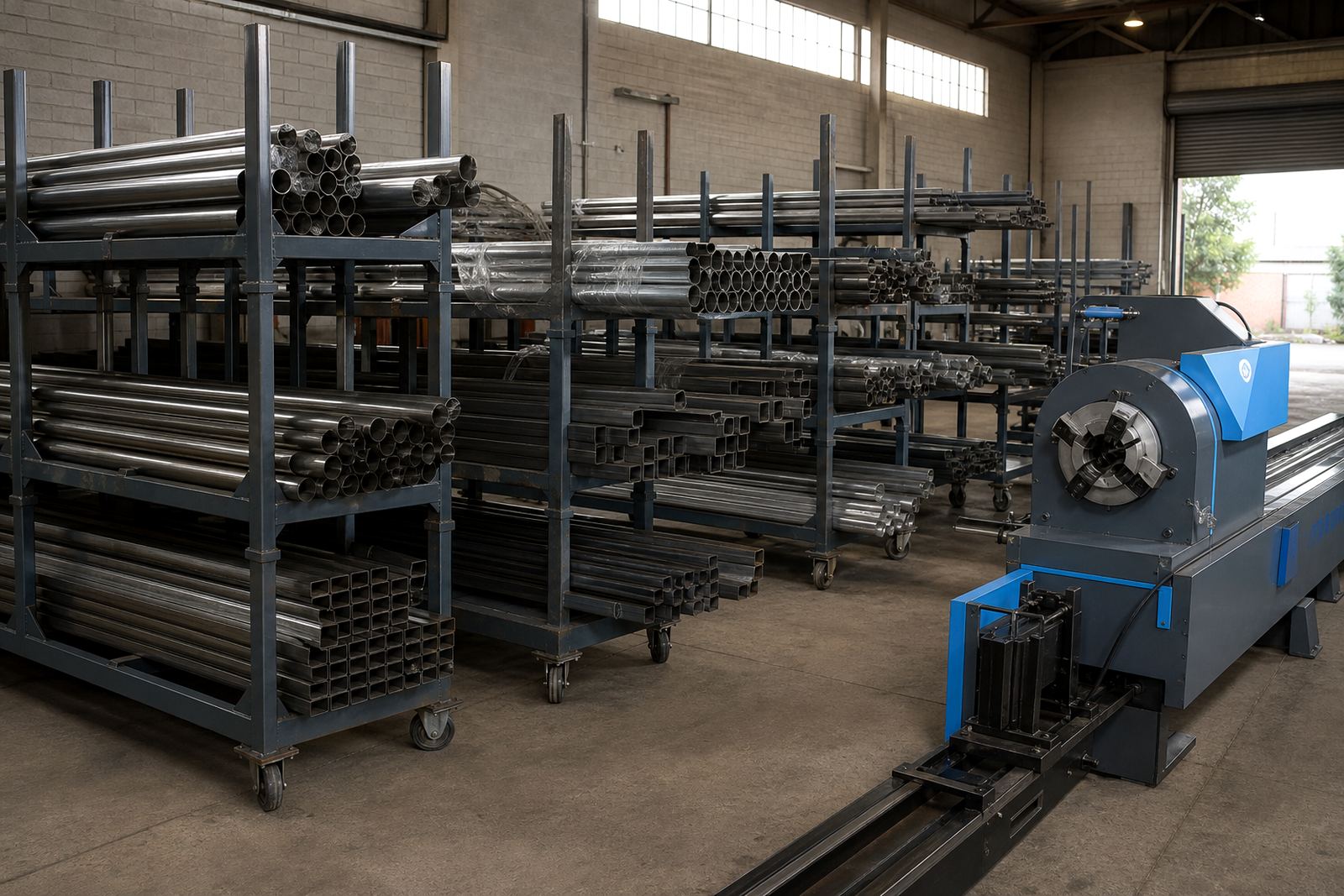
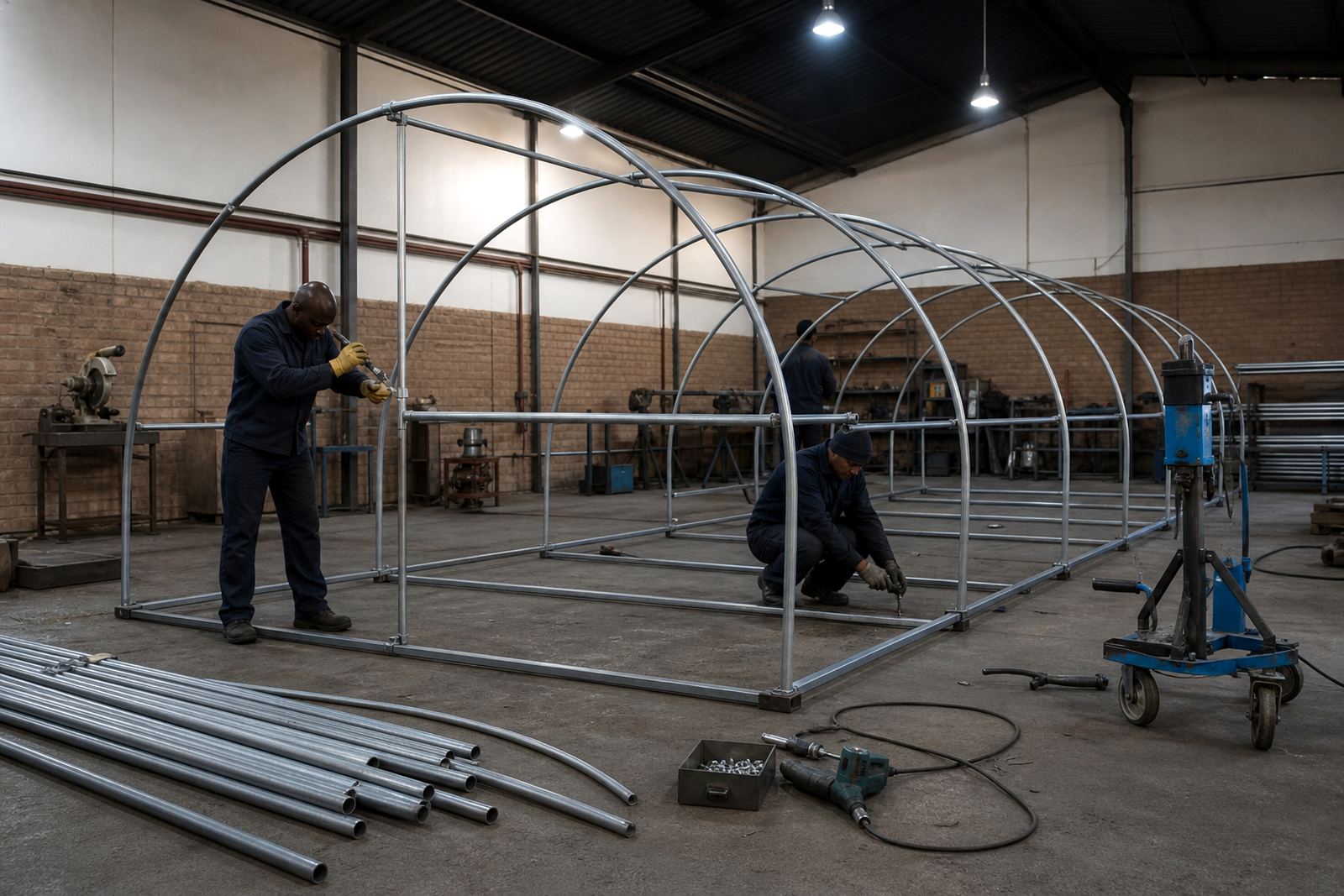
The client was a metal fabricator in Bloemfontein supplying greenhouse structures for local growers and growers farther afield. Their work moved in batches, with one season asking for short runs of light tube parts and the next pushing larger repeats, so the cutting method had to stay accurate even when the batch mix changed.
The brief was direct: cut round, square and rectangular tube, plus selected angle and channel parts, with consistent hole positions and end prep for fast assembly. The team also wanted a cleaner nesting flow so material use could be planned with less offcut waste, and a safer working process around moving tube and finished parts.
- Work material: light-gauge mild steel tube and structural profile sections
- Part types: frame members, bracing pieces, connector plates and end details
- Batch pattern: repeat seasonal orders with changing counts and lengths
What the cutting cell had to handle
Greenhouse framing looks simple until the parts have to line up across long spans and many repeated bays. Small errors in hole position or miter angle show up quickly during assembly, especially when the same cut list is repeated across a full batch and then repeated again for another site.
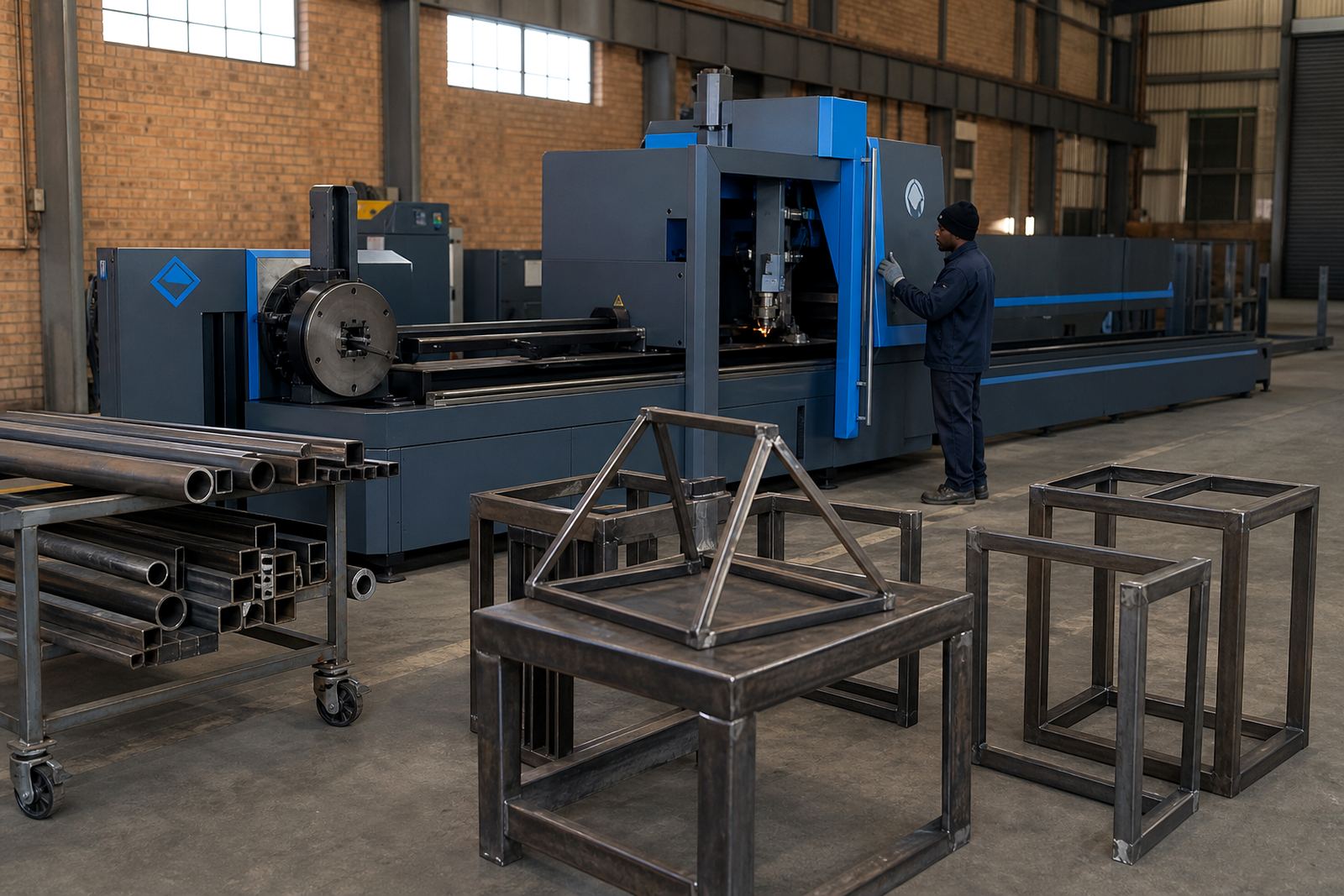
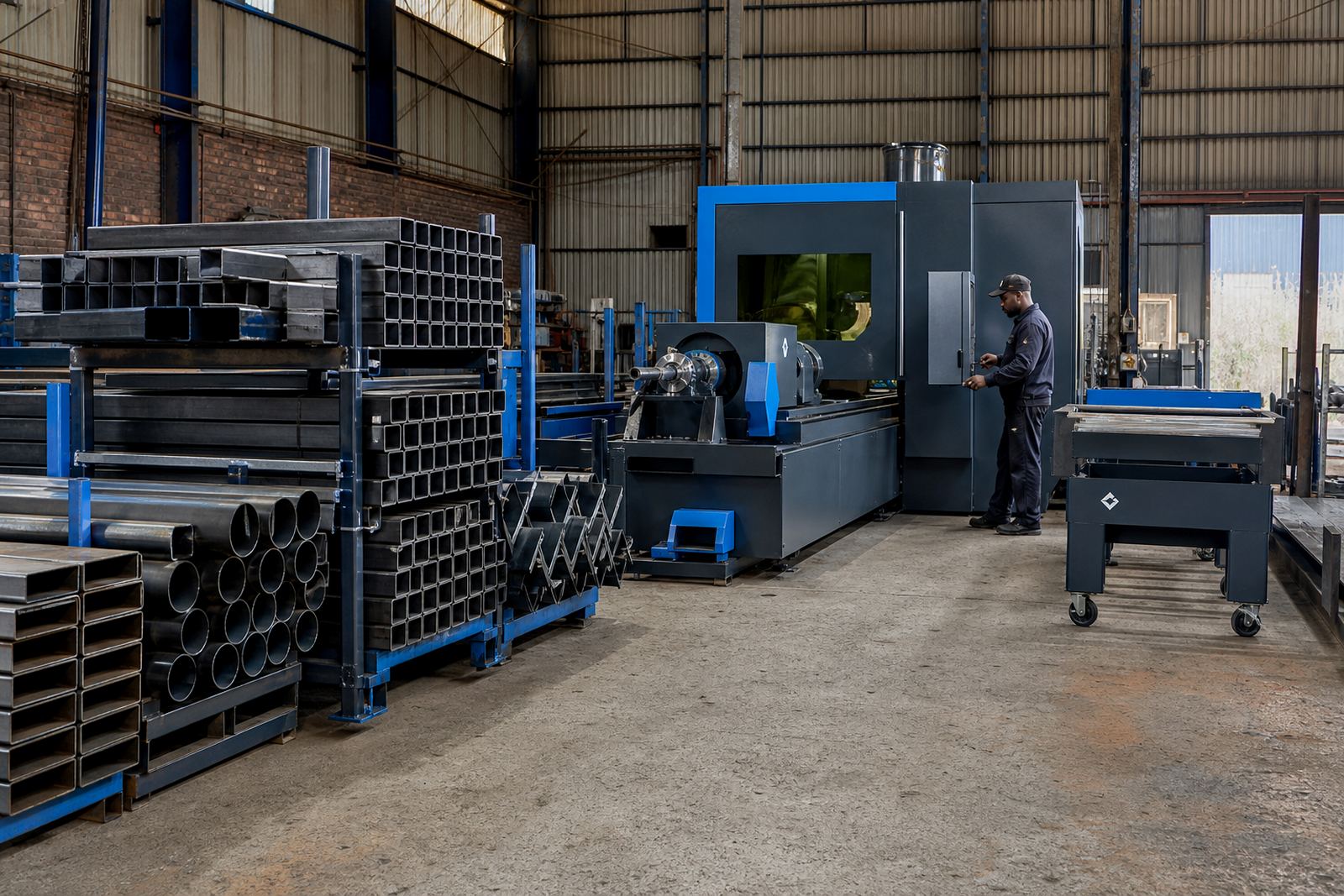
We supplied a fibre laser tube and profile cutting machine with multiple chucks for tube support, plus a bevel head where angled edges were needed for specific joint details. The setup suited narrow wall thicknesses and the sort of repeat work that benefits from stable clamping, clean edge quality and careful nesting around the tube lengths available in the yard. Assist gas setup was included so the team could match cutting quality to material type and thickness, while guarding against rough edges and unnecessary dross.
- Tube forms: round, square and rectangular
- Profile work: angle and channel for support members
- Cut quality target: clean edges with limited manual rework
- Control need: repeatable part lists for seasonal batch cutting
Wadeville installation and setup on the shop floor
The machine was delivered to the Wadeville site area after space planning and access checks with the client’s workshop team. Delivery rigging had to suit the yard layout and the internal moving path to the machine bay, because the room for turning loads was tighter than it first looked.
Our installation covered machine placement, levelling, alignment checks and a full commissioning run before production use. Chuck alignment was set for the tube sizes the fabricator used most often, and bevel calibration was checked against the parts that needed angled ends. We also set the assist gas handling in line with the material mix, then ran a few practical test programs with the team so the first production batch would not start on guesswork.
- Site assessment and access planning
- Delivery rigging and machine positioning
- Installation, commissioning and test cutting
- Chuck alignment and bevel calibration
Training the operators on real parts
The training focused on the jobs that would actually land on the table, not generic machine theory. The operators learned how to load tube, select the right clamp setup, check part orientation, and work through nested jobs where the same frame member appears many times with small changes in length or hole layout.
Nesting training covered how to arrange parts so the tube lengths were used sensibly and the offcuts remained useful where possible. We also covered safe handling around cut parts, gas checks, and how to recognise when a part needed a closer inspection before it moved to assembly. The training coordinator worked with the production lead so the cut list, operator notes and job sequence stayed clear for the next seasonal batch.
- Operator loading and unloading routine
- Nesting software use for repeat batches
- Practical checks before parts move to assembly
- Safe handling of finished tube sections and sharp edges
Results across the first production runs
The first runs showed cleaner fit-up on the greenhouse frames, with less filing and less time spent correcting hole positions by hand. The fabricator could cut repeat seasonal batches with the same part references kept in order, which made planning easier when different greenhouse sizes were needed in the same week.
The client also reported better control over material use. Because the nesting was set up around the lengths they stock locally, the job cards became easier to organise and the offcut pile was less chaotic. In a greenhouse frame job, that matters. One slightly wrong end cut can throw out a whole bay and cost time on site.
- Cleaner assembly fit on repeated frame sections
- Less manual trimming after cutting
- Better control of material usage across batches
- More ordered part flow from cutting to assembly
What we would apply to a similar greenhouse job
If this job landed on the floor again, the same early checks would matter most: tube sizes, joint details, material thickness and the way the finished frames get assembled on site. That gives the cut list enough structure before the first production run starts, and it helps avoid patching the process later.
For a greenhouse fabricator, repeatability beats guesswork. The machine, the nesting plan and the operator notes all need to match the seasonal order pattern, especially when the same customer wants another batch with only small changes in span or bracket layout. Getting the setup right from the beginning cuts down on rework and sorting further along the job.
- Confirm tube profile ranges before the first batch
- Match clamp settings to the most common lengths
- Keep the nesting library tied to real frame sizes
- Check bevel use only where the joint detail needs it
Key facts
| Project | Bloemfontein greenhouse frame tube cutting |
|---|---|
| Client type | Metal fabricator supplying greenhouse structures |
| Material range | Round, square and rectangular tube plus angle and channel |
| Machine setup | Fibre laser tube and profile cutting machine with multiple chucks and bevel head |
| Services delivered | Site assessment, delivery rigging, installation, commissioning, operator training, nesting training |
| Region | Bloemfontein, with support from Wadeville, Germiston |