The handrail package the workshop had to turn out
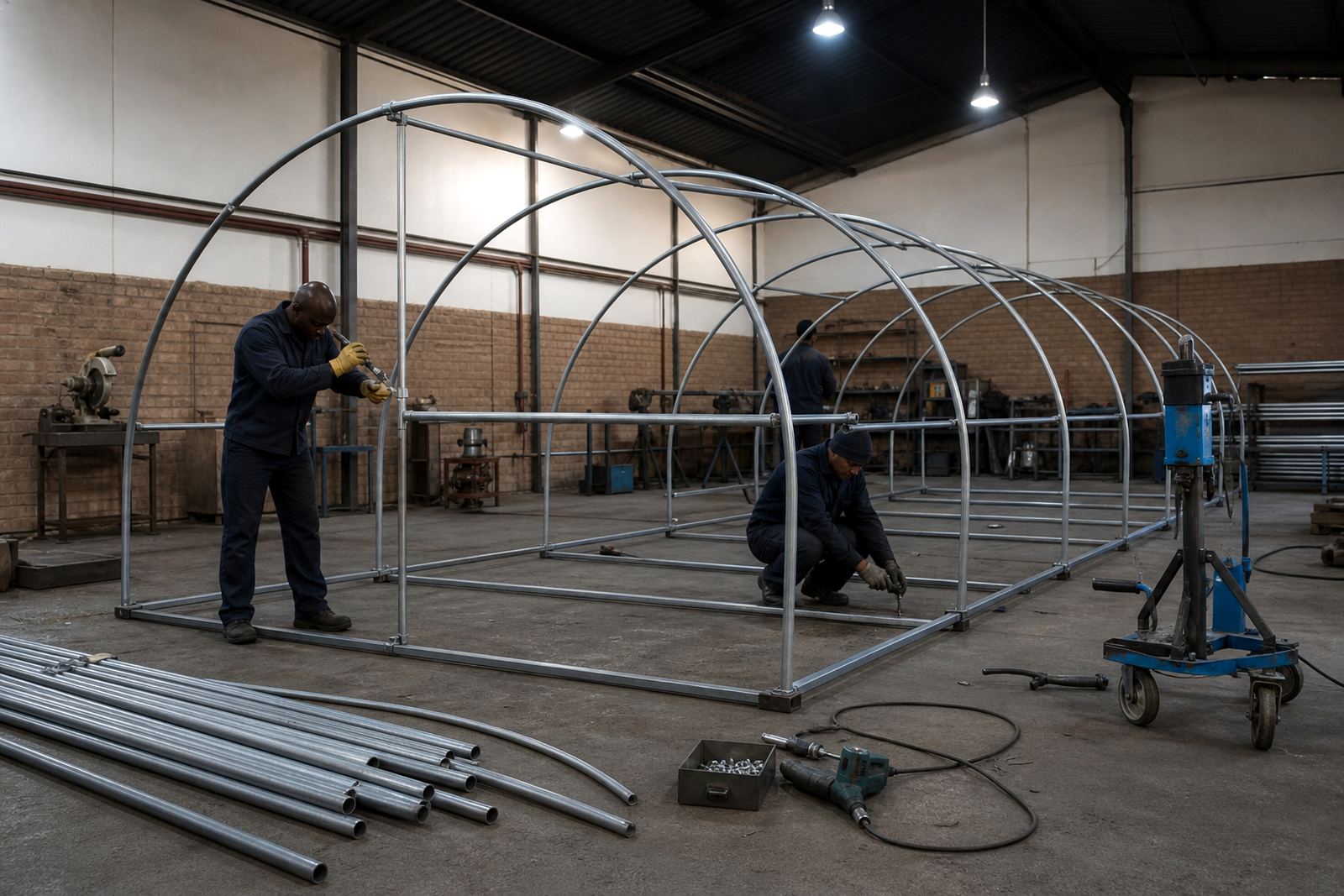
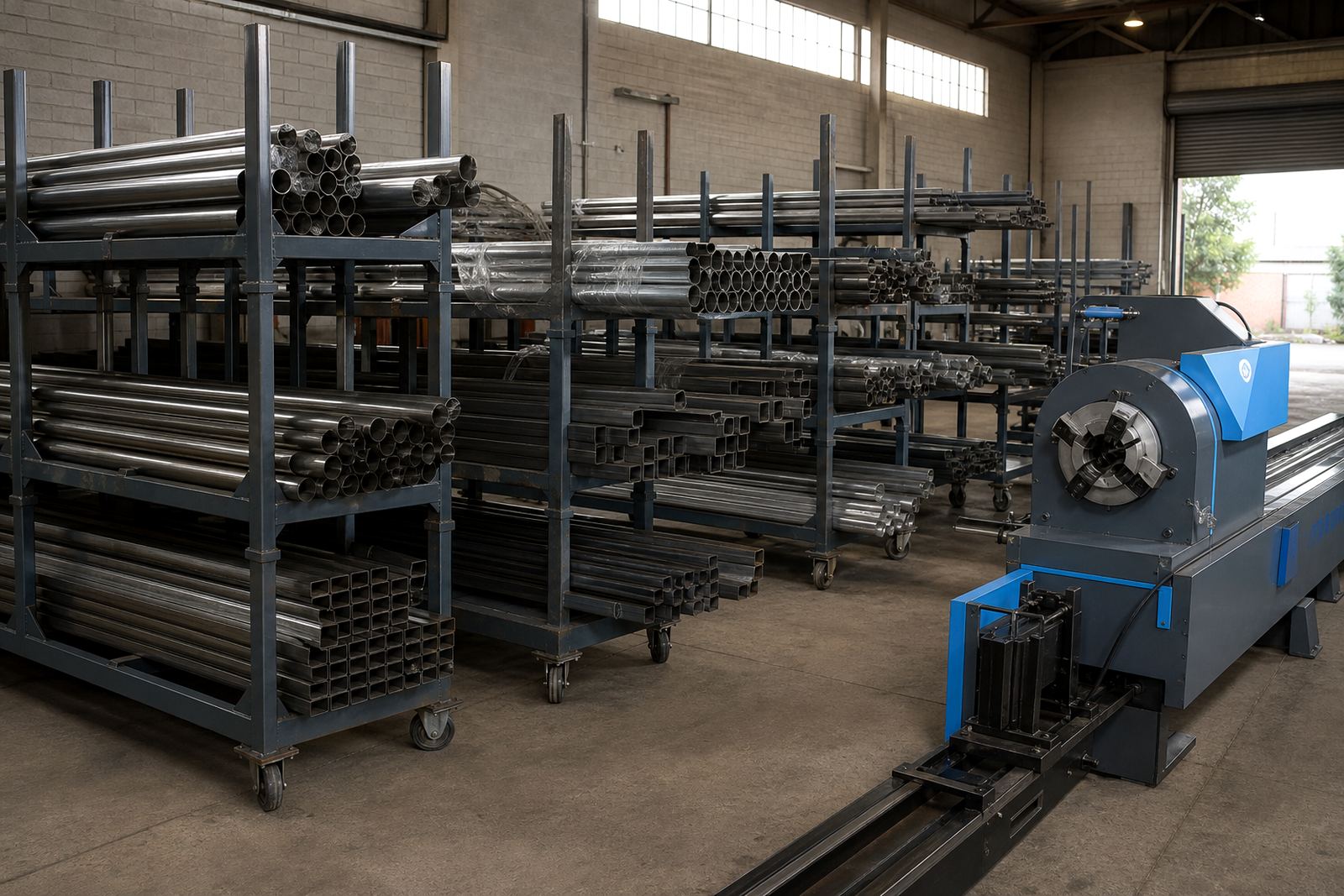
A Germiston metal fabricator needed cut parts for a handrail package going to site installation. The brief covered handrail posts, sleeve pieces and support brackets, all cut to consistent lengths and with edges that stayed square enough for fast fit-up on the welding bench. The parts were mostly round and square tube, with a few profile pieces mixed in for brackets and cleats.
Tight tolerances and clean tube ends were needed throughout the job. The workshop wanted a cutting process that could handle repeat lengths, small changes between parts and a neat finish that would cut down on hand dressing before assembly.
- Round tube, square tube and rectangular tube
- Support brackets and short profile parts
- Clean cut ends for welding and site assembly
- Consistent length control across a mixed batch
What had to be watched on the job
Handrail work sounds straightforward until the site drawing changes a sleeve by a few millimetres or a bracket needs a different notch position. The workshop also needed to keep the cut parts clean enough for welding, because extra grinding at this stage slows the whole job down and can throw fitment off later.
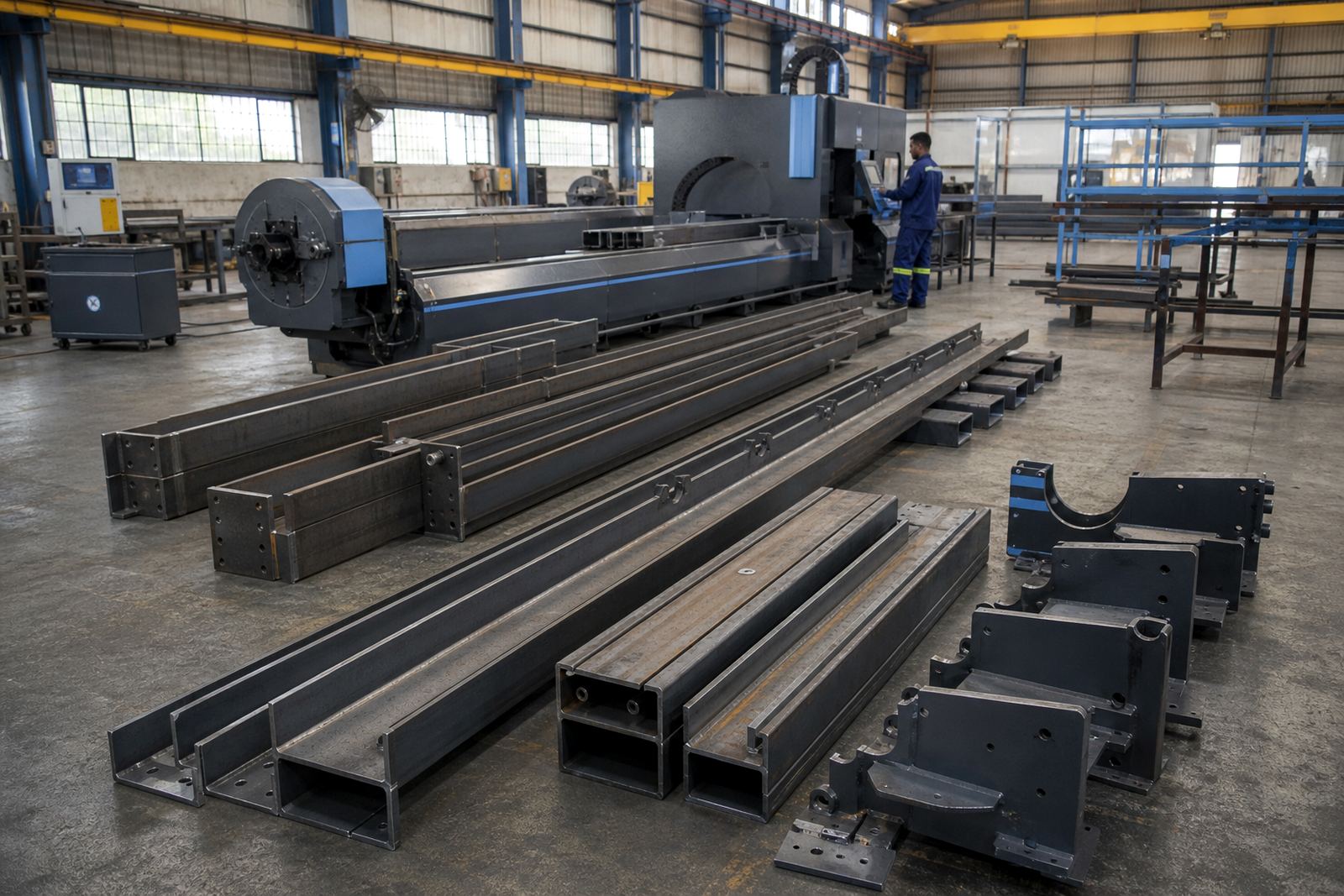
We set the job around tube support, chuck grip and cut planning so the material stayed controlled through the full length. On profile pieces, the cut order and nesting layout mattered because the fabricator wanted to limit offcut waste while still keeping each part easy to identify at assembly.
- Short and long cut lengths in the same batch
- Tube stability during cutting
- Part marking for sorting on the workshop floor
- Waste control on bracket nesting
What we supplied and set up
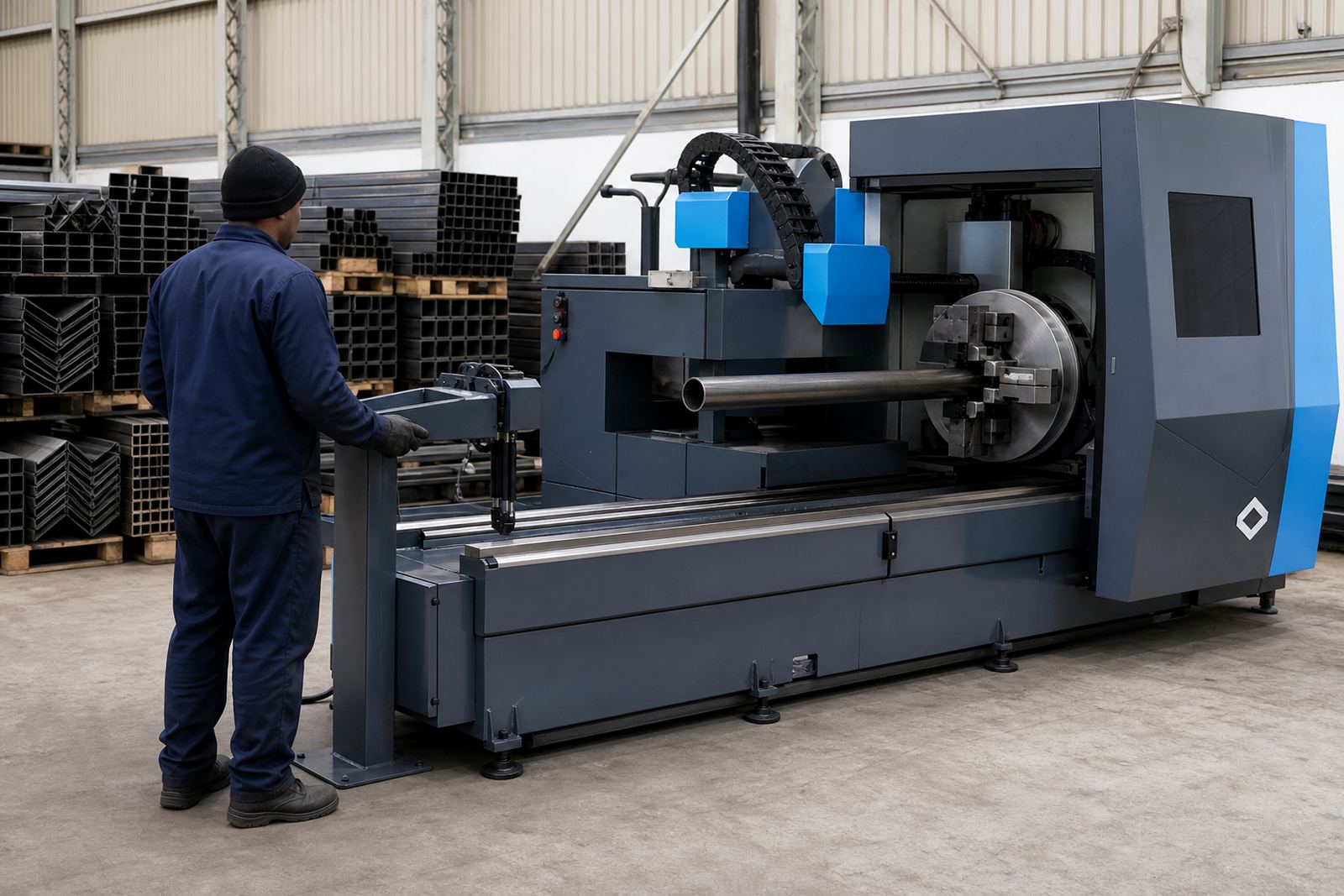
We supplied a fibre laser tube and profile cutting setup matched to the job mix, with tube support for round, square and rectangular sections and a layout suited to handrail parts and light profile work. For the more angled parts, the machine setup allowed accurate cutting of support brackets and connecting pieces without forcing the workshop into extra manual trimming.
Installation covered delivery rigging, machine placement, commissioning and operator training. We also went through nesting software use for the common handrail parts, plus assist gas setup and cut quality checks for the material thickness in the job. Where the client wanted better edge consistency, the cutting setup was tuned for cleaner edges and less post-cut cleanup.
- Fibre laser tube and profile cutting machine
- Tube handling for round, square and rectangular sections
- Nesting setup for mixed handrail parts
- Assist gas setup for clean edge quality
- Operator training and nesting training
The installation week and the first production run
We completed installation and commissioning across two weeks. The first week covered rigging, placement, utility checks and machine alignment in the Germiston workshop. The second week focused on operator training, sample cuts, nesting practice and the first production run of handrail parts.
During the first run, the workshop team worked through posts, sleeves and bracket sets in sequence so the cut parts could be checked against the drawing before full batch cutting. That made it easier to spot any adjustment needed on clamp settings, bevel calibration or cut sequence. Small corrections were handled on site while the team was still learning the machine flow.
- Week 1: rigging, placement and commissioning
- Week 2: training, test cuts and live production
- Sample checks against the fabrication drawing
- Clamp and cut sequence adjustments where needed
What changed on the fabrication floor
Once the machine was in production, the fabricator had cleaner parts with less edge dressing before welding. The sleeves sat better on the posts, and the brackets came off the machine in a form that was easier to sort and issue to the fitters. That helped the shop keep pace with site installation without relying on last minute rework.
The client also gained a more organised way to handle mixed tube work. Instead of treating each handrail set as a one-off, the workshop could nest parts, group similar cuts and keep the material flow tidy. For a Germiston shop doing handrails and general fabrication, that kind of control matters more than flashy numbers.
- Less hand grinding before welding
- Better fit on posts, sleeves and brackets
- Clearer part flow for the workshop team
- More orderly nesting on repeat work
What we would apply to a similar handrail job
Another Germiston handrail shop would get the same treatment: nesting built from its own part mix and tube sizes, and operators trained on the drawings they actually cut from. That helps the workshop avoid awkward changes once the cutting has already started.
On jobs like this, the useful details are the ones that look small on paper but matter on the floor, such as clamp position, sleeve length, bracket orientation and cut order. If those are handled well, the site crew gets parts that slot together with less fuss and the fabrication team spends less time correcting avoidable errors.
- Plan around the real part mix, not a generic drawing
- Train operators on the parts they will actually cut
- Check clamp positions before batch cutting
- Keep tube and profile sorting clear from the start
Key facts
| Project type | Handrail posts, sleeves and support brackets |
|---|---|
| Client location | Germiston |
| Material handled | Round tube, square tube, rectangular tube and profile parts |
| Process | Fibre laser tube and profile cutting |
| Delivery scope | Rigging, installation, commissioning and training |
| Timeline | 2 weeks |