What the Boksburg workshop was trying to solve
The fabricator works on residential gates, balustrade frames and matching access panels for homes around Boksburg and nearby parts of Ekurhuleni. Their older process left too much trimming at the bench, especially where tube ends had to meet neatly for welded corners. The team wanted cleaner cuts on round, square and rectangular tube, plus consistent handling of angle and channel for gate frames and support members.
The brief was practical. Cut parts had to fit better first time, with less marking out and fewer reworks before welding. The shop also wanted a machine that could handle mixed jobs without slowing the rest of the week. That meant dependable chucking for different tube sizes, steady loading and unloading, and nesting that made sensible use of every length placed on the bed.
Site conditions and workshop limits
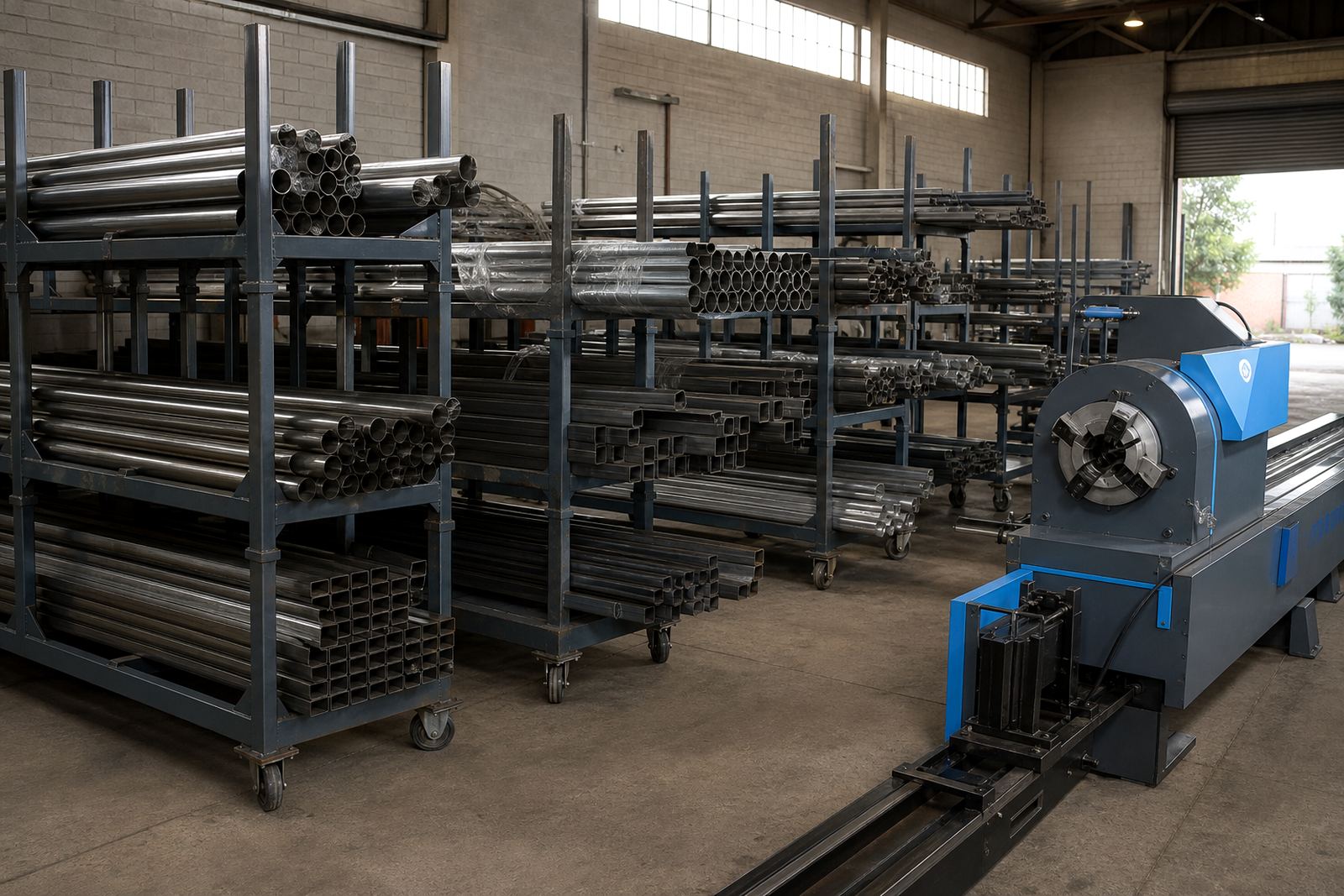
The site had enough floor space for the machine, but not much room to waste around it. Incoming material arrived in mixed lengths, and the fabrication bay already carried jigs, weld tables and finishing stations, so the layout had to be thought through before delivery. The client also asked for a setup that would suit a smaller team, with clear operator steps and enough visibility around the loading area for safe handling.
- Tube work included round, square and rectangular sections.
- Profiles also included angle and channel for gate frames.
- The shop needed cleaner mitres and slot cuts for weld prep.
- Floor layout had to leave space for material staging and offload.
- Operators needed plain training, not a complicated routine.
Because the work mixed custom residential orders with repeat frame sizes, the machine had to cope with short runs and batch cutting in the same week. That shaped the choice of chuck layout, software settings and assist gas setup.
Machine package and setup details
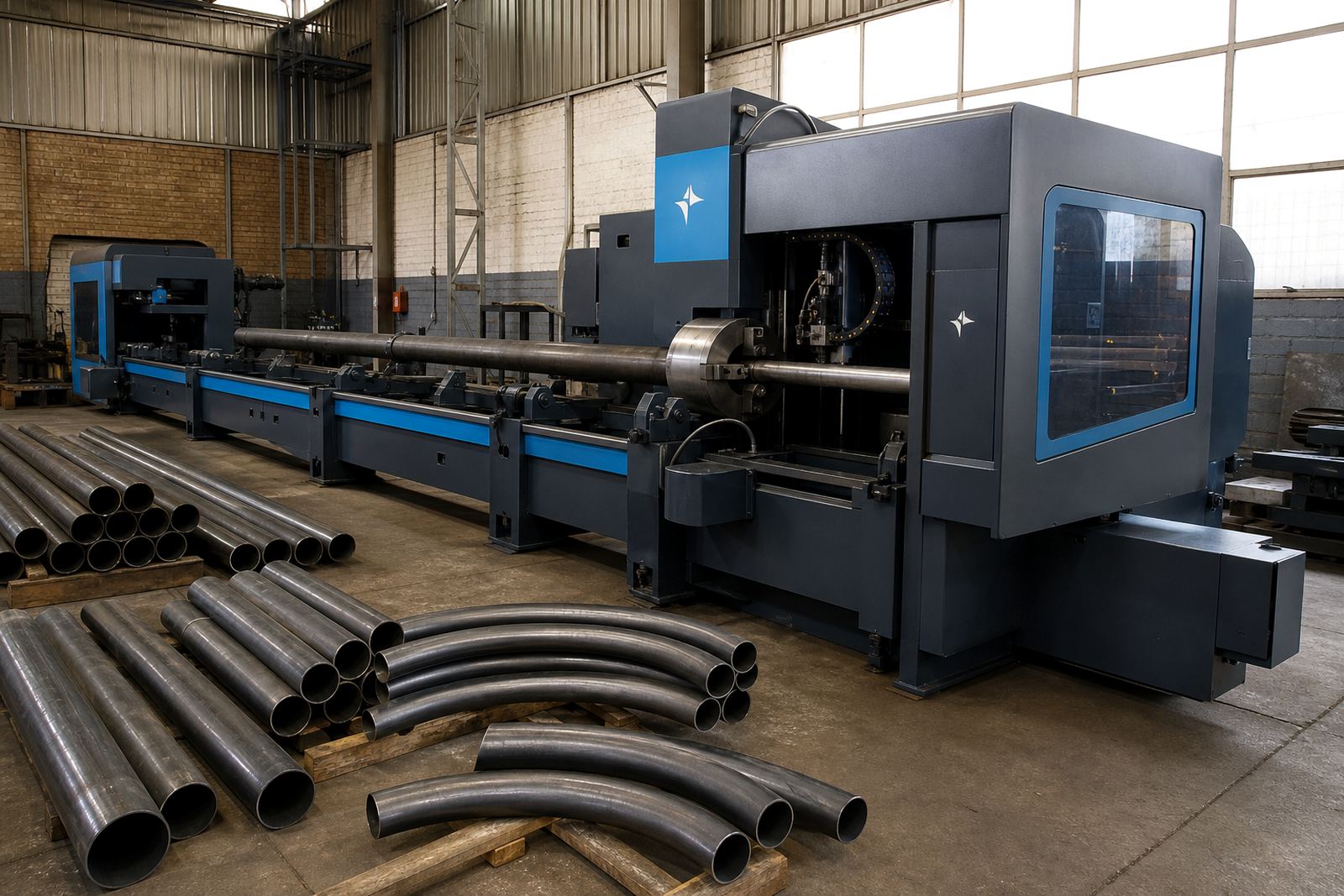
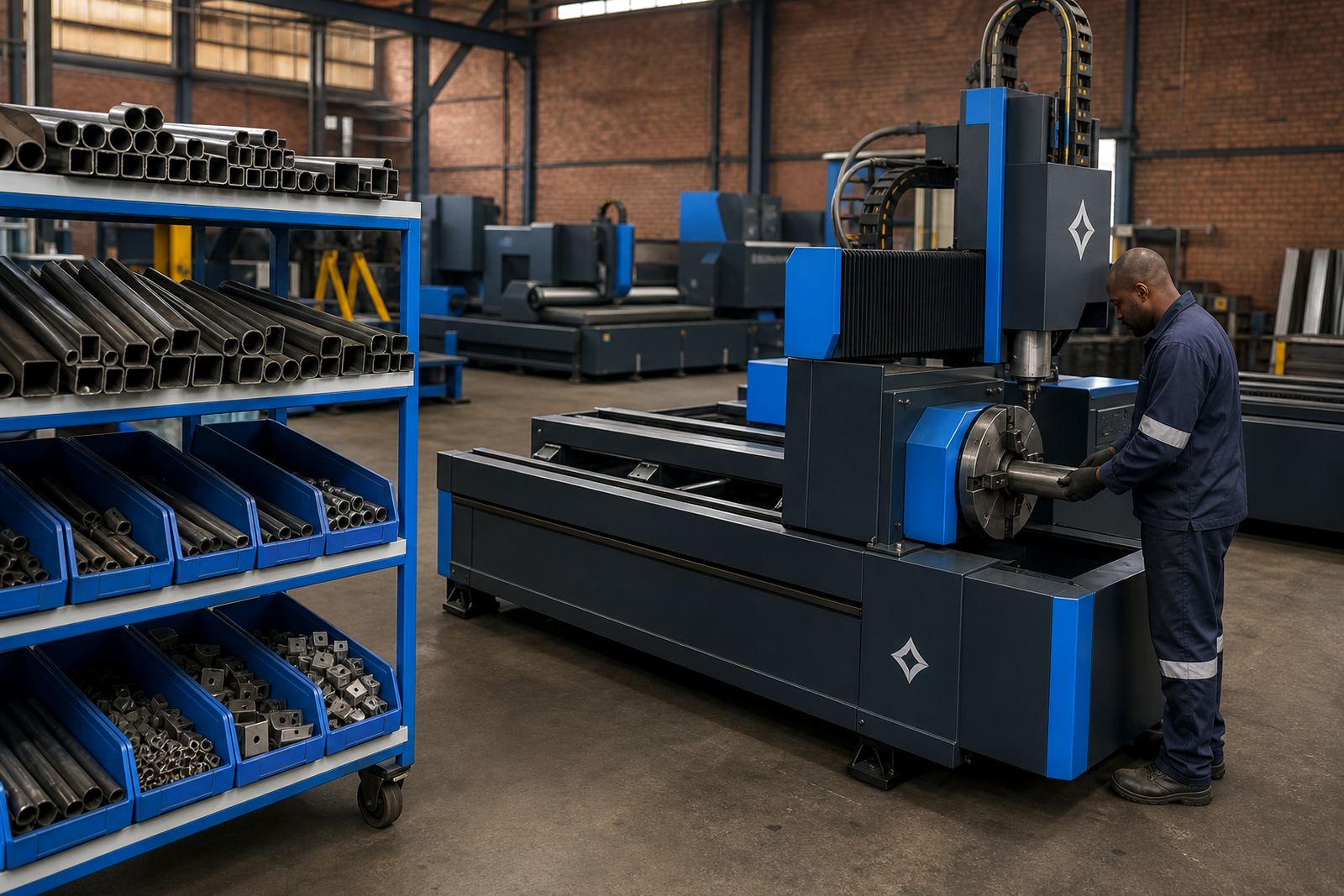
We supplied a fibre laser tube and profile cutting machine suited to fabrication work where accuracy at the joint matters. The setup included a tube chuck arrangement for stable clamping, a cutting head suited to bevel work where needed, and nesting software for arranging parts across available stock lengths. The assist gas system was configured for the materials and thicknesses used on gate work, with attention paid to edge finish and cut consistency.
Delivery rigging and installation were handled on site in Boksburg, followed by commissioning and a full check of motion, alignment and safety interlocks. We set up operator routines for loading, clamping, cut checks and part removal. The training covered part layout, nesting habits, gas selection and everyday housekeeping around the machine.
- Fibre laser tube and profile cutting machine for gate fabrication.
- Tube capacity set up for round, square and rectangular sections.
- Profile cutting for angle and channel used in frame assemblies.
- Chuck alignment checked during installation and handover.
- Assist gas setup matched to the shop's cutting mix.
- Nesting training focused on reducing offcuts and wasted length.
What happened on the job in the first few weeks
The first stage covered site assessment, measurements and machine placement. After that, delivery rigging and installation took place, followed by commissioning and sample cutting. The workshop then moved into operator training and nesting practice using the shapes they cut most often. Over the next few weeks, the team settled into their own job flow and started using the machine for recurring gate frames, side panels and support parts.
We also worked through chuck alignment and bevel calibration during that period, because tube jobs show problems quickly if a holding point is out or if a cut angle is not consistent. Where the shop had questions on part hold-down, loading order or gas settings for thicker sections, Ayanda and Pieter worked through the details with the operators on site. It helped the team keep the same standard between different gate patterns and custom orders.
What changed on the shop floor
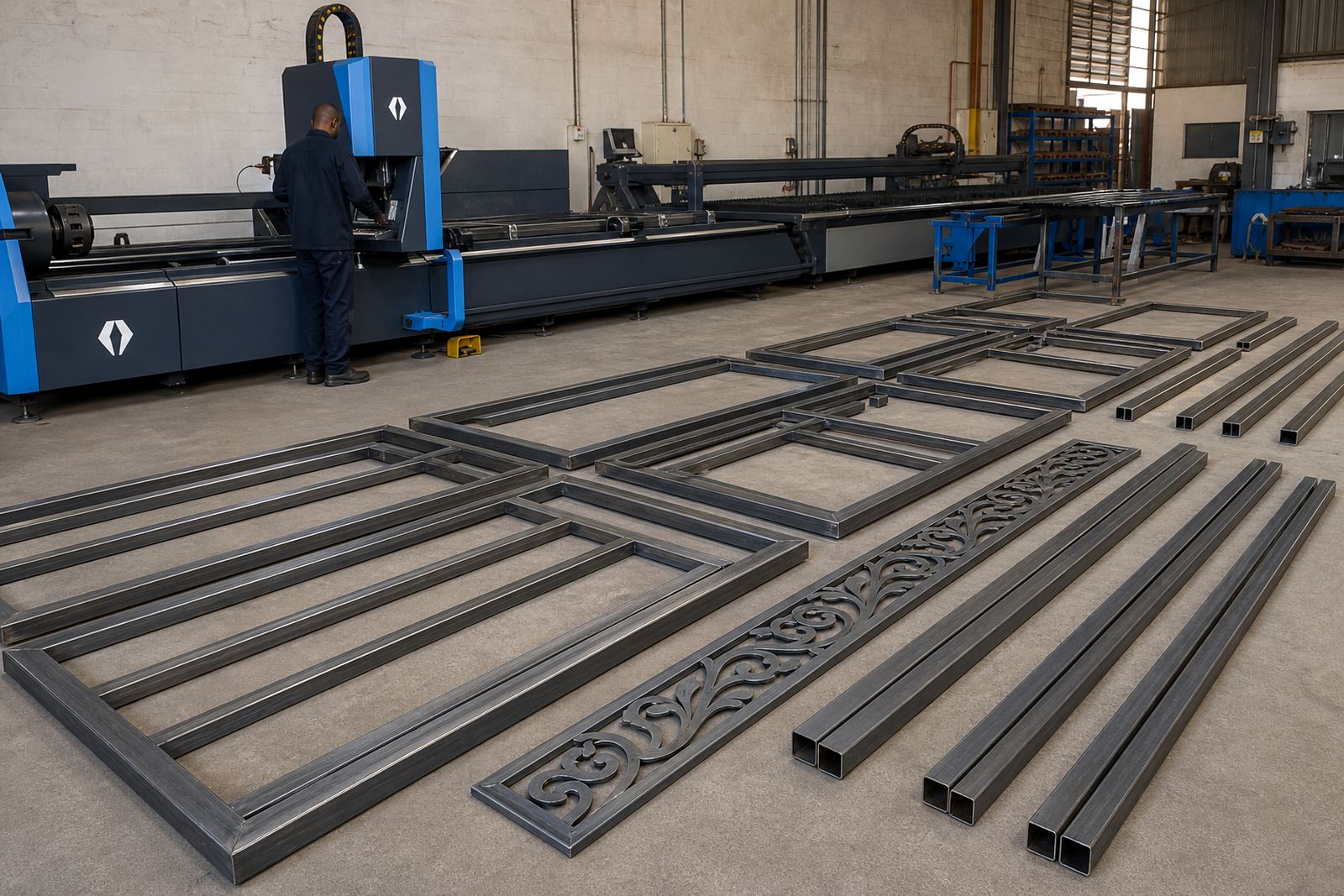
The biggest change was cleaner frame preparation. Tubes and profiles came off the machine with better fit at the weld points, so the welders spent less time grinding and opening gaps by hand. The shop could also move through custom residential orders with a more repeatable process, which mattered when gate patterns changed from one order to the next.
There was also a practical gain in workshop discipline. Parts were nested with more care, lengths were used better, and the loading side of the job became more orderly. For a gate maker that works to homeowners' measurements and site conditions, that matters more than any brochure claim. Less rework means less interruption between cutting, welding and finishing.
- Cleaner joints for welded gate frames.
- Less bench grinding after cutting.
- Better use of stock lengths through nesting.
- More repeatable part fit on custom jobs.
- Clearer handling steps for operators.
What we would apply to a similar Boksburg job
On a similar gate fabrication job, we would again start with the actual frame mix, not a generic machine size on paper. Tube and profile work needs the right chucking range, sensible material handling and a software setup that suits the shop's common lengths. If the business cuts a lot of custom residential gates, the training also needs to stay close to real parts rather than theory.
That approach worked well here because the machine was matched to the work the shop does every week, not a one-off test piece. The result was a practical cutting cell for a Boksburg fabricator that wanted cleaner prep, tighter fit and a steadier route from raw tube to welded frame. Michael Dlamini oversees this kind of project work from Wadeville, with support from Anika, Sibusiso, Leanne, Pieter and Ayanda across South Africa.
Key facts
| Project location | Boksburg, Gauteng |
|---|---|
| Client type | Residential gate fabricator |
| Machine type | Fibre laser tube and profile cutting machine |
| Materials cut | Round tube, square tube, rectangular tube, angle and channel |
| Core services | Site assessment, installation, commissioning, operator training, nesting training |
| Project duration | About 3 weeks from site assessment to operator handover |