Round tube parts for a playground frame shop
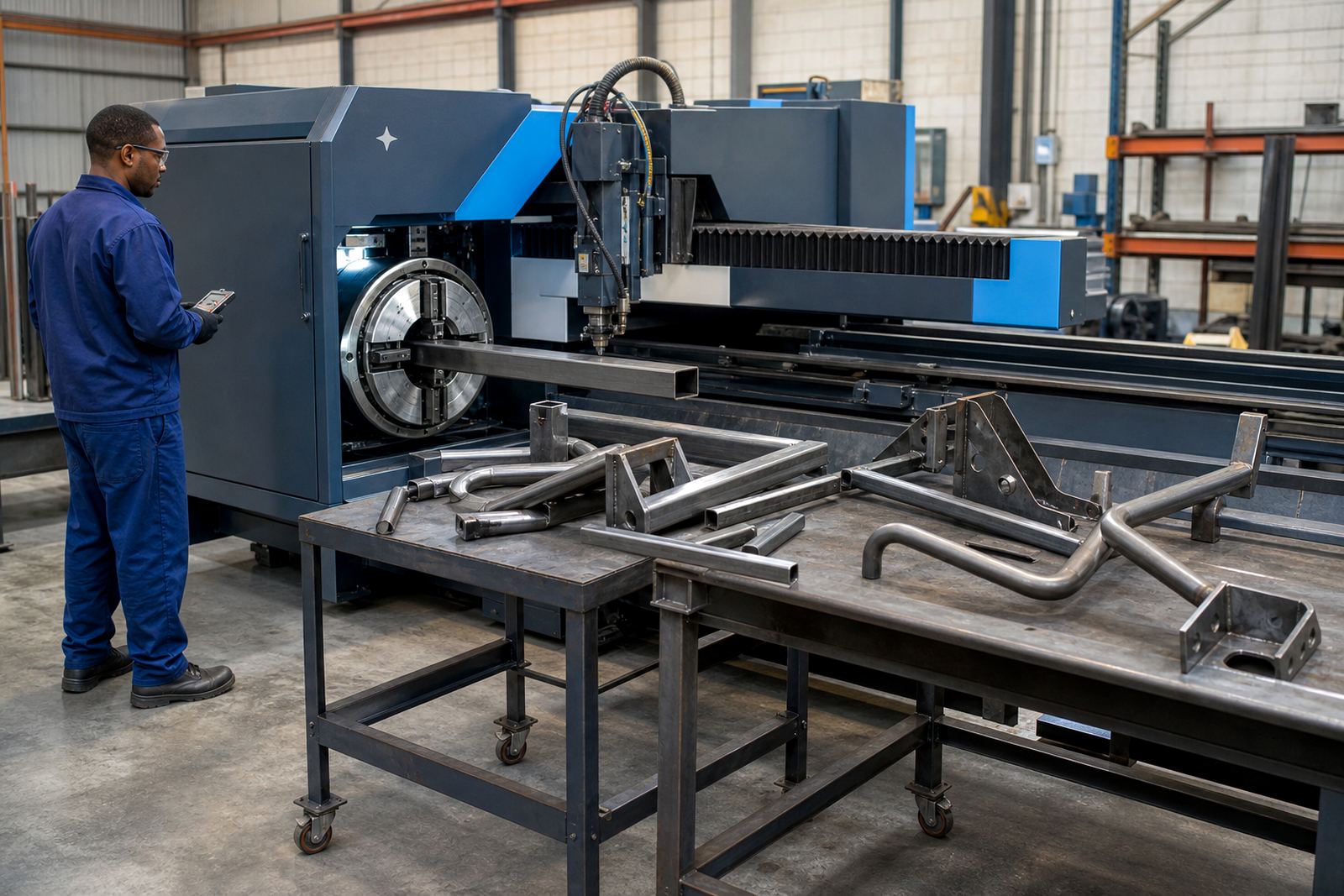
The job came from a metal fabricator in Nelspruit that builds playground structures for local installations. Their work needed round tube sections with accurate mitres, hole positions and repeated part lengths, because the frames had to fit neatly around braces, safety rails and mounting points.
The fabricator was already handling fabrication well, but the cutting stage had become the slowest part of the flow. Saw cuts needed extra cleanup, hole marking took time, and small errors carried into the weld bay. The brief was to tighten that stage with fibre laser tube cutting, while keeping the shop practical for day to day work.
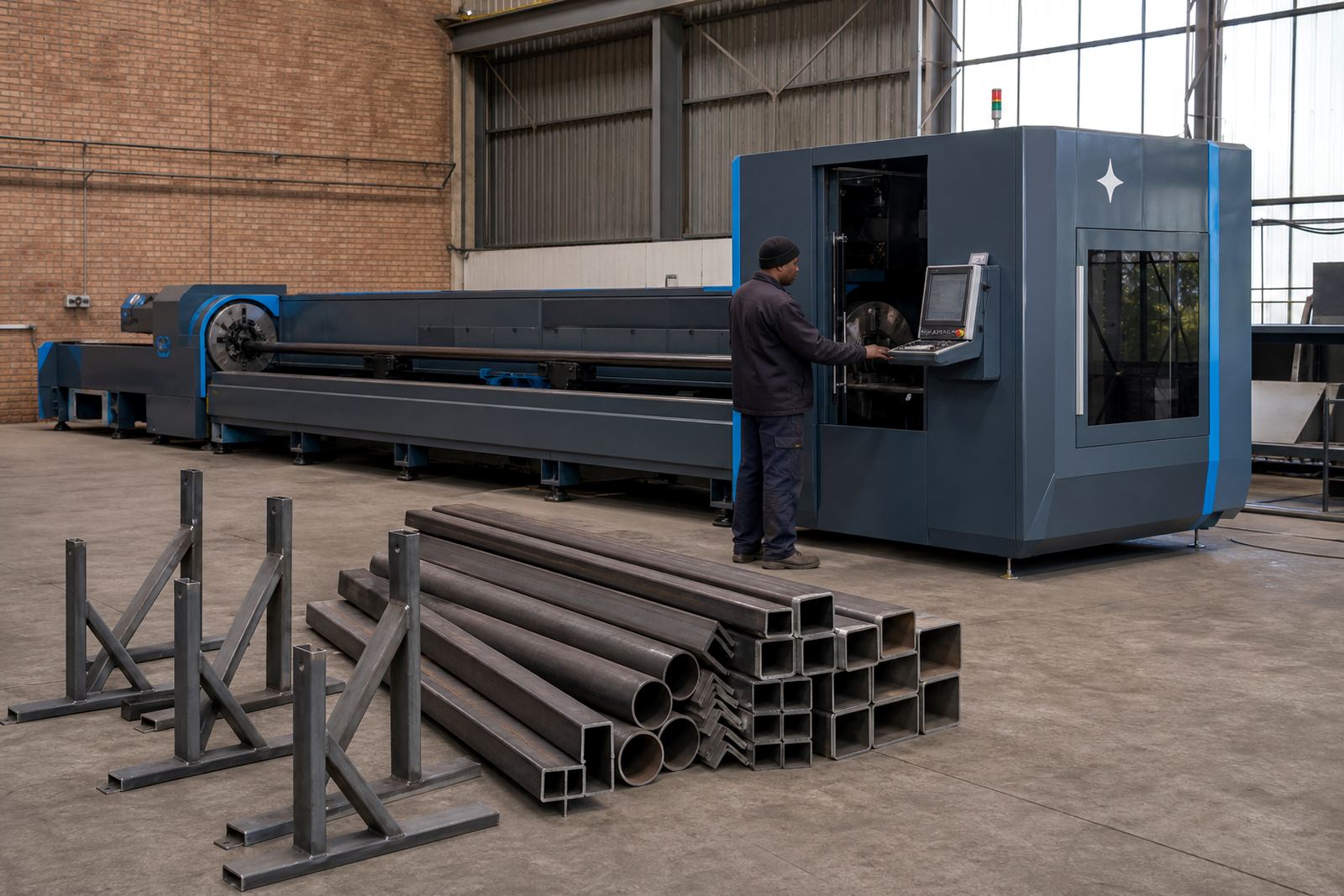
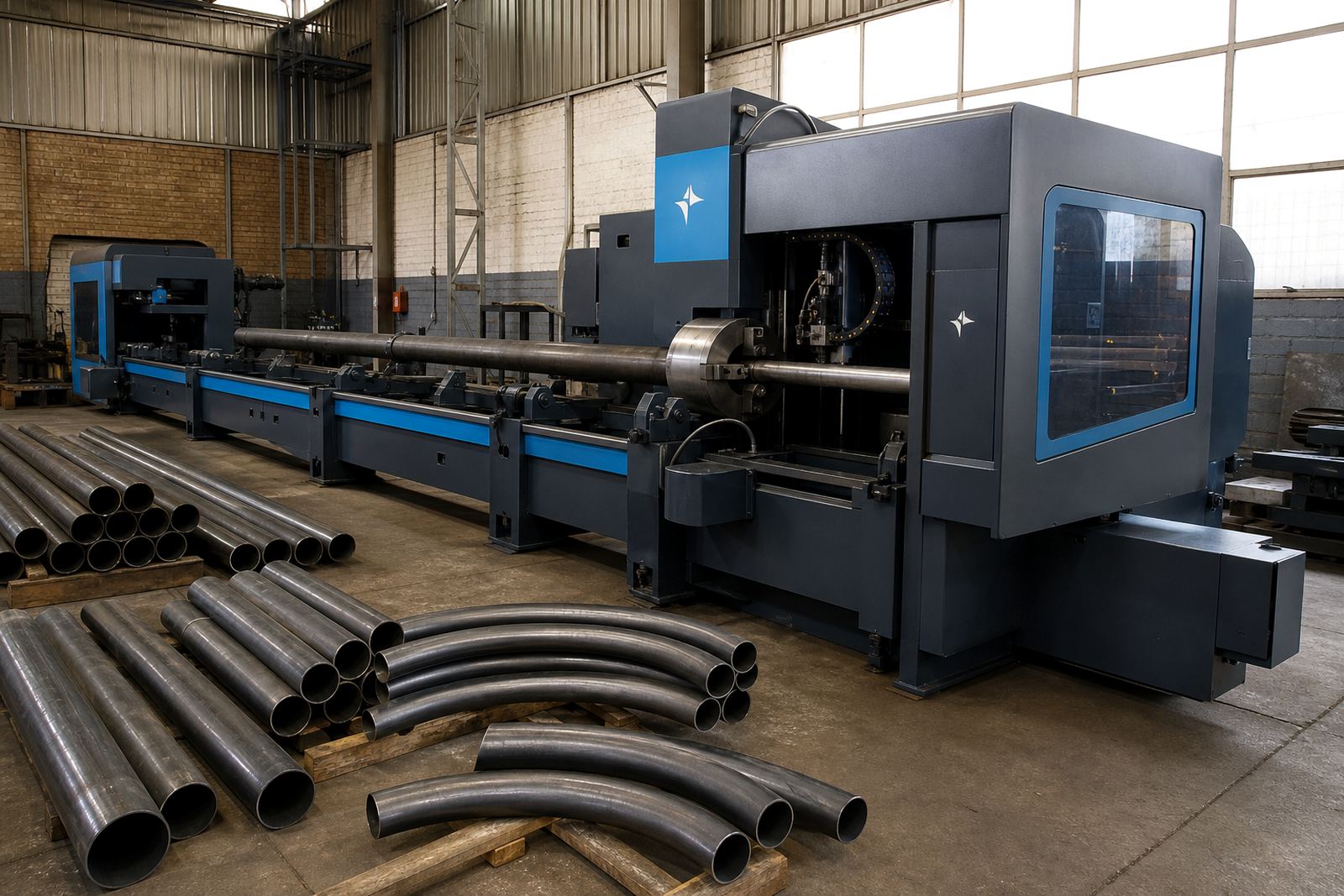
We worked around round tube stock used for swing frames, ladder supports and guard rails, and we also set the machine up for square and rectangular tube where the design called for it. Angle and channel were kept in scope for later structure work, so the machine could support more than one product line.
Measured constraints on a busy Nelspruit floor
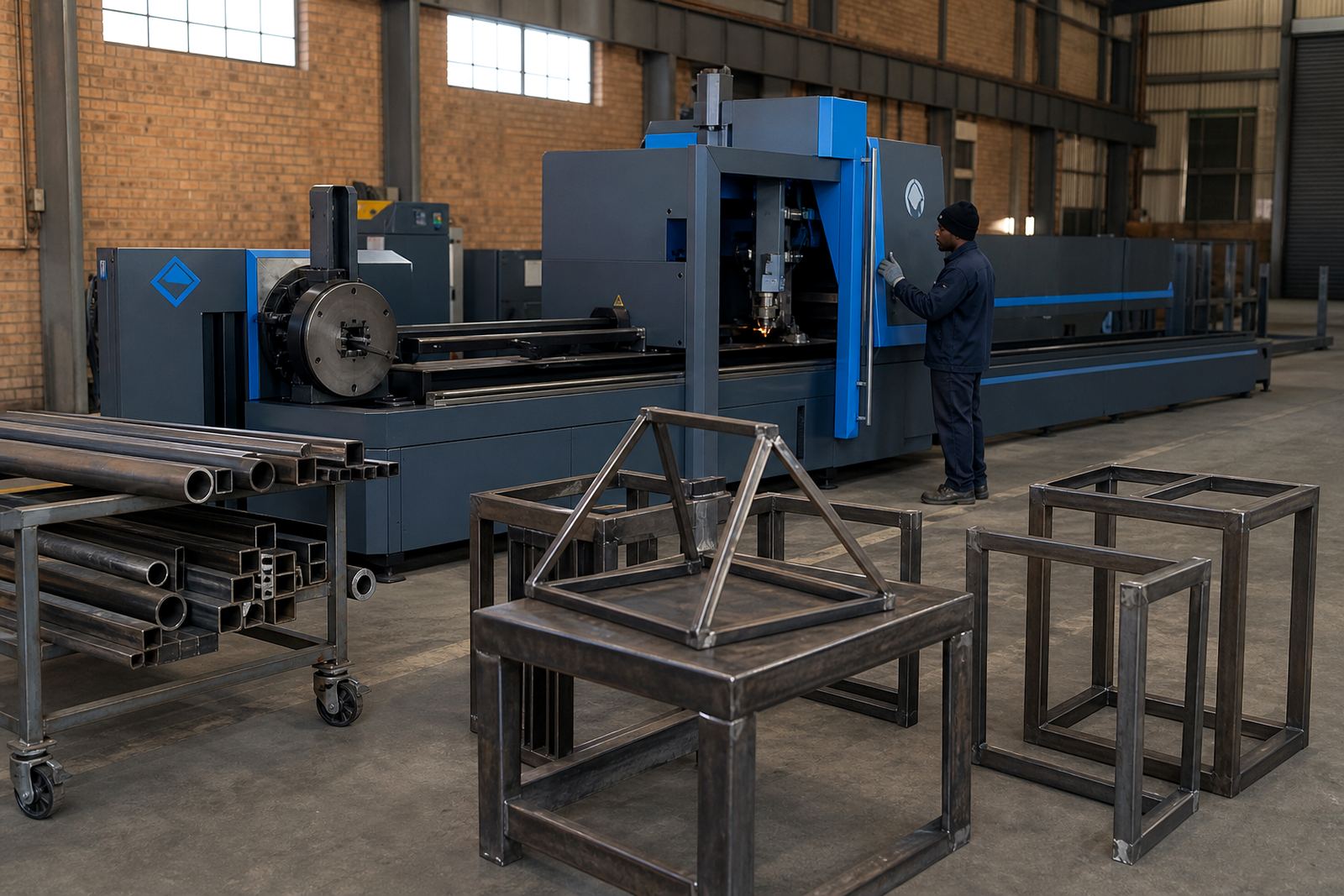
The site had a narrow material flow, limited laydown space and a steady mix of short runs. That meant the installation had to fit the workshop rather than force the workshop to change around it. The machine position, infeed and outfeed paths were planned to suit safe handling of longer lengths and finished parts.
Humidity is a real factor in the Lowveld, so we treated storage and air quality as part of the setup. Clean assist gas delivery, dry lines and sensible part handling helped keep cut edges consistent and reduced the chance of corrosion marks on stored material.
- Material types: round tube, square tube, rectangular tube, angle and channel
- Typical workshop challenge: mixed short runs with repeated part families
- Site concern: space for loading, unloading and finished part sorting
- Environmental factor: warm weather and moisture management around stored steel
The client also needed a process that did not depend on hand marked hole centres and manual coping for every bracket. That was where nesting software and proper machine calibration made the work more predictable.
Machine supply, placement and first cuts
We supplied and installed a fibre laser tube and profile cutting machine suited to a fabrication shop with recurring structural parts. The machine was positioned for safe access to chucks, support beds and loading points, with enough working room for tube handling and scrap removal.
During commissioning we checked chuck alignment, clamping behaviour and cut sequence control. We also set the bevel head where required, so the shop could prepare joints that needed angled faces rather than simple straight cuts. That matters on playground frames where connection detail affects fit-up and weld access.
The assist gas setup was tuned for the material thicknesses in the job mix, with settings chosen to support clean edges and stable pierce quality. Because the parts needed consistent repeatability, we also checked tube squareness, cut length control and the way nested parts were arranged on each job sheet.
- Supply included the cutting machine and installation support
- Commissioning covered alignment, gas setup and first cut verification
- Bevel capability was set for selected joint styles
- Nesting was arranged to reduce waste on repeat parts
Operator training for repeat playground parts
Leanne Mabuza led the operator training with the shop team, while Ayanda Mashaba handled application notes on part layout and cutting order. The training was practical, with a focus on loading tube correctly, checking clamp position, reading the cut programme and spotting signs of poor edge quality before a batch moved further down the line.
Nesting training covered how to group repeated parts from the same tube lengths, how to use offcuts sensibly and how to keep similar jobs apart when dimensions changed. For a playground fabricator, that kind of control helps with safety critical parts like rails, stiles and connectors, where a small mix-up becomes expensive later.
We also went through basic safety around laser cutting, hot parts and fume control. The team needed clear habits for goggles where appropriate, handling cut parts with care and keeping the cutting zone tidy during changeovers. In a workshop that moves fast, those habits save trouble.
- Loading and unloading methods for long tube lengths
- Programme checks before the first cut starts
- Nested job handling for repeated playground components
- Safe part transfer after cutting and edge cooling
Job timing and workshop rhythm over four weeks
Over four weeks, the project moved from assessment through to steady production use. The first stage covered site review, machine placement and utility planning. Stage two included rigging for delivery, placing the machine in position, and completing the mechanical installation. The third stage dealt with commissioning, chuck alignment and gas tuning. The final stage focused on operator training, nesting practice and test production on actual tube parts.
Sibusiso Bhengu handled the installation lead on site, with Pieter Visser supporting service checks and fault finding during the setup period. Michael Dlamini oversaw the project direction, so the handover stayed practical and tied to the fabricator’s actual workloads rather than a generic demo sheet.
By the end of the four weeks, the workshop had a working process for repeated round tube parts, and the team understood how to shift between playground subassemblies without losing cut accuracy. That mattered because the shop had to keep other fabrication work moving at the same time.
What changed after the new cutting line settled in
The main result was cleaner part fit-up before welding. Holes lined up better, mitres needed less dressing, and the welders spent less time correcting small geometric errors from the cutting stage. The machine also made it easier to keep repeat parts consistent across different batches.
Another benefit was better use of material. With nesting software set properly, the shop could place more parts into each tube length and avoid wasting usable offcuts. That helped a fabrication business in Nelspruit where material planning has to stay disciplined if jobs are to remain profitable.
The client now had a process that supported playground work and general structural fabrication in the same cell. Round tube remained the main product, but the ability to cut square, rectangular, angle and channel gave the workshop more room to take on related jobs without resetting the whole process.
- Cleaner fit-up for welded playground frames
- Less hand finishing on cut edges and joints
- Better material use through nesting discipline
- More flexibility across tube and profile jobs
What we would apply to a similar Nelspruit job
Setup needs to be measured from the start, especially in a workshop handling both repetitive parts and custom frame work. Getting the machine position, tube flow and offcut handling right early makes the rest of the job steadier.
We would also keep training close to the actual product being made. Playground frames ask for accurate joints, safe handling and repeatable dimensions, so it helps when the operator learns on the same tube sizes and part families that the shop uses every week.
Before full production starts on Nelspruit playground tube parts, we focus on chuck alignment, assist gas setup and bevel calibration. Those three points make a clear difference on tube work, and they matter even more when the parts are going into structures used by children.
Key facts
| Project | Nelspruit Playground Tube Parts |
|---|---|
| Client type | Metal fabricator making playground structures |
| Location | Nelspruit, Mpumalanga |
| Materials cut | Round tube, square tube, rectangular tube, angle and channel |
| Services used | Site Assessment, Delivery Rigging, Machine Installation, Commissioning, Operator Training, Nesting Training, Chuck Alignment, Bevel Calibration, Assist Gas Setup |
| Project duration | 4 weeks from assessment to stable production use |