Retail shelving parts that had to land square every time
The customer was a Cape Town manufacturer supplying shelving systems for retail interiors, with a steady mix of uprights, cross members, shelf supports and short bracket parts. Their work arrived in batches, often with different lengths and hole patterns, and the brief was to move away from slower saw and drill routines that took too many hands at the bench.
The key requirement was consistency. Shelf frames need clean mitres, accurate hole positions and repeatable section lengths so the assembly crew does not spend hours dressing parts before fit-up. They also wanted a machine that could handle regular profile changes without making each job feel like a reset. That meant a fibre laser tube and profile cutter with proper chuck control, a stable cutting bed and software that could nest mixed jobs without wasting tube length.
- Tube types in the job mix: square, rectangular and round sections
- Profile work included angle and channel sections for support parts
- Repeatability mattered more than rough cutting speed
- Parts had to fit retail installation schedules, with less hand finishing
The constraints on a Cape Town production floor
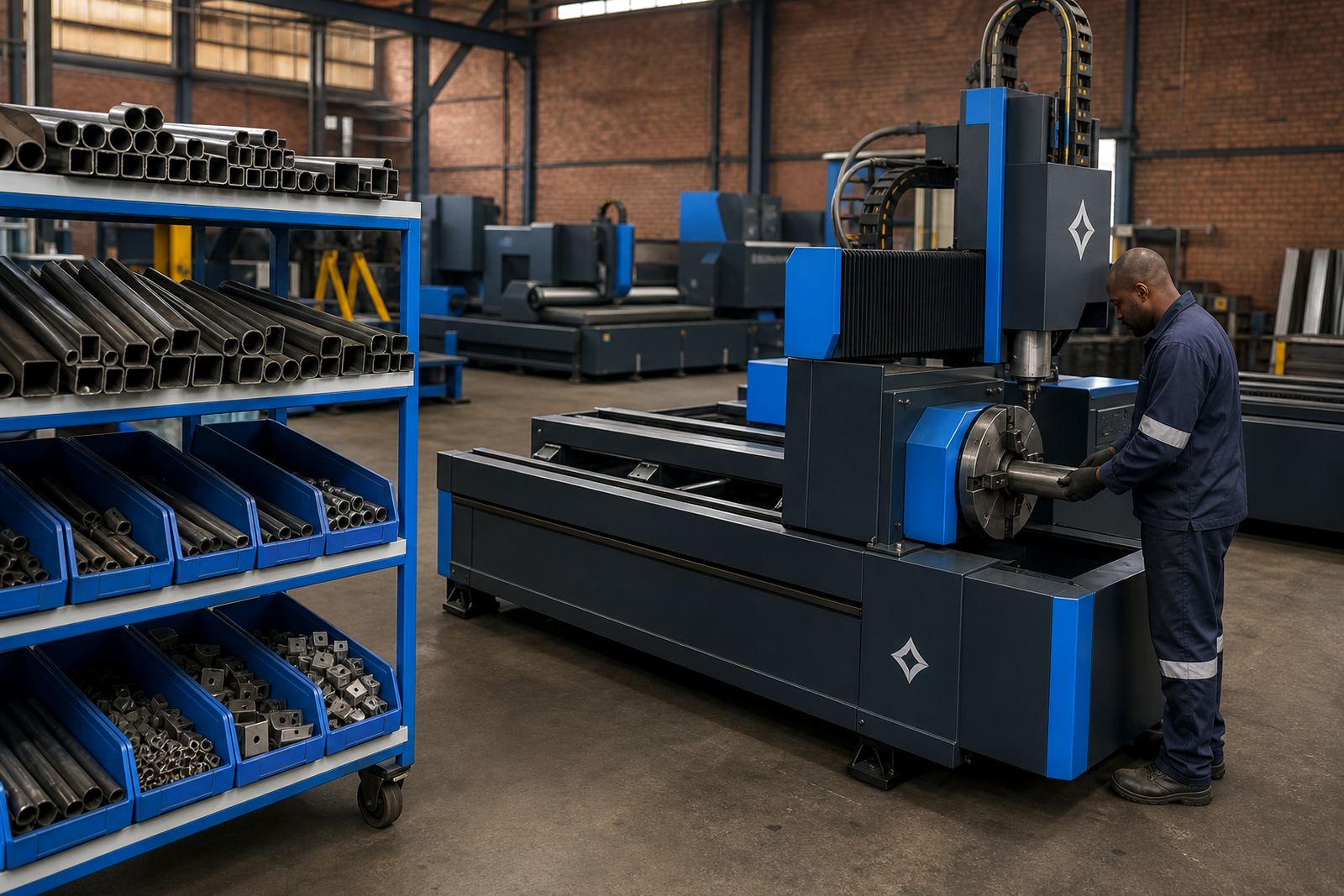
The workshop was working in a coastal environment, so dust, salt air and general corrosion control all had to be taken seriously. The machine area needed tidy extraction, safe gas routing and a layout that kept the loading side clear for longer stock lengths. There was also a practical limit on floor space, so the installation had to suit a real production bay, not a generous showroom plan.
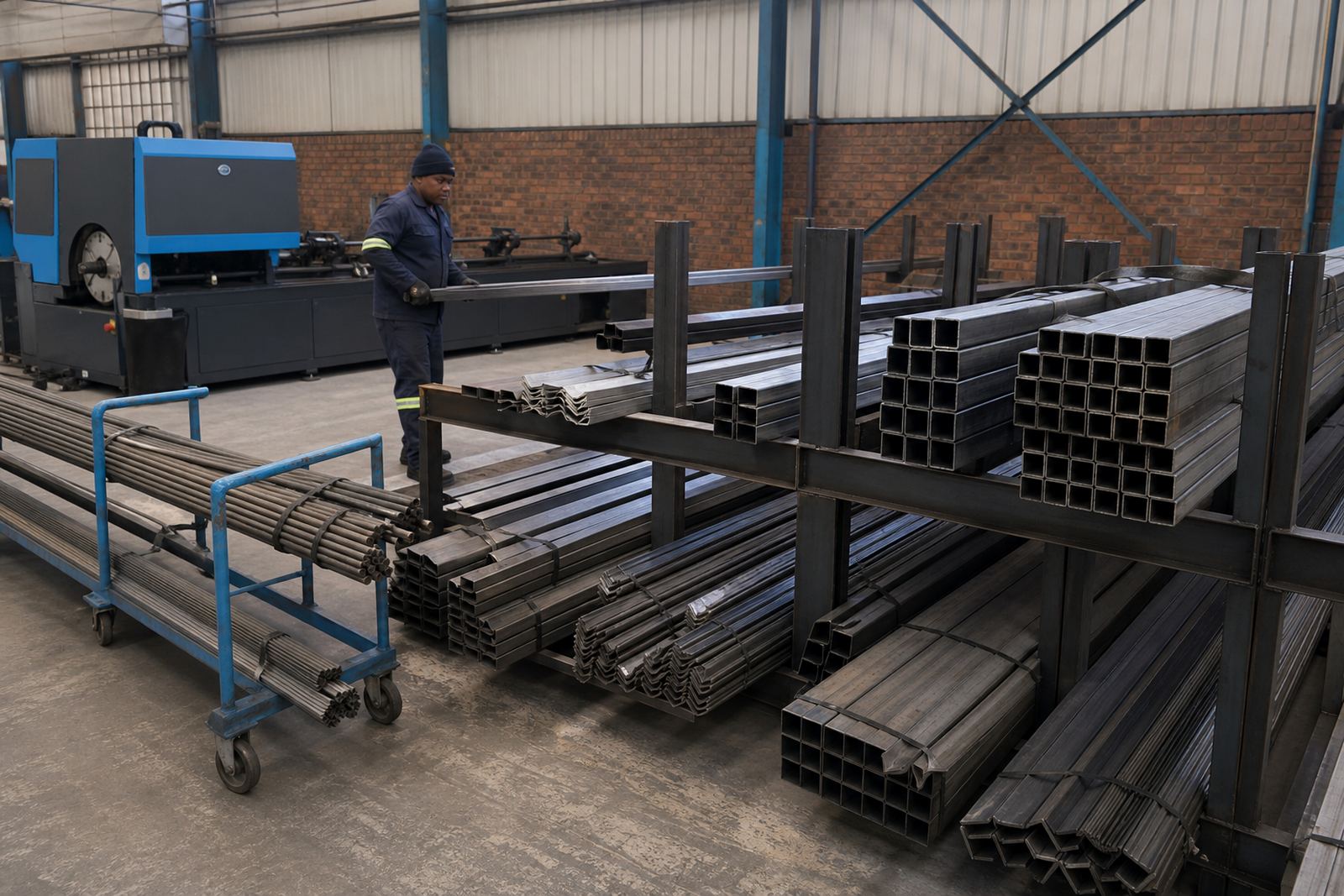
Another constraint was the range of parts. Retail shelving is not one neat product line. One week can bring short uprights, the next week longer rails with extra slots, then odd lengths for an anchor display or a wall bay. The operator needed a system that could switch between jobs without reworking the whole setup each time. That is where nesting software and a reliable clamping arrangement made the difference, because it allowed the team to place parts tightly on the available material and keep the scrap offcuts under control.
Safety and handling also formed part of the brief. The customer wanted guarded access, clear loading zones and a process that gave the operator proper control over tube rotation, support and part release. In a plant cutting slender shelving members, that kind of discipline reduces knocks, misalignment and awkward trimming later on.
What we set up
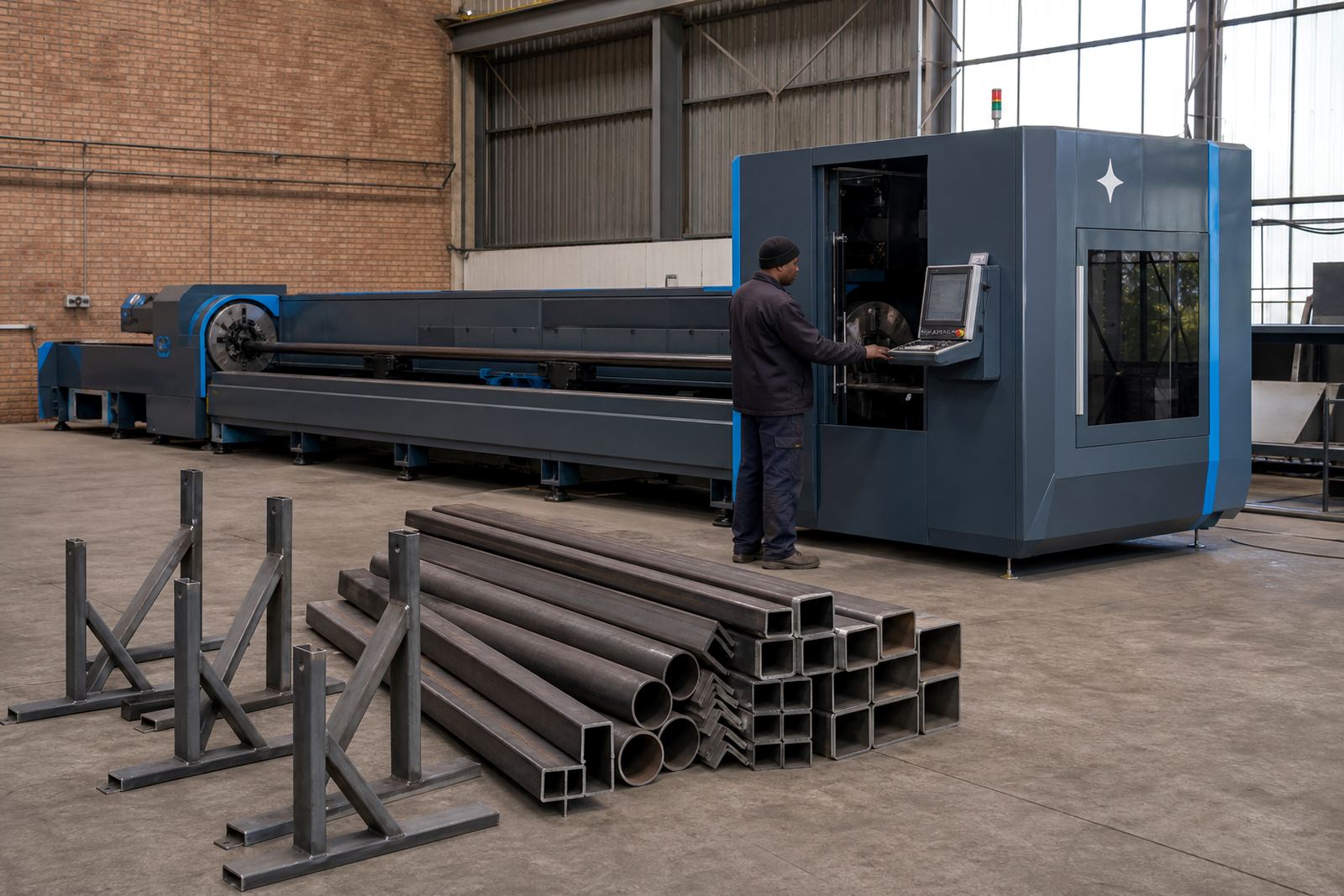
We supplied a fibre laser tube and profile cutting machine configured for the customer’s part range, with chucks suited to tube and open profile work, plus software for job nesting and cut path control. The setup covered round tube, square tube, rectangular tube, angle and channel, which gave the workshop enough range for shelving components and related bracketry.
Installation included machine positioning, levelling, power and service connections, gas setup and practical checks on the cutting side. The assist gas arrangement was set for the material mix they were running, with attention to pressure stability and clean edge formation. We also checked chuck alignment and part support so that long sections would track correctly through the cut without dragging or scuffing at the entry side.
- Fibre laser tube and profile cutter for mixed shelving parts
- Chuck setup for round, square and rectangular tube
- Capability for angle and channel sections used in support work
- Nesting software for tighter material use on repeat batches
- Assist gas setup matched to the material and cut quality required
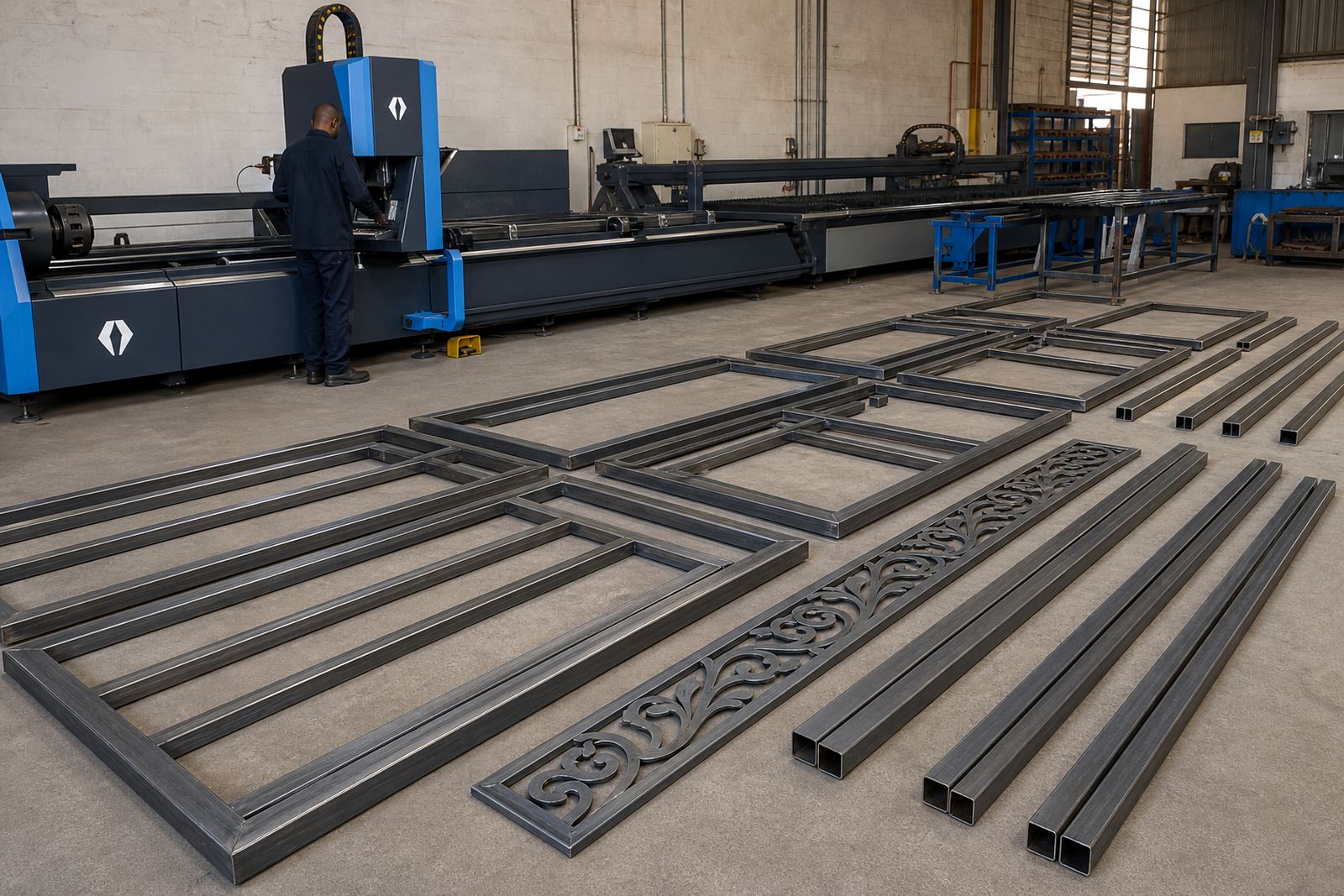
Because shelving parts often include slots, holes and edge profiles in one run, the software and machine controls had to work together cleanly. That saved the team from breaking jobs into too many manual steps. It also gave them a neater path for changeovers when the next fit-out order arrived with a different profile mix.
Installation, training and the first production runs
The installation phase ran over two weeks, starting with delivery rigging and machine placement, then moving into commissioning, cut trials and operator handover. Once the machine was in position, we worked through the practical side of the process with the staff who would run the line every day. That covered loading tube, clamping, zeroing, job setup, nesting choices and how to keep cut parts organised for downstream assembly.
Training covered both machine use and the thinking behind the job list. Leanne Mabuza led the operator and nesting sessions, while Ayanda Mashaba handled applications work around part layout, cut sequence and handling small changes in section size. The team also went through bevel calibration where angled cuts were needed on certain joints, and the maintenance points that help keep the machine steady on a busy production floor.
- Week 1: delivery rigging, placement and commissioning checks
- Week 2: operator training, nesting practice and first production runs
- Follow-up: chuck alignment and assist gas adjustment during live work
- Service handover included cleaning points, wear checks and routine care
By the end of the start-up period, the customer was running actual shelving batches through the machine rather than test pieces. The operators became comfortable with the flow from tube loading to finished part removal, which is where the practical value shows up. A machine can be capable on paper, but if the team cannot get through a mixed fit-out order without hesitation, it will slow the workshop down.
What changed on the shop floor
The clearest change was in part consistency. Uprights came off the machine with cleaner ends and more regular hole positions, which reduced rework before assembly. Cross members were cut with a better match between length and profile geometry, so the fit-up crew spent less time checking and trimming. For a manufacturer working to retail schedules, that matters because the shelving system has to fit the site, not just the drawing.
The other gain was on material use. With nesting set properly, the team could place more parts onto each tube length and keep the offcut pile more manageable. That did not remove scrap completely, of course it never does, but it gave the workshop a better view of yield and made the job cards easier to plan. The machine also opened the door to more profile-based work, not just straight tube cutting, so the fabricator could take on a wider set of shelving and display jobs without changing the workshop rhythm every week.
After the first runs, the customer asked us to stay close to the machine settings for future shelving batches so the cut quality stayed even across different section sizes and wall thicknesses. That is the kind of follow-through that keeps a production line honest. If the machine is set up properly, the next order feels familiar rather than awkward.
The parts we would keep in the same recipe
For this kind of Cape Town work, the same recipe would still suit us well: mixed-profile capability, firm chuck control, practical nesting and training that shows the operators how to manage real jobs, not just samples. Shelving work can look straightforward from a distance, but the details are unforgiving once the parts reach assembly.
Machine layout for this Cape Town shelving work stays focused on easy loading, solid part support and clear access to the cut zone. We would also keep the maintenance routine plain and regular, especially in a coastal city where surface care matters. That combination gave the workshop a workable production setup for repeat retail fit-outs, with enough flexibility to handle related tube and profile jobs when the order book shifted.
Pieter Visser later handled routine service checks, and Sibusiso Bhengu returned for the final alignment verification on the chuck and support side. That helped keep the machine settled after the first production cycle, which is where a lot of practical value sits for a shop that depends on accurate repeat work.
Key facts
| Project | Cape Town shelving components for retail fit-outs |
|---|---|
| Material forms | Round tube, square tube, rectangular tube, angle and channel |
| Machine type | Fibre laser tube and profile cutting machine |
| Included services | Delivery rigging, installation, commissioning and operator training |
| Software use | Nesting for mixed batches and material yield planning |
| Timeline | Two weeks for installation, training and first production runs |