Midrand job brief and workshop pressure points
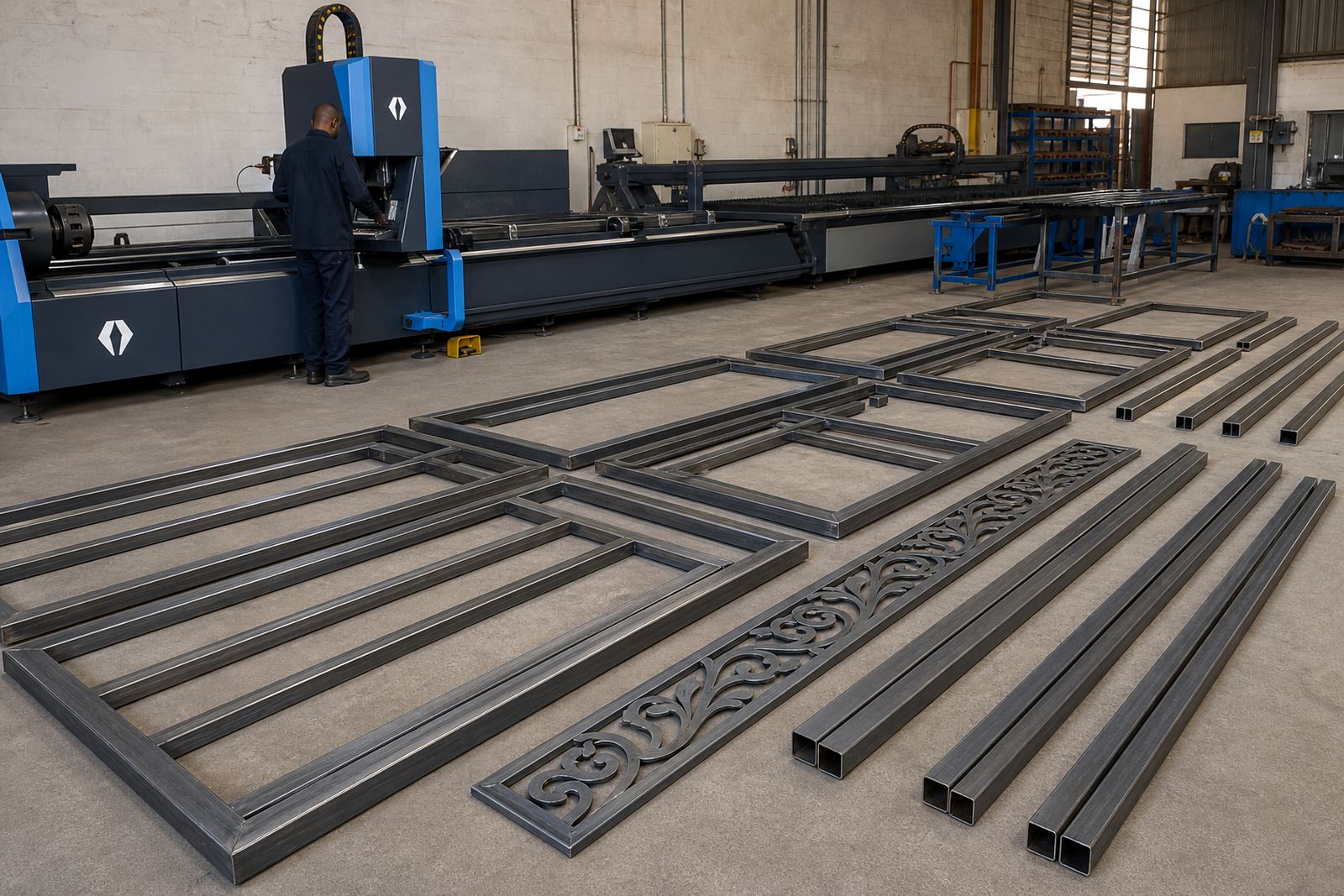
The client was a Midrand signage fabricator making light frame parts for illuminated signs, with short production windows and a steady mix of repeat pieces. The shop needed a fibre laser tube and profile cutting setup that could handle round, square and rectangular tube, plus angle and channel, without slowing down when the work changed from one run to the next.
The brief was practical. Frame members had to be cut to size with clean ends, consistent slot positions and enough accuracy for fast assembly. The workshop also needed a workable nesting flow so the team could arrange batches with less offcut waste and fewer manual corrections at the fit-up bench.
Because the parts were for sign work, the cuts had to stay tidy on visible edges. That meant the setup had to deal with thin wall material, repeated lengths and smaller profile sections that can shift if the chuck grip, beam settings or feed path are not set properly. The team also wanted a machine arrangement that suited grouped production runs rather than one-off cutting only.
What we supplied for the cutting line
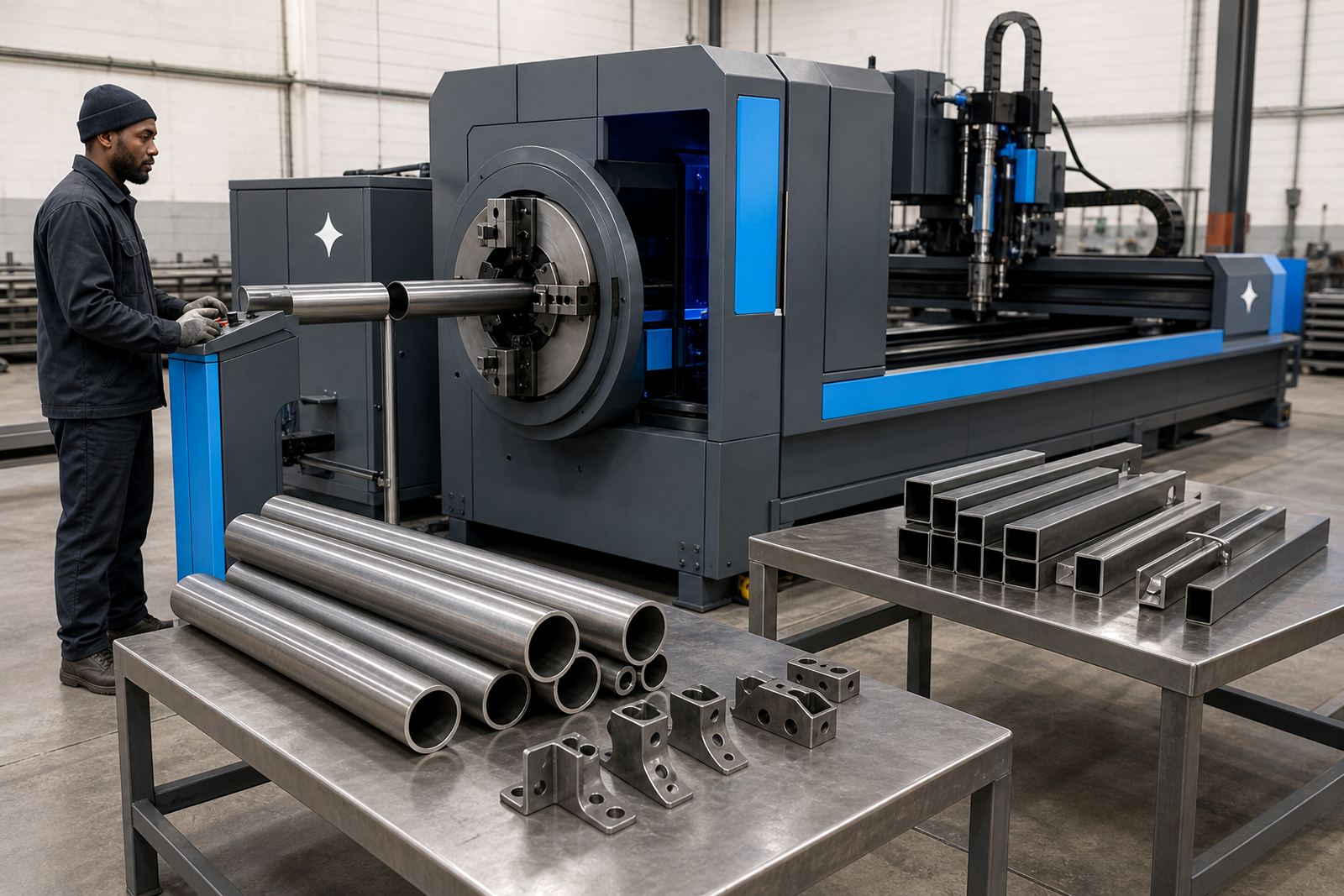
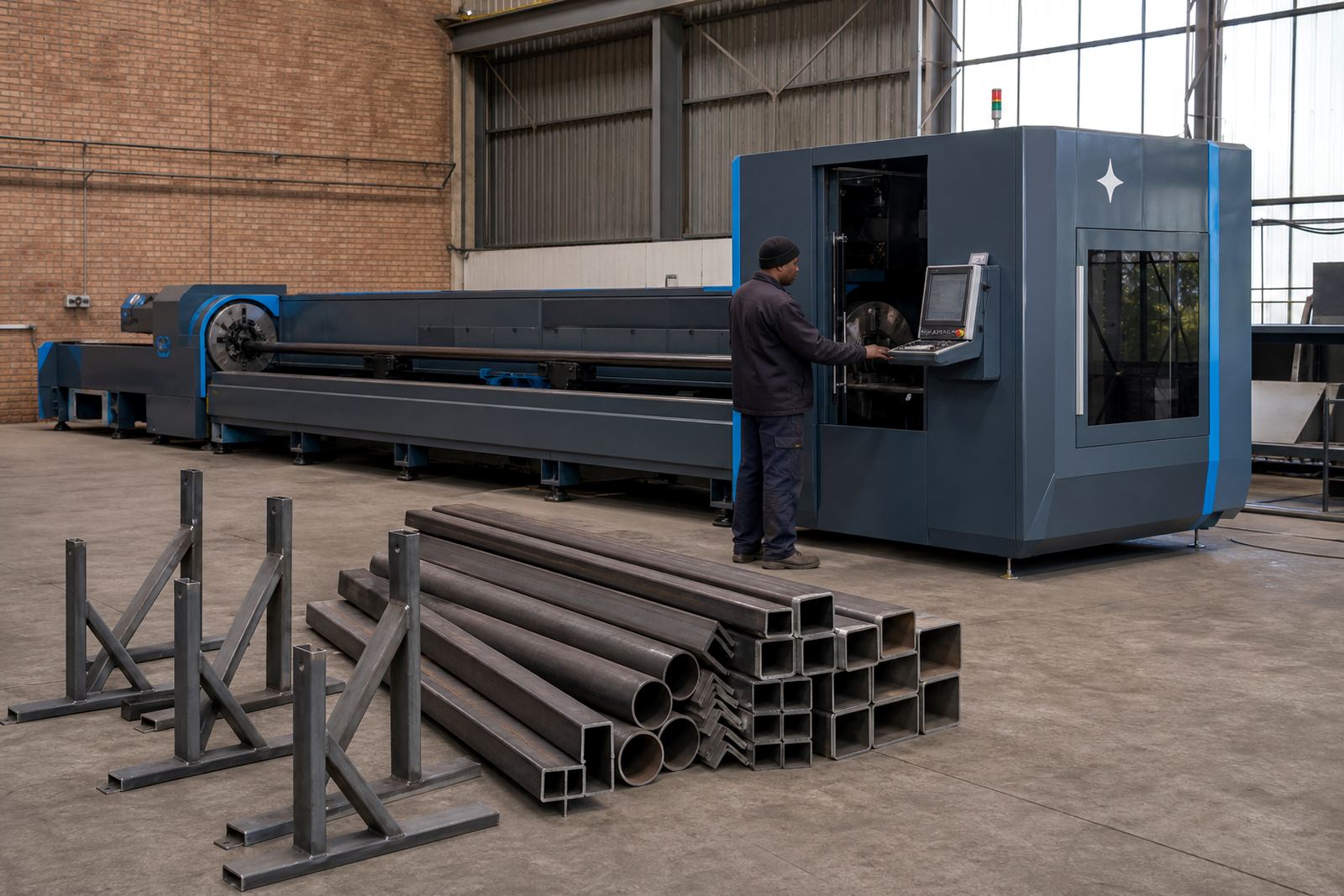
We supplied a fibre laser tube and profile cutting machine configured for mixed structural and light fabrication work. The machine setup suited tube and open profile work, with chuck handling for round, square and rectangular sections, plus angle and channel. A bevel head was included for jobs that need angled edge preparation or more demanding fitment on welded assemblies.
The package also covered the practical pieces that make the machine usable on a real shop floor:
- Site assessment for layout, access and handling space
- Delivery rigging into the workshop area
- Machine installation and commissioning
- Assist gas setup for the cutting process
- Nesting software training for grouped production runs
- Hands-on operator instruction for routine running and safe material handling
For a signage operation, the machine needed to support both short parts and longer runs without awkward repositioning. The chuck system helped with stable clamping, while the nesting workflow made it easier to arrange repeated components for frames, brackets and support pieces. The result was a setup that matched the way the shop actually builds its jobs.
The installation window and line-up checks
From the initial site assessment through to production handover, the work took three weeks. The opening stage covered floor space, entry route checks and the practical movement path for the machine components. Wadeville to Midrand is an easy supply route, but the workshop still needed careful rigging planning because machine weight, turning space and final position all matter once delivery begins.
During installation, the team checked bed level, beam movement, chuck alignment and the relation between the laser head path and the material support line. The assist gas setup was matched to the work expected in the shop, with the aim of giving consistent cut quality on the tube sizes used most often. Safety checks were completed around guarding, access points and operator movement around the machine.
Small setup details made a difference. If the clamp pressure is too high, thin wall tube can distort. If the alignment is off, end faces stop matching the fixture points during assembly. Those checks were handled before the first production batch was released, so the workshop did not have to absorb avoidable scrap in the early runs.
Training for grouped runs and day-to-day use
Training focused on the tasks the Midrand team would repeat every week. The operator group worked through loading, clamping, job setup, nesting, test cuts and basic checks before releasing a batch. The training also covered how to read profile orientation, how to keep tube lengths consistent and how to work through changes in wall thickness without drifting off spec.
The nesting software session was aimed at production habits, not theory for its own sake. The team learned how to group similar frame parts, set offcut use rules and keep an eye on cut sequence so parts stayed stable during cutting. That matters when the shop is processing light sign frames in batches, because a poor nesting order can waste both time and usable material.
- Loading and clamping for mixed profile sizes
- Setting cut order for batch work
- Basic maintenance checks before a shift
- Safe handling around moving chucks and cutting zones
- Using nesting software for repeat frame parts
Leanne handled the training flow with the operators, while Sibusiso led the mechanical handover and machine setup checks. Pieter stayed involved on the service side for technical follow-up, and Ayanda supported the applications side when the cutting sequence needed adjustment for the shop’s part mix.
What changed in the workshop after handover
After commissioning, the fabricator could run grouped orders with less manual rework. The frame parts came off the machine in a more repeatable format, which helped the fitters at assembly and reduced the amount of trimming needed at the bench. The shop also had a clearer way to plan batches around the shapes it used most often.
One useful gain was the stability of the cut parts on visible sign frames. Cleaner end faces and steadier dimensions made the fabrication sequence smoother, especially where multiple members had to line up into a lightweight frame. The machine also made it easier to handle mixed profiles in the same production period, so the team did not have to split jobs across different cutting methods as often.
The workshop came away with a maintenance routine that was easier to apply in day-to-day production. Chuck alignment checks, gas setup checks and basic cleaning steps were built into the workshop routine, which helps keep the machine consistent over time. That matters in a signage shop where order sizes change and the same material may be used in several different frame styles during the week.
How we would approach another signage shop job
A job like this benefits from careful layout planning before the machine lands on site. The loading route, finished position and operator movement space need to be set early, especially where the workshop runs a busy fabrication floor. That avoids last-minute changes while the rigging crew is already on site.
We would also keep the training tightly linked to the actual parts being cut. For a Midrand signage shop, that means using real frame members in the setup session rather than abstract examples. The crew learns faster when the parts in front of them match the jobs on the machine.
- Plan the machine position around material flow and offcut handling
- Train operators on the exact profile mix used in the shop
- Set the assist gas and chuck checks around the normal batch sizes
- Build a maintenance routine around daily use, not guesswork
The final result was a practical machine fit for light sign frame work, with a setup that matched grouped production instead of forcing the shop into awkward handling. For a Midrand fabricator handling repeated runs and mixed profile parts, that kind of result keeps the work moving steadily.
Key facts
| Project type | Midrand signage shop fibre laser tube cutting job |
|---|---|
| Client type | Metal fabricator making light sign frame parts |
| Location | Midrand, Gauteng |
| Material range | Round, square and rectangular tube, plus angle and channel |
| Scope | Assessment on site, rigging for delivery, machine installation, commissioning, and operator training |
| Timeline | 3 weeks from assessment to handover |