Job brief from a Pinetown fabrication shop
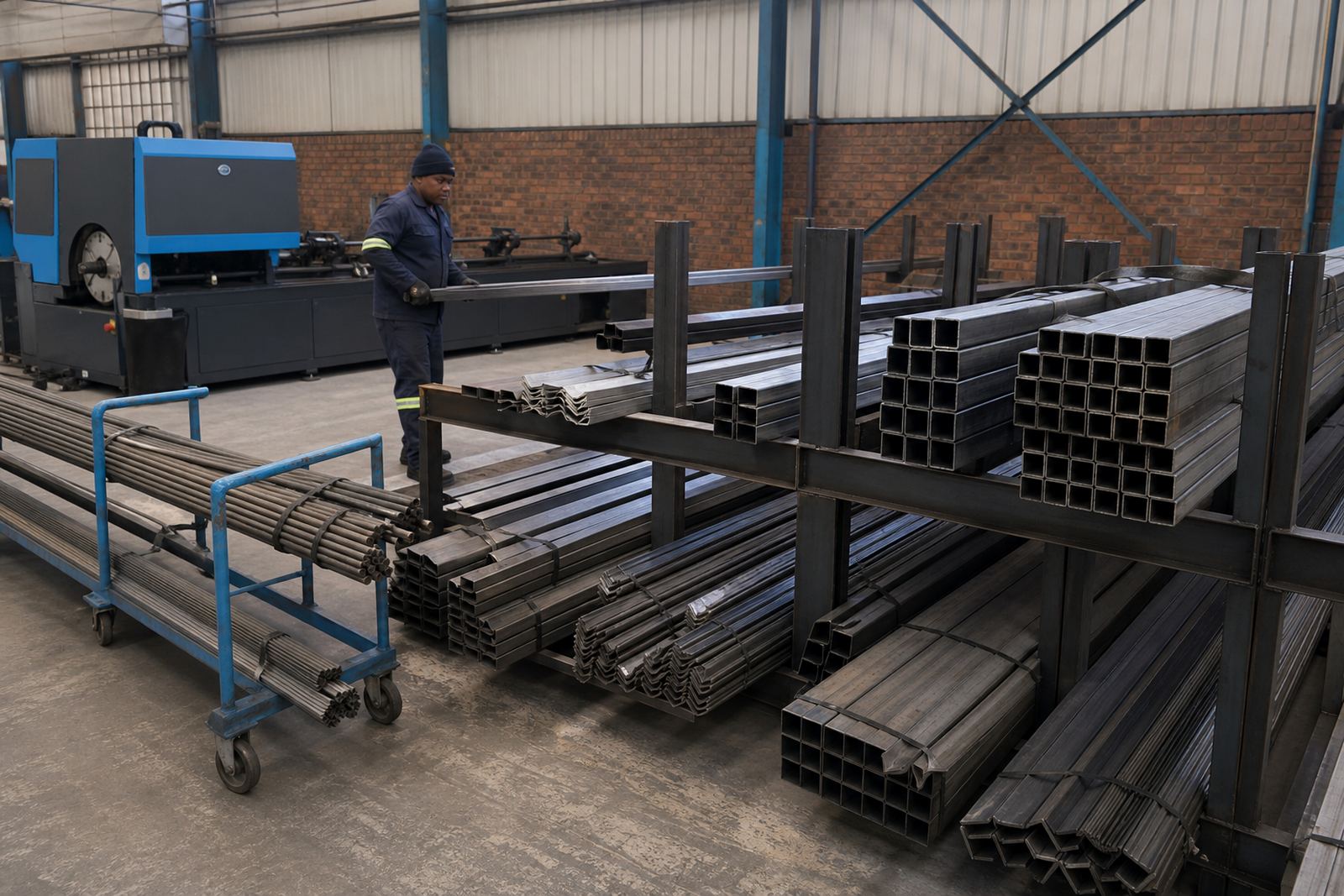
The work centred on parts for rugged farm equipment, with a steady mix of round tube, square tube, rectangular tube, angle and channel. The team wanted neater cut faces, fewer grinding hours and a better way to keep repeatable hole positions and slot details across short runs and batch work.
The workshop was handling mild steel sections in mixed sizes, with many components needing accurate notching before welding. Their old cutting method was producing too much secondary finishing, so the brief called for a fibre laser tube and profile cutting machine that could handle varied section profiles without slowing the shop down.
- Town: Pinetown, KwaZulu-Natal
- Part mix: tube, angle, channel and profile blanks
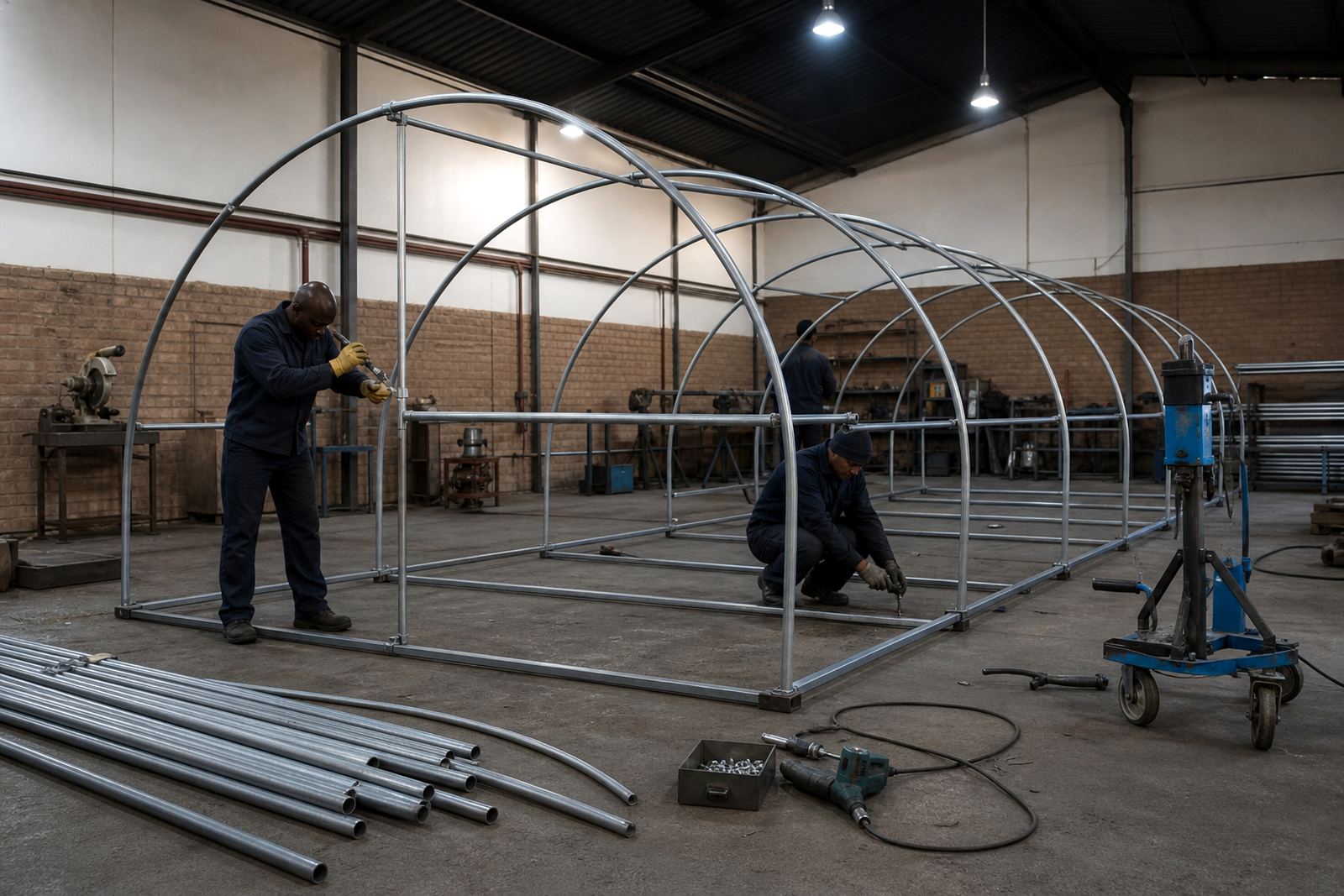
- Use case: field equipment frames, brackets and support members
- Production style: short runs with repeat jobs through the month
Constraints in the workshop and on site
The floor space available for the machine had to fit around existing fabrication bays, material staging and welded assembly areas. Access for delivery rigging mattered as well, because the machine had to move into position without disturbing the rest of the workshop layout.
Part nesting also needed attention. The client wanted better use of offcuts, especially on shorter tube lengths and plate parts that were being cut from the same line. Dust, cut fume control and safe operator movement around the loading side were part of the setup conversation too.
- Limited floor area near welding and assembly stations
- Mixed section sizes with frequent changeovers
- Need to reduce hand finishing after cutting
- Safe loading, unloading and part handling around the machine
What we supplied for tube and profile cutting
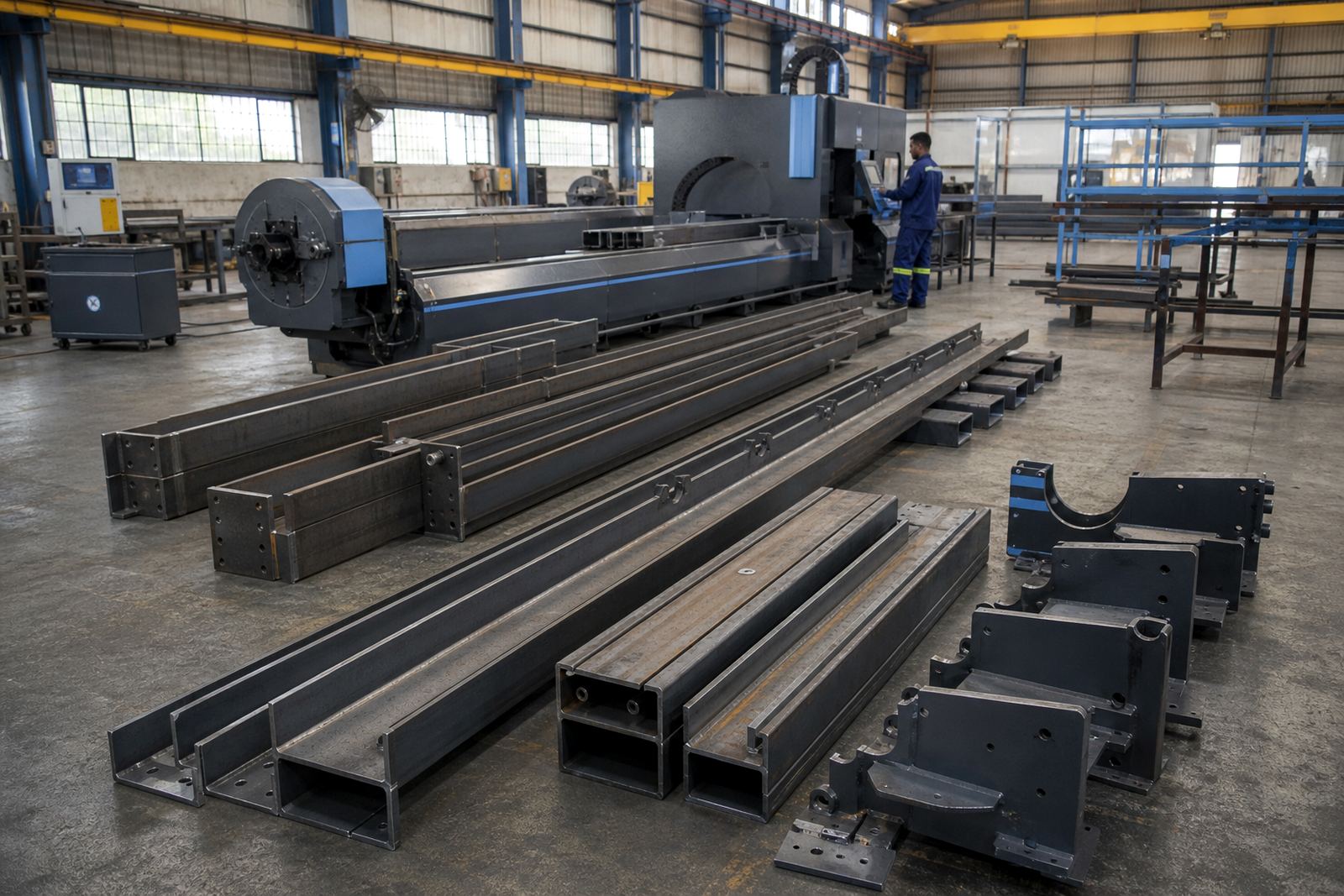
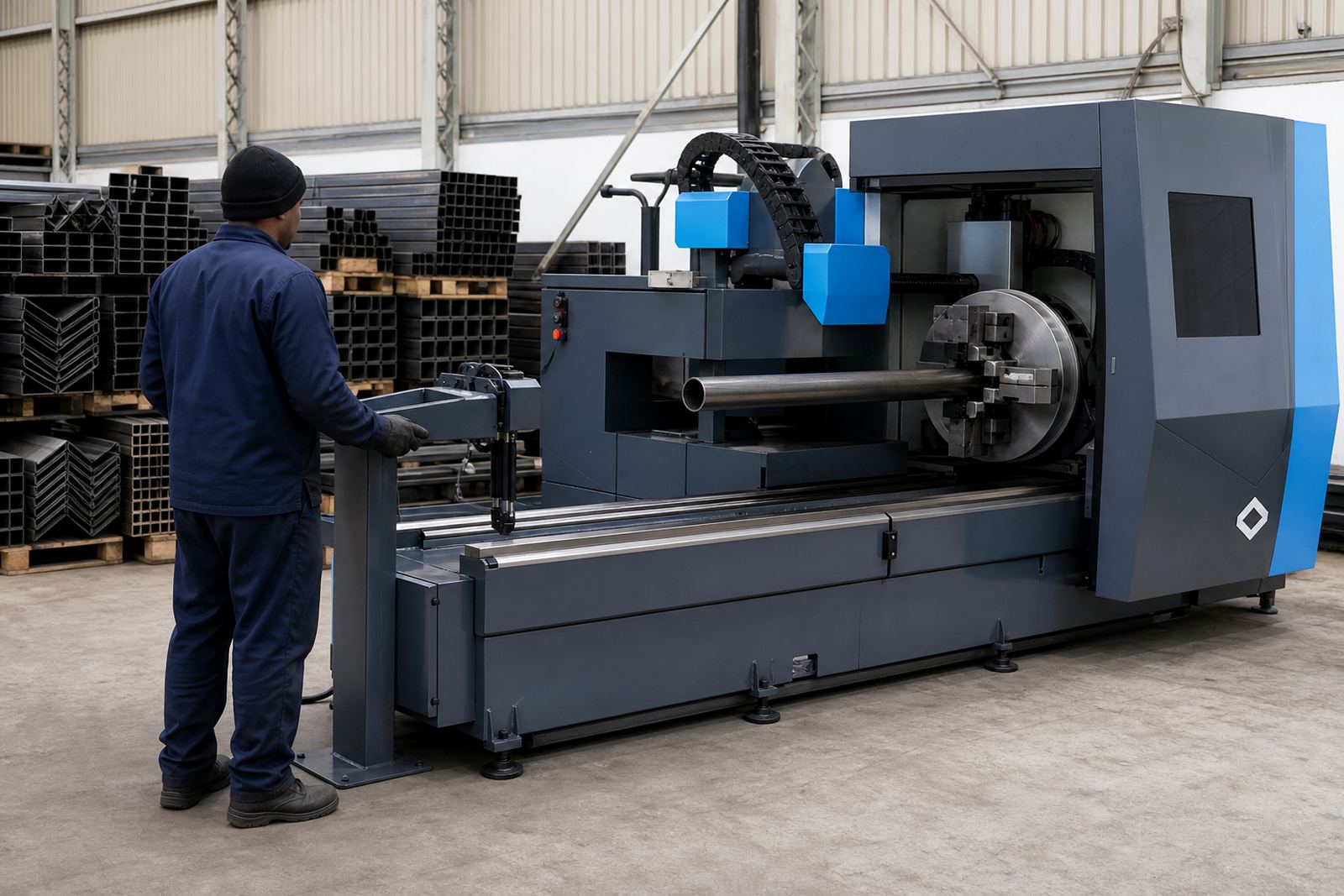
We supplied a fibre laser tube and profile cutting machine set up for round, square and rectangular tube, plus angle and channel work. The machine package included chucks for secure clamping, a bevel head for angled cutting where required, nesting software for part layout and the assist gas setup needed for clean edges on the material range they were processing.
Installation covered machine placement, levelling, connection checks and full commissioning. Our applications work included cut setting checks for the common section sizes, then operator training so the team could manage job loading, part offsets, basic nesting and routine checks without guessing at settings.
- Fibre laser tube and profile cutting machine
- Chuck system for tube holding and rotation
- Bevel cutting head for angled edges where required
- Nesting software for material use and job planning
- Assist gas setup for cut quality and edge finish
- Operator training and nesting training for the workshop team
Installation week and handover in Pinetown
The project ran over a three week period from delivery planning through to production handover. The first week covered site assessment and rigging planning, the second week was dedicated to delivery, machine placement and installation, and the third week focused on commissioning, test cuts and hands-on training with the operators.
During commissioning, the team checked tube alignment, chuck grip, bevel calibration and the gas setup on the more common jobs. Our aim was to get the machine running and to leave the shop confident with a repeatable process for the parts they cut each week.
- Week 1: site assessment and rigging plan
- Week 2: delivery, machine placement and installation
- Week 3: commissioning, test cuts and training
- Follow-up: preventive maintenance guidance and breakdown support access
Results on the shop floor
Once the machine was in production, the workshop had cleaner cut edges on tube and profile parts, with less grinder time before welding. Hole positions, mitres and notch details were easier to repeat from one batch to the next, which helped the fitters hold consistency across the frames and brackets they were building.
The change also improved material use. Nesting software made it easier to plan cuts around the stock on hand, and the operators had a clearer routine for setting up jobs, checking clamp positions and confirming gas flow before starting a run. That cut down on avoidable scrap and kept the cut line moving with less interruption.
- Cleaner edges and less secondary finishing
- More repeatable fit-up on tube and profile parts
- Better stock use through nesting control
- Operators using a more consistent setup routine
What we would apply to a similar job
On a similar Pinetown job, we would again start with the actual part mix and the workshop flow around it. That means checking the common section sizes, the loading side, the cut list and the handover area before the machine is placed, rather than treating the installation as a stand-alone event.
We would base operator training on the client’s own parts and daily production work. When operators learn on the brackets, frames and tube sections they cut every day, the machine settles into production faster and the settings are easier to remember. For a shop running field equipment parts, that practical link matters more than a long theory session.
- Match the machine setup to the real part mix
- Plan loading and unloading around the workshop layout
- Use the client’s current cut list for hands-on training on active jobs
- Keep alignment, gas and nesting checks part of the routine
Key facts
| Project | Pinetown farm equipment parts fabrication |
|---|---|
| Location | Pinetown, KwaZulu-Natal |
| Machine type | Fibre laser tube and profile cutting machine |
| Sections processed | Round tube, square tube, rectangular tube, angle, channel |
| Services delivered | Site assessment, delivery rigging, installation, commissioning, operator training, nesting training |
| Project duration | 3 weeks from assessment to handover |