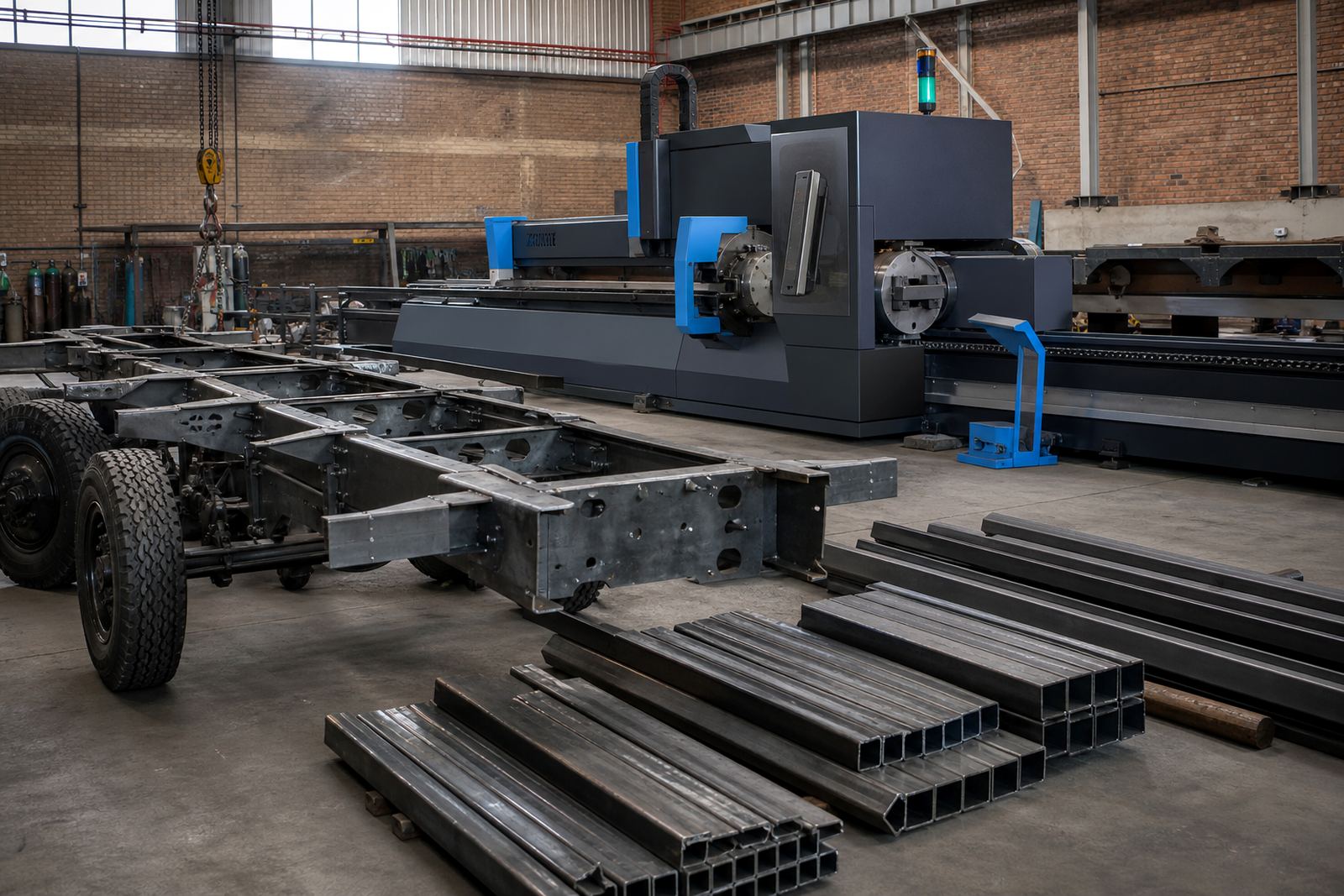
The workshop brief from Gqeberha
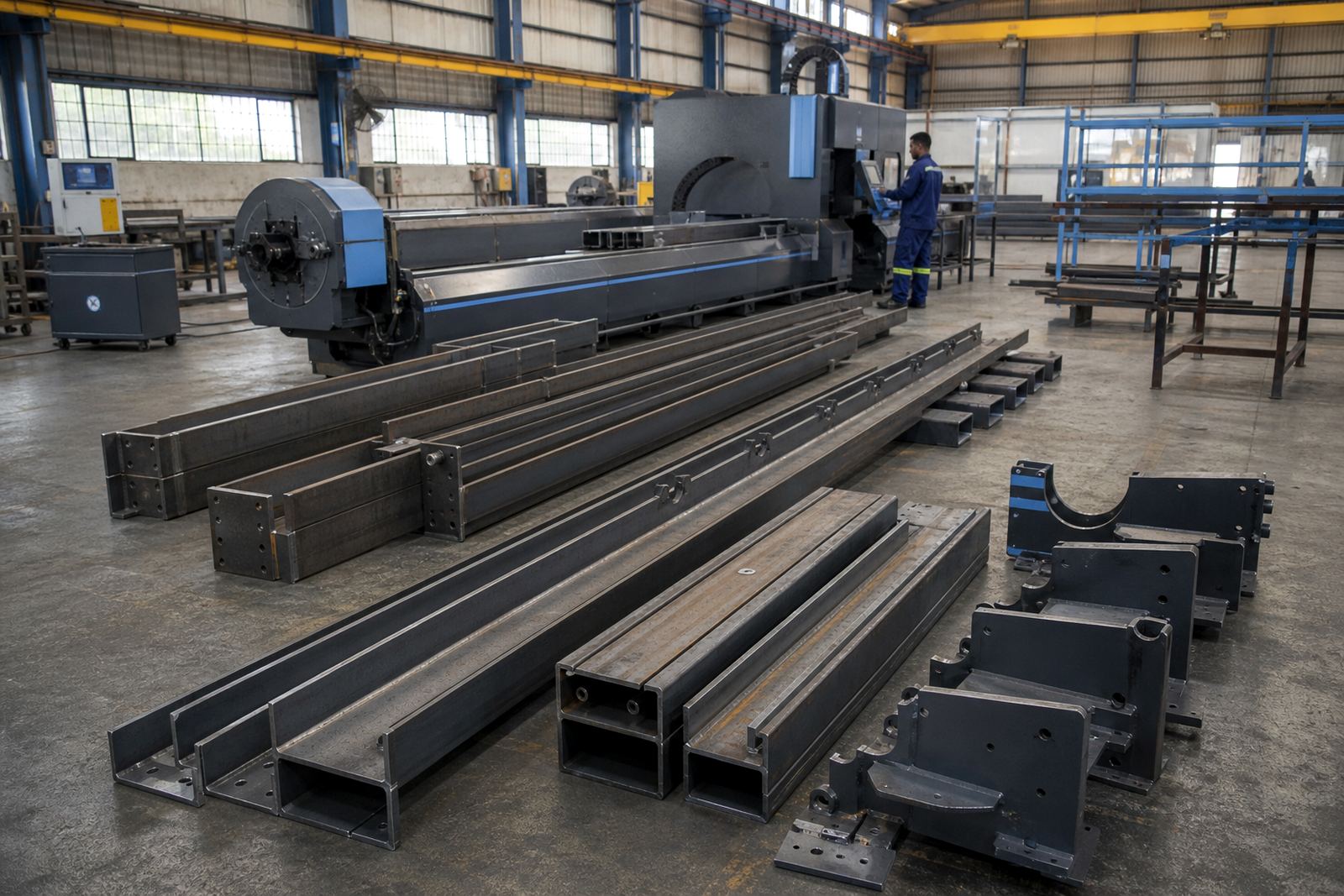
The job came from a busy metal workshop in Gqeberha that builds truck bodies, fitments and support structures for local operators. Their cutting work had moved past manual sawing and drilling, so the team needed a fibre laser tube and profile cutting setup that could handle round tube, square tube, rectangular tube, angle and channel with tighter fit-up on assemblies.
The brief was practical. They wanted cleaner ends, more consistent hole patterns and less time spent on marking, grinding and rework. The workshop also needed a machine that could suit mixed jobs, because one shift could include chassis members, cross braces, brackets and support rails for different body types.
- Mixed structural sections for body-building work
- Consistent repeatability on batch parts
- Cleaner fit-up for welded assemblies
Constraints on the floor in Gqeberha
The site had a working fabrication floor with limited spare space, a steady flow of repair and build work, and a strong need to keep material movement organised. Coastal conditions in Gqeberha also mattered, because stored steel and machine surfaces need sensible housekeeping where moisture can settle into corners and around cut stock.
There was also a real production constraint. The workshop could not afford a machine that needed constant juggling between operators or difficult handovers between nesting, loading and cutting. They wanted a setup that could be taught properly, with clear machine routines and safer handling around clamping, loading and offcut management.
- Floor space had to suit a production workshop layout
- Material handling needed clear paths around the machine
- Training had to fit an active fabrication team
The machine package and setup we supplied
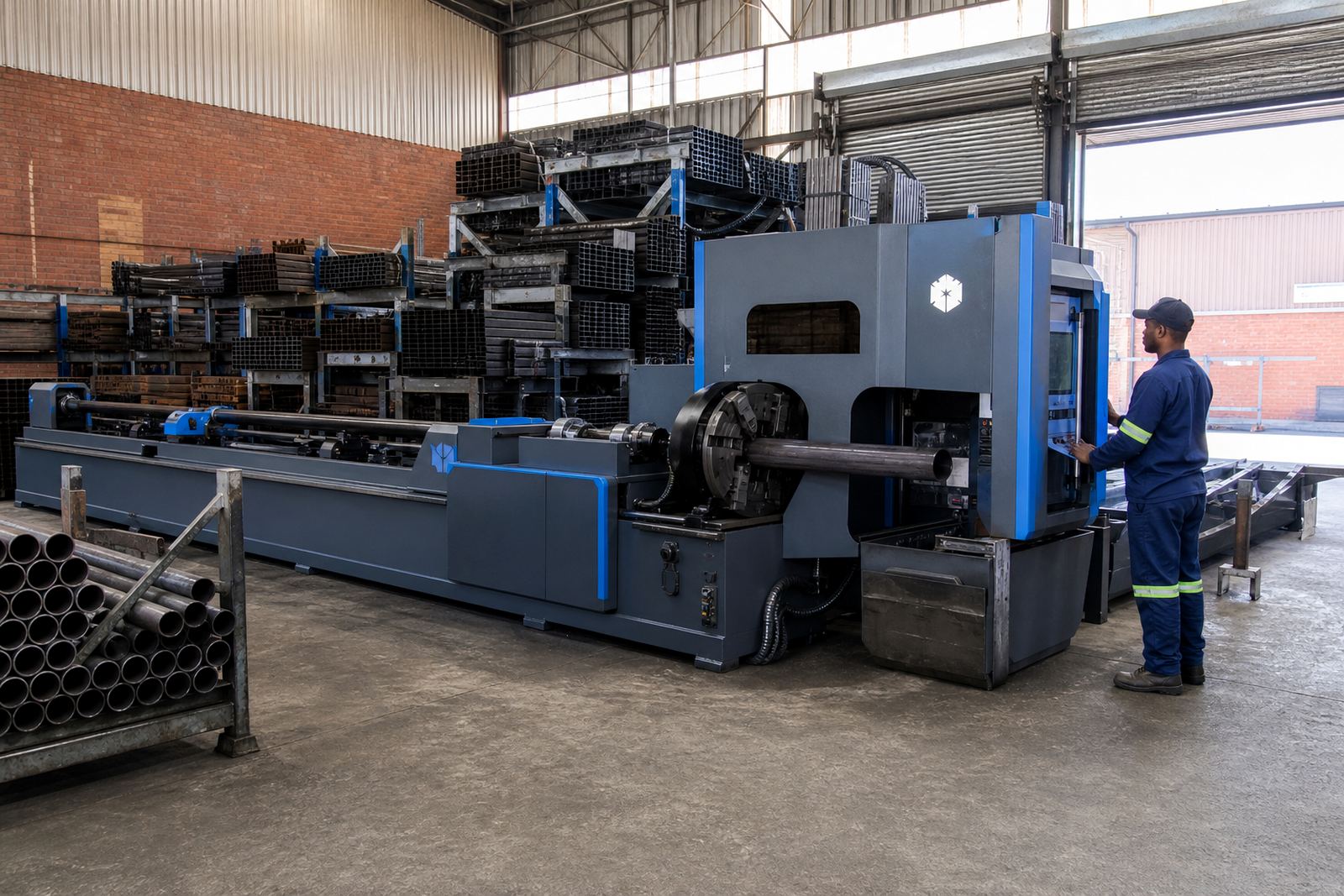
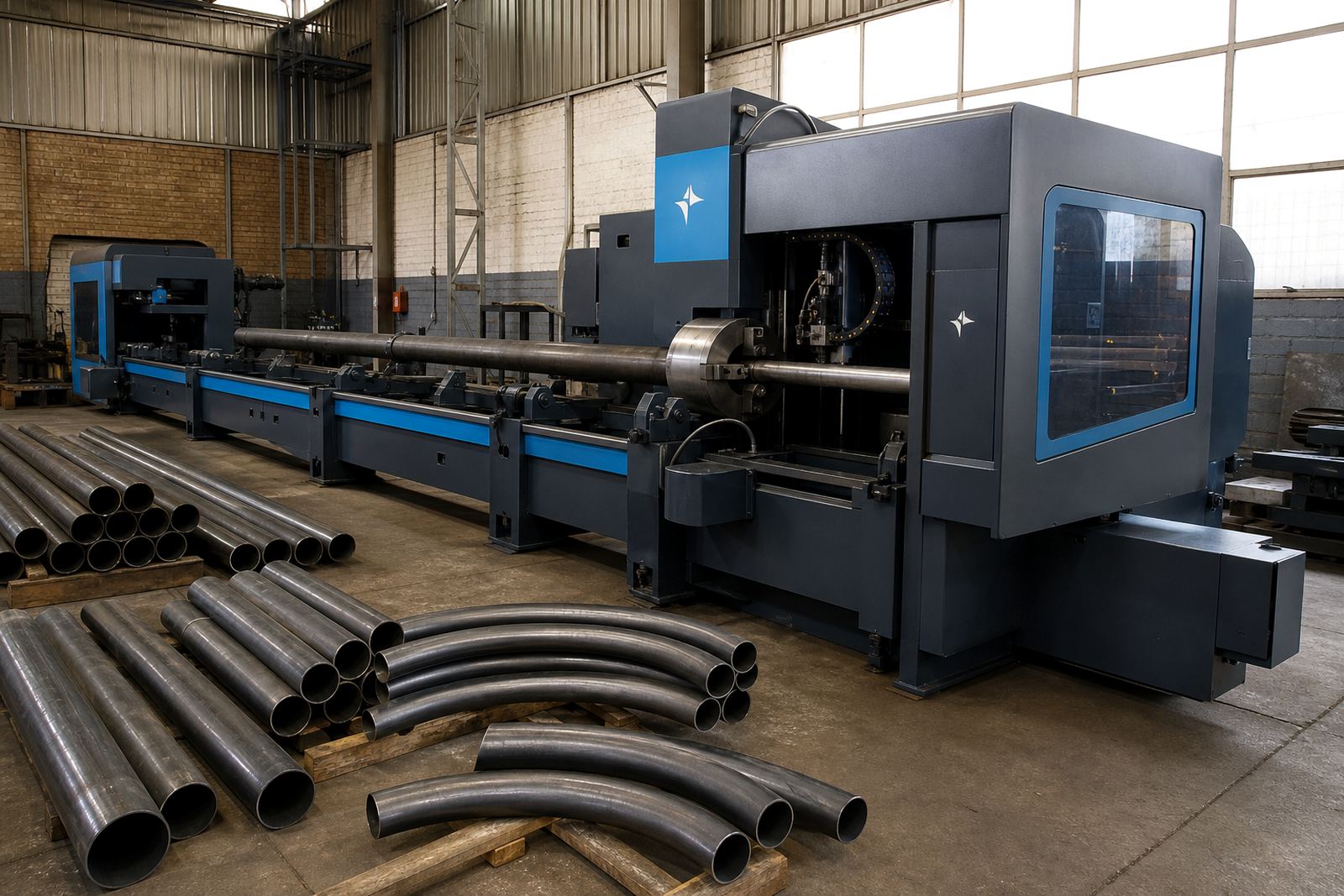
LaserTube supplied a fibre laser tube and profile cutting machine matched to the workshop's section sizes and output needs, together with the practical setup work needed for production use. The package included chuck handling for tube and profile clamping, bevel head capability for angled cuts where the job called for it, and nesting software for arranging parts efficiently on material lengths.
We also handled the support work around the machine itself. That included delivery rigging, installation, commissioning, assist gas setup and the first round of operator training. For safety and day to day control, we worked through guarding, access zones, cut planning, scrap handling and the checks needed before starting a shift.
- Fibre laser tube and profile cutting machine
- Chuck system for round and shaped sections
- Bevel cutting setup for selected jobs
- Nesting software for layout and material use
- Assist gas setup for cutting quality and edge finish
Training the team on real parts
The training focused on the parts this workshop actually cuts, not on generic sample work. Leanne Mabuza and Ayanda Mashaba worked through loading, clamping, program selection, nesting basics and first article checks using tube and profile sections similar to the truck body components in daily use.
We spent time on operator routine as well. That covered chuck alignment, how to check tube position, how to keep bevel work consistent, and how to spot edge issues before a batch runs too far. The aim was for the team to understand both the screen and the metal, so the machine could slot into normal workshop flow without confusion.
- Operator routine for loading and unloading sections
- Nesting training for efficient material use
- Bevel calibration checks for angled cuts
- Chuck alignment and part centring practice
Timeline from delivery to cutting parts
The project ran over six weeks from site assessment to parts under the torch. Delivery rigging and installation were completed first, then commissioning followed once the machine was level, connected and ready for dry checks. After that, the team moved into live cutting, with applications support from Ayanda Mashaba and service follow up from Pieter Visser.
That sequence mattered because the workshop could not stop and start repeatedly. The handover had to fit the rhythm of fabrication work, so the machine was introduced in controlled steps. The result was a cleaner start to production, with the first tube and profile jobs set up in a way that made later repeats easier to manage.
What changed on the body-building jobs
Once the machine was in use, the workshop had a better way to cut frame members and support pieces with consistent length, hole position and end preparation. That reduced grinding and manual correction, especially on parts that needed to line up across repeated builds. The team could also keep more of the geometry in the cutting process instead of pushing it into fit-up on the welding bench.
For a Gqeberha body builder, that meant a steadier workflow and less wasted time on rework. It also helped the workshop manage mixed orders more confidently, because the machine could be used for new builds, repairs and small batch production without changing the basic approach each time.
- Cleaner fit-up on frame members and supports
- Less manual marking and rework
- More consistent repeat parts for body assemblies
Priorities for the next truck body shop
Any truck body shop we equip next gets the same three priorities: its real section sizes, its handling flow and training for the people who run the machine daily. That is where tube laser work succeeds or gets awkward, because the machine has to match the parts, the pace and the layout of the floor.
We would also keep a close eye on gas setup, chuck handling and bevel checks from the beginning. Those details decide whether the machine produces tidy parts or creates extra correction work, and they matter even more where a workshop is building structural items that must land squarely in the jig.
Key facts
| Project | Gqeberha truck body workshop |
|---|---|
| Town | Gqeberha, Eastern Cape |
| Work scope | Frame members and body supports |
| Machine type | Fibre laser tube and profile cutting machine |
| Supported sections | Round, square, rectangular tube, angle and channel |
| Timeline | 6 weeks from site assessment to live cutting |