Durban sites we work on, from light fabrication to heavier production
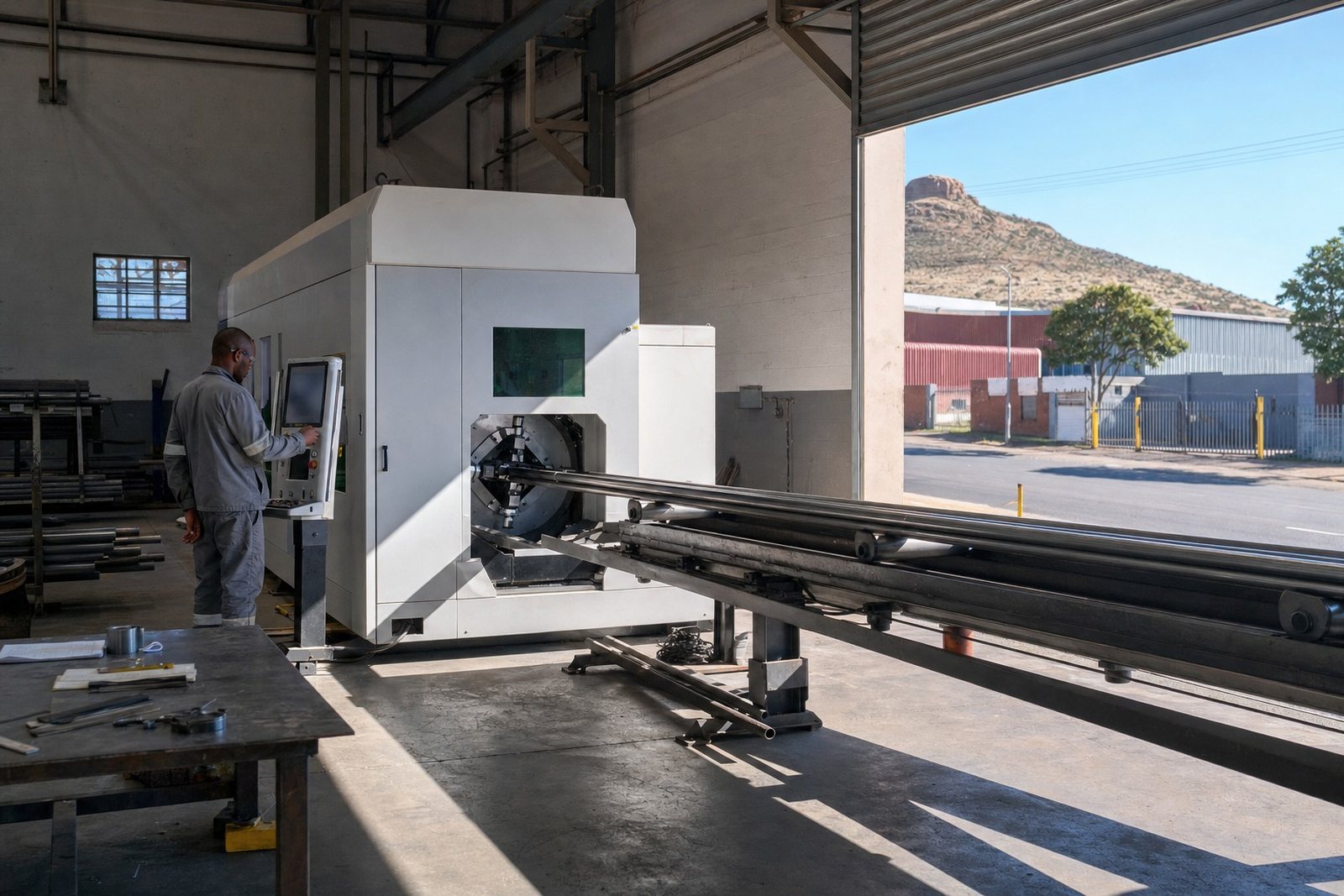
Durban calls for machines that can handle mixed work, from handrails and truck body parts to frames, racks and structural sections. We support metal fabricators in Pinetown, Mobeni, Jacobs, New Germany and Durban North, along with plants serving the port, the logistics belt and inland distribution yards.
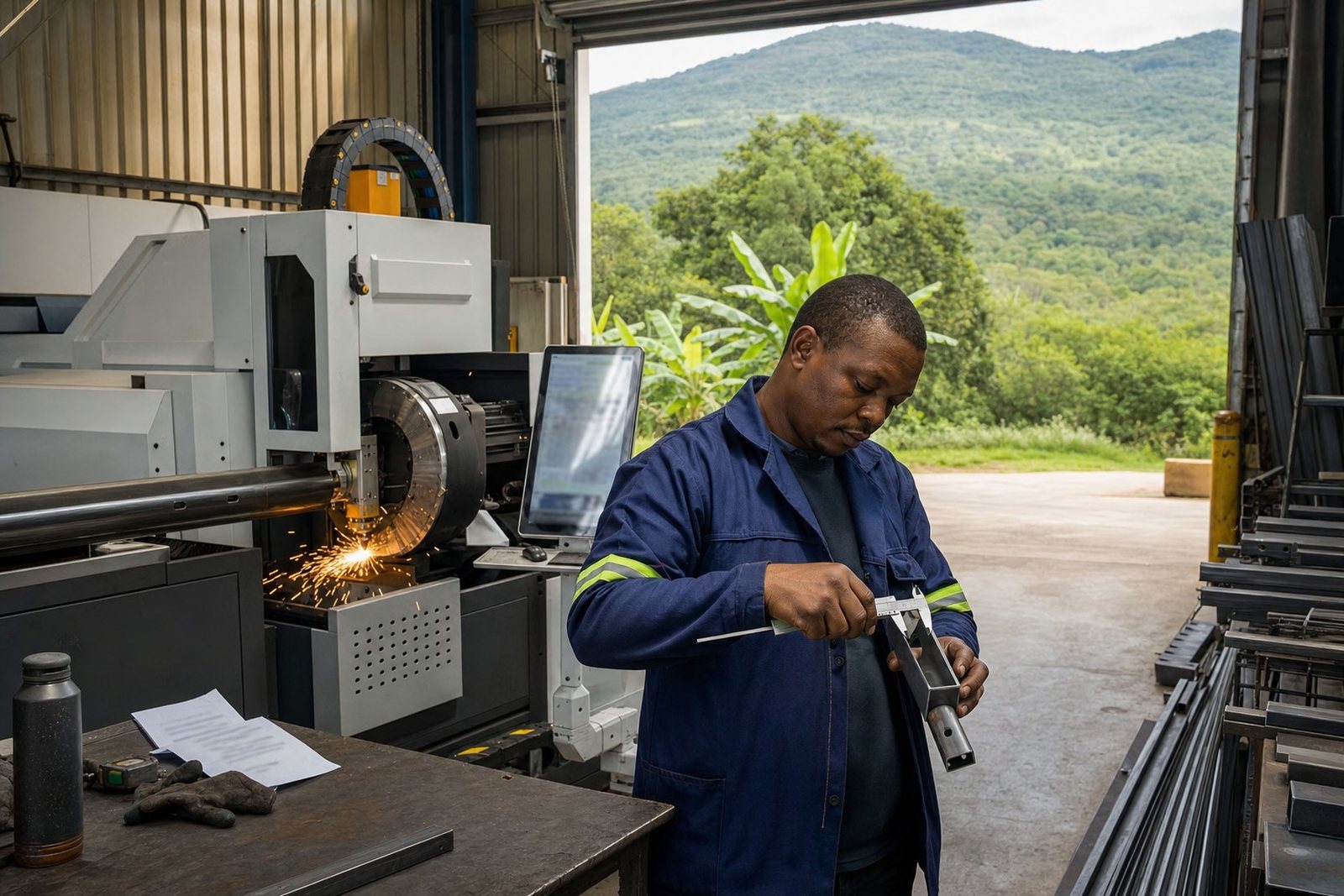
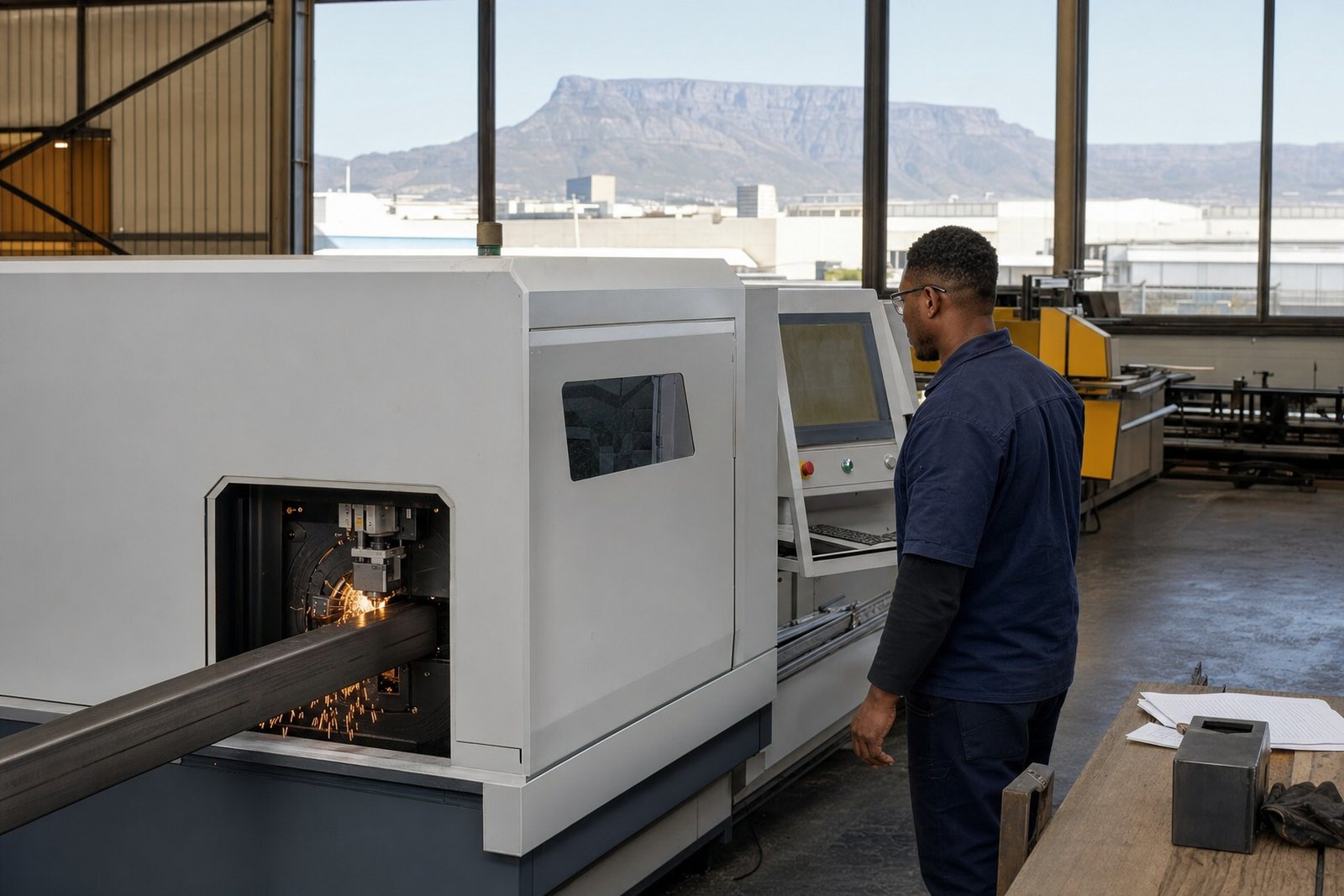
Typical users include job shops, sheet metal workshops, steel fabricators, vehicle fitment teams and production lines that cut repeat tube parts in steady batches. On the coast, we plan machine placement and air flow so the floor stays clean and workable.
- Round tube for handrails, frames and furniture parts
- Square and rectangular tube for equipment frames and racking
- Angle and channel for brackets, supports and light structural work
- Bevel cutting where weld prep needs a cleaner edge
What the Durban team asks us to cover
Many Durban clients want a single setup that handles cutting, loading, nesting and day to day production control without drama. We cover site assessment, delivery rigging, machine installation, commissioning, operator training, nesting training and preventive maintenance. Where the job needs it, we also handle chuck alignment, bevel calibration and assist gas setup.
Tube machines need correct clamping, straight feed, stable support and clean alignment through the full length of the part. If the setup is off, the cut quality drops and the material waste climbs. That is why we spend time on the first setup, not just the handover.
- Chucks sized for the tube range and part lengths in use
- Bevel heads for edge preparation on suitable jobs
- Nesting software for tighter material use and cleaner batch planning
- Assist gas setup for the material mix and cut edge required
Coastal conditions and workshop realities in Durban
Durban air carries more moisture than inland sites, especially close to the coast and the harbour side industrial areas. That means attention to corrosion control, sealed storage for consumables and clean handling around optics, guides and pneumatics. A machine can be a good fit on paper, then struggle if the workshop layout ignores dust, salt and poor material flow.
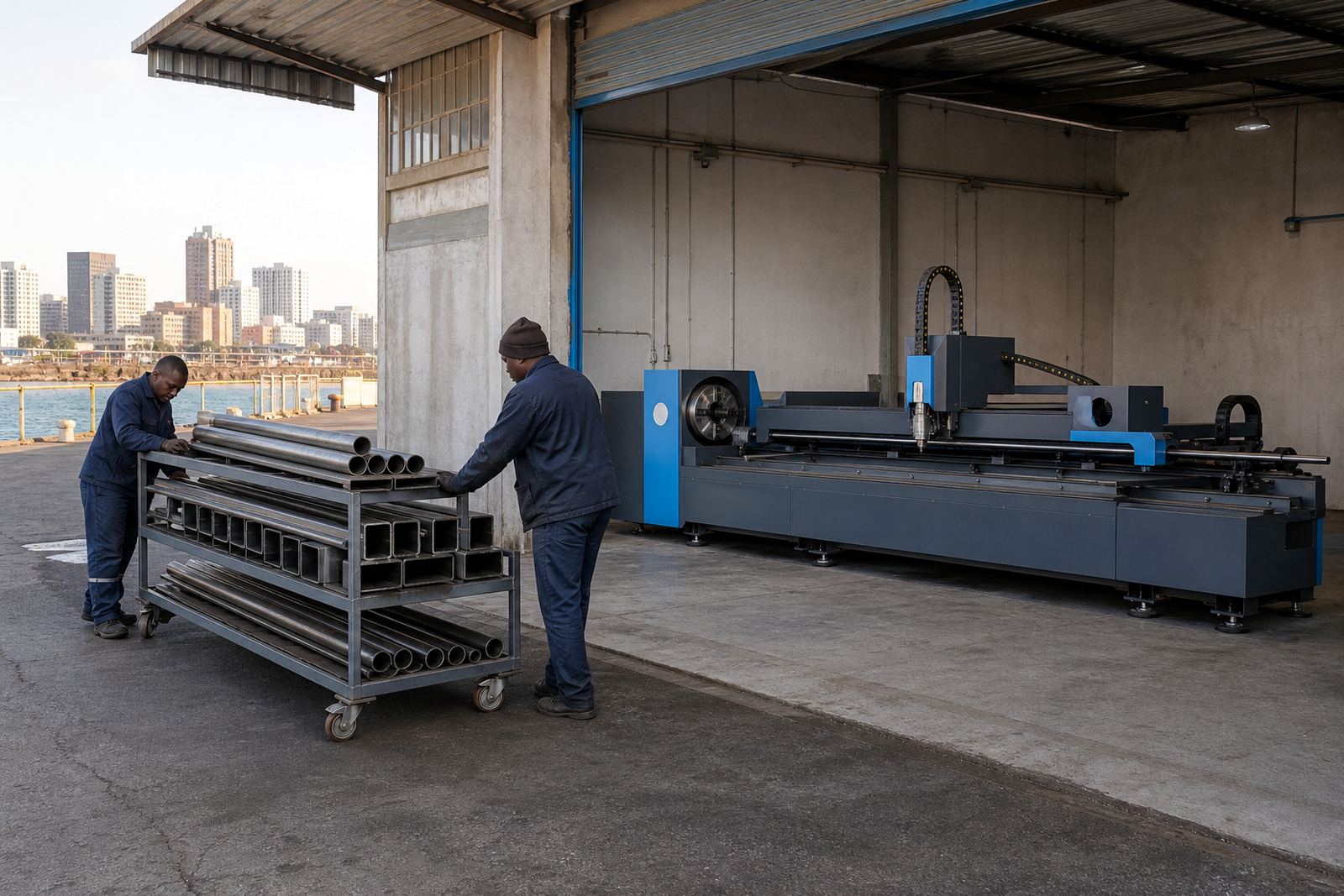
We look at floor space, tube loading paths, overhead clearance, ventilation, gas bottle placement and the route finished parts take out of the bay. In a busy workshop, a tidy flow saves lifting, cuts scrap handling and keeps operators from working around each other. Practical workshop details carry the same weight as the cut specification.
- Humidity control around stored tube and spare parts
- Room to load and unload material, with an area set aside for stacking finished parts
- Safe routes for lines, cable runs and operator movement
- Cleaner conditions around the laser head and clamping area
Installation support for Durban and nearby industrial corridors
For Durban projects, we plan the install around site access, rigging needs and the workshop's production window. Some sites sit in tight industrial yards with limited crane access, while others have long bays and enough room for staged offloading. Either way, the goal is a controlled installation, not rushed assembly.
Our installation lead works with the site team on positioning, levelling, alignment, gas connection layout and machine checks before production starts. If the machine is moving from a smaller manual process to a more automated tube line, we also help the team adjust the cutting sequence, material handling and part sorting. That shift is often where the real production gain shows up.
Durban clients also ask for service support after start-up, especially where production runs are tight and changeovers need to stay orderly. Preventive maintenance, breakdown response and remote diagnostics all matter when a plant is working through mixed part sizes or recurring work.
Training for operators, setters and production teams
Training needs to fit the floor, not a perfect classroom. We train operators on machine operation, safe loading, basic checks, nesting use, gas settings, chucks and bevel functions where fitted. When a team has more than one shift, we shape the session around the people who actually run the equipment, not only the supervisors.
Leanne Mabuza coordinates training sessions, while Ayanda Mashaba handles applications support for cut quality, part layout and process questions. That combination helps when a workshop is moving from manual cutting or outsourced jobs into in-house tube processing. Our goal is consistent production with less downtime that can be prevented.
- Training for operators on machine controls and safe handling procedures
- Nesting training for material use and part layout
- Basic fault finding for everyday workshop checks
- Support for setters working with repeat jobs and mixed profiles
Starting a Durban project
Durban fabricators can open a project on the contact form, with the site location, material types, tube sizes and output targets noted from the start. That helps us match the machine size, chuck setup, bevel needs and handling plan to the actual workshop.
Michael Dlamini leads the business from Wadeville, Germiston, with Anika Kajee on sales coordination and Pieter Visser handling service support. The wider team covers Johannesburg, Pretoria, Durban, Cape Town, Gqeberha, Bloemfontein and Nelspruit, so Durban jobs are part of a broader South African support footprint. If a site needs a visit, the travel plan is arranged around the work, the area and the installation scope.
Durban fabricators often want equipment that can take everyday pressure without becoming difficult to run. That is the level we work to: practical machine fit, proper setup and a workshop team that knows the equipment on the floor.