Nelspruit workspaces and the kind of jobs they run
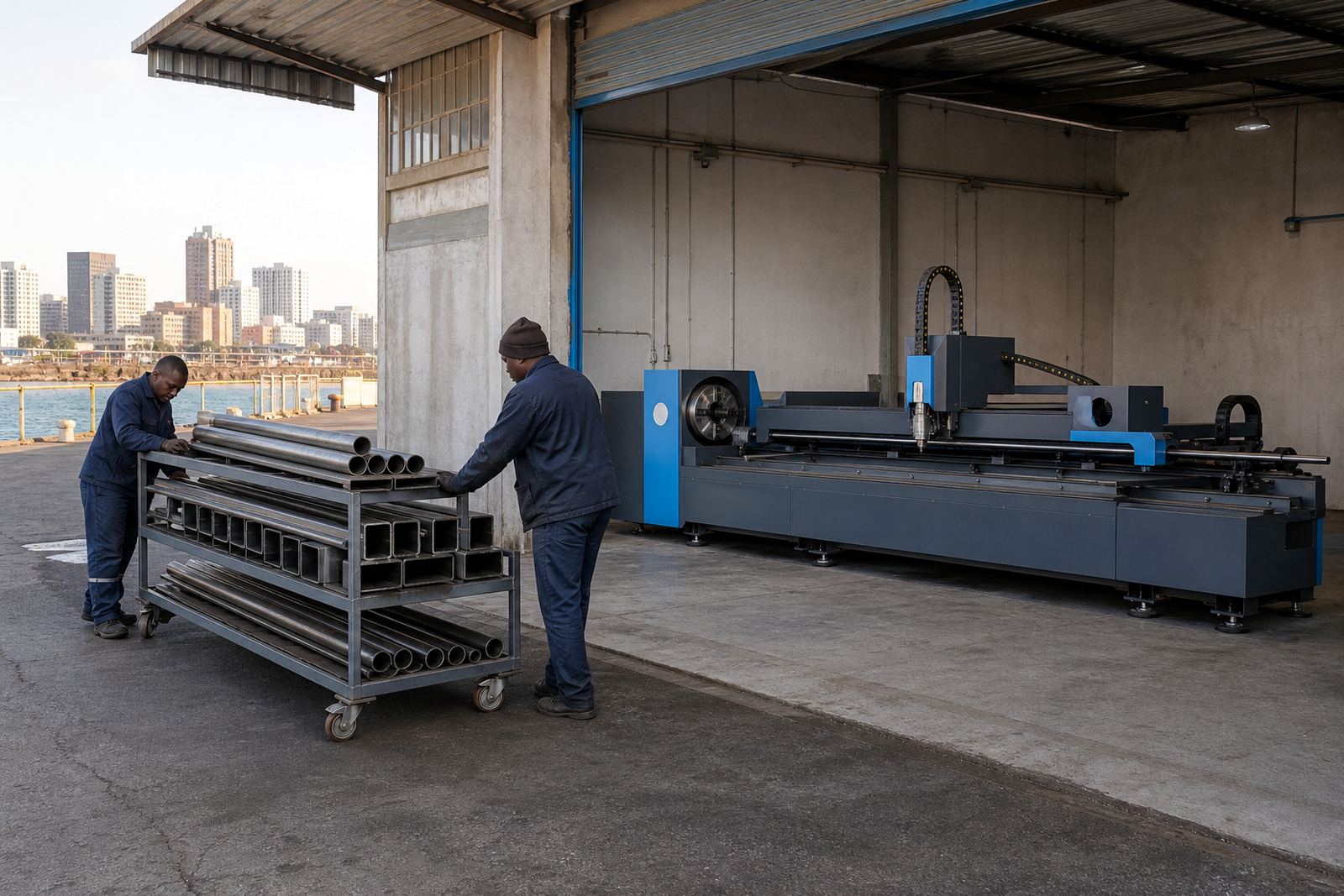
In and around Nelspruit, tube and profile cutting often feeds gate makers, balustrade shops, structural fabricators, trailer builders and general steel work. Material usually includes round tube, square tube, rectangular tube, angle and channel, with cut lengths that must move cleanly from receiving, to machine table, then into bending, welding or assembly without extra handling.
The local mix also brings site conditions that matter. Warm weather, dust from yards and road movement around the workshop can affect storage, alignment and daily cleaning, so machine placement and access need practical thought before delivery starts. Where a shop handles both short runs and repeat parts, nesting set-up and chucking choices need to suit the actual parts list, not a wish list.
- Tube parts for fencing, handrails and frames
- Profile parts for brackets, gussets and brackets with repeated holes
- Jobbing work with different requirements on each order
- Longer production runs for steady plant output
What gets planned before a machine lands on site
Every installation call starts with site assessment and practical checks around floor space, lifting routes, door widths and the path from the delivery truck to the machine position. If a shop in Nelspruit has limited crane access or shared yard space, rigging notes have to reflect that, because the machine body, support equipment and tube loading path all need room. The goal is not a neat brochure layout, it is a workable floor plan.
For tube and profile cutting, the machine package can include a suitable chuck arrangement, bevel head where angled edge preparation is required, assist gas setup and nesting software suited to the parts the shop actually runs. Safety covers guard positions, access points and operator routines that suit a busy metal workshop, including clean entry points, cut zone awareness and sensible storage around the machine.
- Site assessment for floor space, access and lifting route
- Delivery rigging for the machine body and support items
- Machine installation and commissioning on site
- Assist gas setup for the cutting work planned
- Safety checks around guards, access and operating position
Tube and profile cutting features that matter in real production
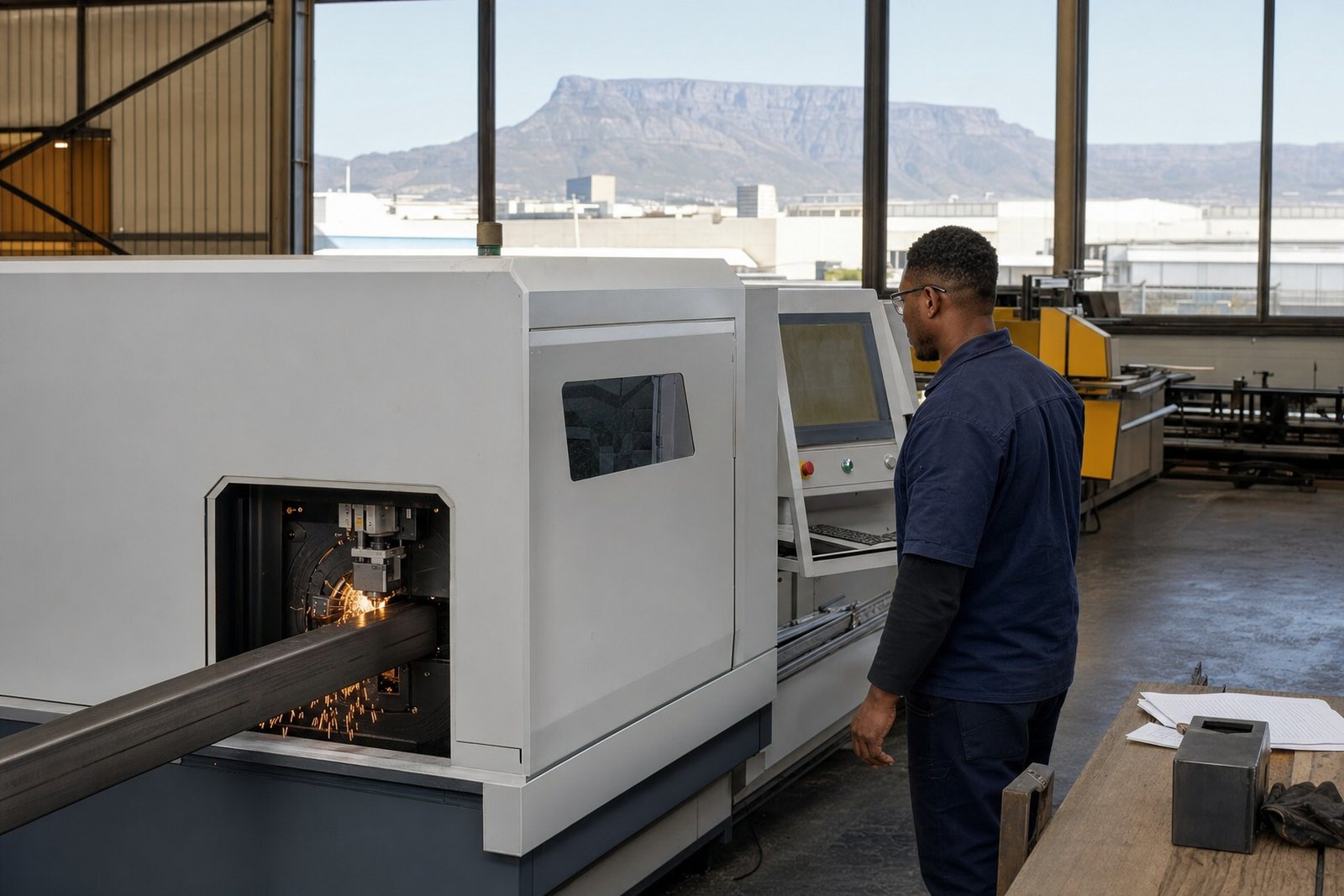
Fibre laser tube cutting is most useful when the machine holds the profile steady, cuts accurately and lets the operator move through mixed jobs without constant rework. Round, square and rectangular tube are the usual starting points, but angle and channel are just as common in local fabrication, especially where frames, supports and light structural parts need clean ends and consistent fit-up.
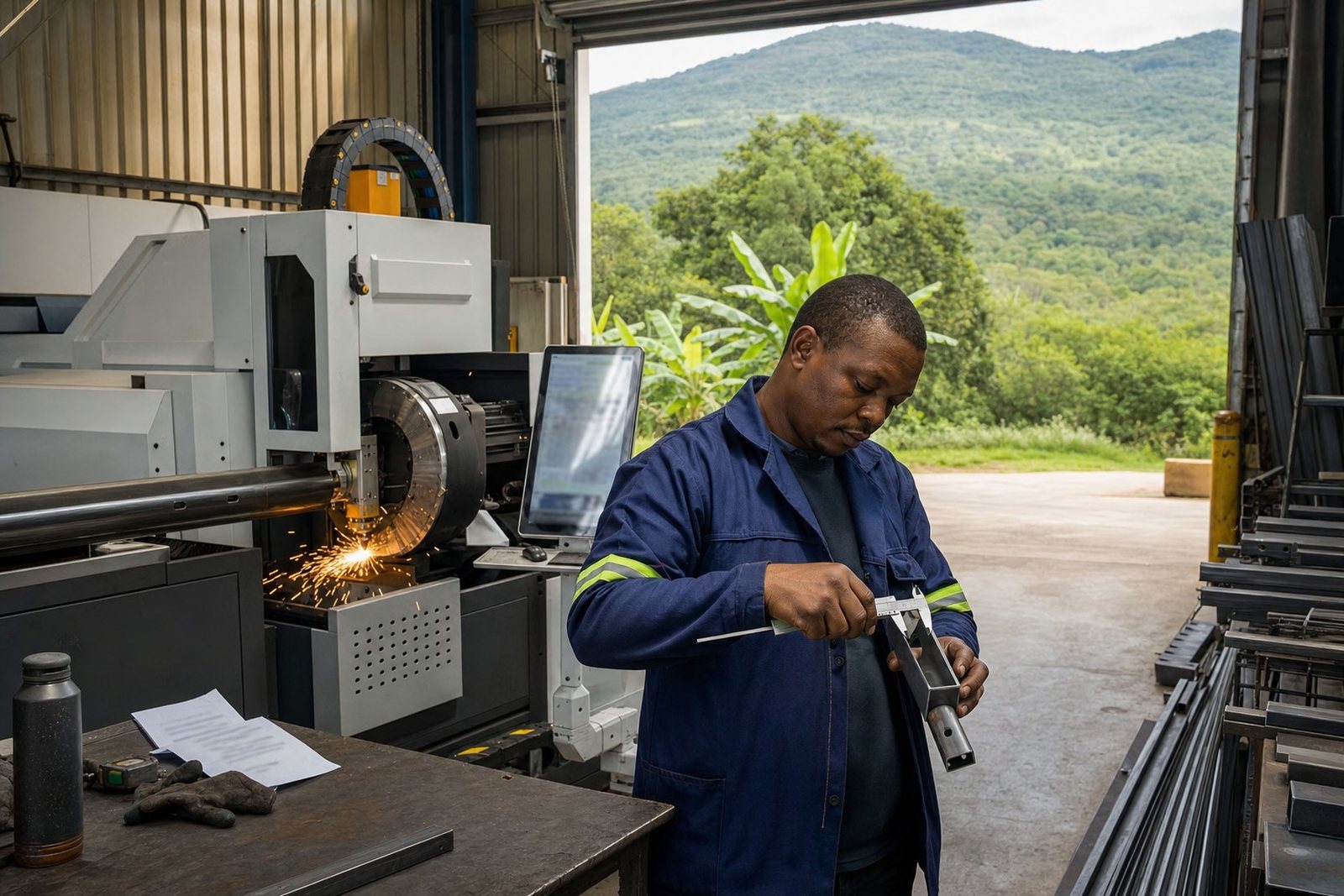
Chuck alignment affects how well the machine grips, centres and feeds the workpiece. If the chuck is out of alignment, tolerances drift and cut quality drops, so chuck alignment needs proper attention during servicing. Bevel calibration matters when a shop cuts parts that need welded edges prepared at an angle. Nesting software then helps the operator place parts efficiently along the stock length, cut waste down and keep the process steady from one batch to the next.
Assist gases also shape the result. Some jobs need cleaner cut faces, others need speed or edge condition suited to the next process step. The gas choice, pressure setting and nozzle setup must match the material and thickness being processed, otherwise the machine can be working hard while the parts still need extra finishing.
How support work is handled from Wadeville to Mpumalanga
LaserTube is based in Wadeville, Germiston and supports Nelspruit through planned travel for installation, commissioning and follow-up service. For shops that already have a machine running, preventive maintenance visits, chuck alignment, bevel calibration and remote diagnostics can be arranged around production needs and access to the machine room. Where a breakdown affects output, the service path is set by the fault, the machine condition and the parts needed to put it right.
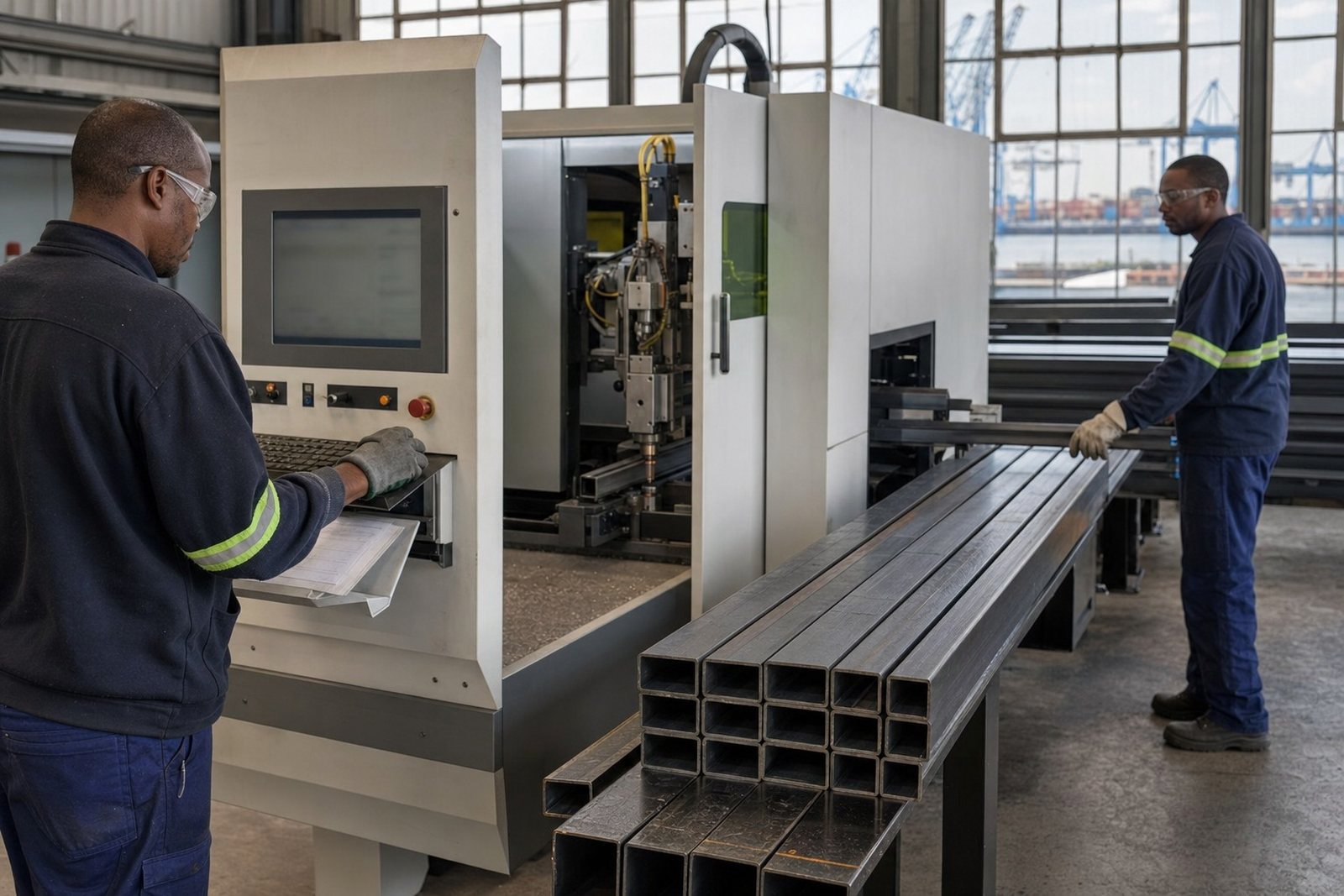
The team covers the full flow from installation through to operator handover. That matters in Nelspruit where one workshop may have a small crew and another may run several shifts with different operators on the same machine. Training has to be clear, practical and tied to the real parts being cut, not generic slides that never match the workshop floor.
- Operator training for daily set-up and part loading
- Nesting training for better sheet and tube use
- Preventive maintenance for cutting consistency
- Breakdown response and fault tracing
- Remote diagnostics where the issue allows it
Typical Nelspruit clients and the machine match they need
Small job shops in Nelspruit often need a laser tube machine that can move between short tube runs, profile parts and one-off work without losing time to changeovers. Larger production plants usually want steadier throughput, more predictable servicing and a setup that handles bigger batches with fewer hands-on steps. The right match depends on whether the workshop is doing custom fabrication or feeding a constant stream of work.
Michael Dlamini oversees the business, with Anika Kajee handling sales work, Sibusiso Bhengu leading installation, Leanne Mabuza coordinating training, Pieter Visser on service support and Ayanda Mashaba handling applications questions. That mix helps when a Nelspruit buyer needs a machine matched to the parts list, the floor layout and the level of operator experience already in the shop.
For fabricators in towns and industrial areas around Nelspruit, the main benefit is getting a machine package that is suited to the material mix, the available space and the handover plan. If the workshop cuts structural tube one week and lighter profile parts the next, the machine needs to handle both without making the operator fight the process.
Local ordering and delivery notes for Mpumalanga sites
Nelspruit orders start on the contact form, then the machine specification, site details and service scope are lined up from there. That helps when the workshop needs a straight answer on fit, access, support items and training before anything moves onto the truck. For broader Mpumalanga coverage, the same support path extends through surrounding industrial and fabrication areas where tube and profile work is part of daily output.
Delivery, rigging and installation planning are easier when the site notes are honest about access, headroom, floor condition and the parts the machine will cut first. In a region where some yards are open to weather and dust, and others sit inside compact industrial sheds, the storage plan for tubes, profiles and assist gas equipment needs to be practical from day one.
For Nelspruit fabricators, the value is in a machine that is put in correctly, trained properly and matched to the actual job list. That includes the cutting head, chuck arrangement, nesting workflow and service plan, so the machine can slot into production without forcing the shop to rebuild its whole routine.