Gas setup for tube and profile cutting jobs
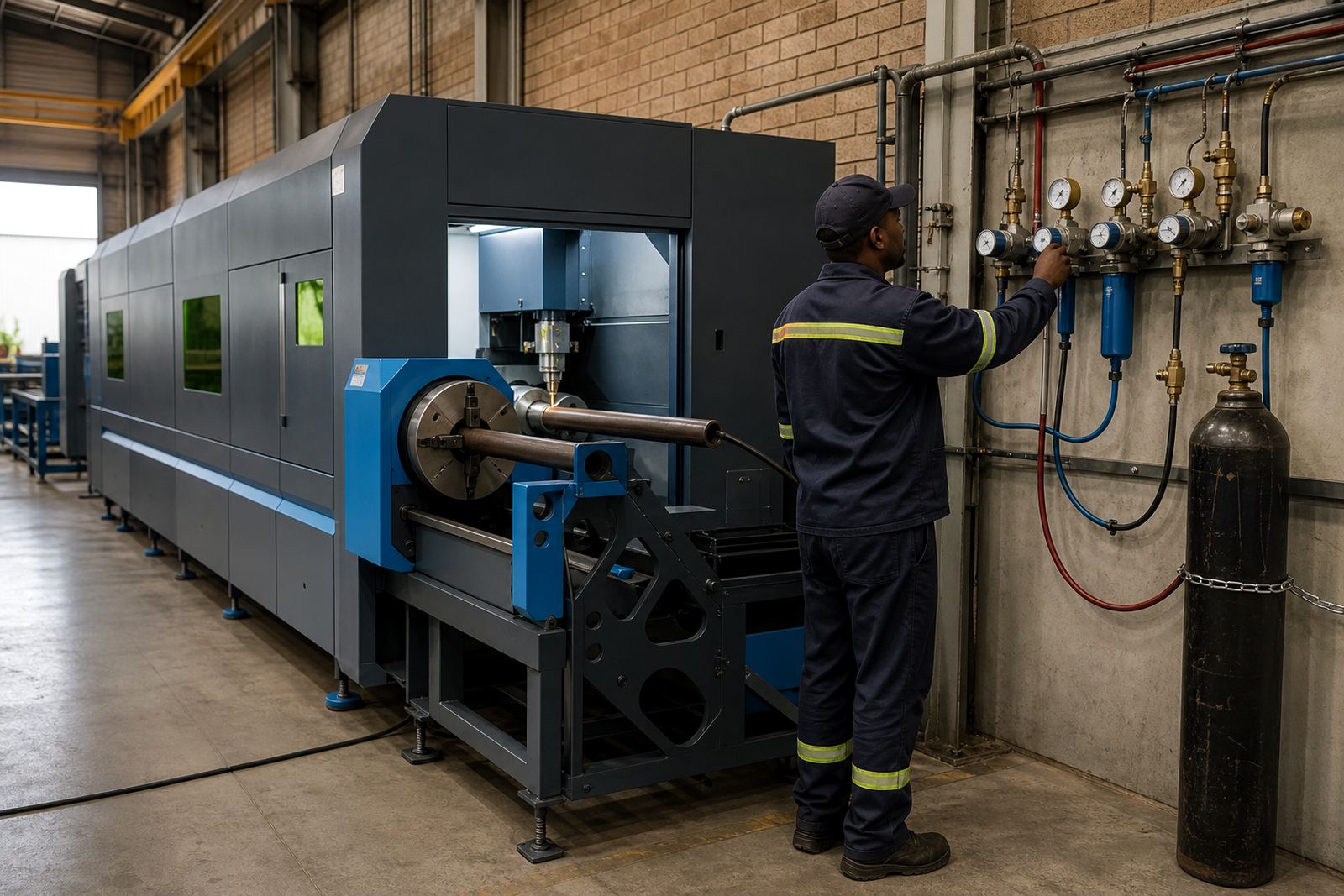
Assist gas setup covers the full path from regulator to nozzle, so the machine gets the pressure and flow it needs at the head. On fibre laser tube cutting, small shifts in pressure can change edge oxidation, kerf width and the amount of hand finishing needed after cutting.
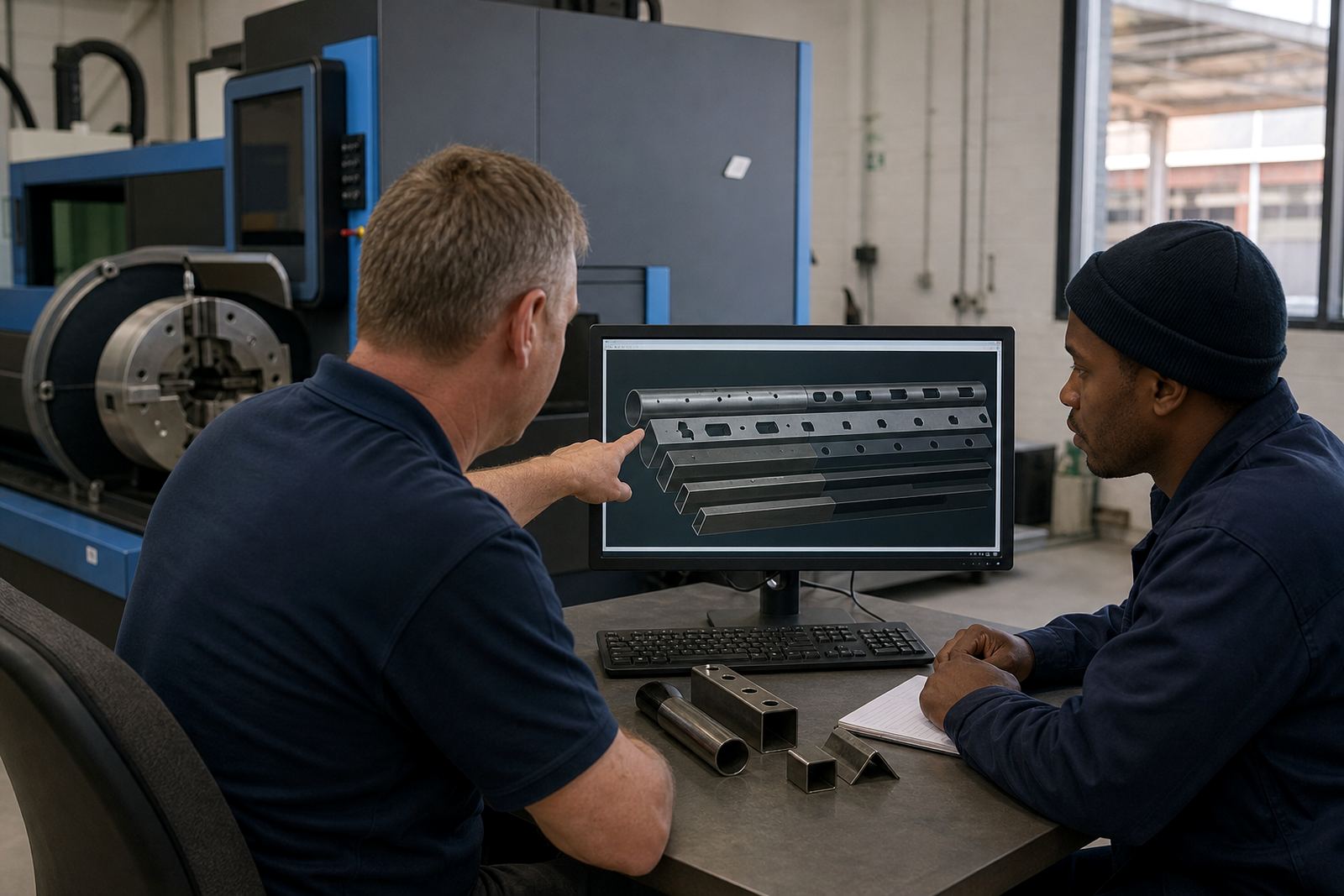
We work with round, square and rectangular tube, plus angle and channel sections, where the gas choice and nozzle condition have to suit the material thickness and the cut geometry. The set-up also needs to match the cutting head, chuck grip, bevel head if fitted, and the nesting programme used on the day.
- Line checks for leaks, pressure drop and contamination
- Parameter setting for cutting pressure, pre-flow and post-flow
- Nozzle condition checks and head alignment checks
- Setup for mild steel, stainless and aluminium by material type
What the service includes on site
The visit starts with a look at the machine layout, gas supply points and the cutting requirements for the current job list. We then check the supply line size, regulators, filters, valves and fittings, because poor line condition can show up as unstable pierce quality or rough cut faces.
Where needed, we set up separate gas routines for oxygen, nitrogen or air assisted cutting, depending on the material and finish required. For stainless steel tube and sheet parts, nitrogen is often used where a clean edge matters, while oxygen can suit thicker mild steel where cutting speed and edge quality need to be balanced.
- Supply line inspection from source to machine inlet
- Regulator and gauge verification under working pressure
- Assist gas purity and filtration checks where applicable
- Cut test runs on sample material and final fine-tuning
How the setup work is carried out
Each job is handled in stages so the machine can be checked without guessing. After the first line inspection, we confirm the pressure range, set the machine parameters, then run test cuts and compare the results to the job finish required by the fabricator. If the edge shows heavy dross, heat tint or rough striations, the settings are adjusted before production starts.
For tube work, the inside and outside edge behaviour matters, especially on mitred cuts, coped joints and parts that will be welded straight after cutting. With profile cutting, the nest layout can affect gas demand across a plate, so the settings are checked against the nesting plan and cut order.
- Initial inspection and operating condition review
- Test cuts on the material and thickness in production
- Adjustment of gas flow, pressure and pierce settings
- Operator handover with the final settings noted
Turnaround on setup and tuning work
Timing depends on machine size, the number of gas circuits and whether the issue is a new installation or an existing line that needs correction. A fresh installation usually takes longer because the full line has to be checked, while a tuning visit may focus on a specific material range or a pressure inconsistency at the cutting head.
For plants running mixed jobs, we can set up practical parameter groups for common materials and section sizes, so operators do not have to start from scratch every time. That matters when the shop shifts between 1.6 mm sheet, 3 mm tube and heavier structural sections in the same week.
Pricing shaped by machine size and line condition
Pricing depends on the size of the visit, the number of gas lines, the machine layout and whether test cuts or operator training must be included. A single-head tube machine with one gas circuit is a smaller job than a production line with multiple cutting zones, bevel capability and several materials to verify.
We quote after looking at the site, the machine spec and the gas arrangement already in place. If fittings, filters or line components need changing, those items are identified clearly before the work proceeds, so the fabricator can plan properly and avoid surprises.
- Site assessment before pricing is finalised
- Scope based on machine type and gas circuit count
- Separate line items where parts or extra testing are needed
- Suitable for small job shops and production plants
Aftercare after the settings are locked in
Once the setup is complete, the operator team gets the final settings, pressure range and any material notes that matter for daily use. If cut quality shifts later, the usual causes are nozzle wear, poor line cleanliness, a regulator fault or a change in material batch, so those points are checked first.
We also support plants that want their own team to handle routine checks without missing the warning signs. That includes recognising unstable pierces, checking for pressure creep and spotting when the gas path is no longer delivering a steady cut at the head.
- Final parameter notes for the operators
- Guidance on pressure checks and line condition
- Support for fault-finding on cut quality changes
- Remote diagnostics where the machine data allows it
Key facts
| Service area | Wadeville, Germiston and across South Africa |
|---|---|
| Machine types | Fibre laser tube and profile cutting systems |
| Materials | Mild steel, stainless steel and aluminium |
| Sections covered | Round tube, square tube, rectangular tube, angle and channel |
| Gas types | Oxygen, nitrogen and air assisted cutting |
| Related tasks | Line checks, parameter setup, test cuts and operator handover |