What planned maintenance covers on a laser tube line
Preventive maintenance for tube and profile cutters goes beyond a quick wipe-down. It covers the parts that carry load, hold material true and keep the cut consistent from job to job. On a fibre laser tube machine that usually means the chucks, guide components, drive systems, cutting head, bevel head where fitted, sensors, gas circuits and the safety functions that protect operators and product quality.
We also check the small details that get missed when a workshop is flat out. Dirty lenses or protective windows, loose clamps, worn jaw faces, misaligned supports, leaks in assist gas lines and poor extraction all show up later as rough cuts, heat marks or scrap. Round, square and rectangular tube all sit differently in the clamp and along the cut path, so the machine must stay square to the work in each case.
For profile cutting machines, maintenance includes table condition, rail cleanliness, axis movement and nesting accuracy. If angle, channel or flat bar is part of the work mix, the machine needs dependable registration and a stable cut path. That is where planned checks pay off, because the machine is measured before it drifts too far.
Checks carried out during a service visit
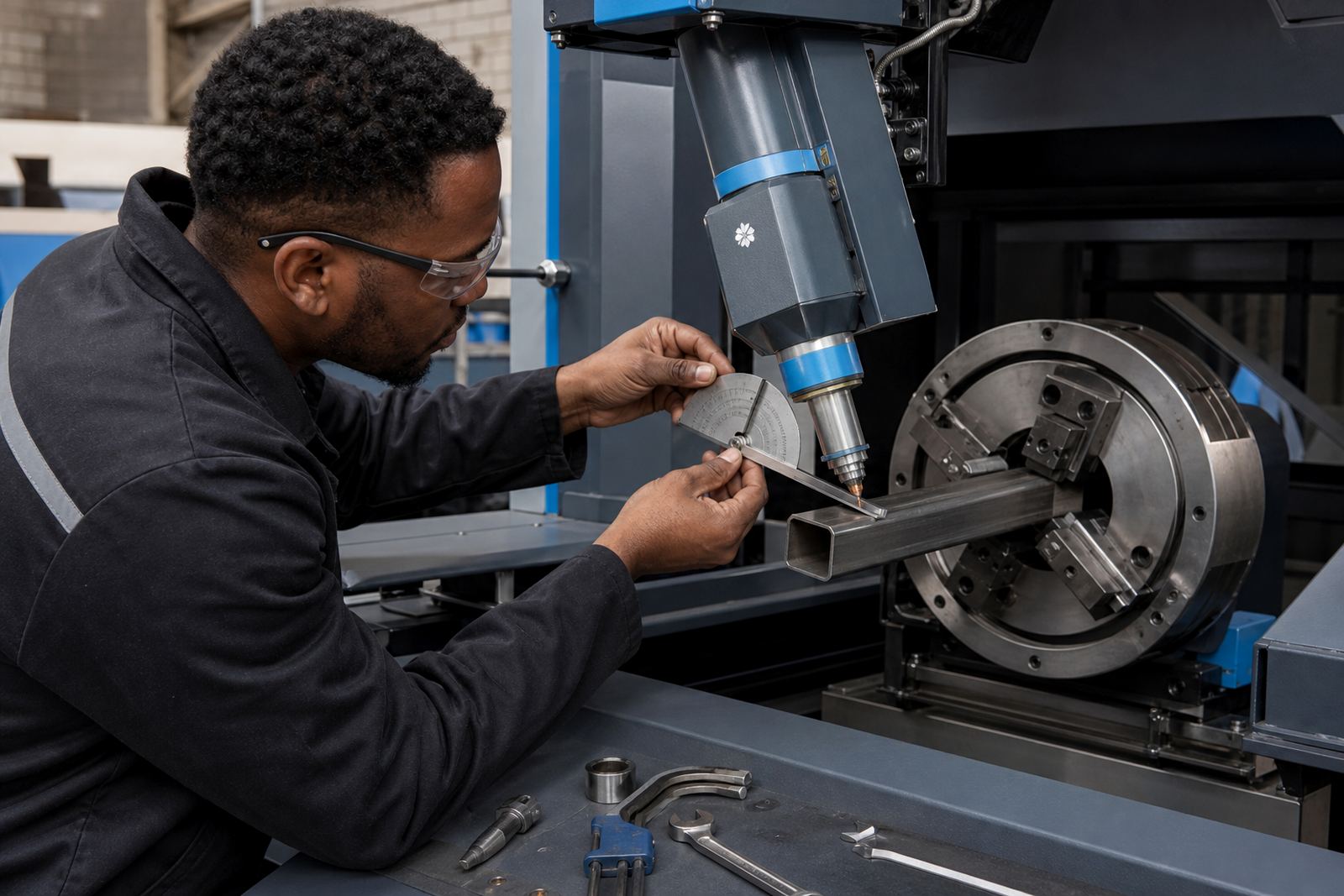
Every site is different, but a proper service visit follows a clear technical sequence. We inspect the machine condition, verify movement, check the clamp and chuck setup, measure key alignments and test the cut quality on selected material. Where the machine includes a bevel head, we inspect calibration and confirm the angle sequence stays true through the programme.
- Check the machine frame, safety guards and access areas for visible wear, damage or obstruction
- Chuck and jaw alignment checks for round, square and rectangular tube
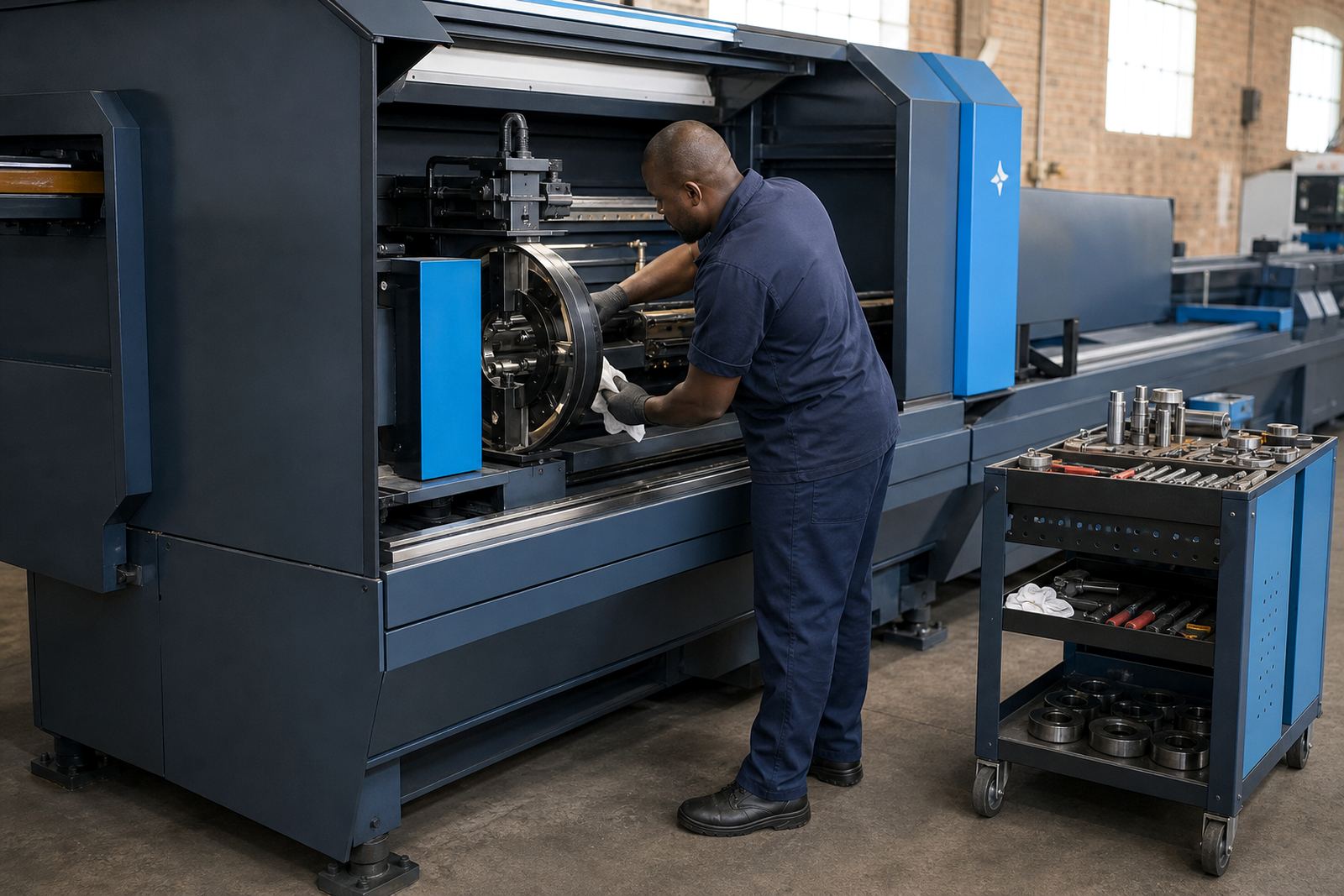
- Cleaning and inspection of optics, nozzles and protective windows
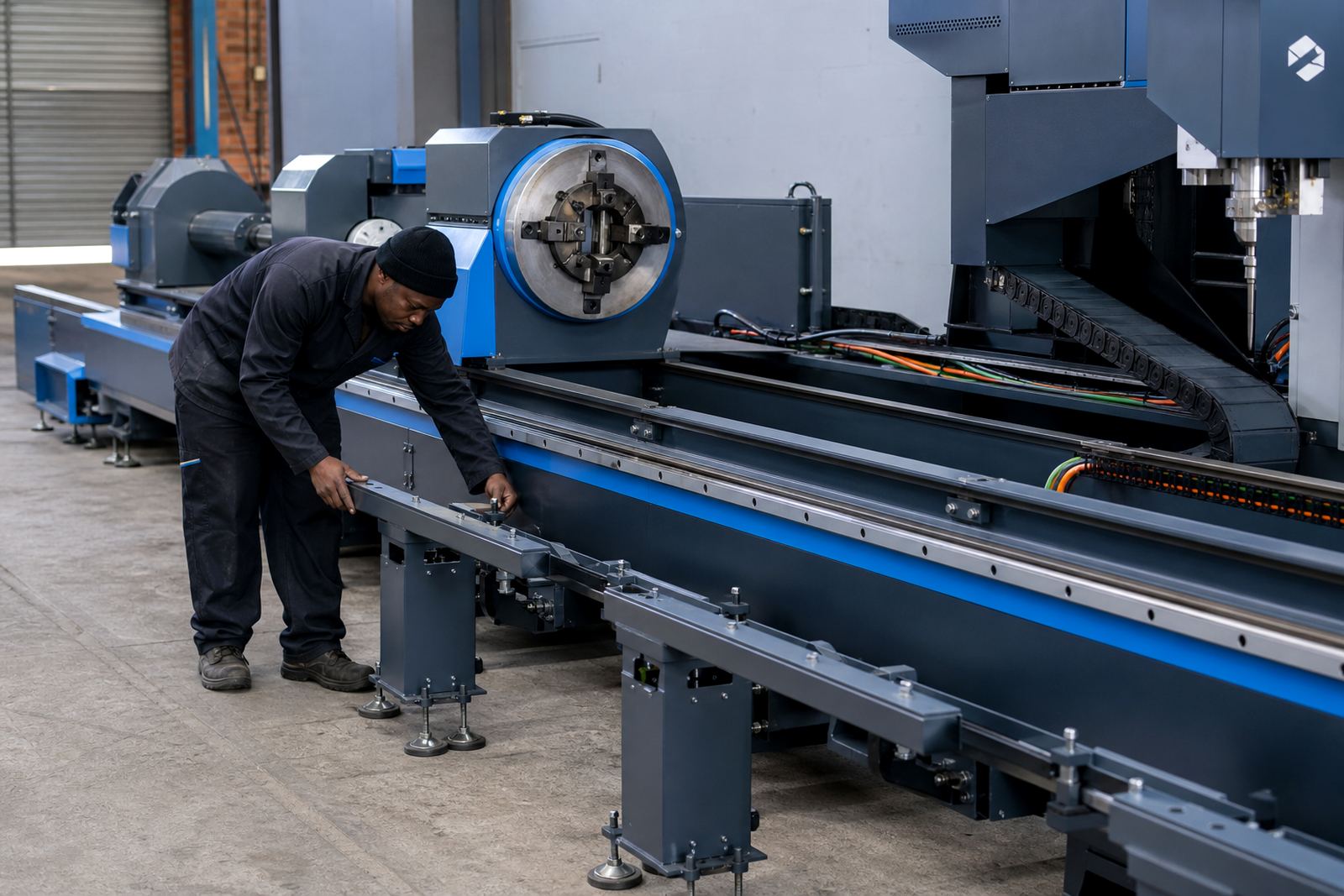
- Guide rail, drive and carriage condition checks
- Assist gas pressure, flow and leak checks
- Safety interlocks, stops and guarding tests
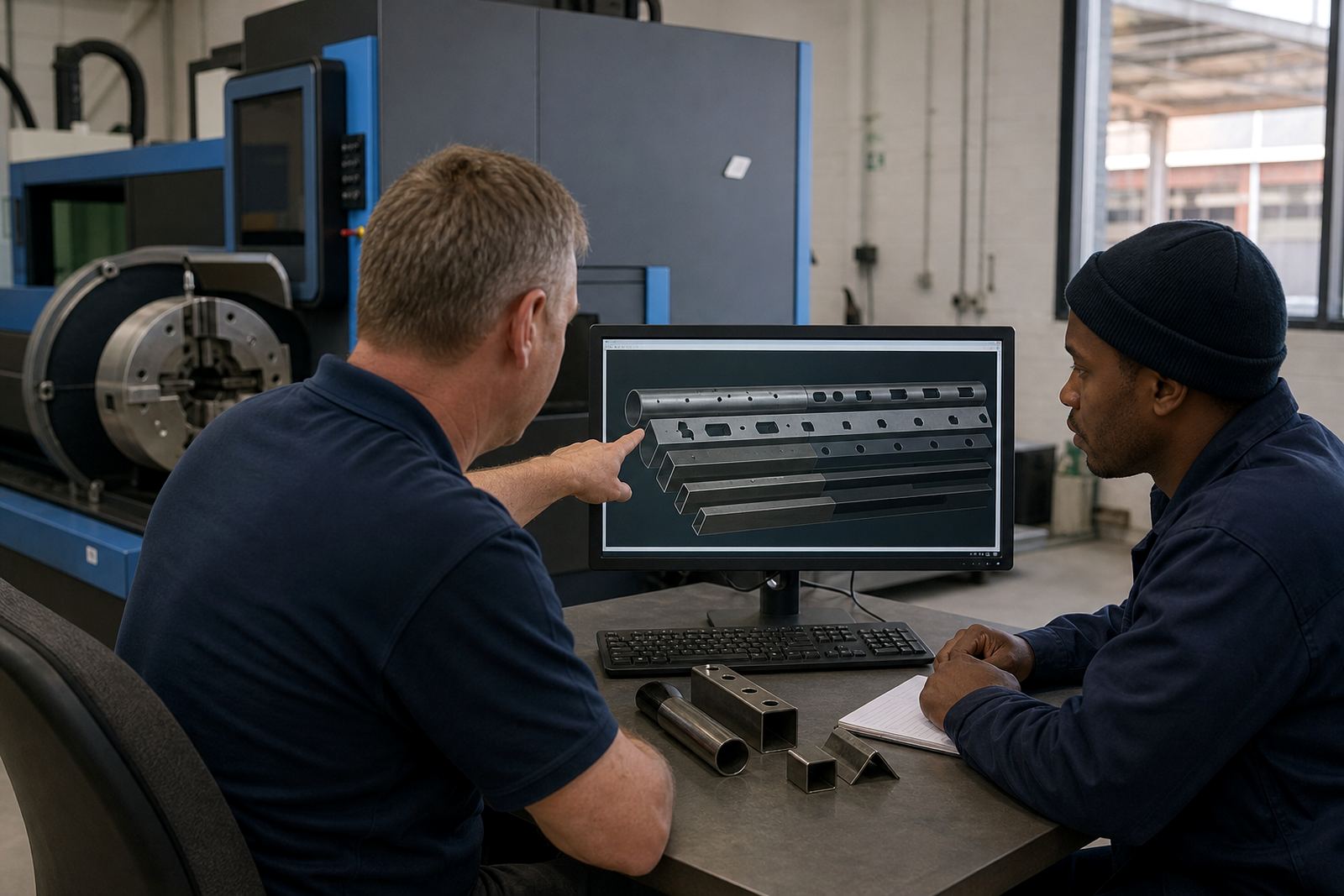
- Verification of nesting output and cut sequence on sample jobs
When the machine is used for more than one tube size, the setup has to be checked against the current production mix. A clamp that is set for heavy wall tube can mark lighter sections, while a loose support line can leave the part with a poor edge finish. Even minor adjustments in that area can improve output noticeably.
How the maintenance process is handled on site
The process begins with a site assessment of the machine, the working area and the current production demands. In Wadeville, Germiston and at customer premises in Johannesburg, Pretoria, Durban, Cape Town, Gqeberha, Bloemfontein and Nelspruit, we look at the machine layout, tube sizes in use, assist gas arrangement and the condition of the tooling and consumables already in service.
After that, the technician works through the planned checks, corrects alignment issues and records the settings that matter for the machine. If the job requires chuck alignment, bevel calibration or assist gas setup, those tasks are folded into the same visit where practical. When a deeper fault appears, we flag it early so the customer can plan the follow-up work instead of finding it during a production run.
- Initial site review and machine condition check
- Cleaning, adjustment and measurement of critical parts
- Functional testing under normal production settings
- Service notes with findings and recommended follow-up work
For production plants, maintenance is often tied to a shutdown window or a slower production block. For smaller job shops, it may be arranged around the load of current work and the mix of tube or profile that needs to go through the machine. Either way, the goal is the same: keep the machine ready for the next run, not just the next hour.
Turnaround, planning and service reach
Preventive maintenance is planned work, so timing depends on the machine type, the access available and the size of the service list. A compact tube cutter with straightforward access takes less time than a larger profile line with a bevel head, extraction points and more than one assist gas circuit. Where several machines share the same workshop floor, the sequence is planned to reduce disruption to production.
From our Wadeville, Germiston base, we support customer sites throughout South Africa. That includes fabricators in Johannesburg, Pretoria, Durban, Cape Town, Gqeberha, Bloemfontein and Nelspruit. Coastal sites often need extra attention on corrosion, moisture around machine rooms and the condition of stored consumables. Inland sites may see more dust and workshop debris in moving parts, so the service focus changes with the location.
For equipment that is already showing wear, we can include extra checks on chuck grip, beam path condition, nesting accuracy and gas performance. If the machine is being pushed through mixed tube and profile work, the service plan should reflect that duty rather than a general checklist copied across every site.
Pricing approach for preventive maintenance
Pricing depends on the machine model, the depth of the inspection, travel to site and the scope of work needed on the day. A routine service with standard checks costs less than a visit that includes alignment correction, gas fault tracing, bevel calibration or more detailed diagnostic work. The machine condition also matters, because a unit that has been running with neglected wear usually needs more labour than a machine kept under regular control.
We quote on the actual service scope rather than a flat figure with hidden extras. That allows the customer to see what is included, what consumables may be required and whether any worn parts need to be replaced after inspection. It also helps a workshop decide whether to service one machine, a full line or a group of machines at the same time.
- Scope based on machine type and condition
- Travel and site access included in the service plan where relevant
- Extra work listed separately when fault tracing is needed
- Consumables and replacement parts identified before fitment
For fabricators running both tube and profile cutting, the budget often makes more sense when the service work is bundled around one visit instead of split across several callouts. That can reduce repeat setup time and keeps the machine records in one place.
Aftercare that helps the next shift run better
After the visit, the workshop gets a practical summary of what was checked, what was adjusted and which parts need monitoring. If the machine has a recurring issue, such as unstable chuck grip, assist gas fluctuation or poor bevel consistency, the notes show where to look first. That is useful for in-house teams that handle the day-to-day running of the machine.
Leanne Mabuza coordinates training support where operators need a refresher on cleaning points, clamp care, nesting discipline or safe handling around the cutting area. Ayanda Mashaba assists with application questions when cut quality, material type or tube geometry affect the settings. Pieter Visser handles service work when a fault needs hands-on attention, and Sibusiso Bhengu leads installation-related checks where the maintenance task overlaps with machine setup.
Planned maintenance works best when the machine record stays current. A good service history shows which parts wear first, how the machine behaves on different tube sections and where the workshop should watch for drift. That makes the next service more efficient and the machine easier to keep in line.
Key facts
| Service type | Preventive maintenance for fibre laser tube and profile cutting machines |
|---|---|
| Machine coverage | Round, square and rectangular tube, plus angle, channel and profile work |
| Core checks | Chucks, bevel heads, alignment, assist gas setup, optics and safety functions |
| Typical service work | Cleaning, measurement, adjustment, testing and fault flagging |
| Area covered | Service visits planned from Wadeville to Gauteng plants and to Durban, Cape Town, Gqeberha, Bloemfontein and Nelspruit |
| Support format | On-site maintenance with service notes and follow-up recommendations |