Software work that matches the machine
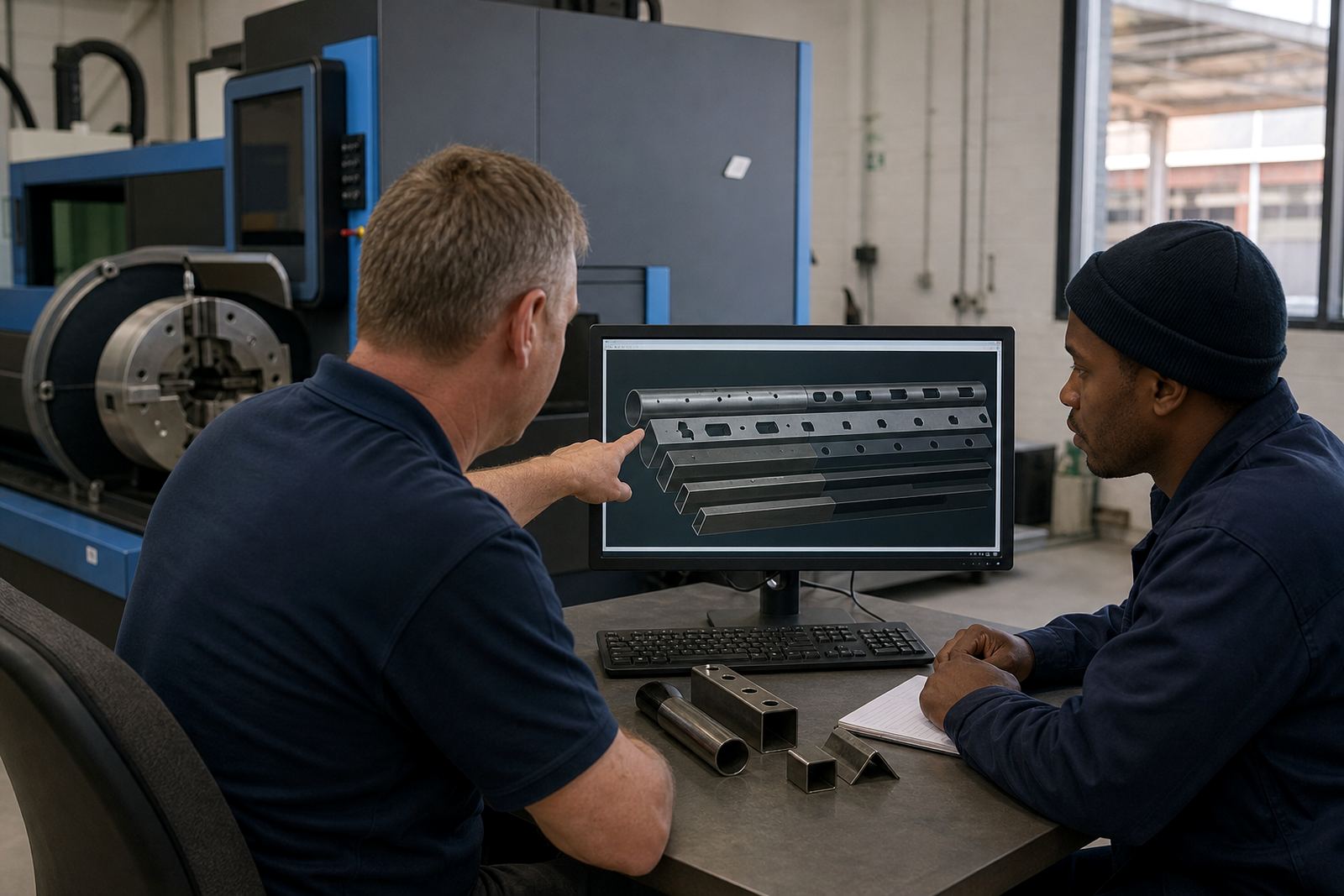
Good nesting starts with the drawing file, but it only pays off when the software output suits the machine on the floor. We show teams how to prepare parts for fibre laser tube cutting, set cutting order, and keep the file structure clear enough for repeated jobs and quick checks before a run begins.
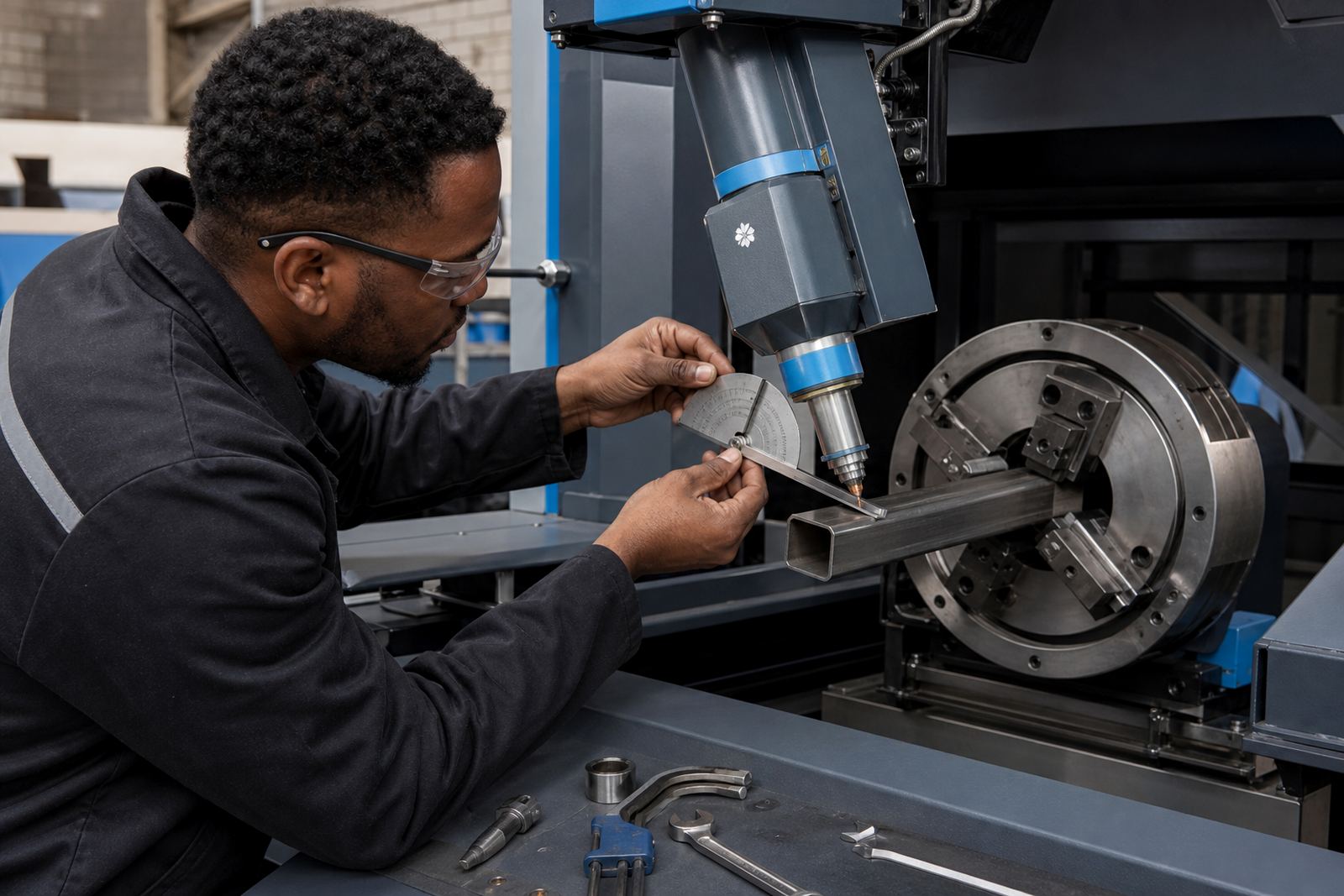
The training covers key settings that matter in day-to-day production, including material groups, part spacing, tube length use, nesting direction and how to treat leftovers from previous work. Where the machine uses a bevel head, we include the extra steps needed to keep angles and cut paths in line with the job.
- Importing and checking part geometry
- Assigning tube sizes, profiles and wall thickness
- Setting spacing, rotation and remnant rules
- Sequencing cuts for less movement and cleaner handling
- Preparing output for standard and bevel work
How the training runs from first file to live cutting
We begin with a site assessment of the current workflow, the nesting software in use and the type of work being cut. That includes the material range, the common tube sizes, the number of operators, and whether the team is working from customer drawings or in-house job cards.
From there, we build the session around the actual jobs on the floor. The practical part covers part setup, nest layout, machine output review and a live check of the cut sequence. The point is not theory alone, but a usable method that fits the way the team already loads, cuts and unloads jobs.
- Review of drawings, remnant handling and batch size
- Live nesting exercise using current job data
- Walkthrough of cut order and machine output
- Operator questions during the practical session
- Handover notes for the supervisor or planner
What the team works on during the session
Nesting training is most useful when the team handles the same parts they will cut next week. We therefore cover production sequencing, material grouping and the small decisions that affect yield, cycle time and repeatability. In tube cutting, even a minor change in clamp position or part orientation can affect how well the nest runs.
The training also covers assist gas setup in a practical sense, because the nesting plan must match the cut quality expected from the machine. Where the job calls for bevel edges, drilled holes or close-tolerance slots, the nesting layout must leave enough room for clean movement and safe part release.
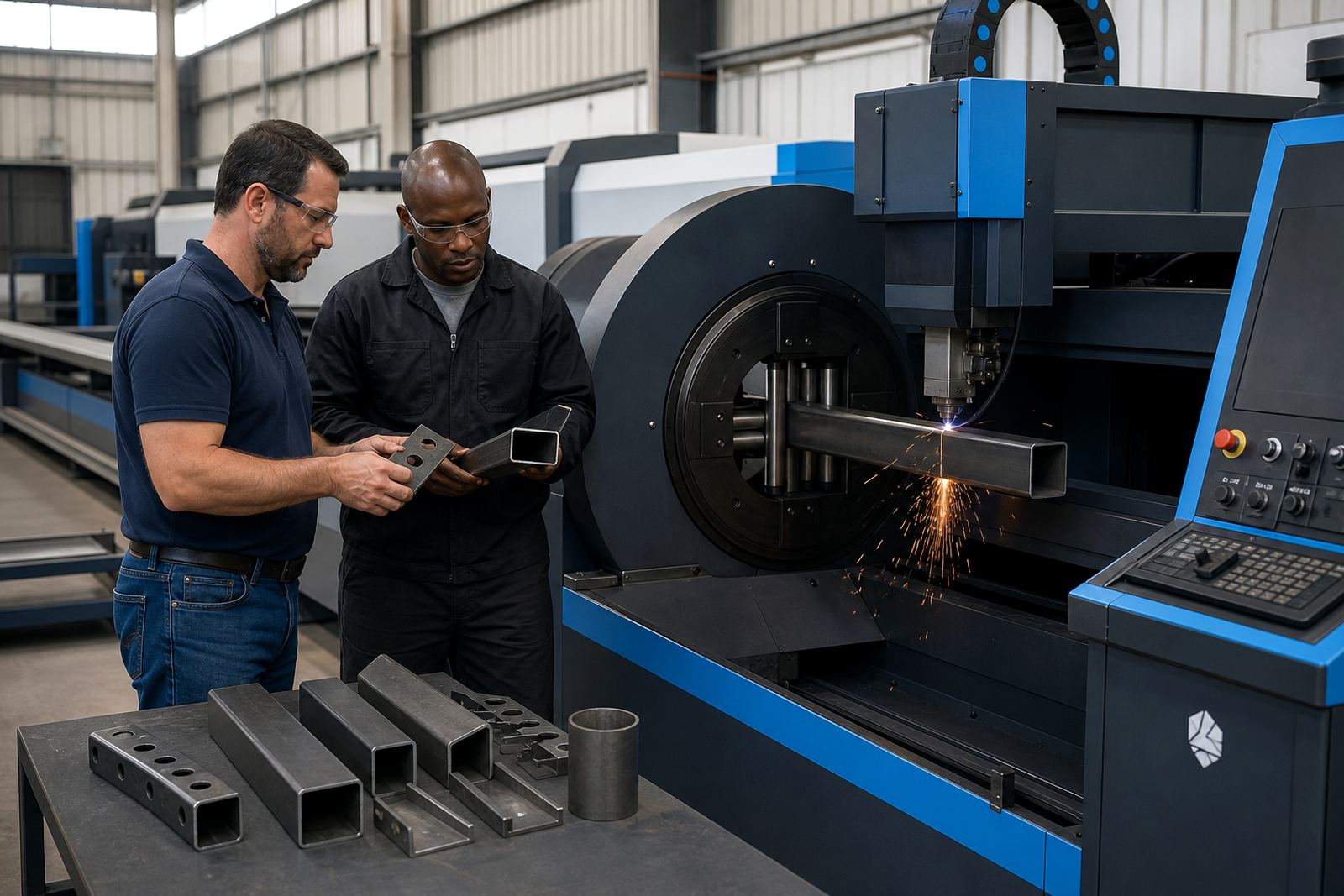
- Tube and profile layout for round, square and rectangular sections
- Angle and channel handling where those sections are in the batch
- Remnant tagging and reuse planning
- Cut order that suits the unloading method
- Safe separation of parts after cutting
Turnaround on training bookings and site preparation
Training is normally arranged after the site assessment, once the machine type, software version and job mix are clear. That allows us to prepare examples that are close to the material and part sizes the team uses every day. For plants in Johannesburg, Pretoria, Durban, Cape Town, Gqeberha, Bloemfontein and Nelspruit, the schedule is set around production windows and access to the machine area.
Before the session, we ask for a few sample drawings or job files, a list of common tube sizes and any known trouble spots in the current nesting process. That keeps the lesson practical and avoids wasting time on parts the business never cuts.
- Site assessment and workflow review
- Sample file preparation for the training run
- Booking aligned to production access
- Practical session on the actual machine setup
- Handover of notes for future reference
Pricing approach for nesting training
Pricing depends on the machine type, the number of operators involved, the complexity of the tube and profile range, and whether the session is part of a larger installation or a standalone service. A shop running short, repeated tube jobs needs a different level of instruction from a plant handling mixed structural sections and bevel work.
We quote after the site assessment so the scope reflects the real job, not a generic classroom session. Travel, time on site and the depth of software work all matter, especially when the training includes live setup on an installed machine and checks on remnant planning or production sequencing.
- Standalone training or bundled with installation
- Operator group size and supervisor involvement
- Software complexity and file preparation needs
- Machine type, including bevel head use where relevant
- Travel and site access for branches outside Wadeville
Aftercare once the nesting session is complete
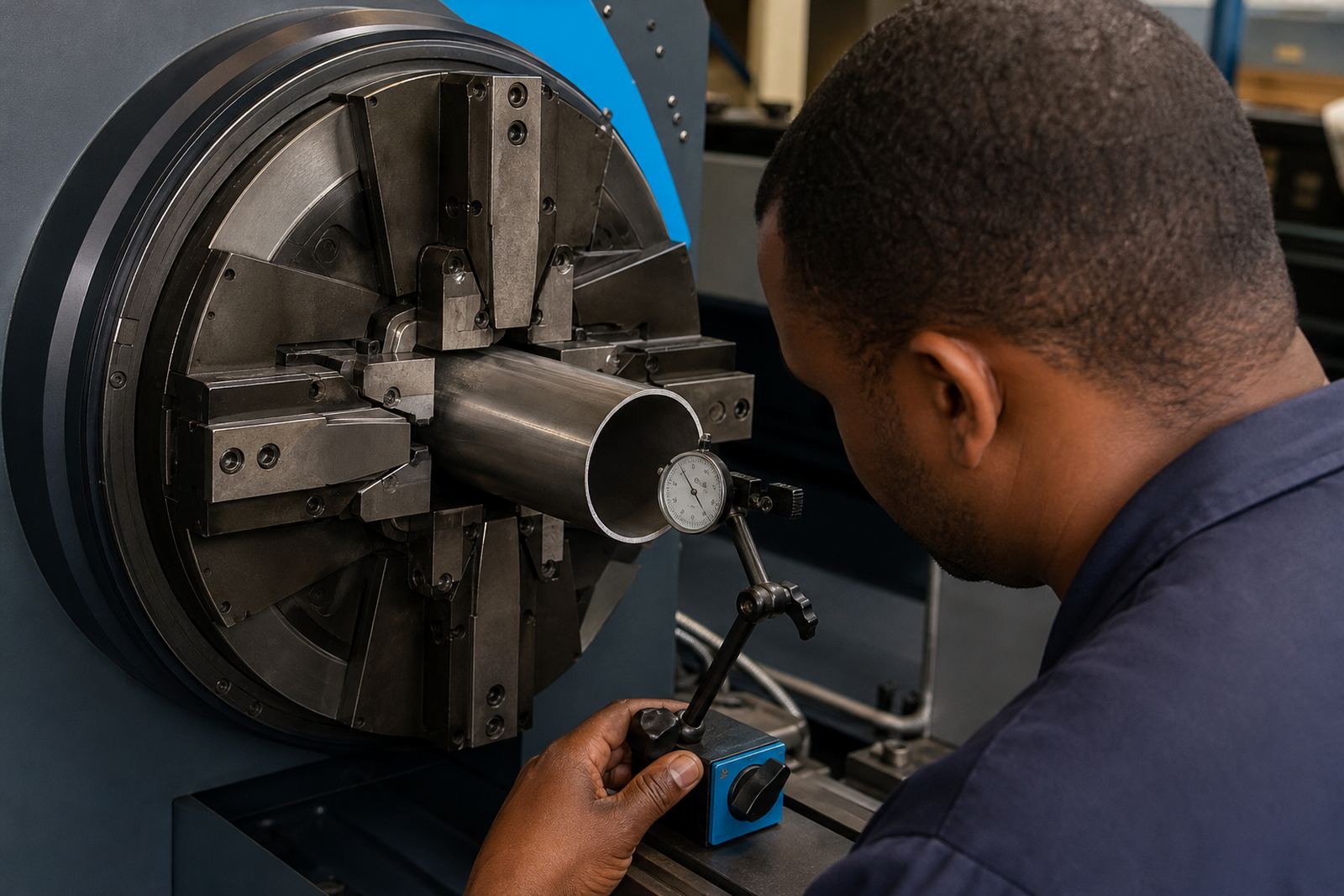
After the training, the team should have a clearer method for organising parts, remnants and cut order on future jobs. Where needed, LaserTube can assist with follow-up checks, remote diagnostics, chuck alignment, bevel calibration and assist gas setup when the nesting workflow is affected by machine setup rather than file preparation alone.
Support also extends to preventive maintenance planning where wear or mechanical drift begins to affect cut consistency. The goal is steady production, with nesting that fits the machine rather than forcing the machine to work around a poor layout.
- Follow-up checks on file setup and part sequencing
- Support for live production changes
- Remote diagnostics where the issue is machine related
- Coordination with installation or service work
- Practical guidance for new operators joining the team
Key facts
| Service type | Nesting training for fibre laser tube and profile cutting |
|---|---|
| Materials covered | Round tube, square tube, rectangular tube, angle and channel |
| Software focus | Part setup, remnant use, sequencing, spacing and output review |
| Machine features | Chucks, bevel heads, assist gas setup and cut order checks |
| Delivery area | Nesting sessions at our Wadeville base or on your own floor, from Pretoria and Johannesburg to Durban, Cape Town and Gqeberha |
| Support options | Site assessment, installation support, training, diagnostics and service follow-up |