What We Look At Before A Machine Lands
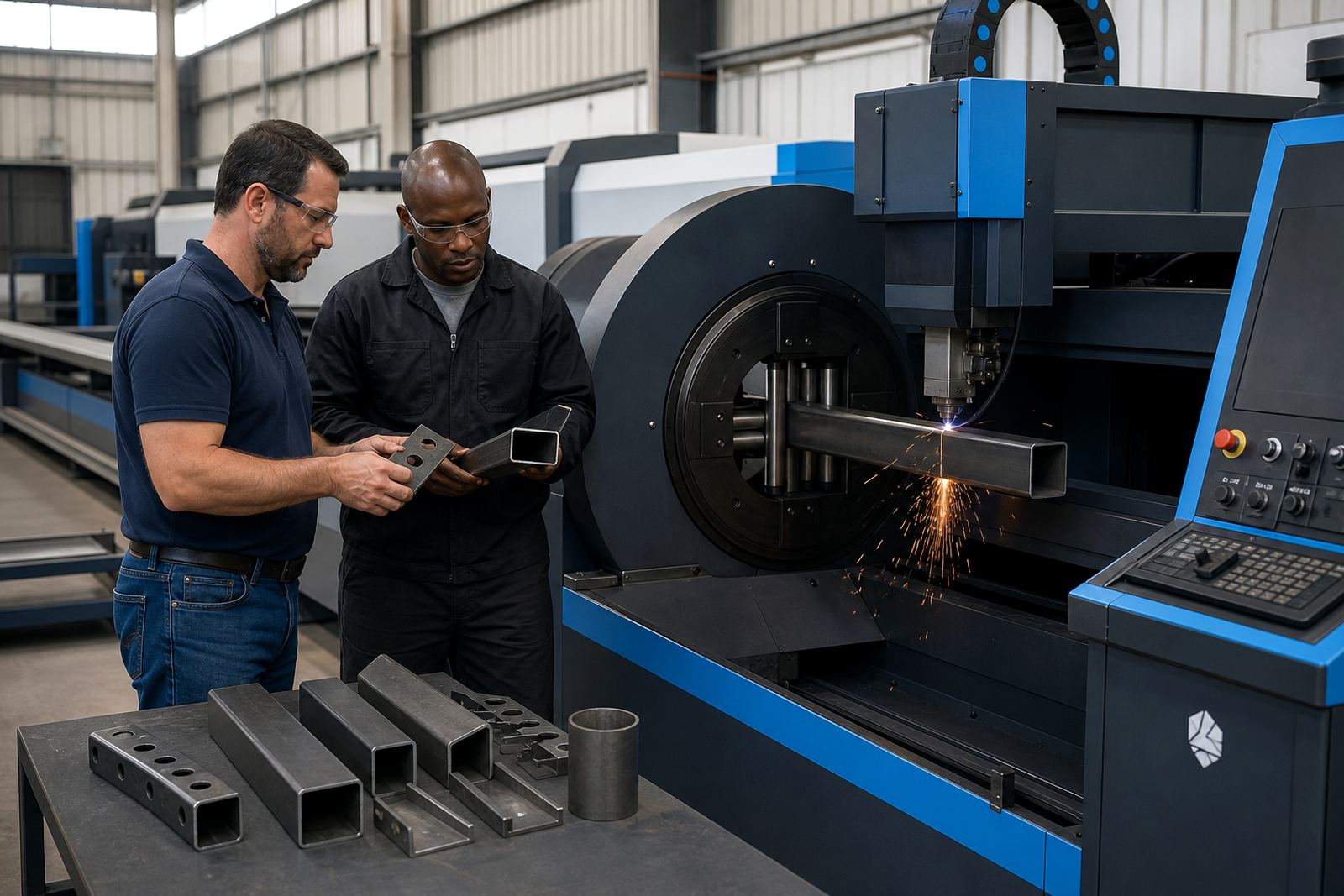
The assessment covers the working area, delivery route and the way your material moves through the shop. For tube and profile cutting, that means checking round, square and rectangular tube stock, angle iron, channel, offcut storage and the space needed for loading lengths without crowding the machine.
We also note where finished parts will leave the cell, how operators will stand at the control side and whether there is enough room for safe access around the chucks, support beds and bundle loading points. If a bevel head is part of the specification, extra clearance matters because the cutting head travels differently and the machine needs a cleaner working envelope.
- Floor space for the machine body, tube loading area and part discharge
- Route for delivery rigging, gates, passages and turning space
- Material stock position for long lengths and mixed profiles
- Operator access, guarding zones and service walkways
- Space for assist gas cylinders or bulk gas connections where used
Services And Access Checks That Save Trouble Later
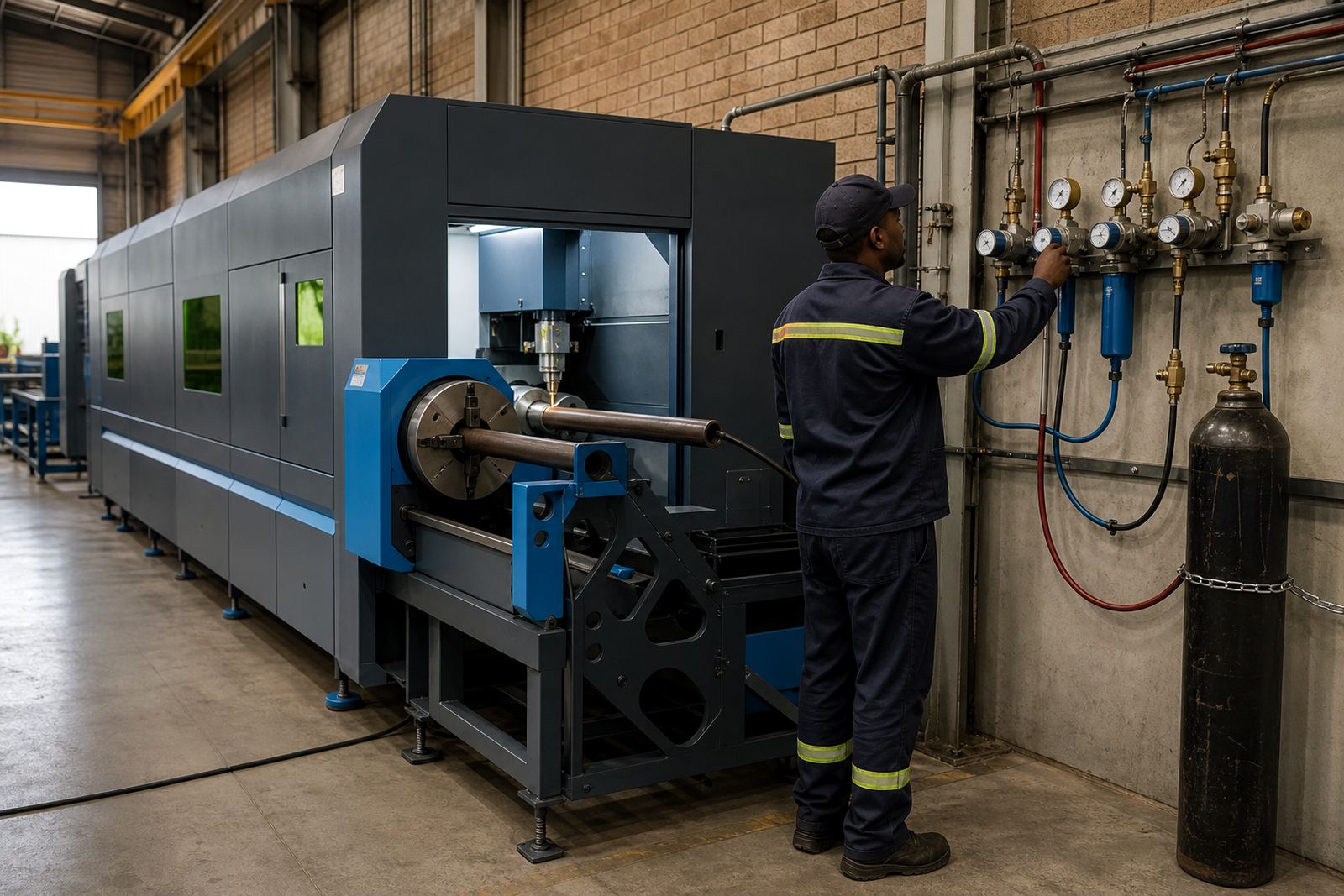
Before installation starts, we look at the practical services the machine will need and how the site is laid out around them. Fibre laser tube cutting equipment needs stable compressed air, the right assist gas setup for the material range, correct earthing arrangements and enough room for extraction and safe fume movement in the cutting area.
Good access to the machine is as important as the equipment itself. We check doorway widths, roller shutter heights, slab condition, overhead obstructions, crane or forklift access and the distance from the offloading point to the final position. In older buildings around Germiston, Wadeville or industrial zones in Johannesburg and Pretoria, a tight doorway or uneven slab can change the whole delivery plan.
- Compressed air points and pressure requirements
- Assist gas layout for mild steel, stainless steel or aluminium work
- Power, earthing and control area position
- Rigging route, door clearances and floor loading points
- Extraction, safety fencing and operator access control
How The Assessment Is Carried Out
The process starts with a discussion about the machine type, tube sizes, profile range and the output you want from the line. A small job shop cutting short runs has different space needs from a production plant handling long bundles, nested jobs and continuous changeovers.
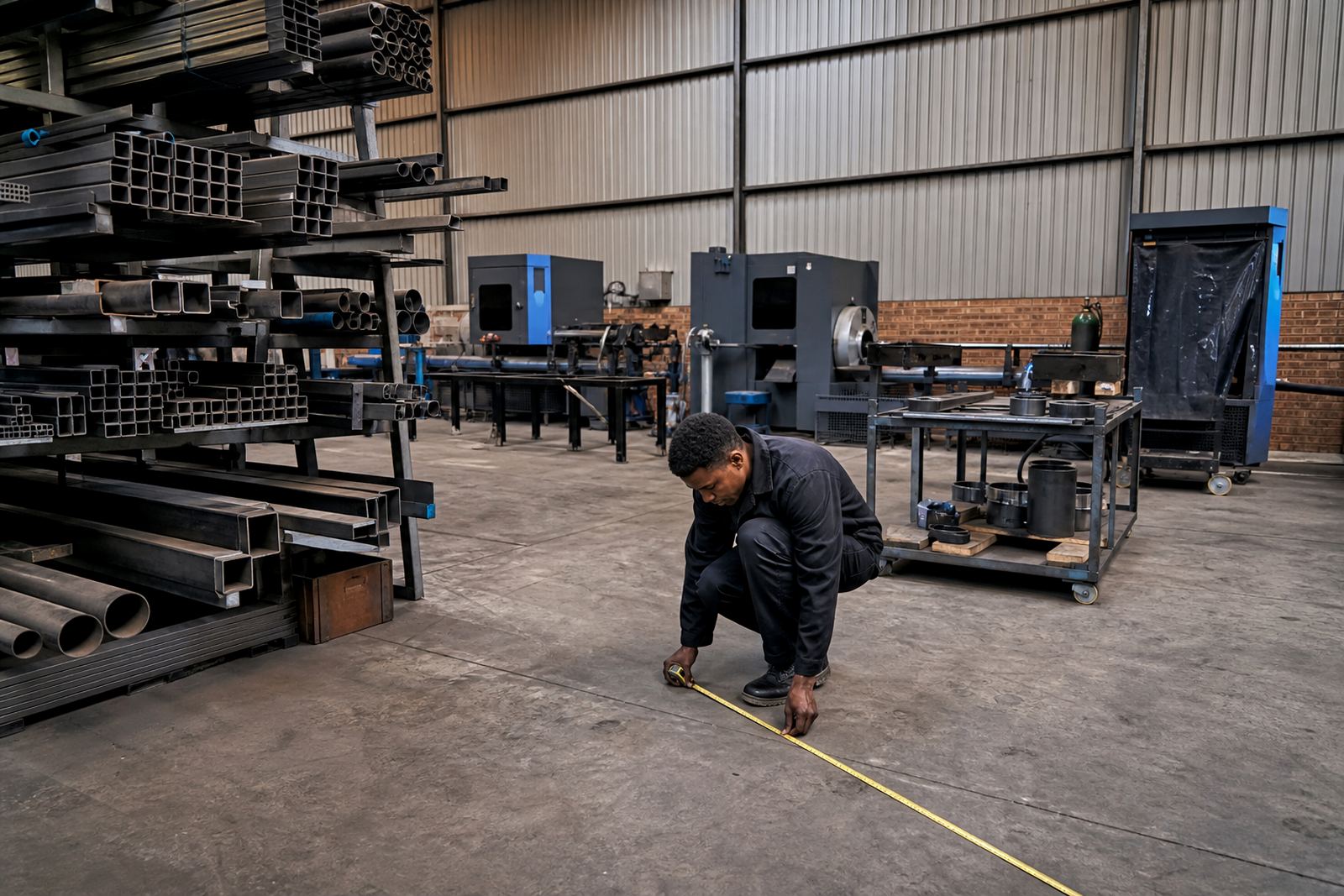
After that, the site walk-through checks the actual floor, not just the drawing. We measure access points, confirm where stock will sit and mark up the machine position in relation to loading, offloading and service access. If your work includes nested flat profile cutting or mixed tube jobs, the layout must support both without forcing awkward movements around the machine.
- Job type and material range review
- Measure and mark the proposed machine position
- Check loading, unloading and stock movement paths
- Review utility points and safety clearances
- Record any site changes needed before delivery
What The Report Covers After The Visit
Once the assessment is done, we compile the practical points that affect installation and day-to-day operation. That includes space constraints, access notes, service positions, rigging risks and any changes needed to suit the machine size or the way your workshop runs. The report also helps with planning for chucks, support sections, bevel head travel and the operator station.
For many fabricators, the value is in seeing the weak spots before they become delays on site. If the floor needs levelling, a doorway needs widening or gas storage needs repositioning, those items are easier to solve while the machine is still on paper. That is useful for plants in Durban, Cape Town, Gqeberha, Bloemfontein and Nelspruit where sites can differ a lot in age and layout.
- Machine footprint and working clearance notes
- Rigging and access risks
- Service and gas layout comments
- Recommended floor or space changes
- Installation readiness notes for your team
Pricing Approach And What Affects The Cost
Pricing depends on the size of the machine, the distance to site, the complexity of access and whether the visit is for a single unit or part of a larger project. A compact tube cutter for a smaller shop in Johannesburg does not need the same level of planning as a full profile line feeding production in Cape Town.
Costs can also shift if the assessment must cover multiple buildings, narrow access routes or a plant with live production that needs careful movement planning. The scope is set clearly before the visit so you know what is being covered, whether it is a new installation, a replacement machine or a site review for a future expansion.
- Machine size and configuration
- Site distance and access complexity
- Single machine or multi-unit project
- Extra planning for tight rigging conditions
- Any specialist checks for gas, floor or layout changes
Aftercare That Starts Before The First Cut
Good aftercare begins with a site that is ready for the machine to do its job properly. If the assessment flags a choke point in material flow or a problem with assist gas routing, we can plan the fix before installation starts, which makes commissioning and operator training smoother.
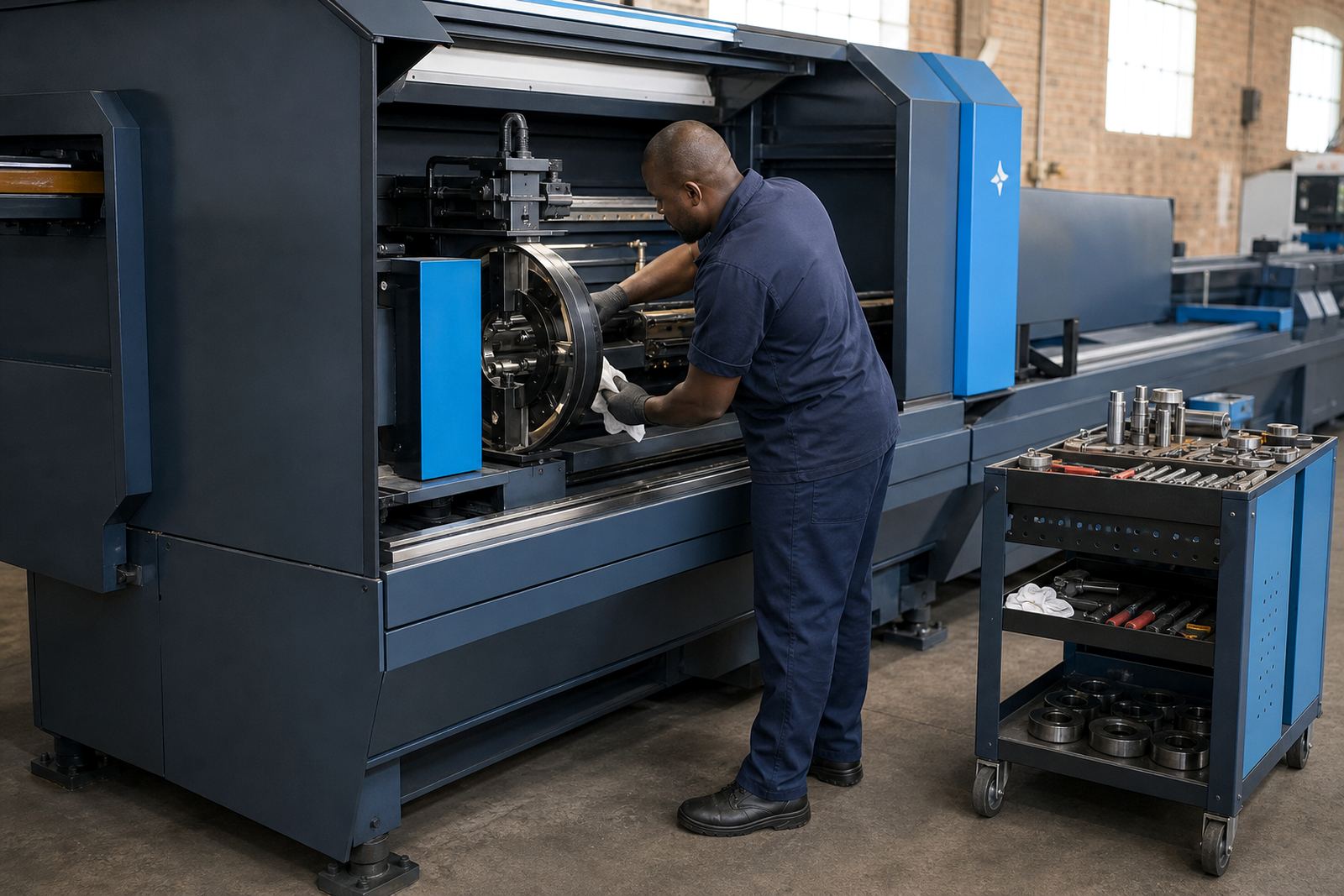
That same groundwork helps once production begins. Clear access around the chucks, enough room for nesting work, tidy gas positioning and a safe operator zone all matter when the machine is running daily tube and profile jobs. Where required, we also note what support is sensible for future chuck alignment checks, bevel calibration or breakdown work.
- Setup notes for installation and commissioning
- Operator station and safety zone planning
- Layout support for nesting and tube loading
- Practical notes for future service access
- Useful reference for later maintenance and adjustments
From Wadeville To Plants Across South Africa
LaserTube works from Wadeville, Germiston and supports metal fabricators across Johannesburg, Pretoria, Durban, Cape Town and Gqeberha, with assessments also arranged for sites in Bloemfontein and Nelspruit. The site visit is shaped around the machine type you are bringing in and the conditions already in place at the workshop or plant.
Michael Dlamini leads the business, with support from Anika Kajee, Sibusiso Bhengu, Leanne Mabuza, Pieter Visser and Ayanda Mashaba on sales, installation, training, service and applications work. When the site is ready, the rest of the project has a cleaner path, and the machine can be placed where the workflow actually makes sense.
Key facts
| Service area | Wadeville, Germiston and sites across South Africa |
|---|---|
| Machine types | Fibre laser tube and profile cutting machines |
| Materials covered | Round tube, square tube, rectangular tube, angle and channel |
| Assessment focus | Floor space, stock flow, services, access and safety |
| Related services | Installation, commissioning, operator training and breakdown support |
| Team support | Sales, installation, training, service and applications specialists |