What chuck alignment covers on a tube laser
Chuck alignment service focuses on the parts that hold and index the workpiece. On fibre laser tube machines, that means checking concentricity, jaw wear, clamping pressure, chuck runout and the relationship between the front and rear chucks. Where the machine cuts angle, channel and open sections, we also look at how the support and rotation path affect feeding and release. Small errors here show up fast on stainless tube, mild steel box section and long carbon steel lengths.
In Wadeville and on customer sites across Johannesburg, Pretoria, Durban, Cape Town and Gqeberha, we see the same pattern. A machine can cut well on paper, yet still leave a job with slight wobble, inconsistent grip or a finish that changes from the first tube to the last. Proper alignment puts the clamping line back where it belongs and gives the nesting software and motion control a cleaner starting point.
- Inspection of chuck body, jaws and mounting faces
- Runout checks on the clamping axis
- Grip check for round, square and rectangular tube
- Feed path review for channel and angle profiles
Our alignment check on site
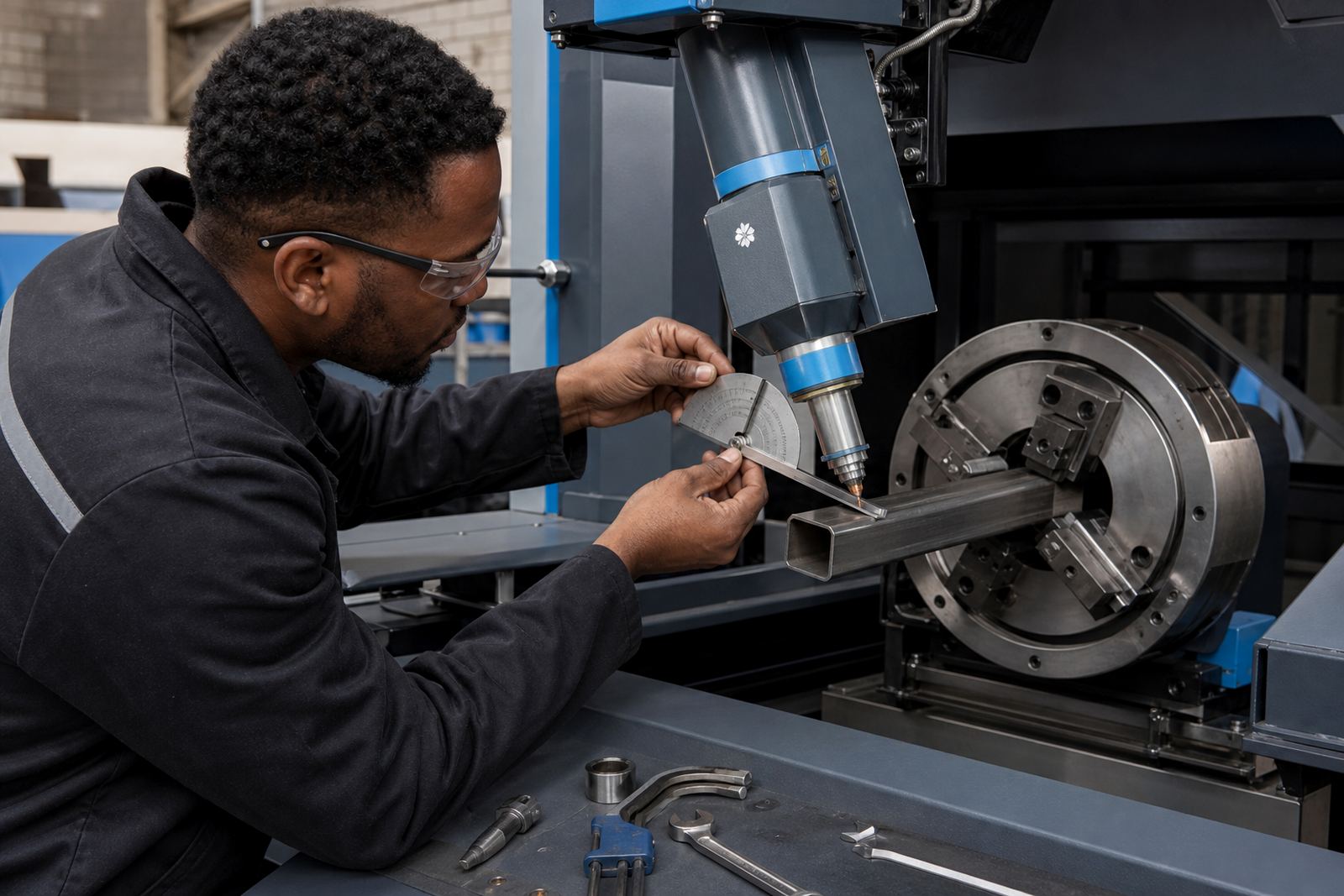
The service begins with a physical inspection of the machine and the current job conditions. We check how the tube sits in the chuck, whether the clamping faces are carrying evenly, and if there is any side pull when the part rotates. For bevel heads, we also check that the chuck position and cutting angle agree with the programmed path, because a small shift can change the bevel face and cause fit-up trouble on welded assemblies.
A chuck alignment visit follows this sequence: isolate the unit, inspect wear points, measure alignment, correct the setting, then run a test piece. That test piece may be a short round tube, a square offcut, or a section with a cut-out pattern and mitre feature. It gives a clear read on grip consistency, repeatability and edge quality before the machine goes back to production.
- Visual inspection of chuck wear and contamination
- Measurement of alignment and mechanical condition
- Adjustment of jaw position and clamping symmetry
- Test cut on representative tube or profile material
How the work is carried out
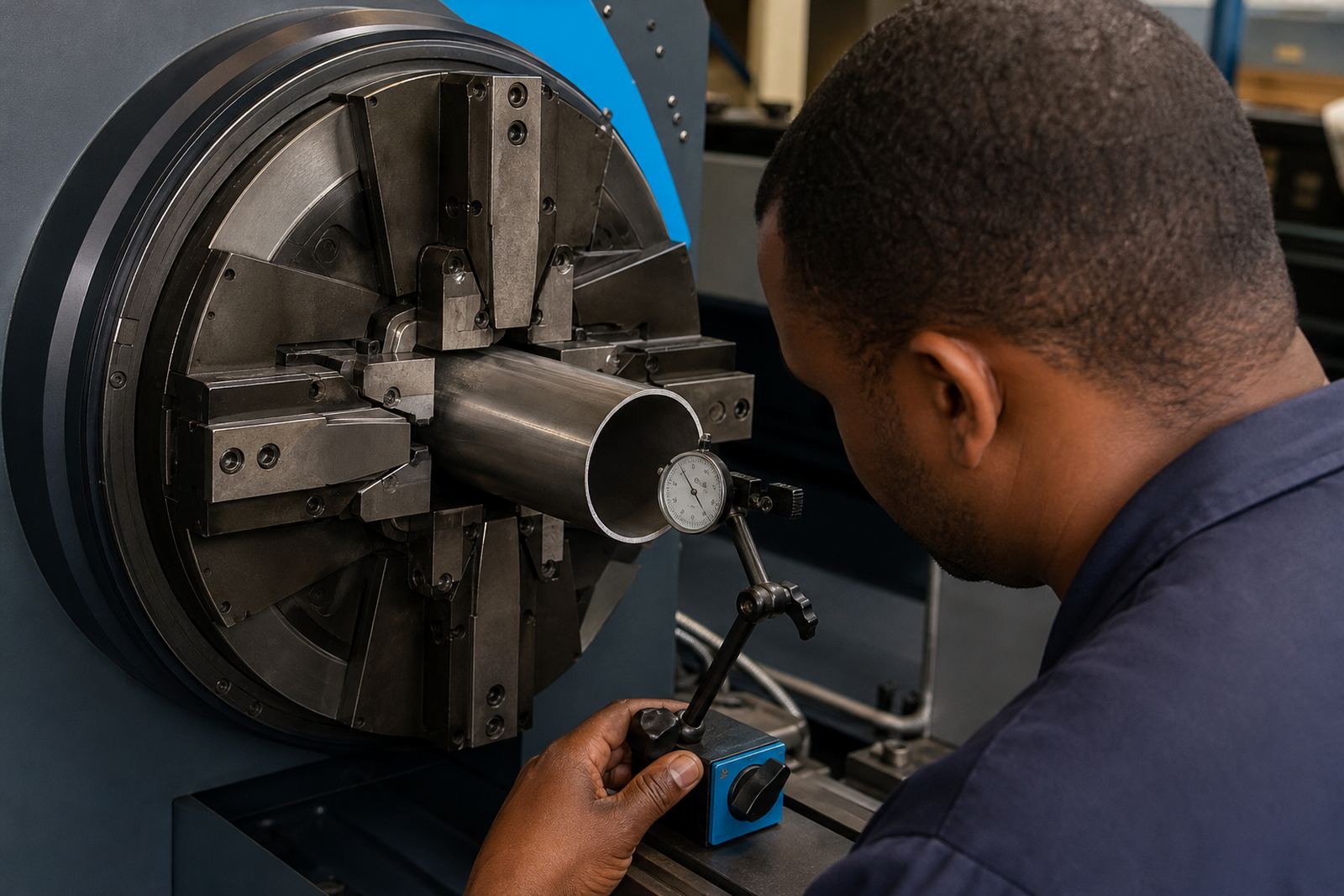
Every machine behaves a little differently, so the process is practical rather than rushed. We start with the installation record where available, then compare the actual chuck position with the machine geometry. If there is a measurable offset, we correct it at the mounting points and confirm the result with a dial check or equivalent measuring method. When the jaws are uneven, we inspect for wear, damage or contamination that may need cleaning or replacement.
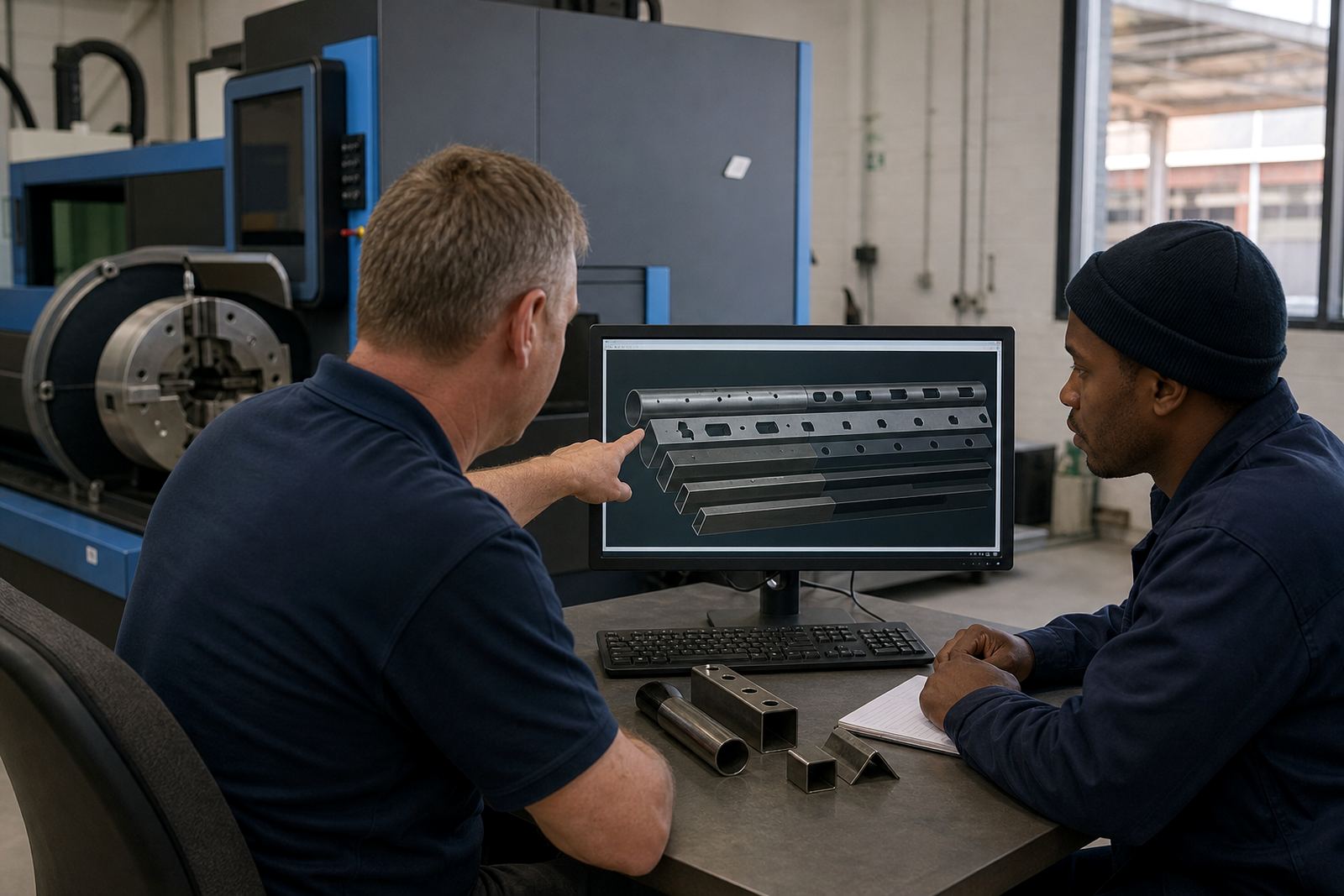
Once the mechanical side is sorted, we check how the software side supports the cut. That includes nesting settings for tube length, remnant use and part spacing, plus the handling of lead-in and lead-out points around the clamp zone. On machines fitted with assist gas, gas setup is reviewed so the cut is stable at the alignment point and the nozzle is not fighting a poor grip. The aim is a setup that holds straight, cuts cleanly and leaves less room for correction downstream.
Specs we look at during alignment
Chuck alignment is not guesswork. It is measured against the machine's own geometry and the material being run. Typical checks cover tube diameter ranges, chuck concentricity, jaw condition, clamping stroke, support height and the offset between the two chucks on longer beds. For profile cutting, we also consider the shape of open sections, because channel and angle can twist if the hold points are not balanced.
Where bevel cutting is involved, the tolerance window is tighter. The machine has to hold the workpiece steady while the cutting head moves through its programmed angle. If the chuck is out, bevel edges can show mismatch, edge drag or a poor weld prep face. For consistent cut quality, we align the chuck with the full cutting system so the workpiece stays true through the machine’s movement and programmed cutting angles.
- Round tube, square tube and rectangular tube
- Angle, channel and open section support
- Front and rear chuck relationship
- Bevel cutting position and cut face stability
Turnaround and pricing approach
Turnaround depends on the machine condition, the number of corrections needed and whether worn parts must be reset or replaced. A straightforward alignment on a healthy machine can be handled as a focused site visit, while a machine with jaw wear, damaged mounting faces or repeated drift will need more time and a fuller check. If the unit needs a larger service plan, we explain that before work continues.
Pricing is based on the scope of the job, the travel distance, the machine type and the level of correction required. We do not bundle every site into one fixed figure, because a small job shop in Germiston may need a different scope from a production plant in Durban or Cape Town. The pricing method is clear: you pay for the work the machine actually needs, with parts and extra adjustments listed separately where required.
Aftercare after the alignment is set
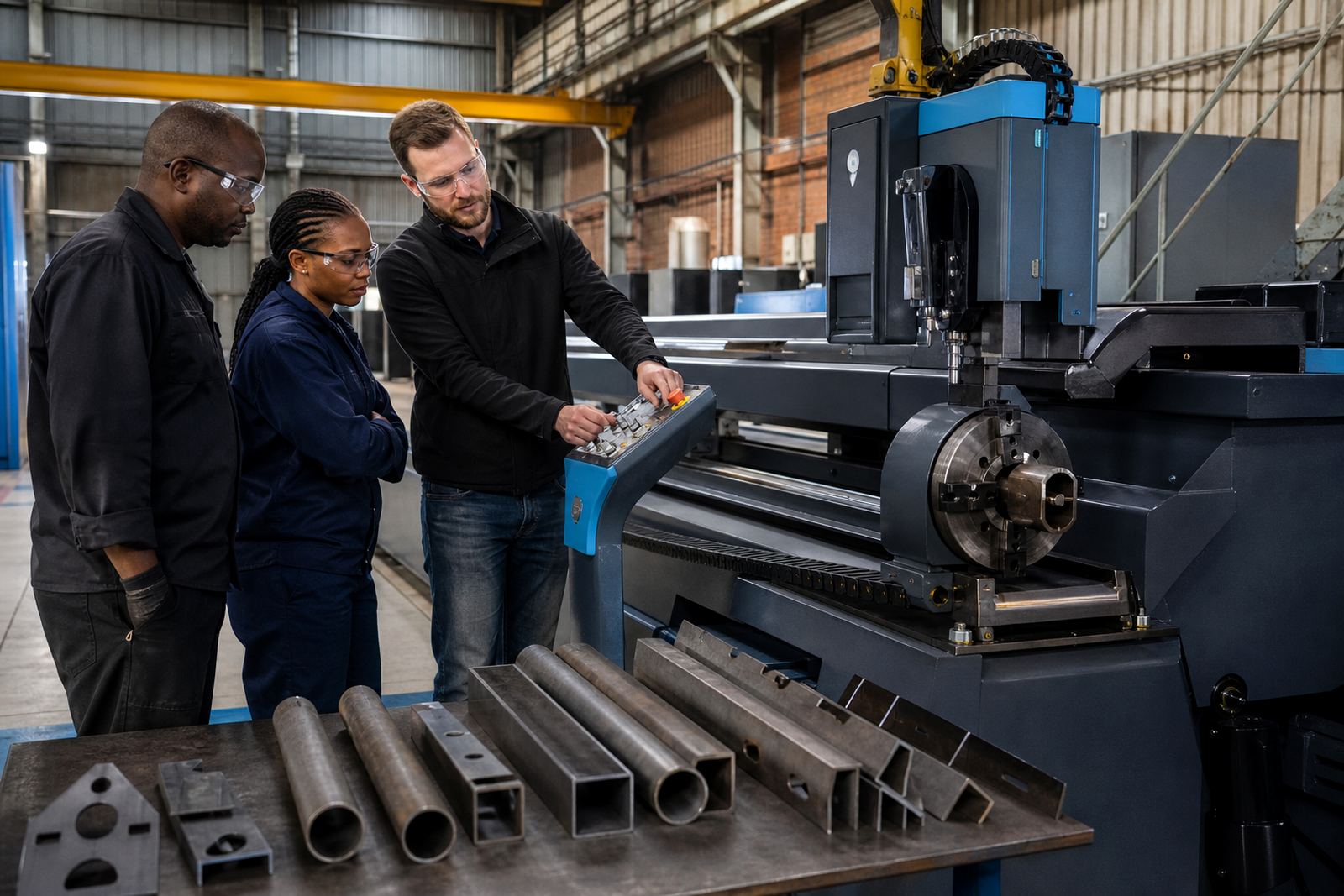
Once the chuck is aligned, we leave the machine with a record of the settings, the test result and any points that need watching during production. If the machine uses nesting software, we can show the operators where clamp clearance, part spacing and remnant handling affect the cutting path. That helps the team keep the machine on track when jobs change from heavy wall tube to lighter profiles or mixed section packs.
We also give practical guidance for daily checks at the machine. Operators should watch for clamp marks, uneven loading, noise at rotation and any change in part repeatability. If the machine shows a change in grip or cut quality, that is often the first sign that the chuck needs inspection before the issue spreads to a larger run.
- Alignment record and test cut notes
- Operator guidance for clamp and load checks
- Software notes for clamp zone and nesting
- Support for follow-up inspection if wear returns
Support for fabricators across South Africa
LaserTube works with fabricators in Wadeville, Johannesburg, Pretoria, Durban, Cape Town, Gqeberha, Bloemfontein and Nelspruit. Some plants run long shifts on high volume tube packs, while smaller shops need alignment help after a move, a new job mix or a cut quality change that starts at the chuck. We handle the mechanical side, the machine setup and the operator handover in one service path, so the line is ready for tube and profile work that needs accurate holding from the first cut.
For teams running fibre laser tube cutting on round, square and rectangular stock, chuck alignment protects the parts that matter most: grip, rotation and cut consistency. It is a practical service, and on the right machine it makes the rest of the process easier to manage.
Key facts
| Service type | Chuck alignment for fibre laser tube and profile cutting machines |
|---|---|
| Material range | Round tube, square tube, rectangular tube, angle and channel |
| Alignment checks | Runout, jaw wear, clamping symmetry and chuck relationship |
| Related systems | Bevel heads, nesting software and assist gas setup |
| Site coverage | Our chuck alignment service covers Durban, Cape Town, Gqeberha, Johannesburg, Pretoria and Wadeville. |
| Support options | We provide installation support, commissioning, preventive maintenance, and breakdown assistance. |