Operator training matched to the machine in your workshop
Operator training is shaped around the exact machine, tube sizes and job mix in front of us. A new operator needs more than button pressing, so the session covers the full path from loading material to checking the finished part for burrs, dross, heat mark and dimensional drift. On tube work, that includes how the chuck system grips round, square and rectangular sections, plus angle and channel where the job requires it.
We also cover how nesting is read, how cut order affects distortion, and how assist gas choice influences edge quality. Where a bevel head is part of the machine, operators are shown how angle settings change the edge and where to slow down for corner conditions. Safety forms part of every session, including guards, interlocks, raw tube handling, eye protection and the habits that keep hands clear of moving axes and rotating stock.
What the operator works through during training
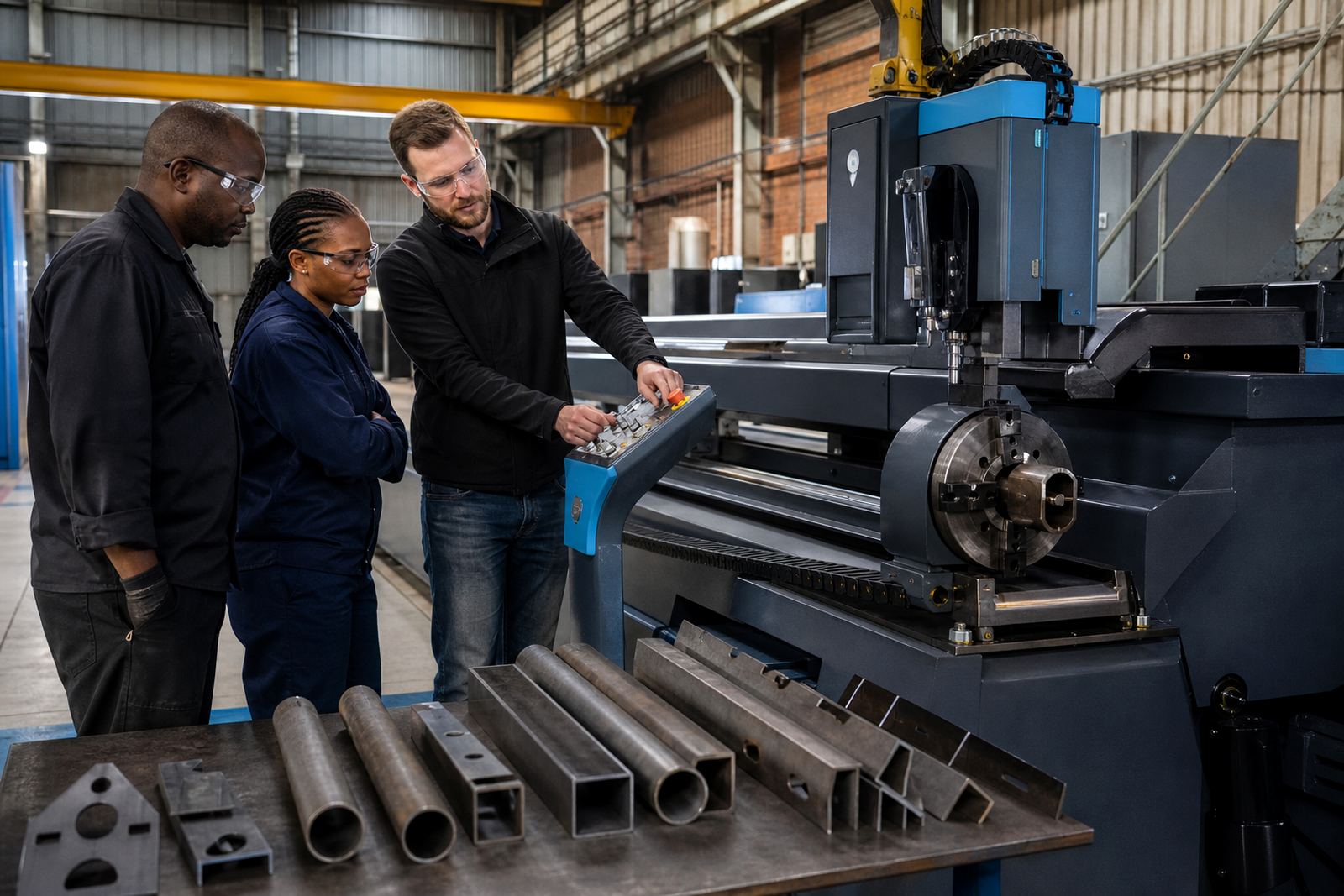
The session is practical and hands-on. We work through the machine screen, the loading table, the chuck area, the cut path and the offload side, then repeat the sequence until the operator can move through it without guesswork. On sites in Wadeville, Johannesburg, Pretoria, Durban, Cape Town and Gqeberha, the training is usually tied to the actual parts being cut that week, not to a generic exercise piece.
- Material identification, length checking and tube inspection before loading
- Clamp positioning, chuck centring and safe stock support during rotation
- Program selection, job loading and part nesting review on the control screen
- Kerf, pierce point and cut sequence basics for cleaner results
- Part removal, edge checking and handling of small cutouts or sharp scrap
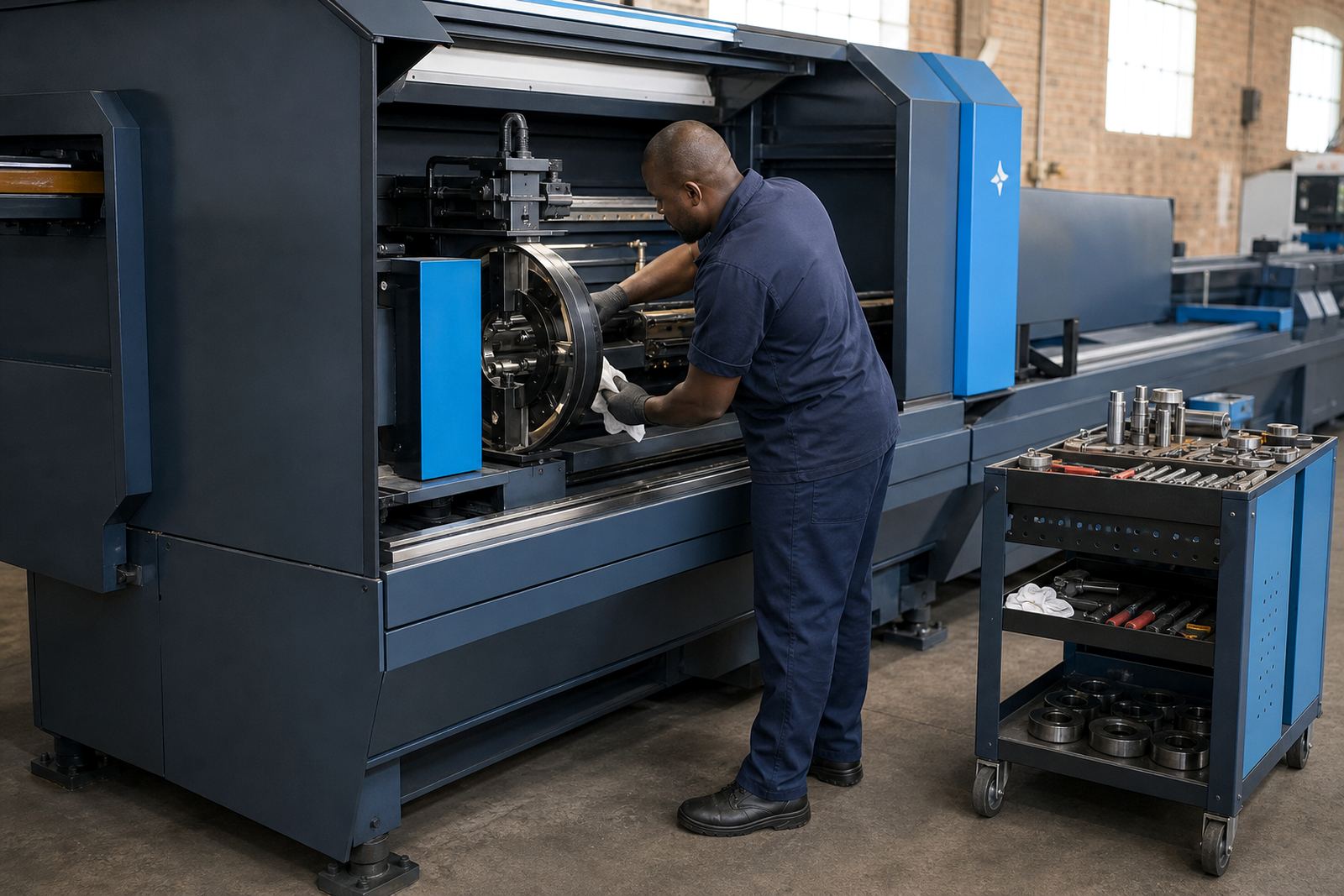
- Daily visual checks on lenses, nozzles, chucks and gas connections
- Safe response when the cut stops, alarms appear or a part shifts during processing
Operators are also shown how to spot the difference between a process fault and a machine fault. That saves a lot of time when a cut edge looks rough or a hole comes out oversize, because the cause may sit in the program, gas pressure, clamp position or worn consumables rather than the tube itself.
How the training is usually arranged
Most jobs begin with a site assessment, so the training can match the machine layout, available lifting method and the sizes that move through production. That matters on tube and profile work because long stock, mixed wall thickness and heavy cut sections call for proper loading discipline. Our team then plans the session around the operators on site, whether the crew is learning the machine for the first time or tightening up existing habits.
During the session, the trainer moves from demonstration to supervised practice. Anika Kajee handles the sales side of the project, while Leanne Mabuza coordinates the training flow and Sibusiso Bhengu handles installation details where the machine set-up affects how the operator uses it. Pieter Visser and Ayanda Mashaba support the work where cut quality, machine condition or nesting logic need extra attention. Michael Dlamini oversees the service direction from Wadeville, Germiston.
- Pre-training review of machine type, tube range and current workflow
- Walkthrough of loading, clamping and safe machine start-up
- Guided practice on sample jobs or current production parts
- Cut review with corrections on gas, feed and sequence where needed
- Operator sign-off notes for the key actions the machine team must follow
Turnaround, duration and training formats
Training time depends on the machine size, the number of operators and how much of the control system the team already understands. A single-operator refresher on loading and setup is very different from a wider rollout for a production plant with multiple shifts. Tube and profile cutters with nested jobs, bevel heads and mixed material schedules need more hands-on time than a basic cut demonstration.
Sessions can be arranged at the Wadeville base or at a client site anywhere in South Africa, including Johannesburg, Pretoria, Durban, Cape Town, Gqeberha, Bloemfontein and Nelspruit. Where travel and access rules apply, we plan around the floor conditions, lifting equipment and shop timing. If the machine is already installed, the training can be linked to commissioning work or to a production handover after installation.
We also cover remote follow-up for operators who need a second look at nesting steps, gas setup or repeated cut issues after they have started running jobs. That support is focused on the machine and the job flow, not on theory for its own sake.
Pricing approach for operator training
Pricing is built around the scope of work rather than a flat claim that suits every plant. The main factors are the machine model, the number of operators, the depth of the training, whether nesting support is included, and whether the work is done in Wadeville or on a client site elsewhere in the country. If assist gas setup, bevel calibration or chuck alignment need to be included in the same visit, that is carried into the scope so the training reflects the machine in use.
For budgeting, it is best to treat the training as a practical service linked to production readiness. A short refresher for one operator, a full machine handover for a new line, and a multi-day training block for a plant with several shifts will not price the same way. The quote follows the actual scope after the machine details and access conditions are known.
Aftercare that helps operators stay steady
Once the training is finished, the team still needs a clean way to keep working. Aftercare covers the practical points that matter on the floor: how to read recurring cut defects, when to recheck chuck grip, how to spot gas pressure drift and what to do when a program behaves differently on a new batch of tube. It also helps supervisors set a common routine for shift handover, scrap checks and part marking.
When an issue sits beyond operator control, we can step in with preventive maintenance, chuck alignment, bevel calibration or remote diagnostics. That keeps the machine side and the operator side connected, which is important on production jobs where one weak step can affect a full batch of parts. The aim is not to overcomplicate the process, but to make sure the people at the machine know what good running looks like.
- Refresher guidance after new staff join the machine team
- Support for recurring cut quality issues linked to setup or handling
- Checks on gas, clamping and nesting logic where job patterns change
- Escalation path for mechanical faults, alarms or cut movement problems
Key facts
| Training scope | Loading, clamping, cut setup, part handling and routine checks |
|---|---|
| Machine types | Fibre laser tube and profile cutting machines |
| Tube and section range | Round, square and rectangular tube, angle and channel |
| Included topics | Chuck use, nesting, bevel work, assist gas and safety |
| Delivery areas | Run from Wadeville for teams in Gauteng as well as Durban, Cape Town, Gqeberha, Bloemfontein and Nelspruit |
| Service base | Wadeville, Germiston |