What commissioning covers on site
Commissioning is the final technical stage before a machine is signed over for production. For tube and profile cutting equipment, that means checking axis movement, chuck operation, bevel head function where fitted, nesting setup, assist gas delivery and the safety systems that protect the operator and the machine.
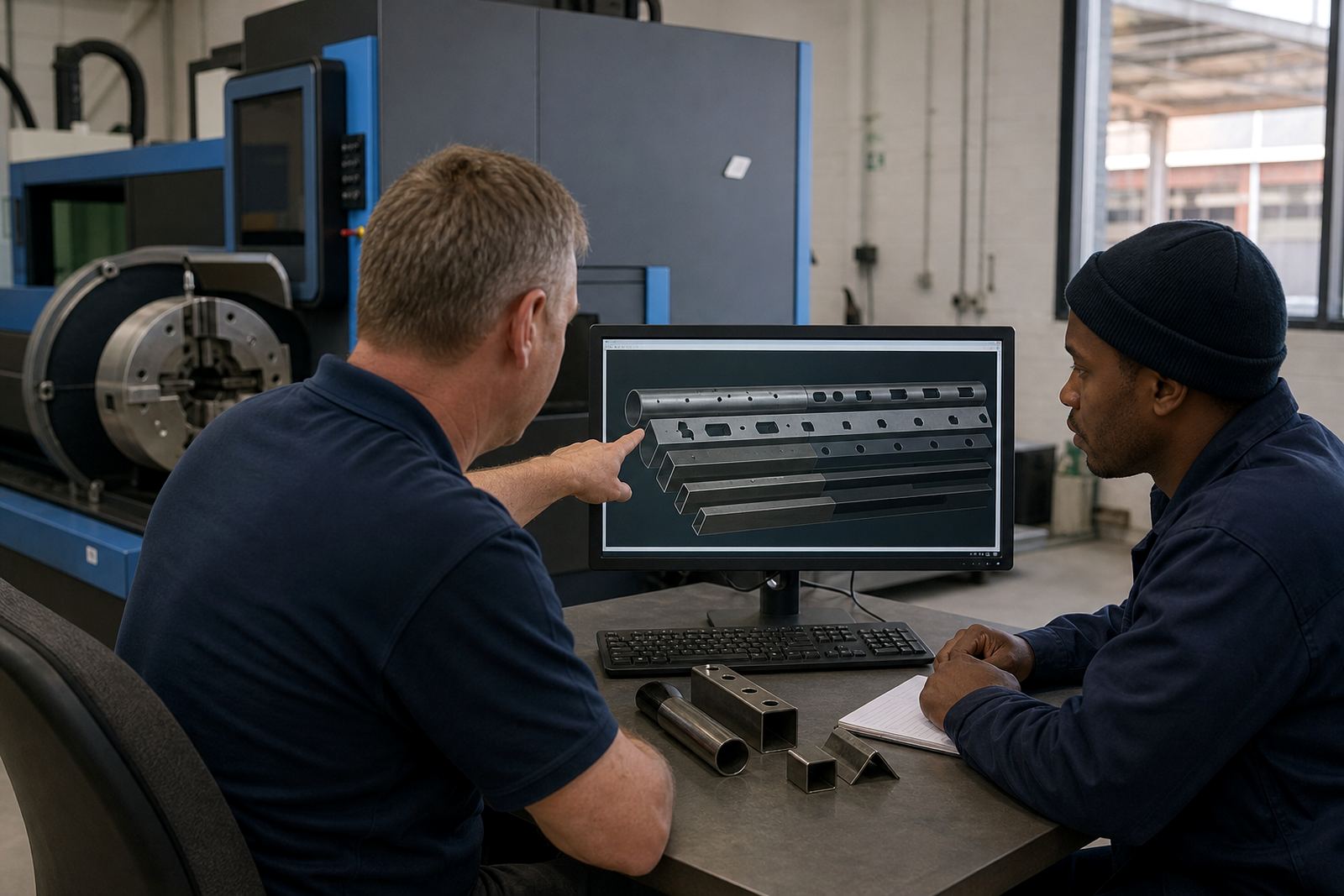
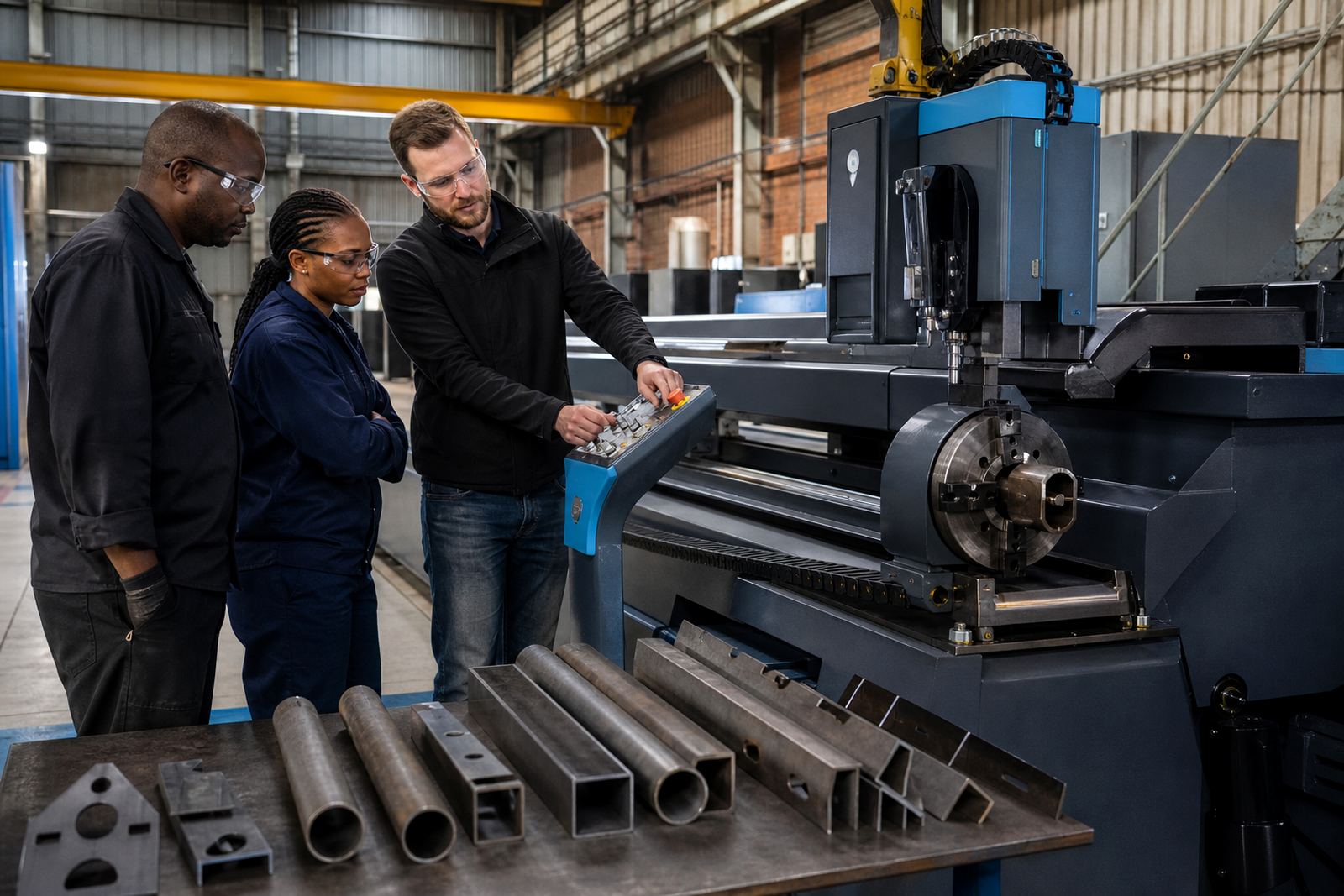
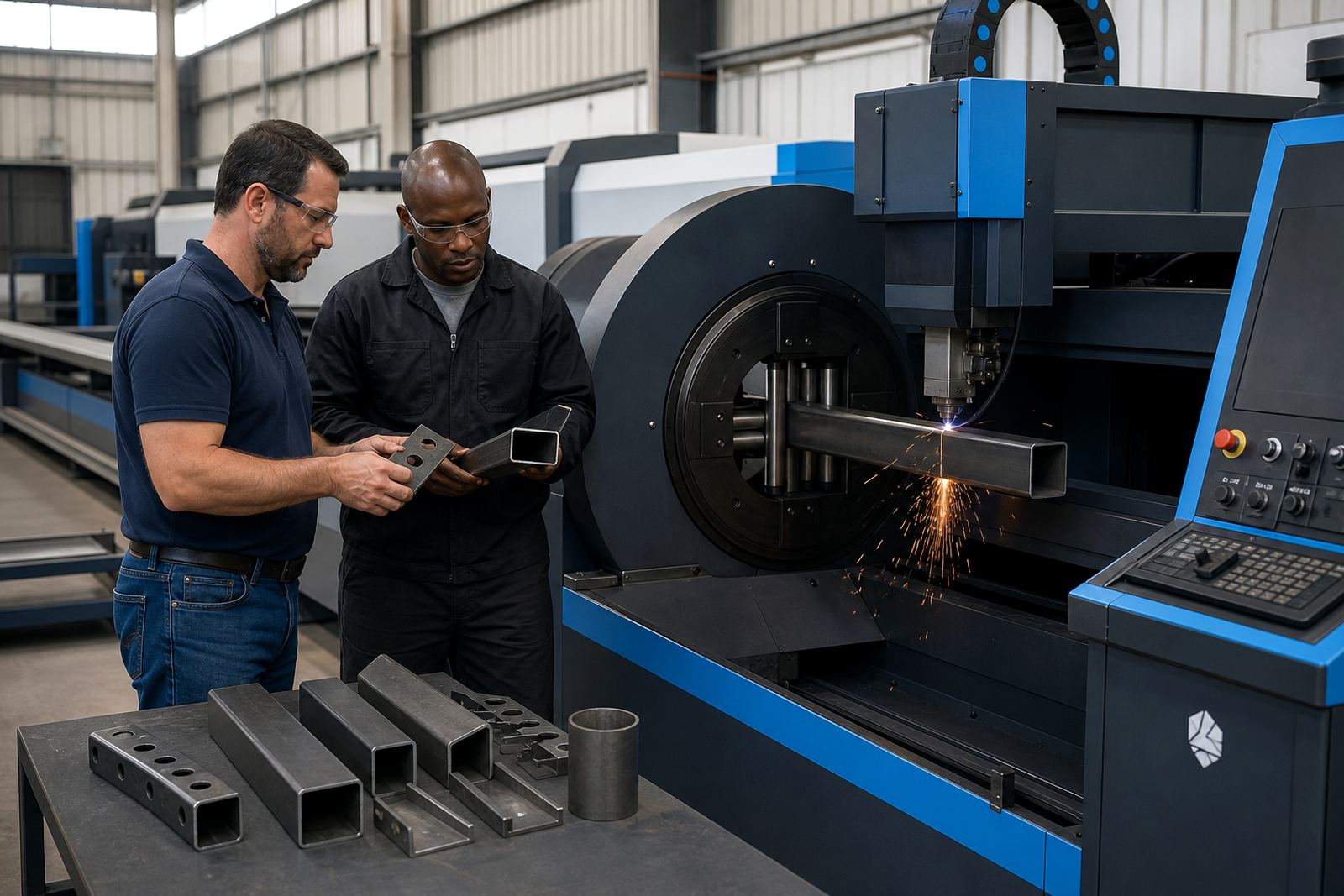
On a typical Wadeville or Germiston installation, the machine is checked with sample round tube, square tube, rectangular tube and open profiles such as angle or channel. We confirm that the head tracks cleanly, the cut edge is consistent and the machine handles the part lengths that the workshop has planned for, from short fabrication runs to longer production jobs.
- Axis homing, travel limits and repeatability checks
- Chuck centring, clamping pressure and tube rotation review
- Bevel head setup where angled cuts are required
- Assist gas pressure, flow and cutting quality checks
- Safety interlocks, guarding and operator access checks
The production checks we make before handover
The focus is not only on whether the machine moves, but whether it cuts the right part in the right way. We run practical tests on nesting layouts, pierce quality, corner behaviour and cut finish across the material types that the fabricator will use most often. If the workshop handles mild steel, stainless steel or aluminium tube, the settings are checked for the actual wall thicknesses in use.
For tube work, chuck grip and support height matter just as much as laser power. A machine can look ready but still produce drift, marks or twisting if the tube is not seated correctly. That is why we check the full path from loading to cut exit, especially on longer sections where deflection can show up midway through the cycle.
- Test cuts on common tube sizes and open profiles
- Edge finish checks for burr, dross and heat marking
- Part drop and offcut handling review
- Program review for nesting and part order logic
- Verification of gas selection for the intended material
How our commissioning process runs
Commissioning starts with a site review so the machine is matched to the floor layout, material flow and lifting access. Delivery rigging and installation are confirmed first, then the machine is levelled, connected and brought through its mechanical checks. After that, we move into motion tuning, cutting trials and operator familiarisation.
Where a plant has multiple shifts or a mix of fabrication jobs, we look at how the machine will be used in practice rather than in a neat test room. That includes tube loading paths, finished part removal, gas bottle or bulk gas arrangement, and how the nesting files will be prepared for the first production runs. Michael Dlamini oversees the broader technical direction, while Sibusiso Bhengu leads the on site work and Ayanda Mashaba handles applications testing with the workshop team.
- Site layout and access check before final setup
- Levelling, alignment and axis verification
- Cut trial sequence on agreed material samples
- Operator walk-through on machine screens and controls
- Sign-off after practical output has been checked
Training that sits inside commissioning
Commissioning is the point where the team learns the machine on the actual floor, not from a short theory session. Leanne Mabuza guides operator training alongside the commissioning work, so the staff who will use the machine know how to load material, read alarms, manage nesting files and handle basic checks before each shift.
For workshops that are new to fibre laser tube cutting, we cover the habits that protect cut quality: clean material support, correct chuck loading, sound gas setup and careful part removal. If the machine includes bevel cutting, the operator is shown how angle changes affect the finished edge and why calibration matters when changing from straight cut work to angled profiles.
- Loading and unloading tube safely
- Reading alarms and status screens
- Running and checking nesting files
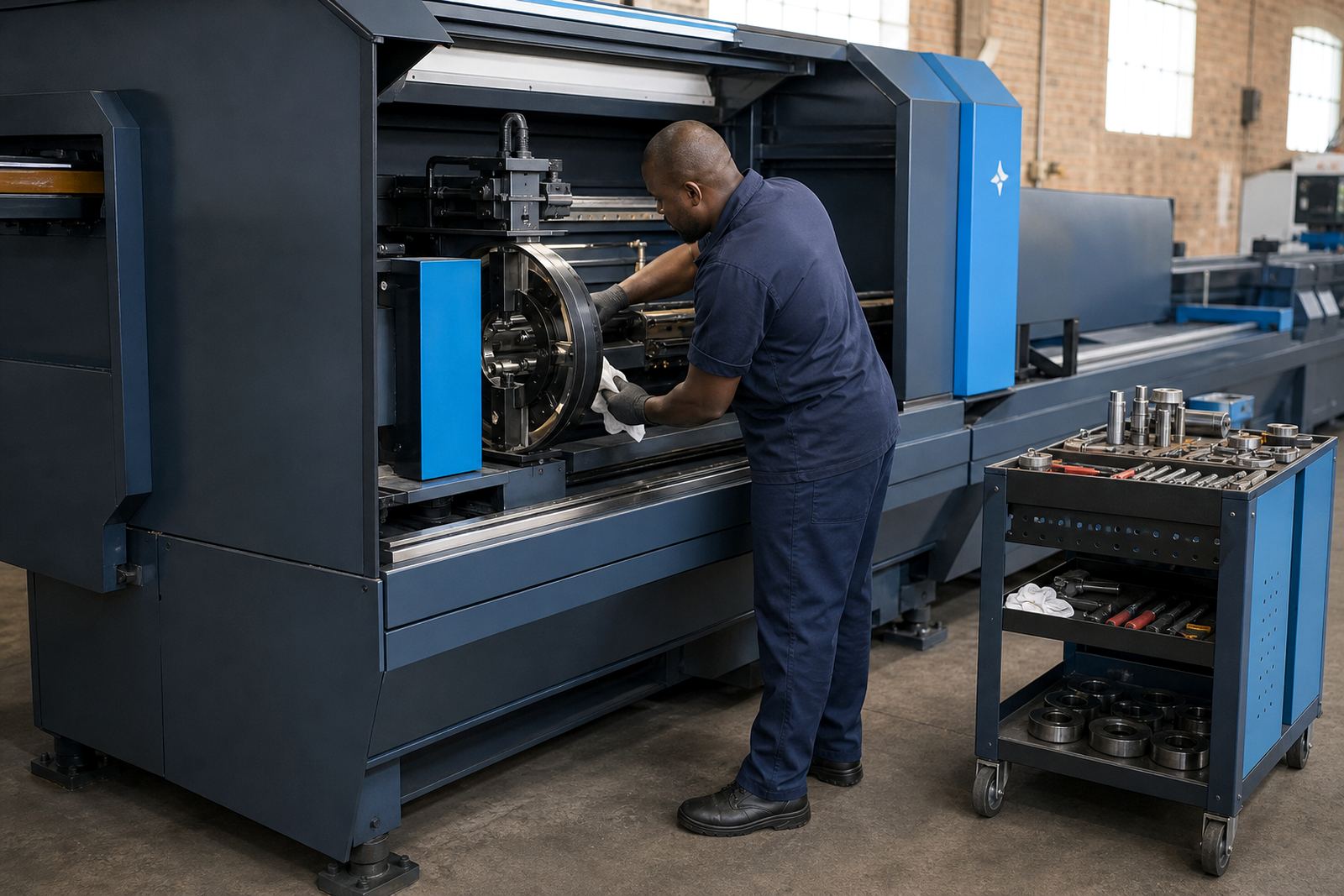
- Basic chuck care and alignment awareness
- Assist gas handling and cut quality checks
Turnaround, scope and pricing approach
The time needed for commissioning depends on machine size, site readiness and how much process testing is required. A compact machine on a prepared floor takes less time than a larger cell with long tube handling, bevel capability and a wider range of material trials. Sites in Johannesburg, Pretoria, Durban, Cape Town and Gqeberha are handled with the same practical planning, though access, rigging and local travel all affect the schedule.
Pricing is built around the scope of work rather than a flat assumption. Factors include the number of test cuts, the extent of chuck alignment, the need for bevel calibration, operator handover depth and whether assist gas setup or nesting training is included in the same visit. We quote on the actual commissioning task, so the cost reflects the equipment and the workshop needs.
- Machine size and axis count
- Tube handling and support complexity
- Bevel head setup or straight cut setup only
- Number of operators to be trained
- Site access, rigging and travel requirements
Aftercare once the machine is running
After handover, the support work is practical and specific to the machine in the workshop. If cut quality changes, chuck alignment drifts or the gas setup needs adjustment after a material change, the service team can assist with diagnostics and correction. Pieter Visser handles field service calls and remote diagnostics support where a site can be checked before a visit is arranged.
We also support preventive maintenance, because small checks done after commissioning help keep motion steady and cutting consistent. That includes verifying chuck condition, checking consumables, confirming gas settings and watching for changes in cut edge quality that point to an adjustment rather than a bigger fault. For plants in Bloemfontein, Nelspruit and the major metro areas, the aim is to keep the machine producing the parts it was commissioned to cut.
- Remote fault review and fault isolation
- Chuck alignment correction when needed
- Bevel recalibration after tooling or setup changes
- Assist gas review after material or thickness changes
- Practical service support for production recovery
Key facts
| Machine types | Fibre laser tube cutters and profile cutters |
|---|---|
| Tube shapes | Round, square and rectangular tube |
| Open profiles | Angle and channel |
| Functions covered | Motion setup, chuck alignment, bevel calibration, assist gas setup |
| Support area | Commissioning crews travel from Wadeville to plants in Gauteng, Durban, Cape Town and Gqeberha. |
| Service team | Michael Dlamini, Anika Kajee, Sibusiso Bhengu, Leanne Mabuza, Pieter Visser and Ayanda Mashaba |