How the machine gets from truck bed to final position
Delivery rigging starts with the machine weight, centre of gravity and the route into the workshop. Fibre laser tube and profile cutters often arrive as long, awkward loads with delicate gantries, chucks, control cabinets and assist-gas gear packed separately. Our team checks doorway widths, roller shutter openings, slab condition, turning space and overhead clearance before any lifting gear is booked.
We work with the realities of South African workshops, from tight bays in Wadeville to production floors in Pretoria and Durban. If the unit needs to move past machine tools, racks, mezzanines or low lintels, the lift plan changes to suit the site. That keeps the placement accurate and avoids having to shift a heavy machine twice.
- Pre-delivery site assessment for access, floor loading and entry points
- Lift planning for fork hoists, gantries, skates, cranes or low-load moves
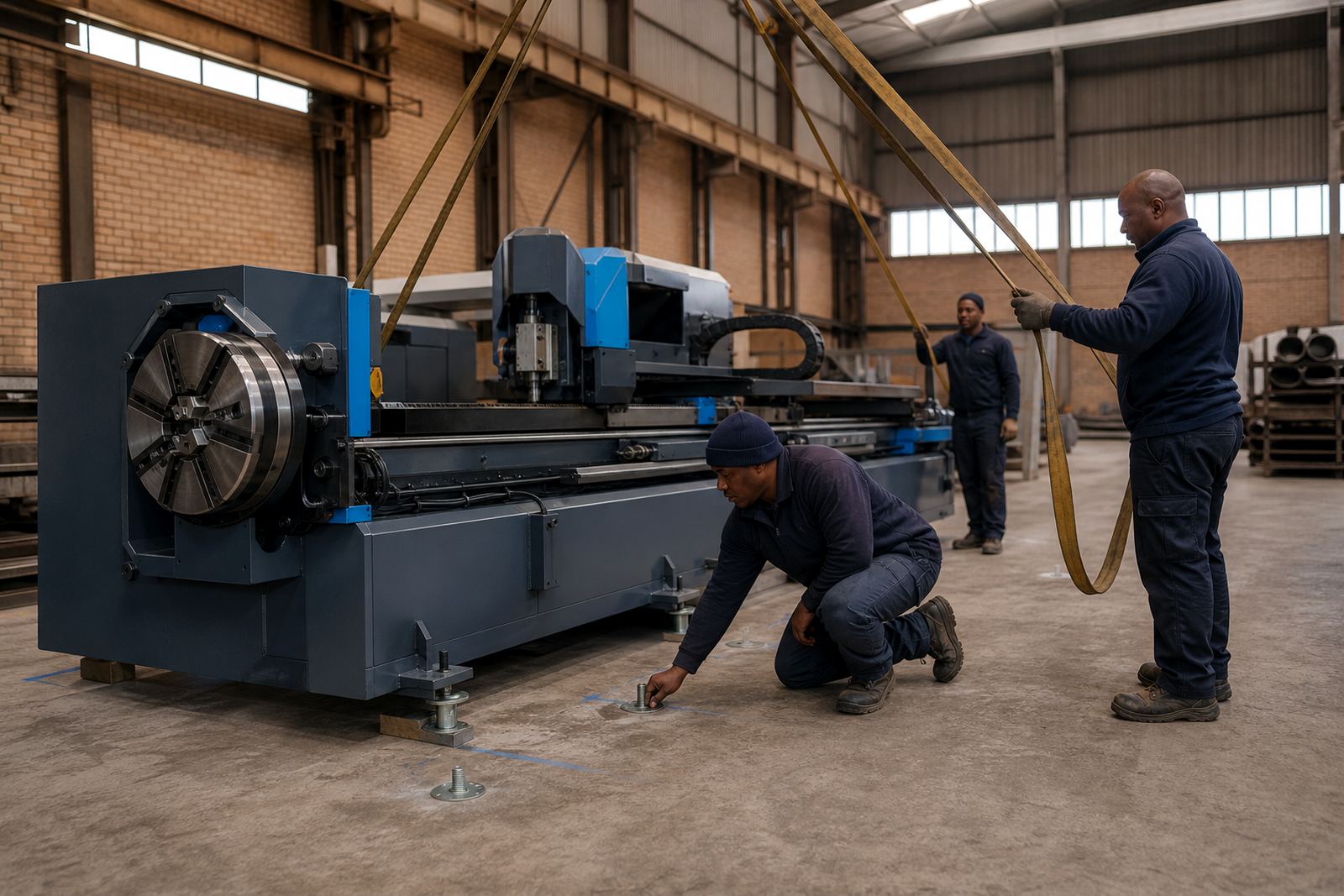
- Controlled offloading of machine frames, cabinets and loose components
- Final positioning to suit loading side, tube stock handling and service access
What is included in delivery rigging
The service covers the physical move from arrival point to the prepared machine position. That includes offloading, controlled travel across the floor, levelling where needed and placing the machine so installation can start cleanly. For tube cutting machines, we also take account of tube loading bays, bundle supports, scrap collection access and the swing path for chucks and support arms.
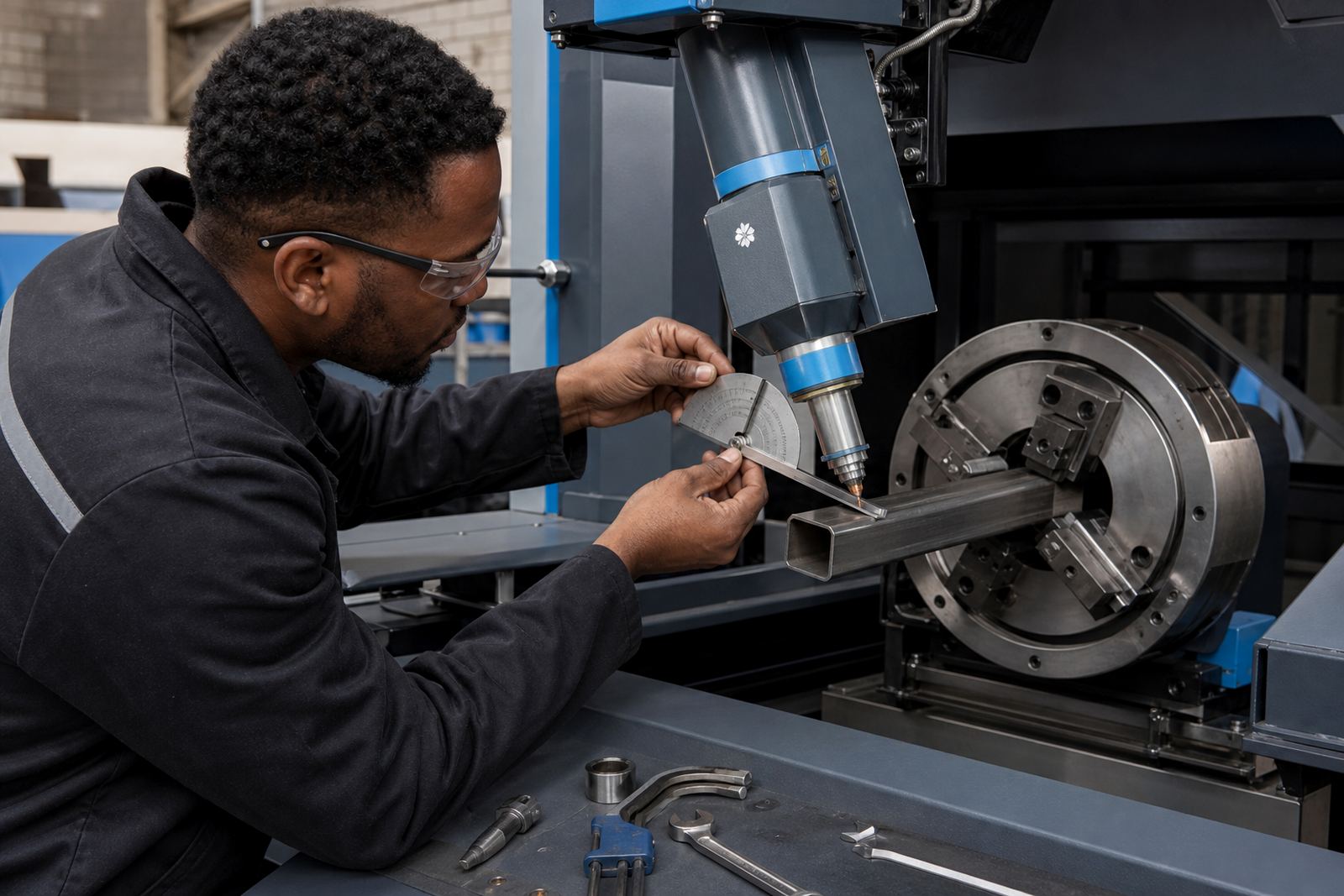
Bevel head machines need extra care around head height, travel envelopes and service panels. Profile cutters may require a wider set-down area because of the cutting bed, extraction access and loading method. Where a machine is supplied with nesting software workstations or a separate control counter, those items are moved and placed as part of the same rigging plan.
- Offloading and safe transport inside the workshop
- Placement to the agreed position and orientation
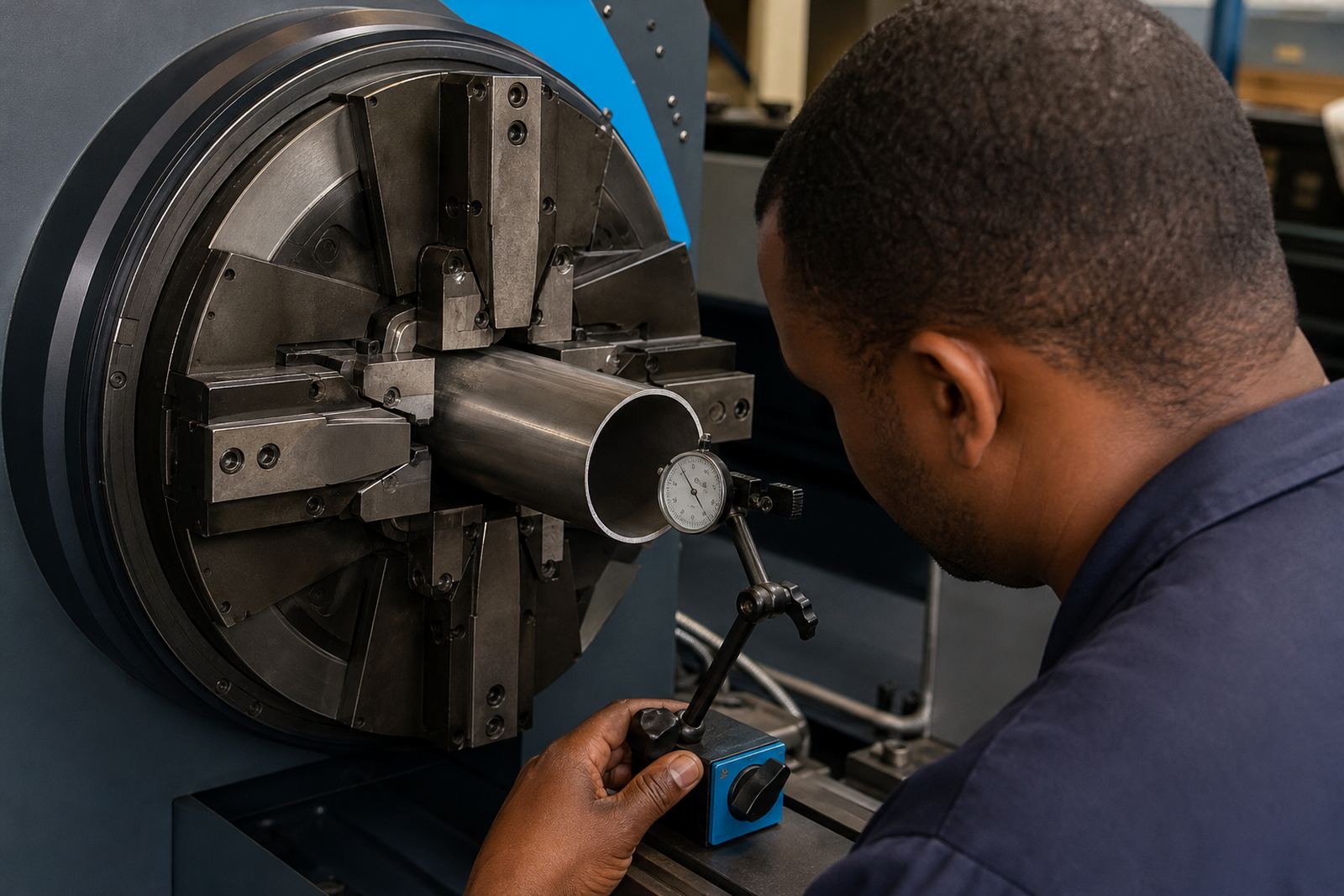
- Levelling and basic alignment checks before installation
- Handling of separate accessories, controls and gas equipment
The steps from site walk-through to set-down
Good rigging is staged work. First we confirm the access route and measure the openings that matter. Then we match the rigging method to the machine size, floor finish and the space available for lifting gear. On delivery day the offload area is cleared, the route is protected where needed and the machine is moved in a controlled sequence.
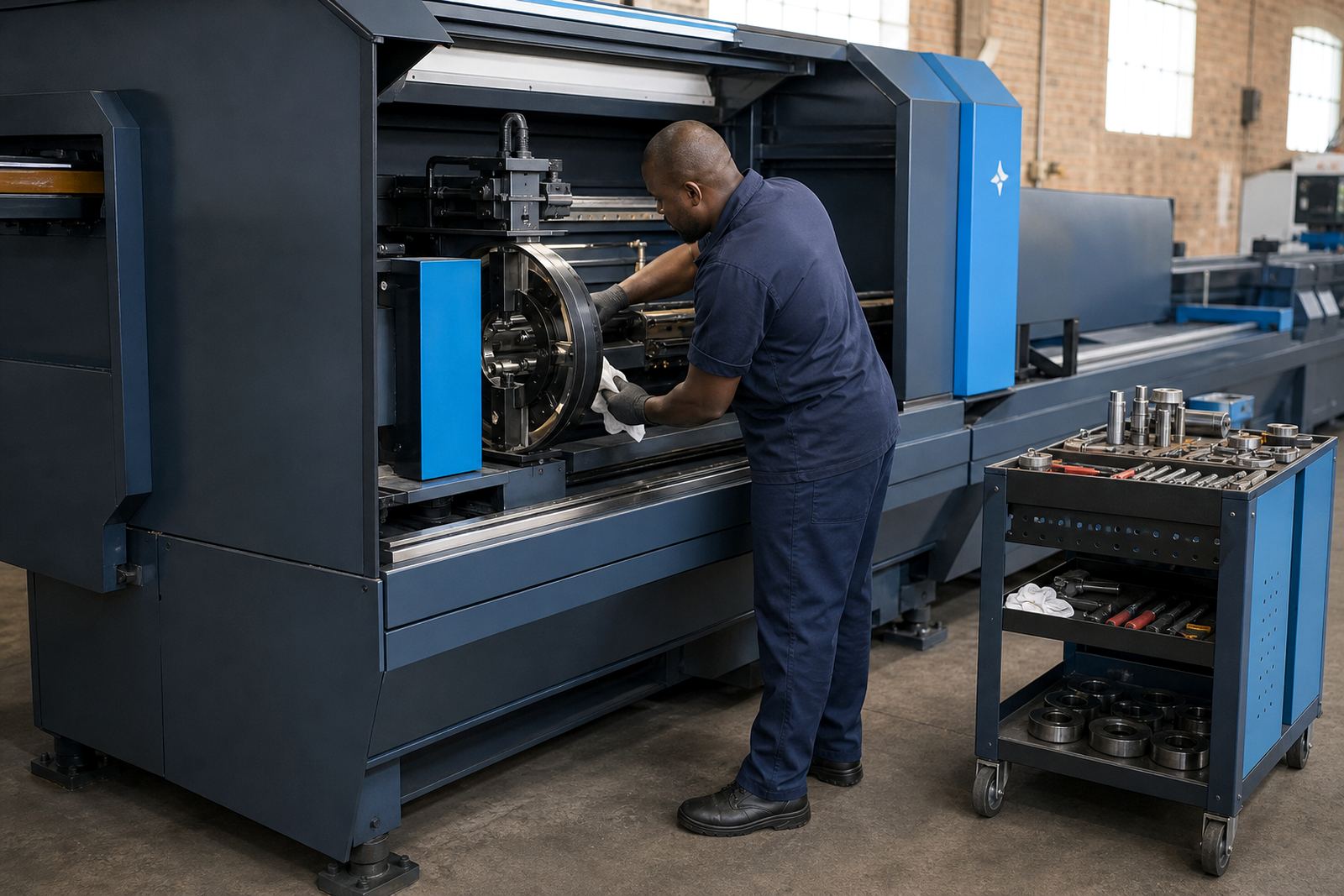
Once the unit is in position, the installation crew can carry on with machine assembly, electrical connection, gas line setup and laser head checks. That handover matters because a poorly placed machine wastes time later when the operator needs space for tube bundles, finished lengths or access for the next task. We place it for daily work, not only for the first day on site.
Workshop access, floors and lifting conditions
Every site behaves differently. A flat concrete floor in Germiston is not the same as a busy production area in Cape Town with narrow access and mixed traffic. Some floors carry old patch repairs, some have loading lips at the doorway and some need extra protection for polished surfaces. We look at those details before the machine arrives so the rigging method fits the site rather than forcing the site to fit the machine.
For heavier units, the slab and access route must suit the load. If the machine has long bed sections, the move may need to be broken into stages so that each part can be turned, lowered and set in sequence. That is especially relevant for tube and profile systems with extended infeed and outfeed zones, where a few extra metres of clearance make the move far easier.
- Gate and door clearances checked against the machine footprint
- Floor finish reviewed for cracks, lips, slopes and traffic paths
- Headroom checked for lifting tackle and machine height
- Placement planned around future tube loading and maintenance access
Turnaround and pricing approach
Delivery rigging is priced from the actual job conditions rather than a flat assumption. Machine mass, travel distance, access difficulty, lifting method and the number of set-down points all influence the scope. A compact tube cutter in a neat industrial bay needs a different rigging plan from a long profile machine moving into a production plant with restricted entry and busy internal traffic.
We prepare the scope around the machine and the site. That means the price reflects the labour, lifting equipment and planning needed for the move itself, plus any special handling for separate chucks, support tables, bevel heads or control cabinets. Where a site needs extra measures, those are built into the rigging plan before the truck arrives.
Aftercare once the machine is in place
After the machine is set in place, we stay on the job through the practical handover. The next steps may include installation, commissioning, chuck alignment, bevel calibration, assist gas setup and operator training. If the machine needs a final shift after cable routing or gas line work, we include it in the placement plan so the machine finishes in the correct position.
We also brief the workshop team on how to keep clear access around the machine, where to store tube bundles safely and which paths should stay open for service work. That reduces unnecessary movement around the unit and helps the machine settle into daily production properly.
- Placement review after installation works are complete
- Support for any final position adjustments linked to commissioning
- Guidance on keeping access paths open for operators and service work
- Optional follow-on support for training and production start-up
Key facts
| Machine types | Fibre laser tube cutters, profile cutters and combined tube and profile systems |
|---|---|
| Load handling | Offloading, internal move, set-down and final placement |
| Access checks | Doors, gate widths, headroom, floor condition and turning space |
| Site scope | Wadeville, Johannesburg, Pretoria, Durban, Cape Town, Gqeberha and other South African industrial areas |
| Linked services | Installation, commissioning, operator training and assist gas setup |
| Handling focus | Chucks, bevel heads, control cabinets, infeed and outfeed sections |