Site Readiness Before the Rig Arrives
A clean installation starts with the floor, the lifting route and the machine footprint. At Wadeville and on jobs in Johannesburg, Pretoria, Durban, Cape Town and Gqeberha, we assess access widths, slab condition, lifting points and the position of the controller, chiller, gas lines and extraction equipment. That check cuts delays on the day and helps the machine sit square from the first lift.
For tube and profile cutting machines, the setup needs space for loading long stock, offcut removal and safe access around the chuck zones. We also review ceiling height, doorway clearance and where cut parts will land. If the job includes bevel cutting, we allow for extra head movement and service access around the cutting zone.
- Access and rigging route planning
- Floor and slab check for level and load bearing
- Machine footprint, operator side and loading side marked out
- Utilities position confirmed before unloading
Rigging, Positioning and Levelling
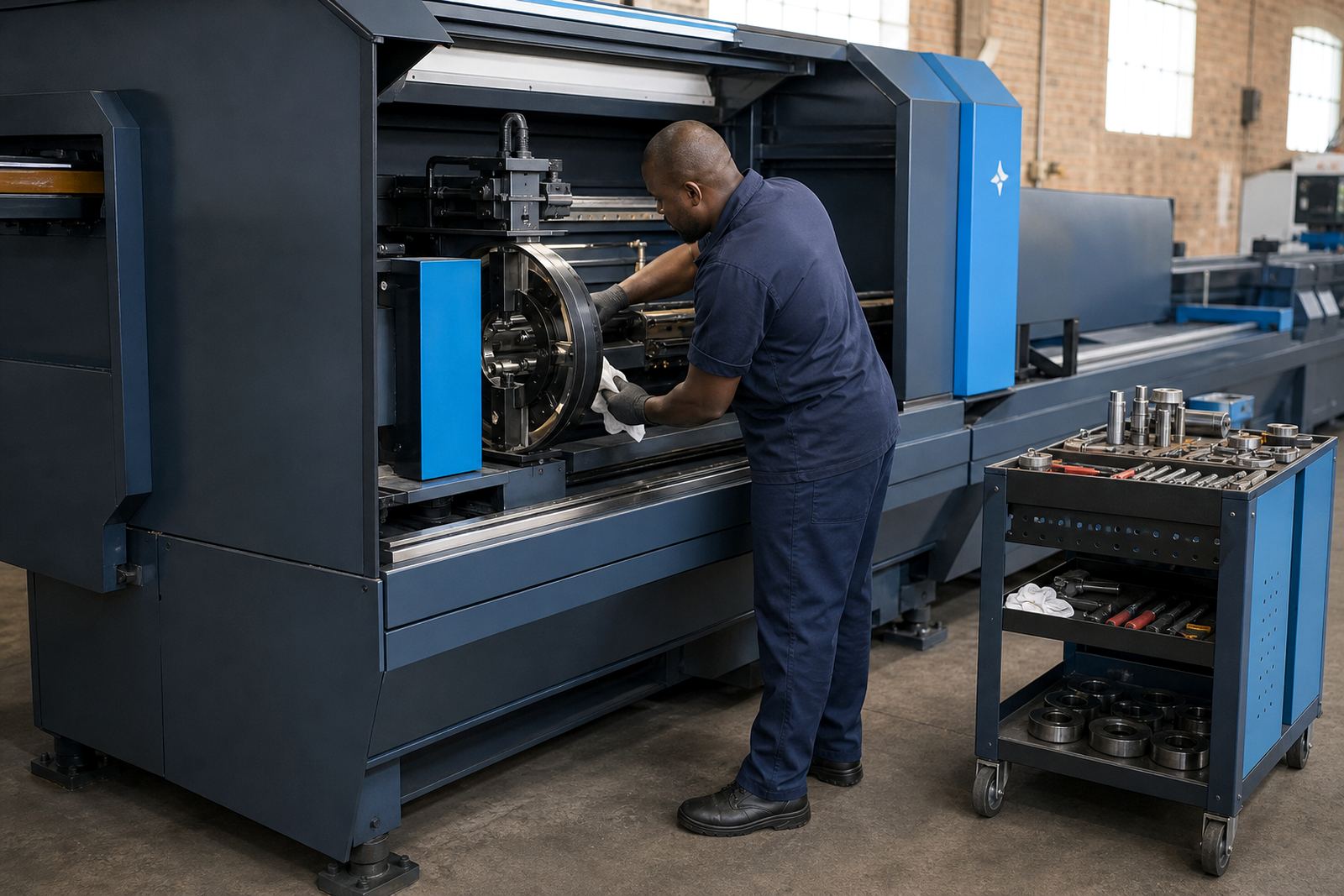
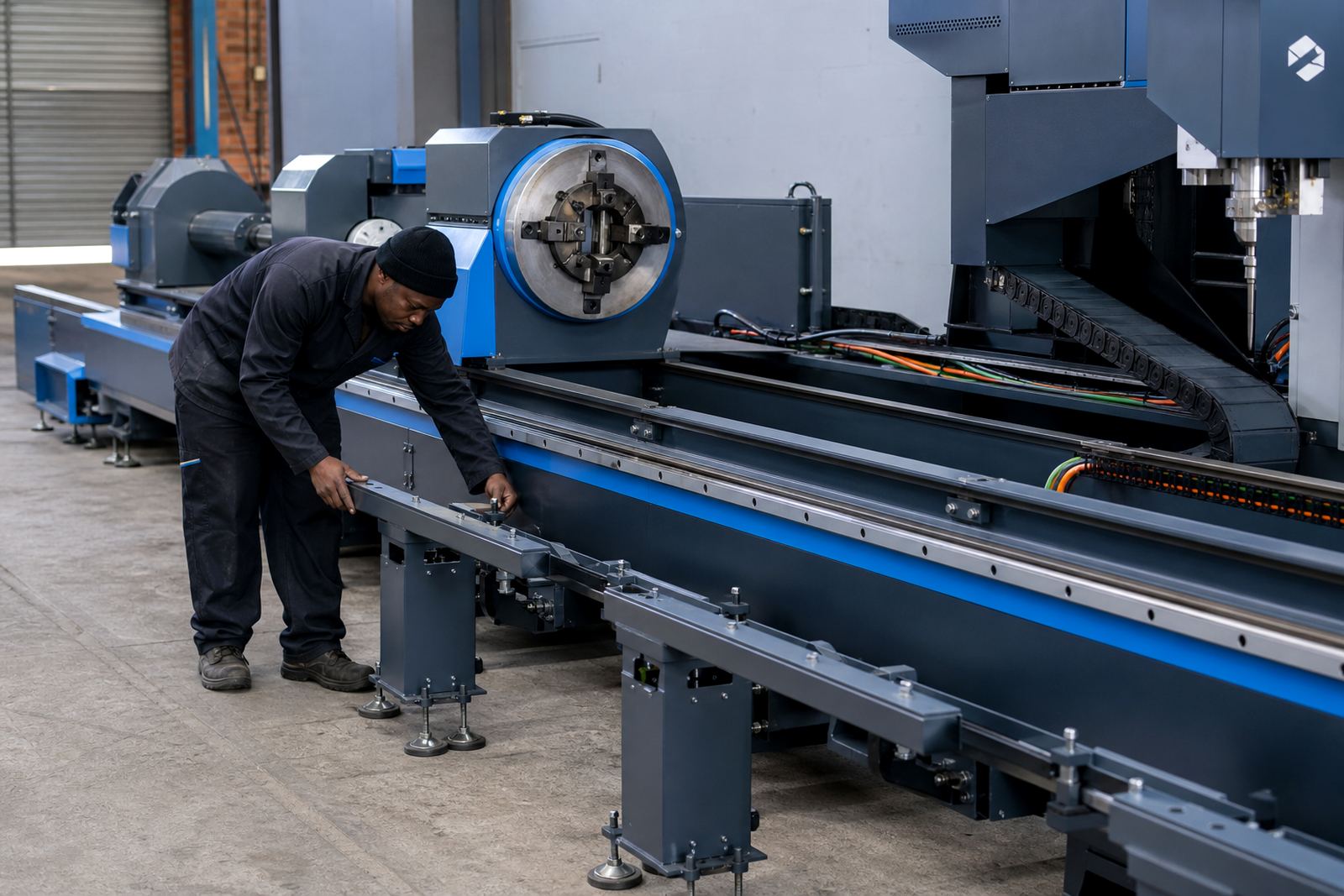
Delivery rigging is handled with the machine type in mind, whether it is a compact unit for a small fabrication shop or a larger system for production work. The machine is moved into position, set onto its anchors or feet, then levelled so the cutting axis, chucks and gantry travel sit correctly. That matters for round tube, square tube, rectangular tube and structural sections such as angle and channel.
Levelling is not a quick visual job. We work from measured points across the base and machine frame, then check that travel stays true through the full cutting length. On long-bed systems, that also supports part consistency across full-length tubes and bundle work. In a humid coastal area, we are careful with protection around exposed surfaces during the installation stage.
- Controlled unloading and machine positioning
- Frame levelling and anchor setting
- Travel checks on the full cutting bed
- Protection of optics, rails and exposed surfaces during setup
Connections, Guards and Core Setup
Once the machine is seated, we connect the services needed for normal operation and set up the core cutting functions. That includes electrical tie-in, assist gas routing, extraction or fume control where fitted, and the machine controls that support chuck rotation, tube clamping and head movement. Guarding is checked so doors, interlocks and access panels work as intended before production starts.
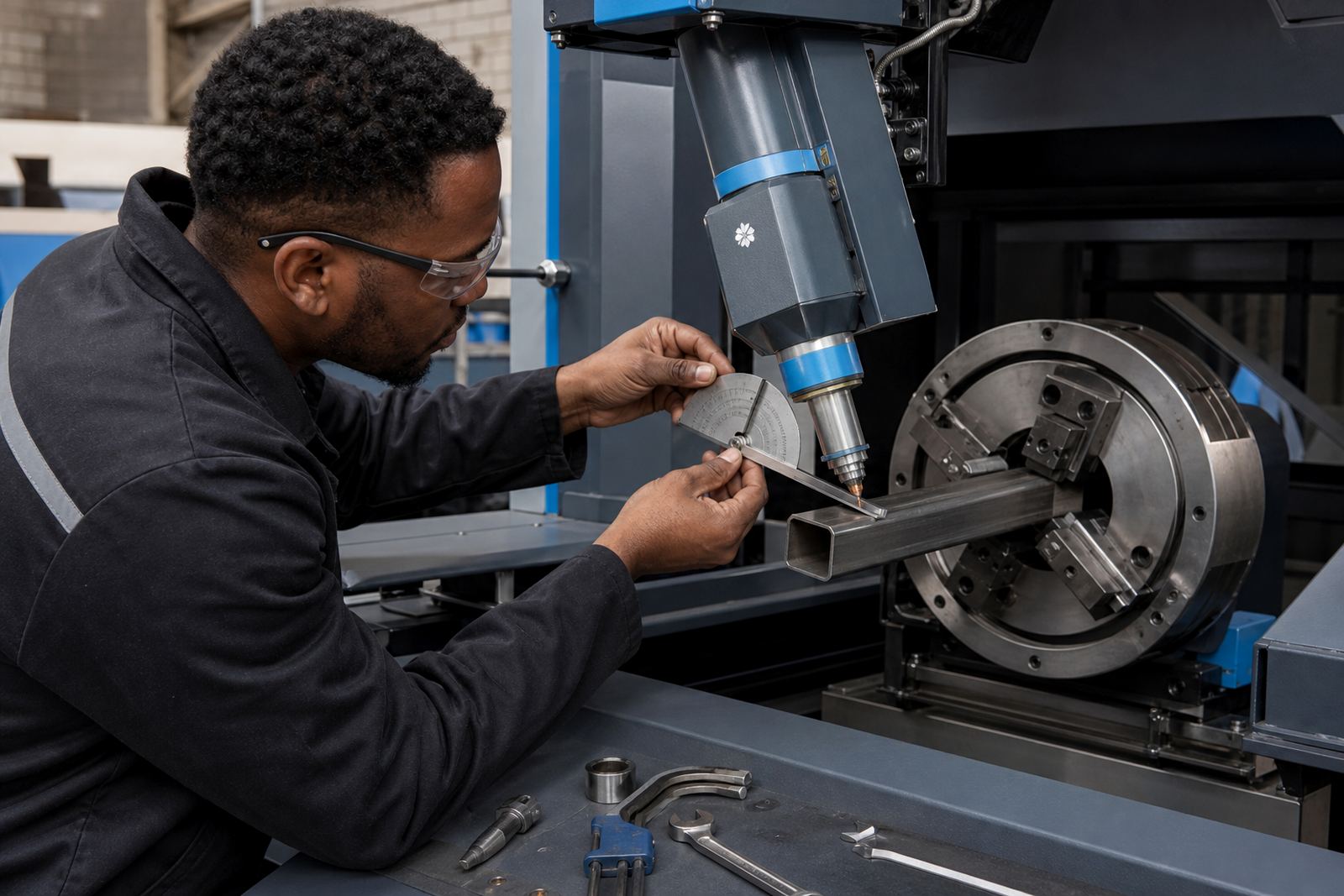
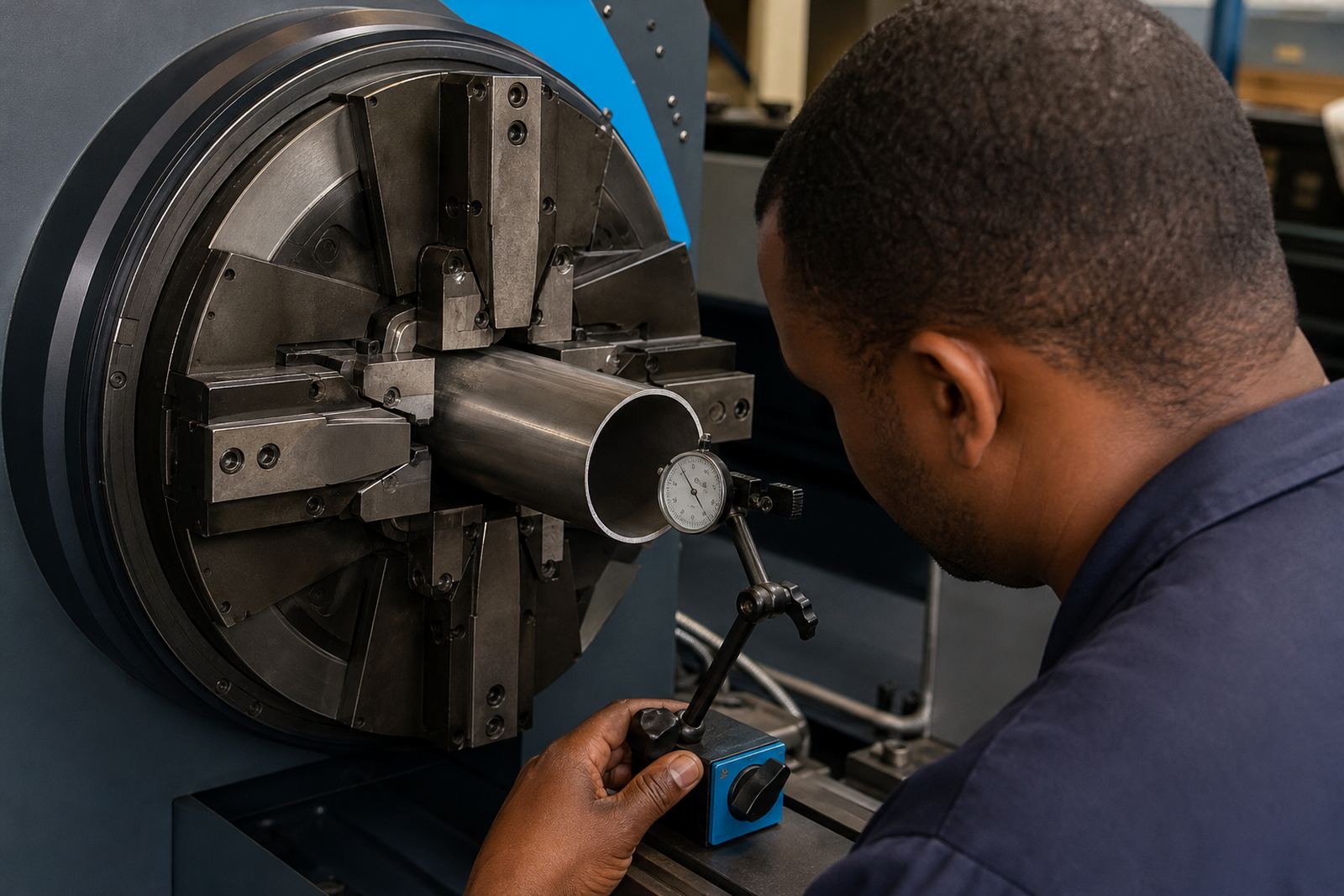
Core setup also includes axis reference, home position checks, chuck alignment, head clearance and the first run through the nesting software workflow. For machines with bevel heads, we check the tilt range and set the basic calibration for angled cuts. That gives the operator a stable starting point for both straight cuts and more detailed profile work.
- Electrical and control connections checked
- Assist gas lines routed and checked
- Guarding, interlocks and access panels verified
- Chuck alignment and bevel calibration carried out where fitted
Commissioning on Real Tube and Profile Work
Commissioning is where the machine is tested on actual material, not just idle movement. We run sample cuts on the section sizes the site uses most, then check edge quality, squareness, bevel accuracy and part fit. If the job involves repeated nests, we confirm that the software setup matches the stock lengths, clamp positions and part orientation needed on the shop floor.
Assist gas settings are confirmed for the material and thickness being cut, whether the work is mild steel, stainless or aluminium. The focus is practical: clean pierce, stable cut quality and predictable part release. Where the machine will be used for tube work in volume, we also look at loading method, clamp pressure and the sequence used for different profile shapes so operators are not fighting the machine from the start.
- Trial cuts on site stock and common section sizes
- Cut quality and fit-up checked on sample parts
- Nesting setup matched to actual production jobs
- Gas pressure and cut sequence tuned for the material mix
Operator Training That Matches the Shop Floor
Installation is not complete until the operators understand the machine well enough to run it safely and repeat the setup. Training covers startup, shutdown, loading, clamping, nesting basics, alarm handling and daily checks around the cutting head, chucks and guards. We show the team how to spot alignment problems early, before they become scrap or downtime.
On sites with a mix of short and long runs, we cover the handover between setup work and production work so the first team on shift can keep the machine moving. Leanne Mabuza leads the training flow, with practical input from the installation and applications team. That keeps the instruction tied to the actual machine on the floor, not a generic classroom version.
- Safe loading and unloading routines
- Basic nesting and part layout guidance
- Alarm checks and operator side inspections
- Daily cleaning points around optics, rails and clamps
Turnaround, Pricing Approach and Aftercare
Turnaround depends on machine size, site readiness and whether the job includes extra items such as bevel setup, gas systems or networked software setup. A small installation on a prepared floor may take less time than a larger machine that needs full rigging coordination and longer commissioning runs. We plan the work in stages so each part of the job is closed off properly before the next one starts.
Pricing is handled around the scope of work rather than a flat one-size figure. That means the quote reflects rigging distance, access conditions, connection work, training depth and the level of commissioning required. For clients in Germiston, Pretoria, Durban, Cape Town, Gqeberha, Bloemfontein and Nelspruit, the scope can differ a lot from one site to the next. Aftercare includes remote diagnostics, breakdown response, adjustment support and follow-up help for operators who need a second look at a setting or sequence.
- Pricing linked to scope, access and machine size
- Project plan based on site conditions and setup complexity
- Remote diagnostics available after handover
- Support for alarms, settings and production questions on the machine
Key facts
| Machine types | Fibre laser tube and profile cutting machines |
|---|---|
| Section capacity | Round tube, square tube, rectangular tube, angle and channel |
| Cutting options | Straight cutting and bevel cutting where the machine is fitted for it |
| Core setup | Levelling, chuck alignment, guarding checks and axis reference |
| Where we install | Wadeville, Johannesburg, Pretoria, Durban, Cape Town, Gqeberha, Bloemfontein, Nelspruit |
| Support scope | Installation, commissioning, operator training, remote diagnostics and breakdown response |