Start with the gas the cut actually needs
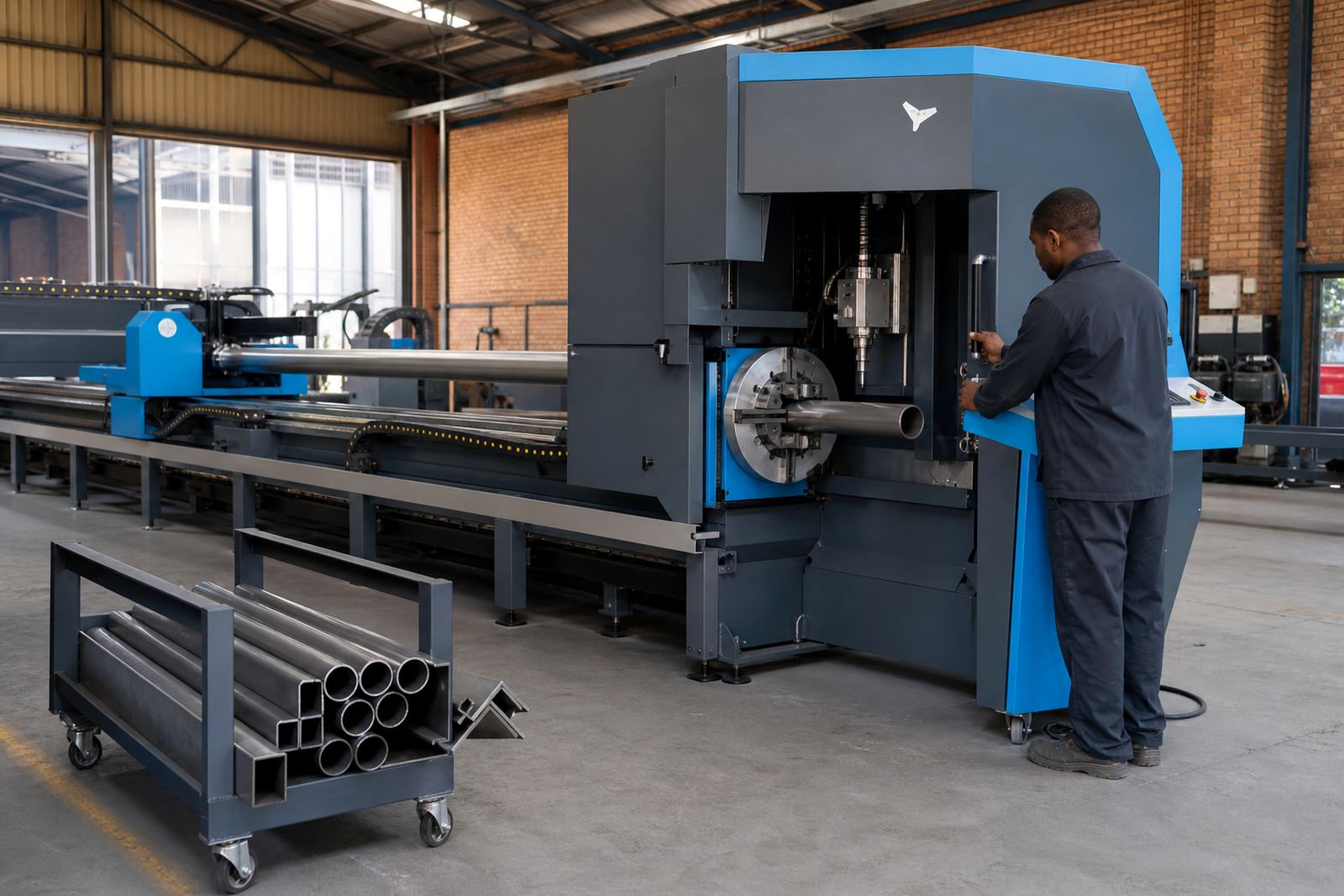
Tube cutting works best when the assist gas matches the material and the finish you want. Mild steel usually calls for oxygen on thicker sections when heat and edge quality matter, while nitrogen is used where a clean, oxide free edge is needed. Stainless steel and aluminium are usually cut with nitrogen to keep the edge bright and reduce oxidation.
Round, square and rectangular tube do not behave the same way as flat sheet, so gas choice has to support the cut around corners, seam positions and internal features. Angle and channel can trap heat too, which means pressure and flow need to stay consistent through the full path of the cut.
Line checks before a job starts
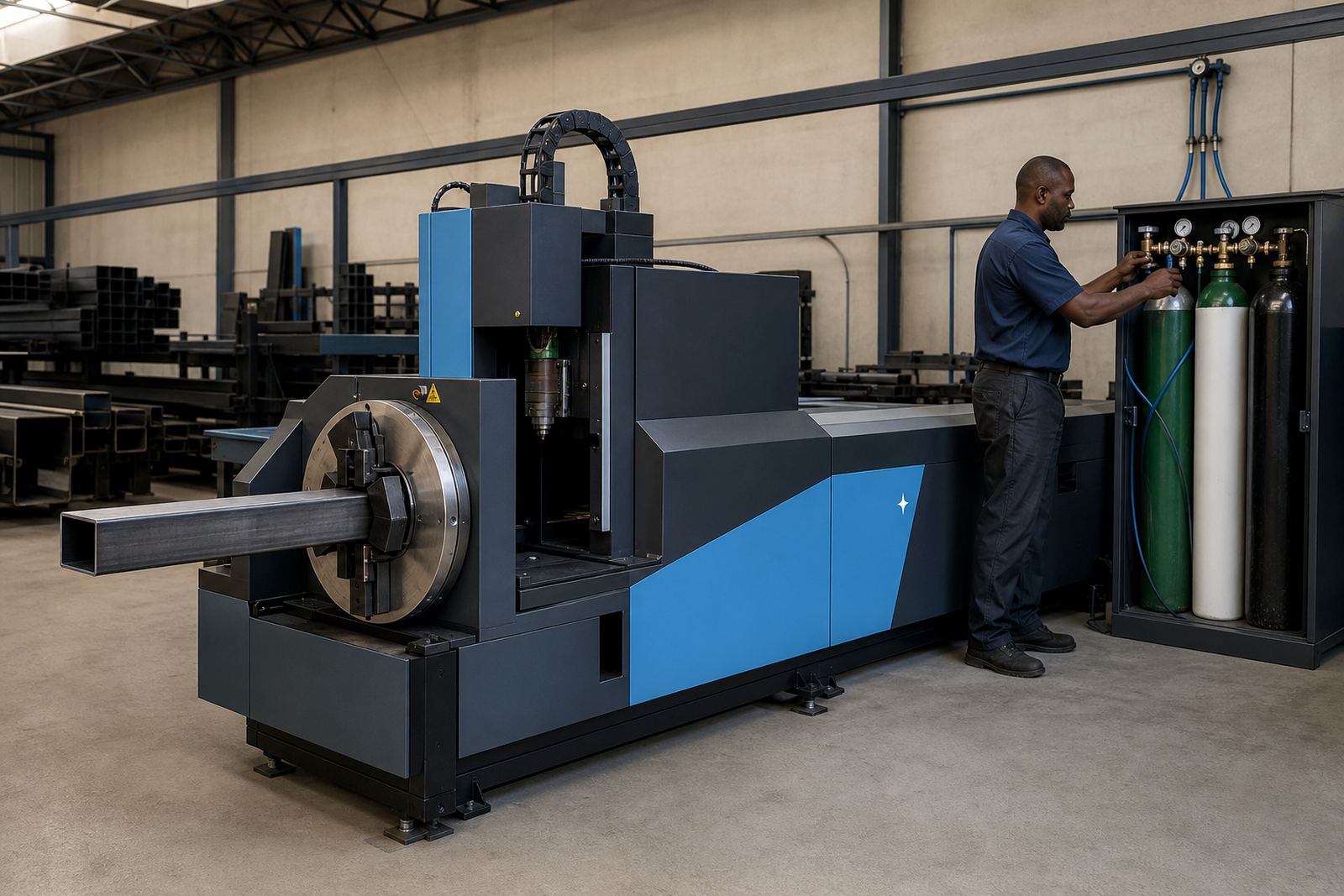
Most gas trouble shows up in the supply line first. A good check starts at the cylinder bank, bulk source or plant line and works toward the machine. Look for damaged hoses, loose fittings, dirt in couplers and pressure drop after a valve is opened. Any sign of oil or moisture in the line needs attention before production starts.
- Check inlet pressure at the machine and at the source.
- Check hoses, seals and quick couplers carefully for any gas leaks.
- Drain moisture traps where they are fitted.
- Confirm the correct gas is on the correct line.
- Test flow while the machine is drawing gas, not only at rest.
Pressure, purity and flow need to stay steady
A stable cut depends on more than one number on the gauge. Pressure can look fine at rest and still fall when the machine starts drawing gas through long pipe runs or undersized line sections. Purity matters just as much, because dirt, moisture and mixed gas can leave dross, rough edges and inconsistent pierce marks.
On larger workshops in Wadeville, Germiston and other industrial areas, the line layout often needs proper sizing to handle multiple stations. When the flow is uneven, the edge finish changes from tube to tube and the operator starts chasing settings that are not really the root cause.
What changes on different materials
Different metals need different gas behaviour, and the machine settings need to follow that choice. Mild steel can tolerate a wider process window, but stainless steel reacts quickly to poor purity or unstable pressure. Aluminium needs clean gas delivery and controlled parameters because the cut face can degrade fast if the stream is not clean and consistent.
- Mild steel: watch oxide build-up and slag on thicker wall sections.
- Stainless steel: keep the line clean and the pressure stable.
- Aluminium: use clean gas and avoid line contamination.
- Galvanised material: manage fumes carefully and keep extraction effective.
When the material mix changes through the day, the operator should not assume the previous setup will suit the next job. A short check of gas type, nozzle condition and cut path settings saves time on rework.
Bevel heads and tube geometry need extra care
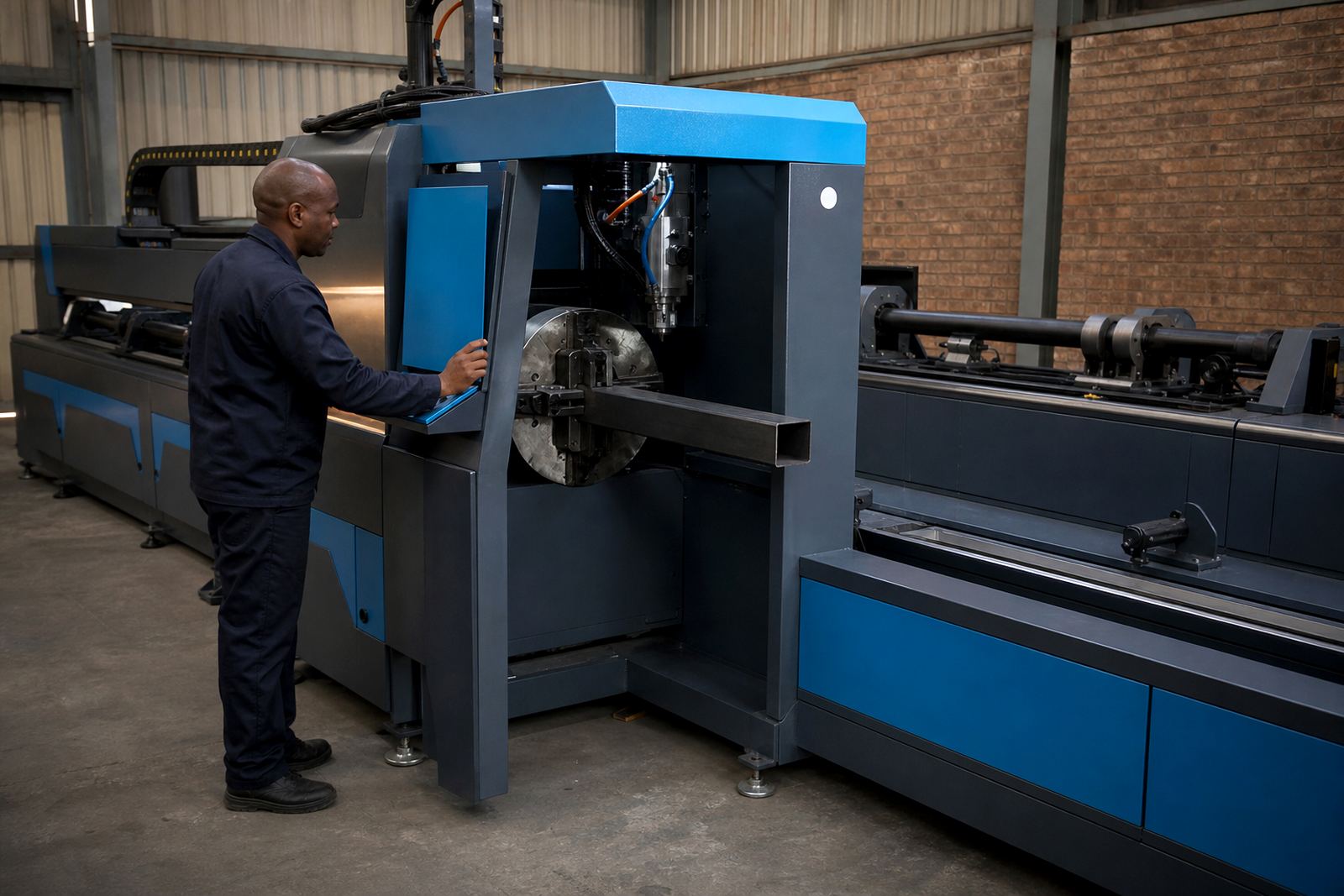
Bevel cutting adds another layer to gas control because the cut angle changes the way the gas reaches the kerf. If the bevel head is not aligned correctly, the gas stream can strike the cut unevenly and leave a rough edge on one side. That is noticeable on structural tube, gate frames and fabricated sections that must fit cleanly after welding.
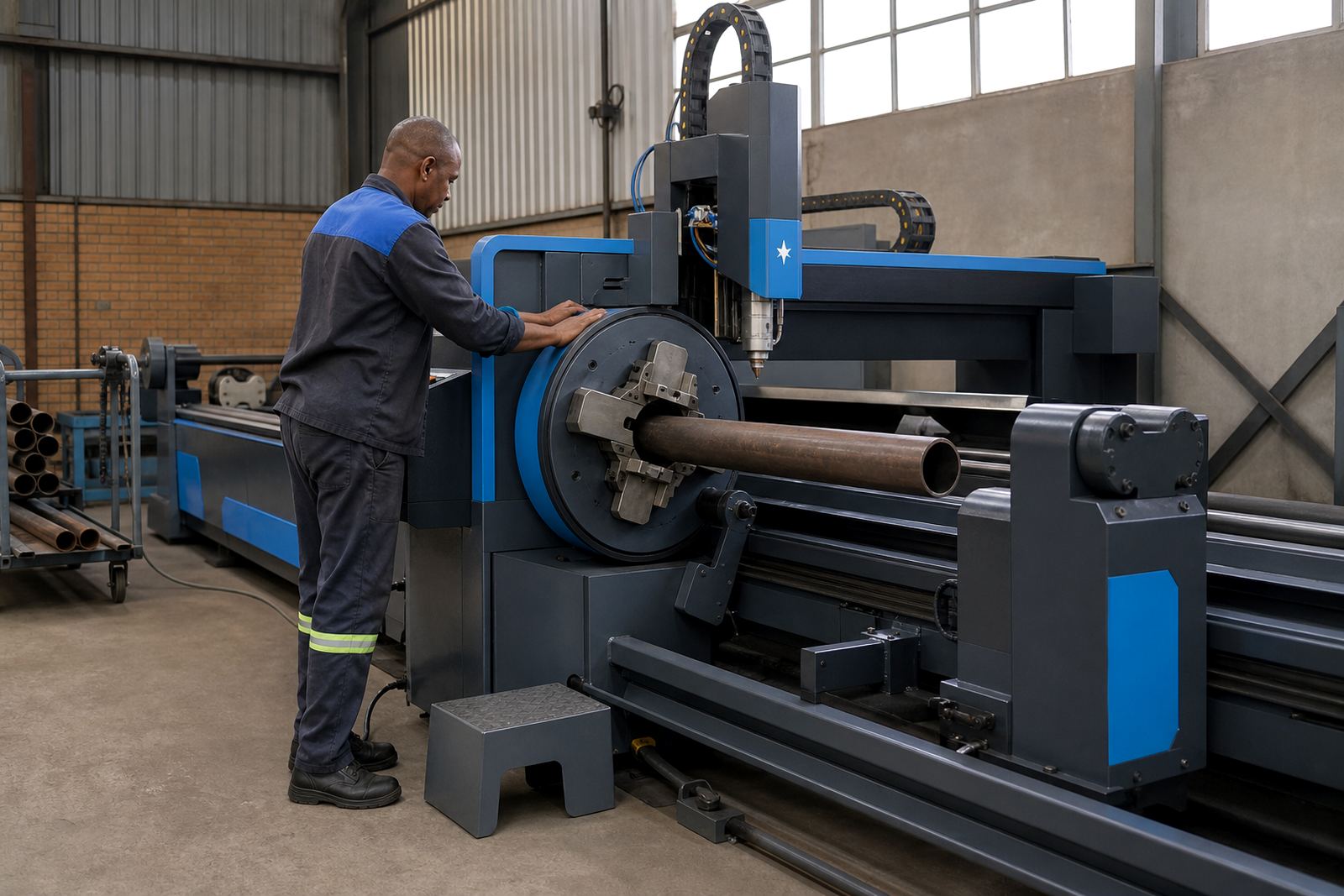
Tube geometry also changes how gas behaves inside the part. Closed shapes can trap heat and reflection can affect the cut zone, so the setup needs to suit the wall thickness, seam position and clamp layout. Chuck alignment matters here too, because poor grip can shift the part and upset the gas path.
Safety around assist gas and the machine line
Gas safety is part of daily machine work. Oxygen, nitrogen and mixed gas setups each need the right cylinders, regulators and connections, plus clear labelling so no one crosses the lines by mistake. Keep the area tidy around the machine and store cylinders securely in line with site rules and local safety practice.
- Secure cylinders upright and keep caps in place during handling.
- Use the correct regulator and hose for the gas in use.
- Keep oil and grease away from oxygen equipment.
- Ventilate the work area where cutting fumes build up.
- Train operators to stop the job when pressure or flow drifts.
When LaserTube steps in on site
Our team supports assist gas setup as part of installation, commissioning and ongoing machine care across South Africa, including Johannesburg, Pretoria, Durban, Cape Town, Gqeberha, Bloemfontein and Nelspruit. We look at the full path from supply to nozzle, then match the line conditions to the material mix and the cut style the shop needs.
That can include line checks, assist gas setup, chuck alignment, bevel calibration, nesting training and machine operator coaching. For sites with recurring cut variation, the issue is often a small pressure fault, a tired hose, a blocked filter or a setup mismatch between the gas and the job. Send the details on the contact form when the line needs a proper look.