Measure the route from gate to final stand
The first job is not the machine itself, it is the path it has to travel. A tube and profile cutter often arrives as separate loads, with the bed, control cabinet, chiller, loading support and gas gear needing a clear route into position.
Walk the route from the gate, through the yard and into the building. Check for narrow turns, low beams, uneven paving and soft ground. In places like Wadeville, Germiston and older industrial zones around Johannesburg, door widths and crane reach can change the whole plan.
- Measure gate width, door width and turning space.
- Check floor load points where the machine will stand.
- Clear loose steel, pallets and stored stock from the access path.
- Mark the final machine position before delivery day.
Floor, power and services at the machine position
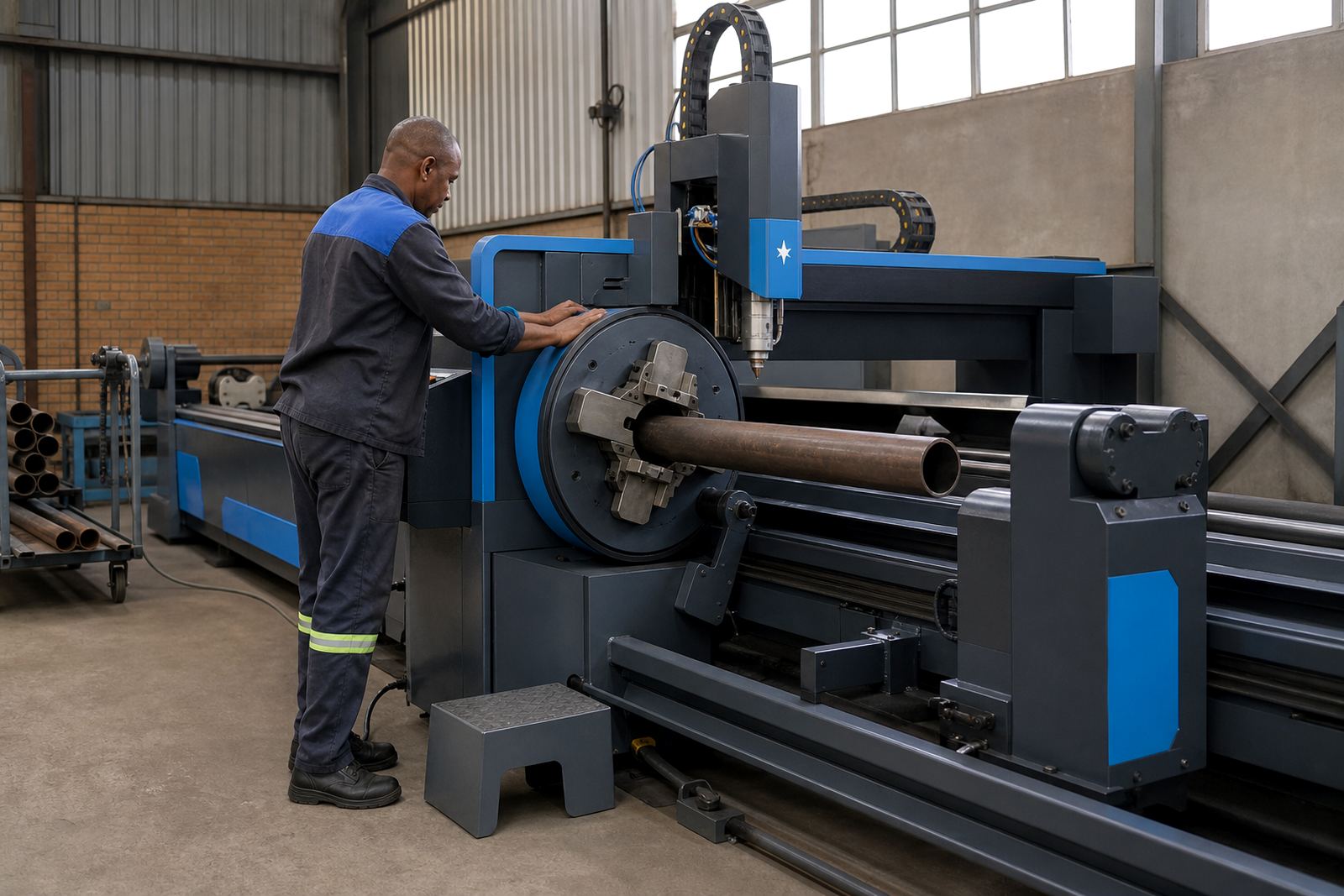
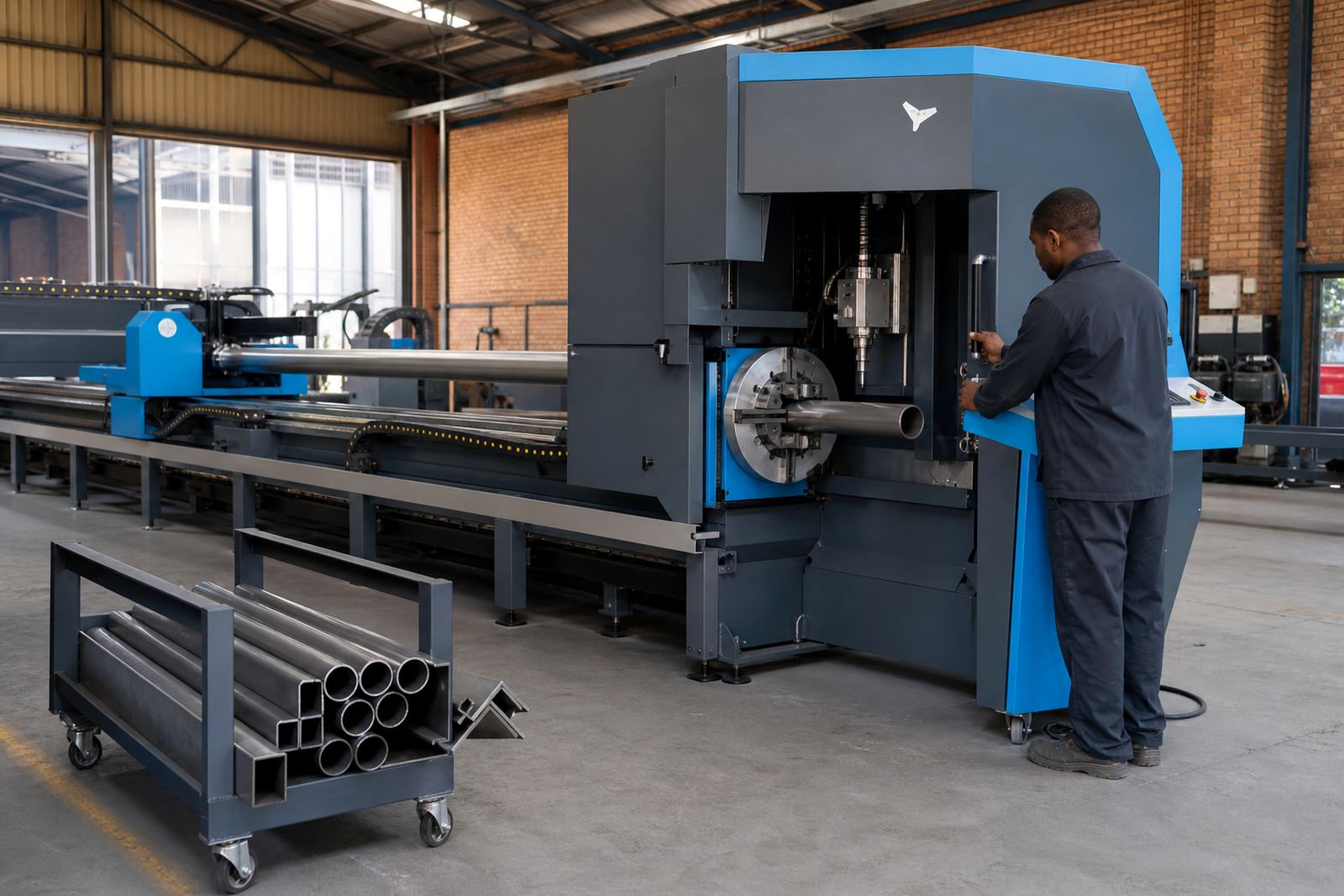
The stand location needs a level base and enough room for loading, unloading and maintenance access. Tube cutting machines need space for material infeed, offcut removal, chuck movement and safe operator access around the bed.
Get the services ready before the installation team arrives so the setup can move ahead without delay. That includes the electrical supply, earthing, assist gas lines, and any cooling or extraction points the machine package calls for. Dust, metal fines and humidity near the coast can affect cabinets and moving parts, so the room should stay clean and dry.
- Keep the machine bay level and free of standing water.
- Keep the area beside the controls and the service side open for easy access.
- Plan gas bottle or bulk gas placement with safe restraint.
- Leave room for maintenance access around chucks and the bevel head.
What the delivery crew needs to know
Delivery rigging works best when the site team and the installation crew are working from the same plan. Let the team know where the loading bay is, whether there is a crane, forklift or gantry available, and whether the floor has any weight limits or uneven sections.
For plants in Durban, Cape Town or Gqeberha, coastal weather can add extra care to packing and positioning, especially if machines are standing in open yards before final placement. Keep the unloading area dry and clear. If the machine needs to pass under a canopy, measure the highest point on the load and not just the main frame.
- Nominate one site contact to guide access on the day.
- Keep the route open for rigging equipment and pallets.
- Have lifting equipment ready if the plan calls for it.
- Confirm where packing, crates and offcuts will be removed.
Setting up for tube, angle and channel work
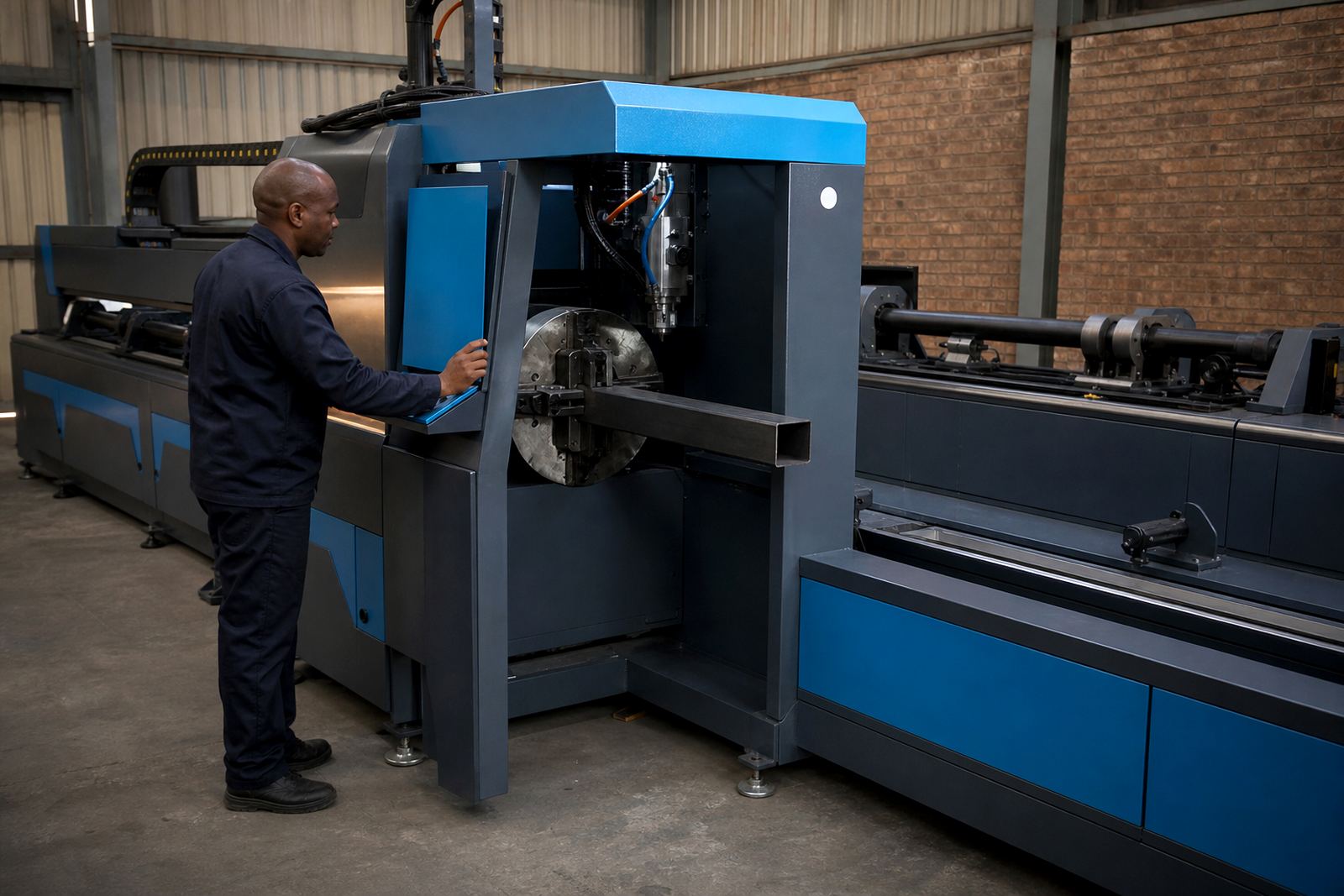
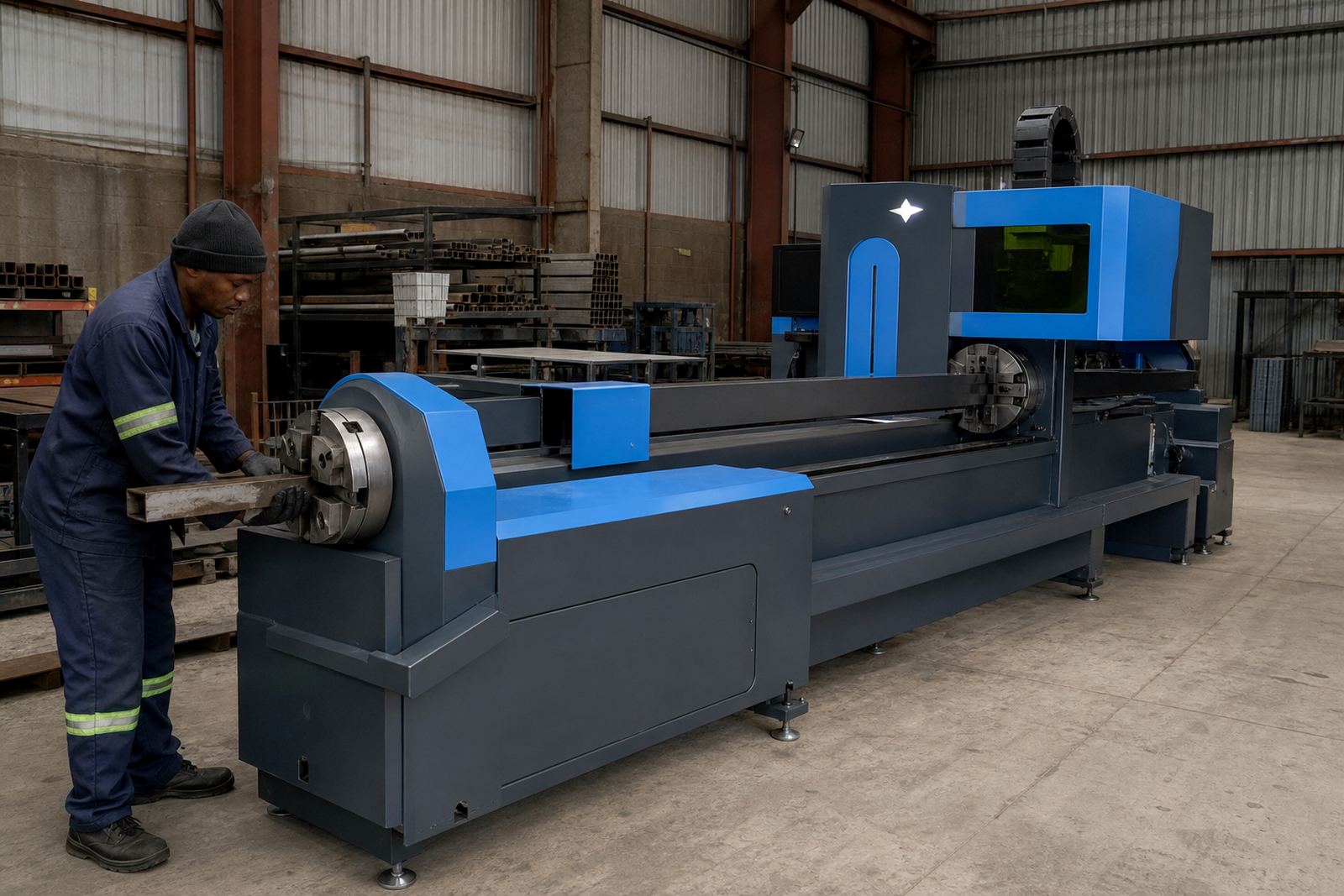
Machine setup changes with the profile range you plan to cut. Round, square and rectangular tube need sound chuck alignment and stable clamping. Angle and channel work call for careful nesting, correct support and a clear check on how the head approaches the section.
If bevel cutting is part of the job, the head calibration must suit the thickness and the joint prep needed for downstream welding. Good setup also depends on the assist gas choice, the nozzle condition and the way nesting software handles short lengths, scrap and mixed bundles. A few millimetres of poor alignment can show up in the cut edge and fit-up later on.
- Confirm the main profiles to be cut on day one.
- Check whether bevel cuts are needed for welded assemblies.
- Review chuck grip and support settings for each section type.
- Set aside test material for the first cutting checks.
Operator training that fits the job floor
Training is easier when it starts with the parts that operators will touch every shift. That includes loading lengths, setting zero points, calling up nesting files, checking gas pressure, reading alarms and handling the cut parts safely after the cycle ends.
LaserTube structures the handover around real production tasks, not theory only. A new team may need one session on control basics and another on tube nesting, bevel settings or maintenance checks. The goal is for the shift team to understand the machine, the cut path and the parts that need daily attention.
- Basic machine controls and safety checks.
- Loading and unloading of tube and profile sections.
- Nesting setup for mixed batch work.
- Daily checks on chucks, lenses, nozzles and gas supply.
Support after commissioning and during the first runs
Commissioning closes the installation phase, but the first production runs usually expose the small adjustments that matter. That may be chuck alignment, gas pressure tuning, bevel calibration or a nesting change to suit the way your material is delivered and stored.
LaserTube supports preventive maintenance, breakdown response and remote diagnostics for sites in Wadeville, Pretoria, Durban, Cape Town, Gqeberha, Bloemfontein and Nelspruit. When the machine is cutting daily, a clean maintenance routine protects the chuck, the head and the control system from avoidable wear.
Michael Dlamini and the team work with fabricators that run mixed tube and profile jobs, from workshop batches to longer production schedules. The point is to set the machine up so it fits the site, the stock flow and the people running it.