Loading tube and profile material without scuff marks
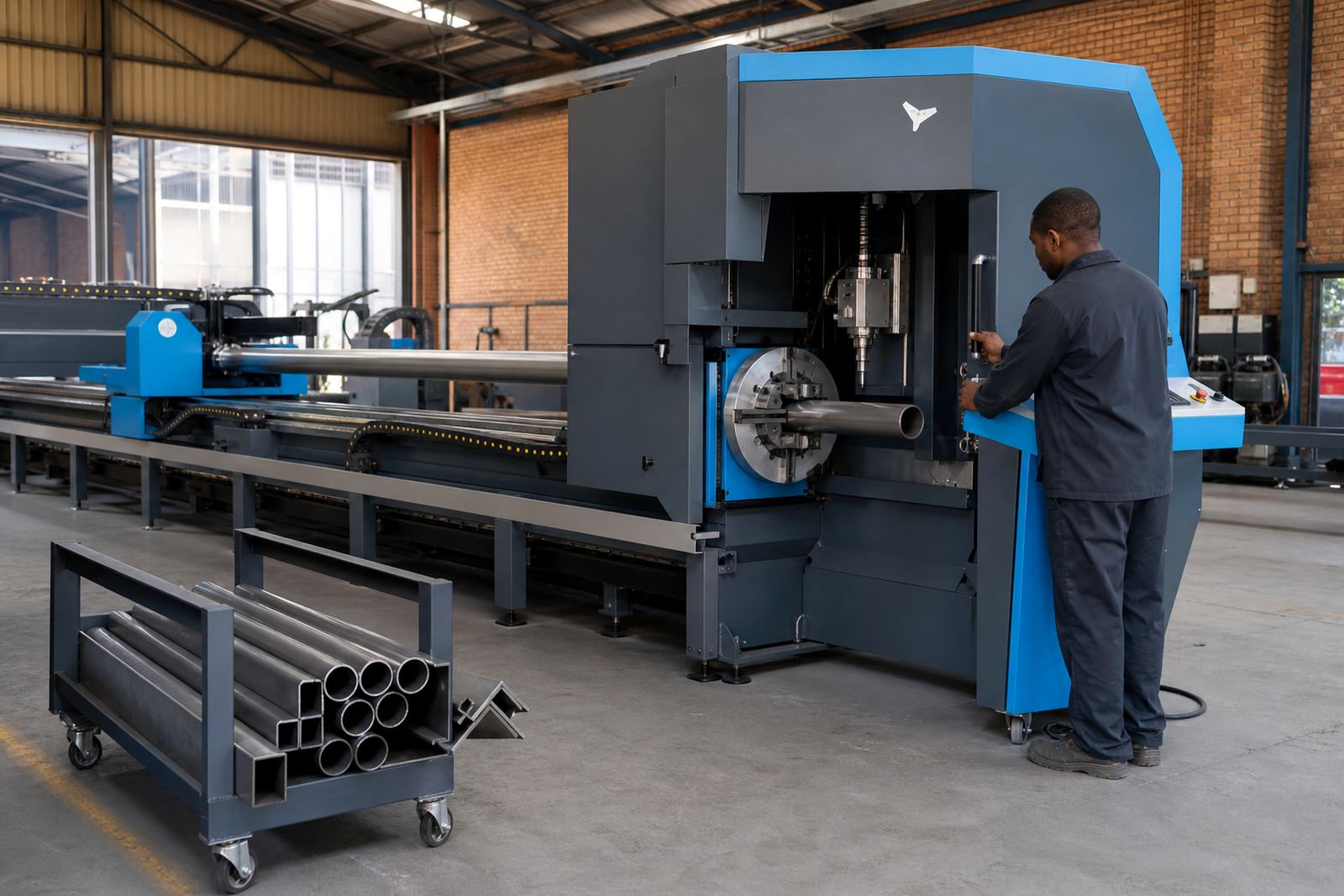
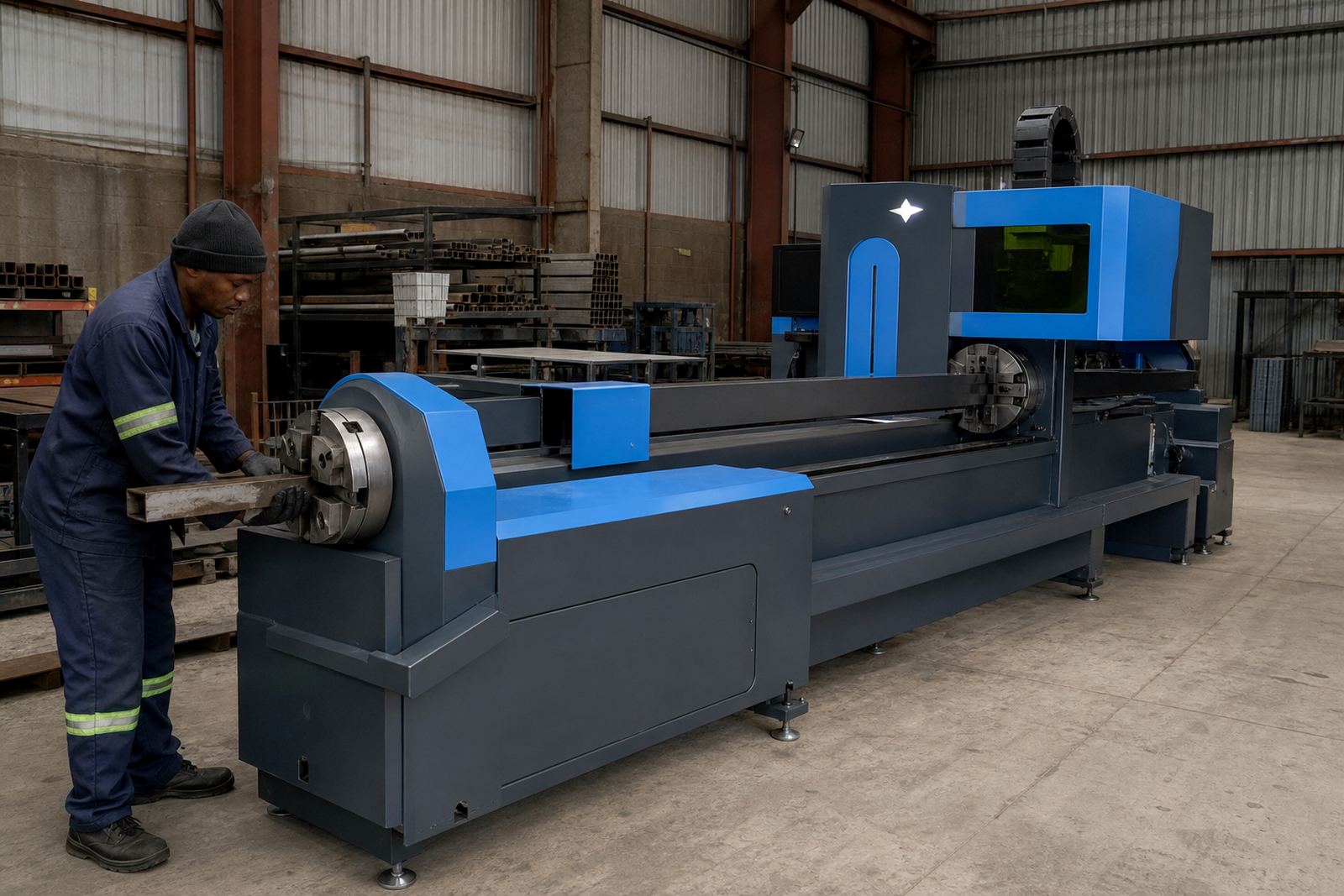
Tube and profile work needs a steady loading routine, especially when round, square and rectangular sections move between the rack, chuck and cutting bed. Our operator help covers safe lifting points, sling use for heavier bundles, and the right order for feeding angle, channel and straight lengths into the machine. Clean edges, dry contact surfaces and correct bundle spacing reduce marks before the first cut starts.
- Check the incoming length against the job file before loading.
- Keep mixed sizes separated so the wrong section does not reach the chuck.
- Brush off mill scale, oil and grit where the clamping face grips.
- Use gloves that allow grip without catching on burrs or sharp ends.
Setting the cut path for real workshop work
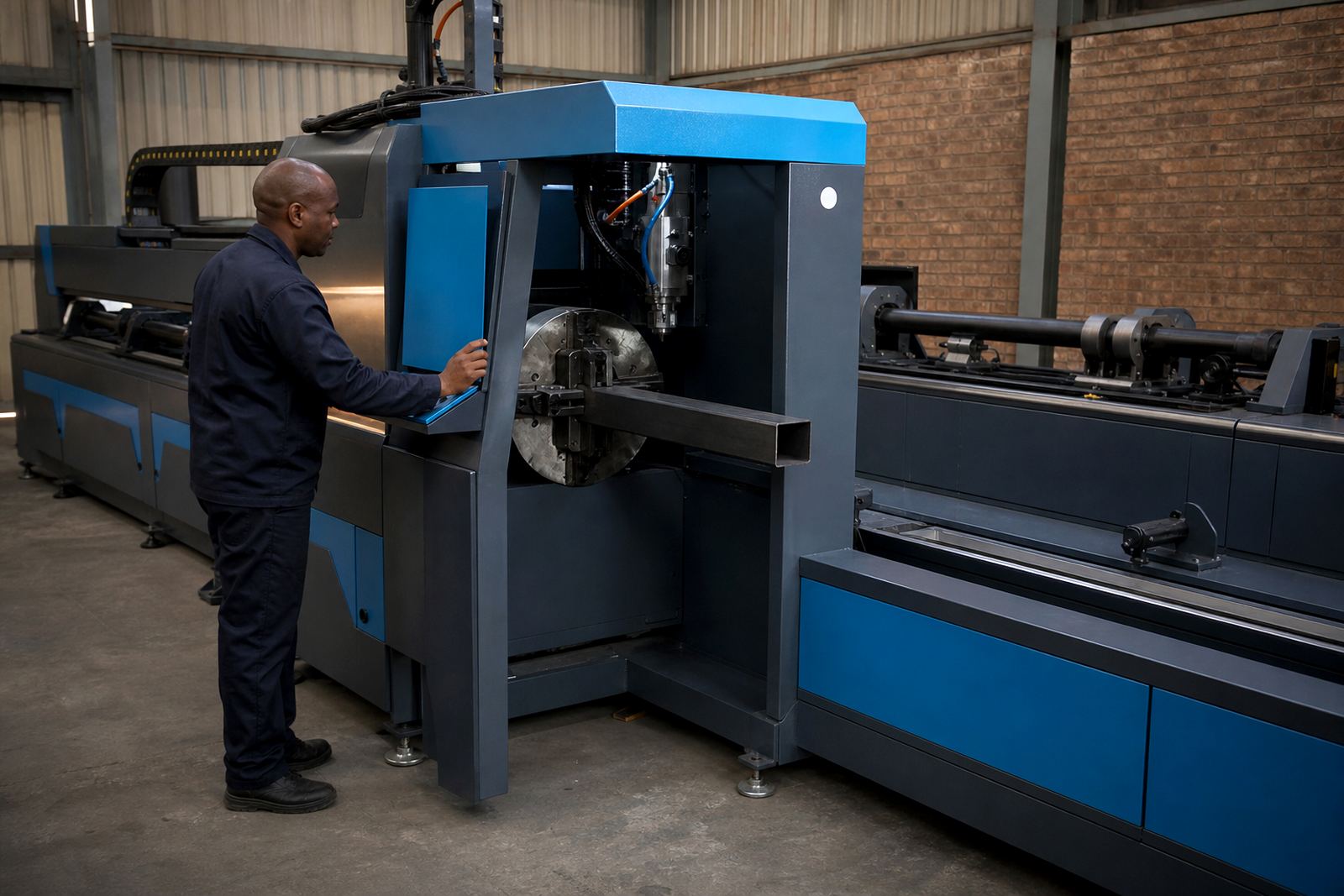
Setting up a cut takes more than importing the job file and starting the machine. The operator needs to match wall thickness, section shape, pierce position and part spacing to the job at hand. On fibre laser tube machines, nesting software helps reduce offcuts, but the load still needs a careful eye so short parts do not tip, twist or drop into the wrong lane during the run.
For bevel heads, the cut angle has to match the drawing and the part stack-up. Small changes in rotation, focus height or assist gas pressure can alter edge finish, especially on thicker tube. We train operators to read the first sample cut, check for dross and adjust before the batch runs on.
Safe handling around chucks, heads and cut parts
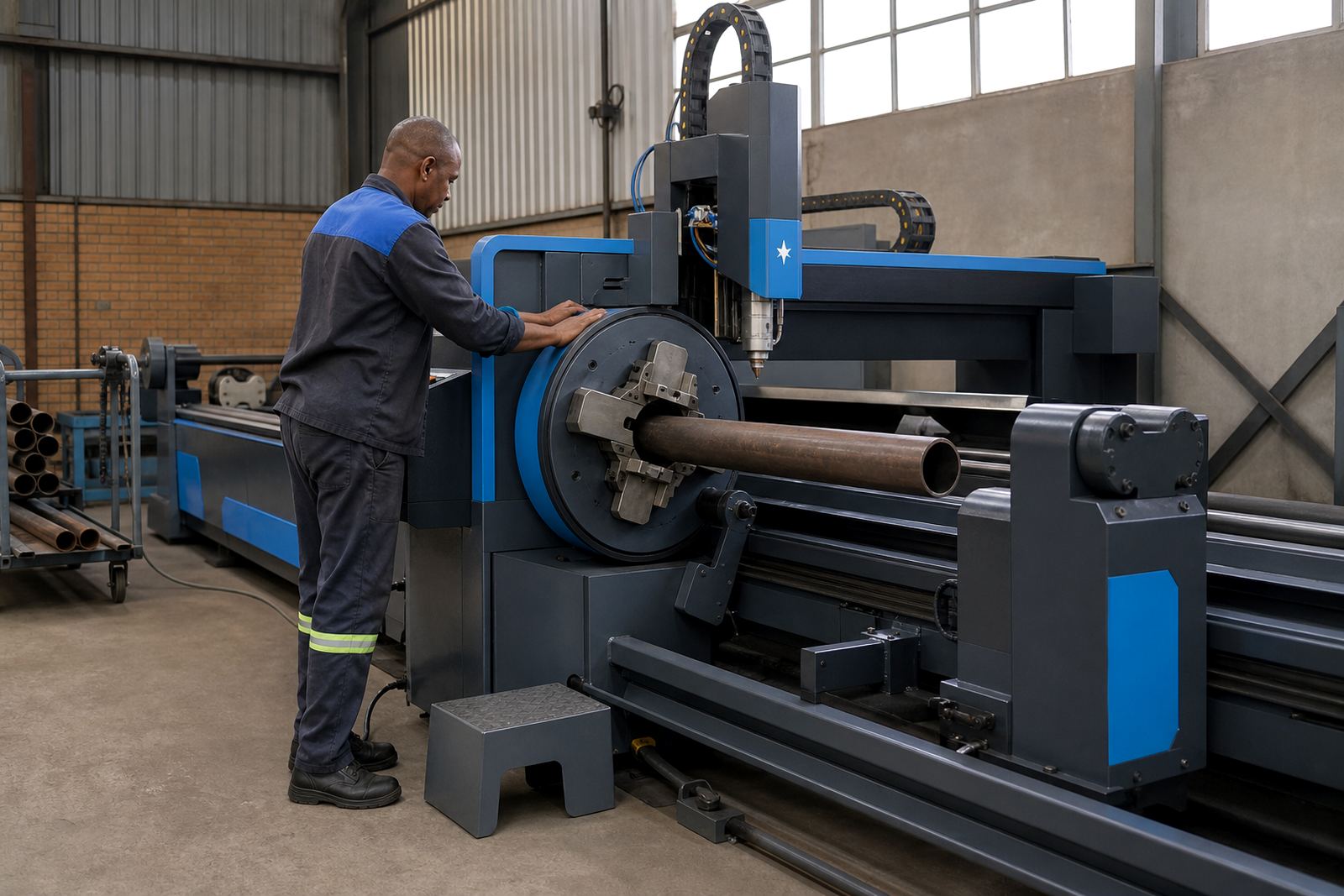
These machines work with moving chucks, rotating tube, sharp cut edges and hot offcuts. Safe handling starts before the cycle begins and continues right through unloading. Operators should keep hands clear of pinch points, watch the machine envelope and wait for full stop before touching the part or clamping area. A tidy floor matters too, because loose ends of tube and scrap strips can shift underfoot.
- Never reach between the chuck and the material while the machine is active.
- Use a proper hook or tool for removing short cut pieces.
- Allow cut edges to cool before stacking or packing.
- Keep safety screens, interlocks and viewing areas clean and unobstructed.
Daily checks that stop avoidable stoppages
A quick inspection before the shift begins can prevent delays and wasted production time later that day. The operator should inspect the chuck grip, air and gas lines, nozzle condition, lens area and the general cleanliness of the loading zone. On tube and profile cutting machines, a small alignment issue can show up as poor roundness on a finished hole, a poor mitre on channel, or a shifted cut on a rectangular frame.
Our preventive maintenance support includes routine checks for wear, lubrication points and clamp alignment. Where the machine is used in humid coastal areas such as Durban or Gqeberha, extra attention to storage, dust control and exposed surfaces helps protect the working parts.
Assist gas setup for cleaner edges and less rework
Assist gas choice affects edge finish, cutting speed and the amount of cleaning after cutting. Operators need to know which gas suits the material and thickness on the day, how the pressure behaves at the nozzle and how to spot a poor setting before a full batch is affected. The aim is stable cutting, not guessing from job to job.
- Confirm the line is linked to the correct supply
- Check that pressure settings match the material schedule.
- Watch for soot, heavy burr or excessive oxide on the first sample.
- Record useful settings for repeat work on similar tube sizes.
Training that fits the machine and the shift
Leanne Mabuza coordinates operator training for teams that need hands-on guidance, not theory for its own sake. We work through loading routines, nesting software basics, safe unloading, bevel calibration, chuck alignment and the daily checks that keep production moving. For a small job shop in Germiston or a larger plant in Pretoria, the training is matched to the level of the operator and the parts being cut.
Michael Dlamini and the support team also help with site assessment, machine installation, commissioning and breakdown response. That means the operators are not left guessing where a setting belongs or how the machine should sound when it is cutting properly.