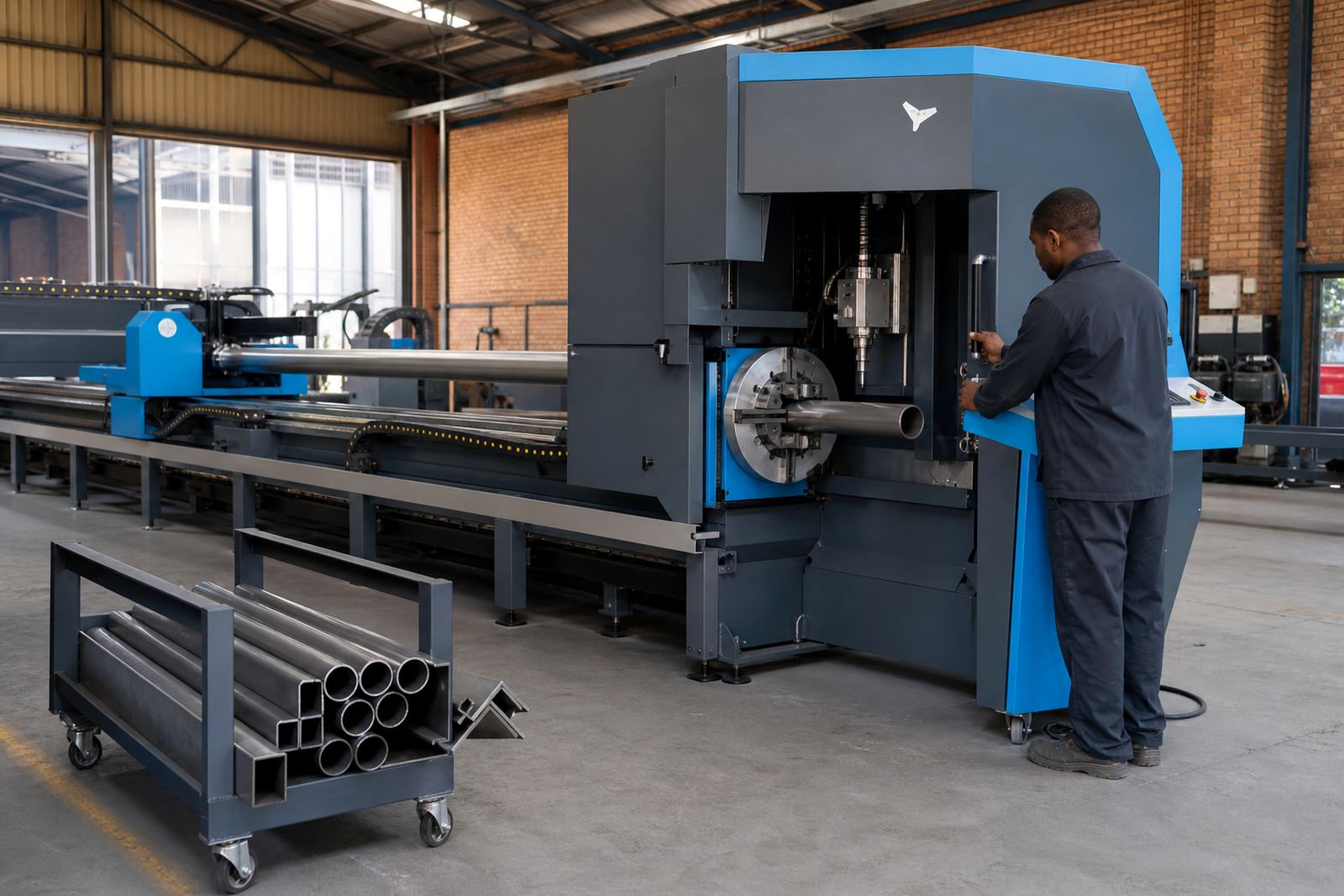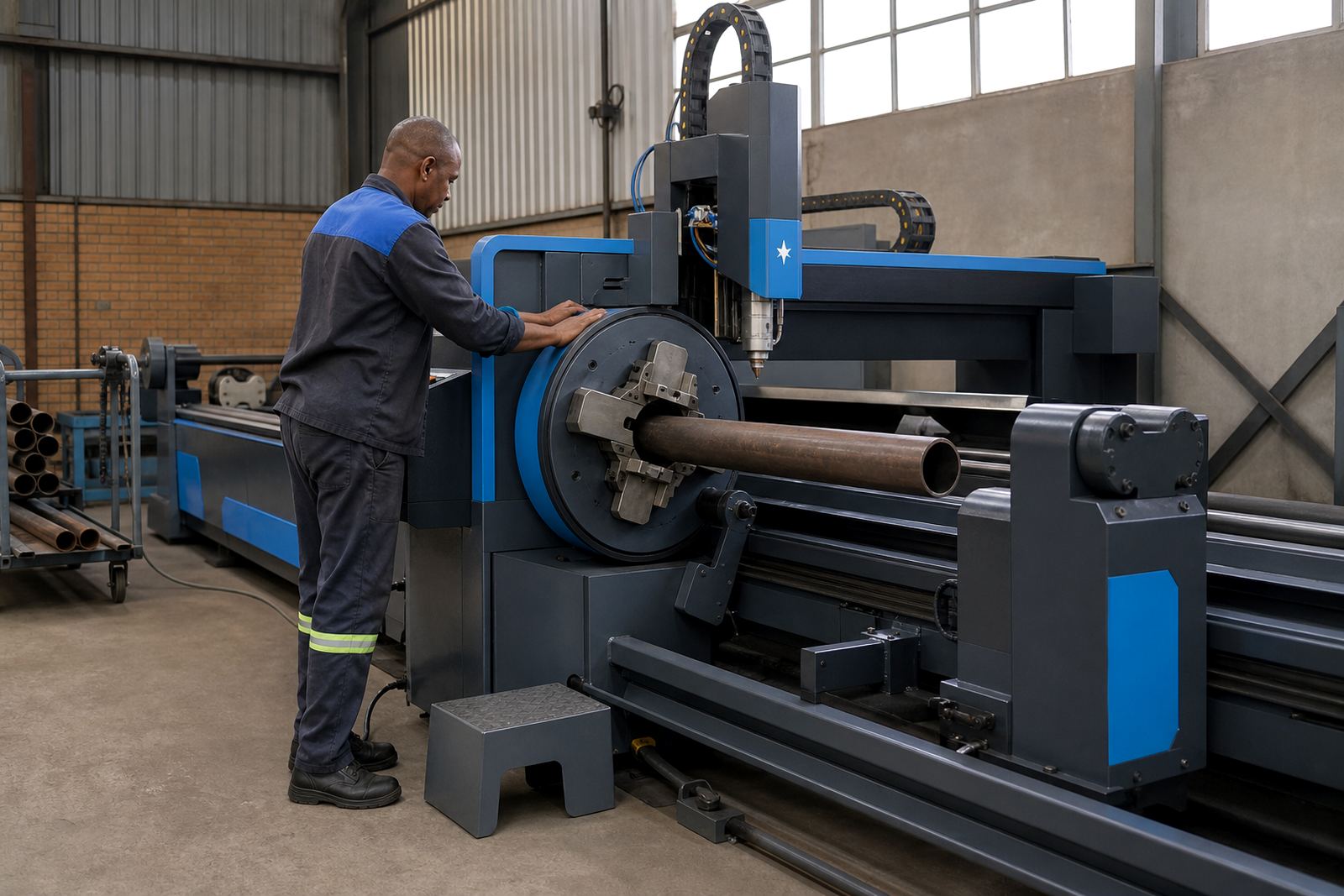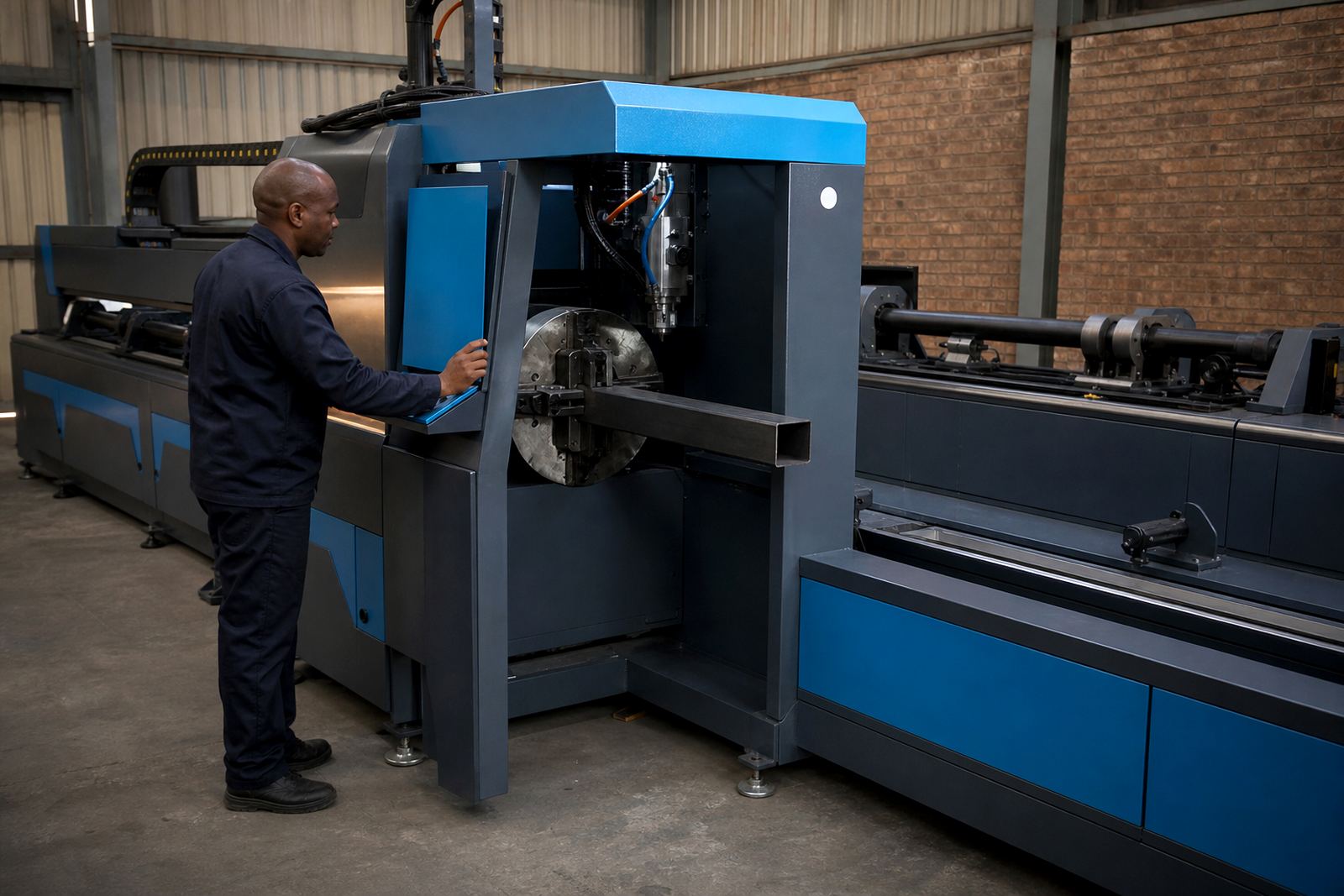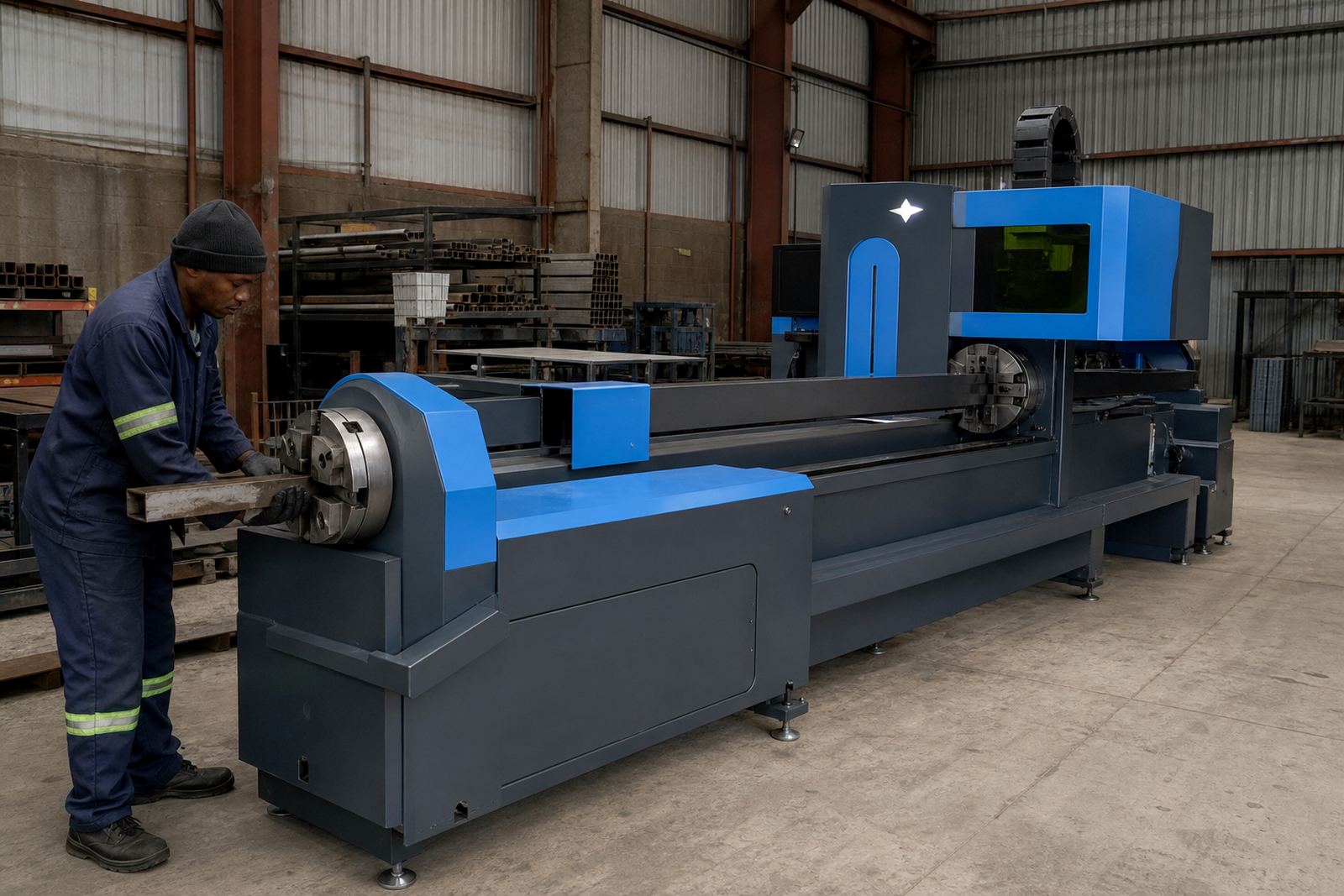
Service support for tube and profile cutting lines
Most service calls begin with a machine that is cutting slightly off size, marking the material, or leaving a rough edge where the part should be clean. On tube machines, that may point to chuck wear, clamping pressure, beam alignment, nozzle condition, or a nesting file that no longer suits the section being run.
We work with small job shops and larger production plants that cut mixed batches of round, square and rectangular tube, as well as angle and channel. The support process is practical: check the symptom, isolate the cause, set the machine back to a consistent cut, then record what must be watched next.
- Cut quality checks on tube and profile work
- Chuck condition and alignment inspection
- Bevel head checks where angled cuts are used
- Assist gas and pressure setup review
- Operator guidance on day-to-day handling
Routine upkeep that keeps the machine steady
Regular maintenance protects cut quality and reduces avoidable stoppages. The right interval depends on how many shifts the machine runs, what material thickness is being cut, and whether the work mixes short lengths with heavier profiles. In humid coastal areas, optics, rails and electrical cabinets need closer attention, while inland plants often focus more on dust and swarf control.
We help customers build a maintenance routine that covers the parts most likely to drift. That includes cleaning, inspection, lubrication where specified, checking chuck grip, and watching for wear on consumables that affect beam delivery and edge finish.
- Daily cleaning around cutting areas and extract points
- Weekly inspection of nozzles, lenses and clamps
- Routine checks on rails, chucks and limit devices
- Cabinet and cooling system inspection where fitted
- Recorded maintenance notes for production teams
When cut quality starts moving off target
Small changes often show up before a serious fault develops. A tube can start showing taper, dross, uneven corners or a slight shift in hole position. On profile cutting jobs, the machine may still run but the edge finish and repeatability will drift. Those signs usually point to a setup issue rather than a single broken part.
Our starting check is usually the simplest one. We look at material condition, gas quality, nozzle wear, focus settings, nesting strategy and chuck grip. If bevel heads are fitted, calibration matters too, because a minor angle error can carry through an entire batch.
- Rough or burred edges on repeated cuts
- Holes drifting from the programmed position
- Visible taper on thicker material
- Uneven clamping or tube slip during cutting
- Bevel mismatch on angled joints
Chuck alignment, bevel calibration and gas setup
Tube machines depend on the chuck holding the section square and true. If the grip is off, the cut path moves with it. That is why chuck alignment is one of the main service items on machines that handle mixed tube sizes and heavier profiles. Bevel heads need the same care, especially on fabrication work where parts must fit cleanly for welding or assembly.
Assist gas setup also matters. Different material and thickness combinations call for different gas selection, pressure and flow behaviour. If the setup is too far off, the machine may still cut but the finish will suffer and consumable life can drop quicker than expected.
- Chuck grip and jaw wear checks
- Alignment of tube loading and rotation
- Bevel angle verification on production runs
- Assist gas pressure and line inspection
- Nozzle and consumable condition review
Remote diagnostics and breakdown response
Some faults can be narrowed down without a site visit, especially when the machine is reporting clear alarms or the issue appears after a settings change. Remote diagnostics help identify whether the concern sits in software, drive settings, gas supply, sensor readings or a mechanical condition that needs hands-on work.
When a breakdown needs site attendance, the focus shifts to getting the machine safe, checking the fault path and restoring normal production without guessing. That may involve reconfirming reference points, examining the beam path, testing movement, or checking that the loading and clamping system is behaving properly.
- Error code review and fault tracing
- Movement and sensor checks
- Software and nesting issue review
- Mechanical inspection where the fault is physical
- Safe restart checks after the repair
Training that reduces repeat mistakes
Operator training makes a visible difference on tube cutters because the machine can only perform as well as the setup it receives. Staff need to understand clamping, nesting, material loading, gas settings and how small changes affect the finished part. That is especially true on jobs with mixed tube sections and bevelled ends.
Training is also useful after installation, after a layout change, or when a new shift takes over part of the workload. The goal is to keep the machine consistent on ordinary production days, not only during the first run after commissioning.
- Machine start-up and shutdown routine
- Tube loading and job setup practice
- Nesting training for efficient material use
- Basic fault recognition for operators
- Safe handling around moving parts and cutting zones
Support areas across South Africa
LaserTube is based in Wadeville, Germiston and supports customers in Johannesburg, Pretoria, Durban, Cape Town, Gqeberha, Bloemfontein and Nelspruit, with site work arranged for fabrication plants and job shops across South Africa. The service scope includes delivery rigging, installation, commissioning, operator training, preventive maintenance and machine support after the handover.
For teams running fibre laser tube and profile cutting machines, the useful habit is to keep service notes with the machine and log any shift in cut behaviour early. That gives the next inspection a clear starting point and helps keep the line productive.