Start with the symptom, not the guess
When a machine begins to mark the tube, leave burrs on the cut edge, or struggle to hold round stock cleanly, the worn item is not always where people first look. A bad cut can point to a lens issue, a nozzle problem, a chuck grip fault, a beam path setting, or gas delivery that is out of range.
Send the material type, section size, wall thickness and the cut fault you are seeing. If the job involves bevelled ends, mention the angle and the part orientation, because bevel heads put different demands on the head, sensors and calibration set-up.
Consumables that wear during normal production
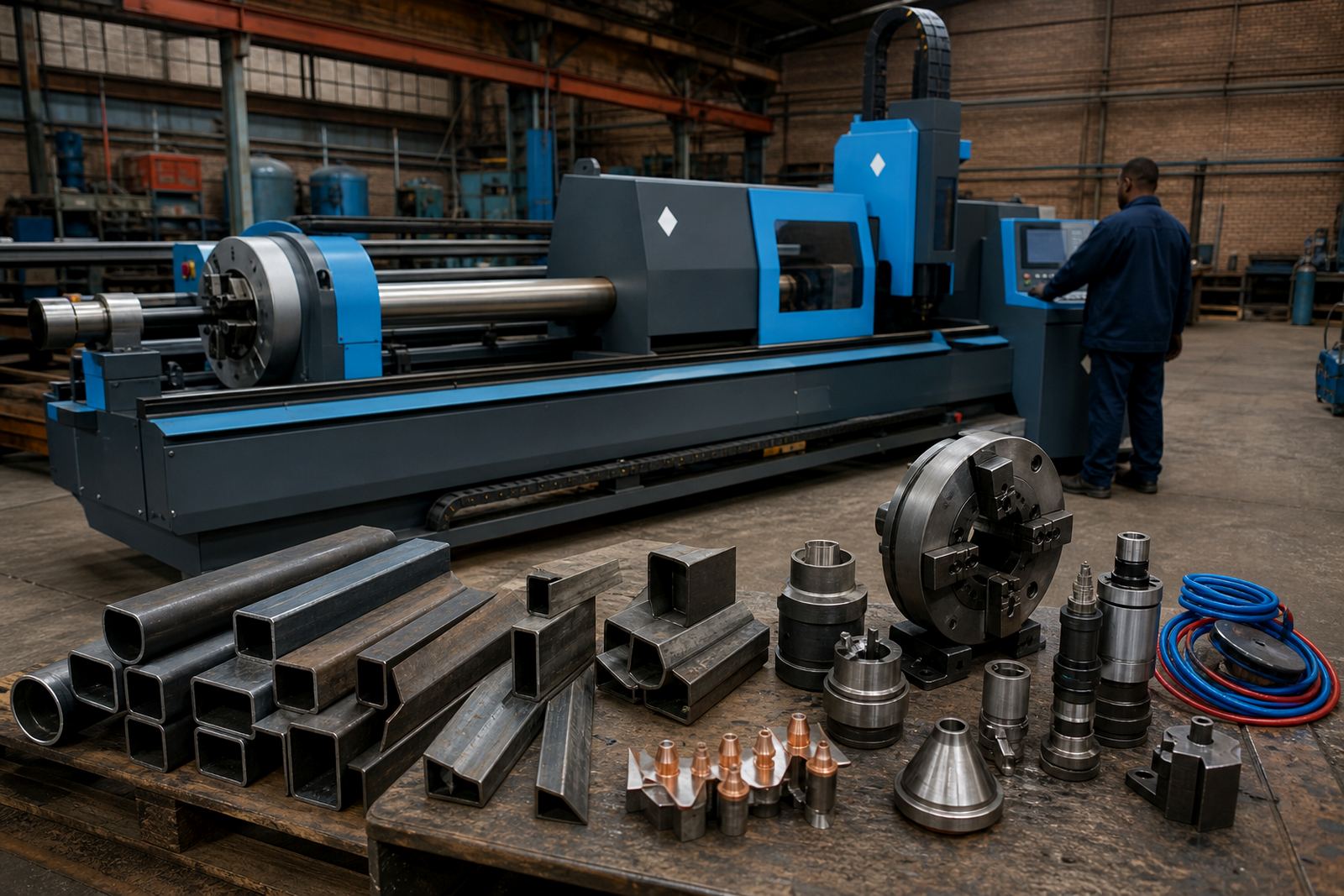
Fibre laser tube cutting uses parts that wear with heat, spatter and repeated changeovers. Some items are small and cheap, but the wrong one can hold up a full shift if it is not on hand. We help identify the items that match your machine layout and the way your shop runs.
- Protective windows and cover lenses
- Nozzles for the cutting head
- Ceramics and insulating rings
- Seals and O-rings
- Focusing and collimating elements where the head design uses them
- Chuck jaws, pads and grip inserts
Chuck wear, grip marks and tube movement
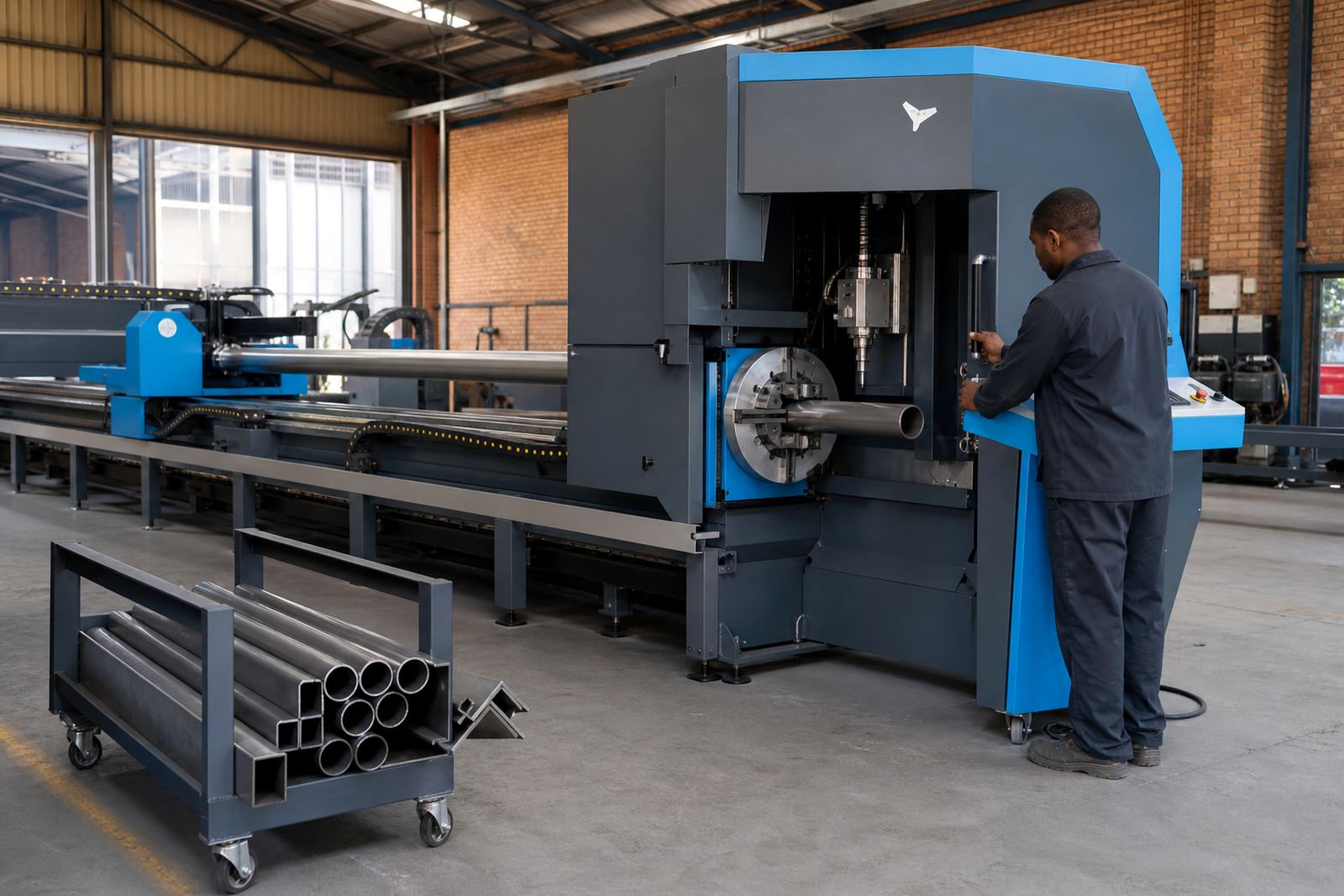
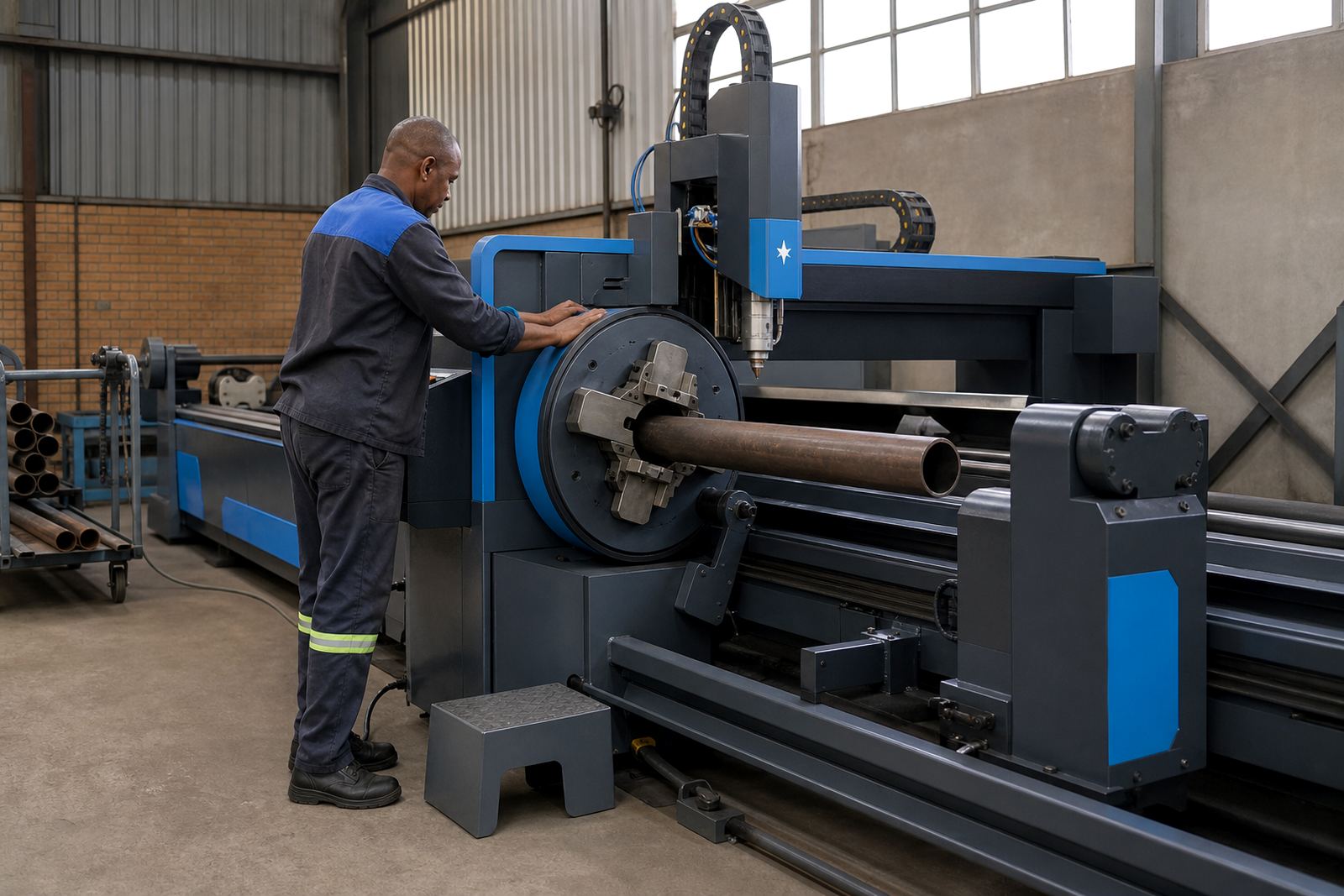
On tube and profile machines, the chuck does more than hold the part. It keeps the tube stable while the head moves through the cut path, and any slip or jaw wear shows up in position errors, roundness issues or marks on painted or coated material. Heavier wall tube and long lengths place extra strain on the clamping system.
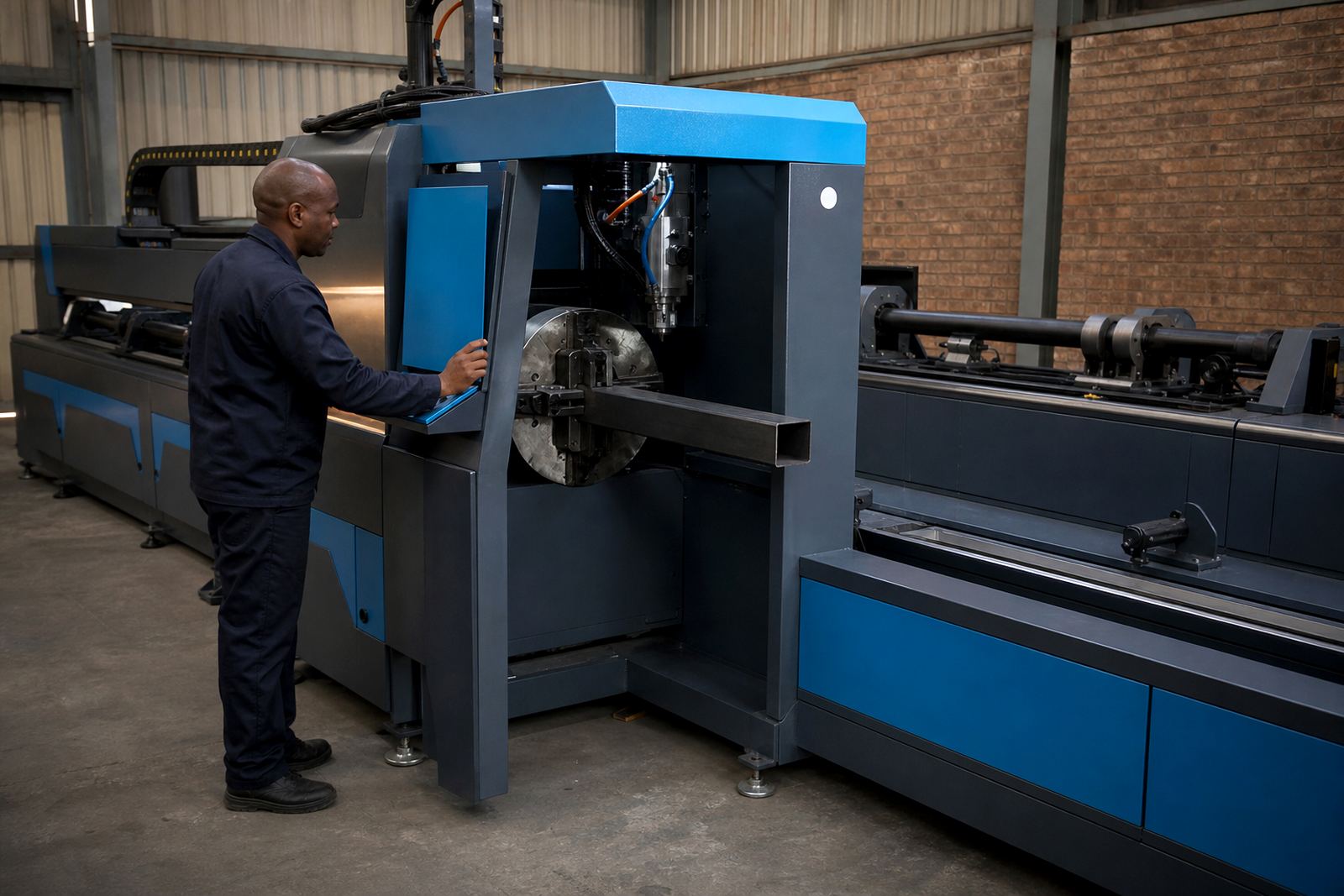
If the issue is movement during rotation, we look at jaw wear, alignment, lubrication points and the condition of the chuck drive components. Where a machine handles angle or channel as well, the support points and clamping sequence need checking too, because open sections behave differently from closed tube.
Bevel heads and the parts that keep angles true
Bevel cutting adds another layer of wear. The head must hold its angle accurately while the machine follows the nest, and even a small calibration drift can leave a joint that does not fit cleanly on assembly. This matters on structural work, handrails, frames and fabrication jobs where weld prep must match the drawing.
- Calibration components for the bevel axis
- Sensor parts used for reference and height control
- Motion parts linked to the swivel assembly
- Fasteners and wear items around the head mount
If a bevel cut has started to vary from piece to piece, the cause may be a worn part, a loose fitting or a calibration setting that no longer matches the head condition.
Gas, pressure and cut quality
Assist gas setup has a direct effect on edge finish, dross and heat tint. Stainless, mild steel and aluminium each ask for different gas behaviour, nozzle choice and pressure control. A line with unstable supply can make a good part cut like a tired one, even when the optics are fine.
We help check the practical side of the gas train, including regulators, filters, valves and the fittings that let the line deliver steady flow to the head. In workshops across Wadeville, Johannesburg and Pretoria, this is often where a planned batch slows down because one worn component is doing too much work.
Nesting files, cutting sequence and the parts list
Good nesting software reduces scrap, but it also helps the machine move in a way that suits the parts on hand. A poor sequence can build up heat, slow cycle times and put extra stress on consumables. When planned work is lined up for the week, the parts list should follow the nest, not just the machine model.
For production plants and smaller job shops alike, the useful list usually covers the head wear items, chuck parts, safety components, filters and any calibration pieces tied to the current job mix. If the work shifts from thin tube to heavier profile cutting, the list changes with it.
What to send with a parts request
A clear parts request helps narrow the match without delay or confusion. The best starting point is not a long story, just the machine details and the fault pattern you can see on the material.
- Machine type and cutting head style
- Tube or profile shapes being processed
- Material type and wall thickness
- Fault description with photos of the cut edge, mark or alarm where possible
- The part name you already use, if the workshop has one
- Tell us if the problem is limited to one station or runs through the entire cutting cycle
From our base in Wadeville, Germiston, we support fabricators in Durban, Cape Town, Gqeberha, Bloemfontein and Nelspruit as well, with installation, operator training, preventive maintenance and breakdown response where the job calls for it.