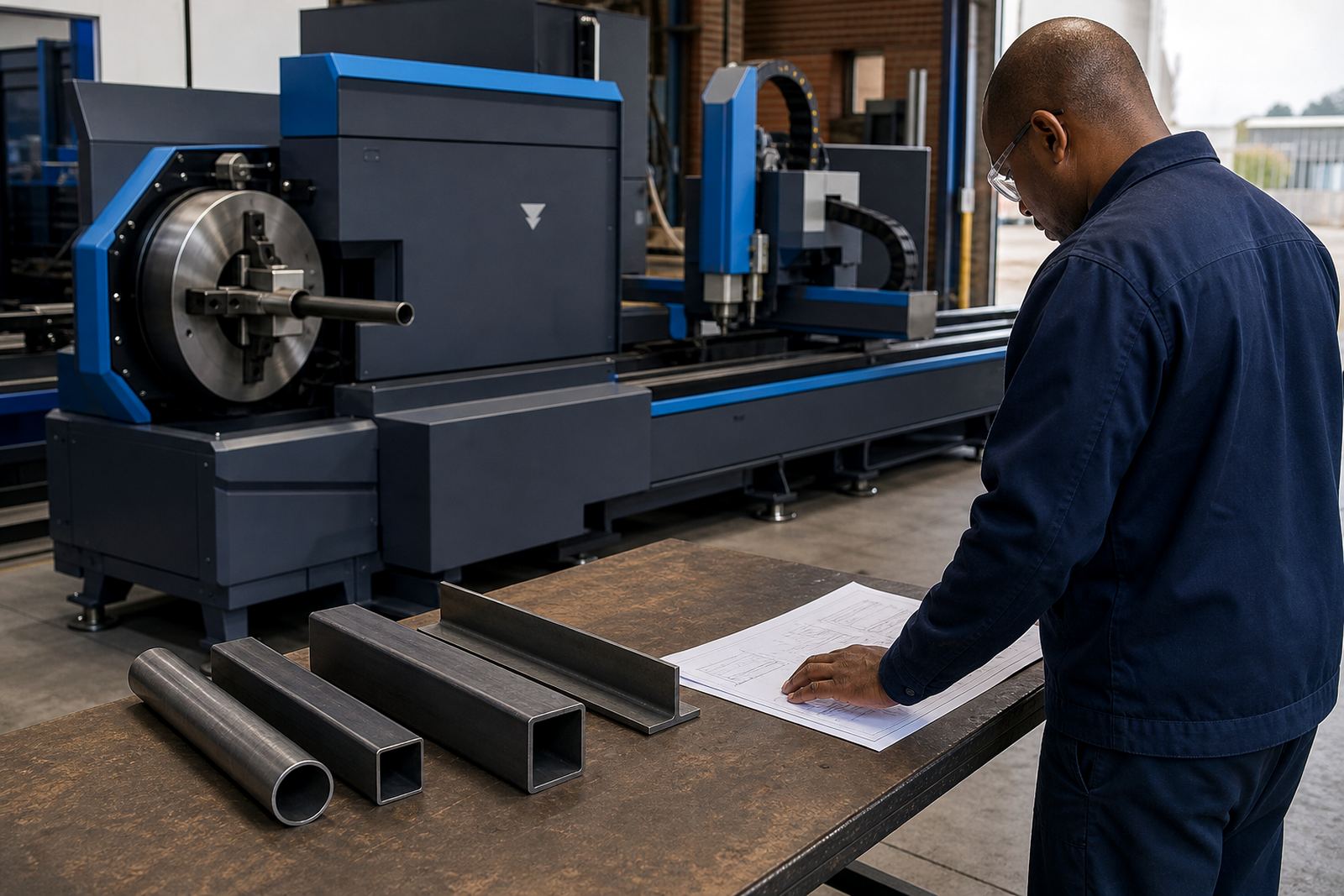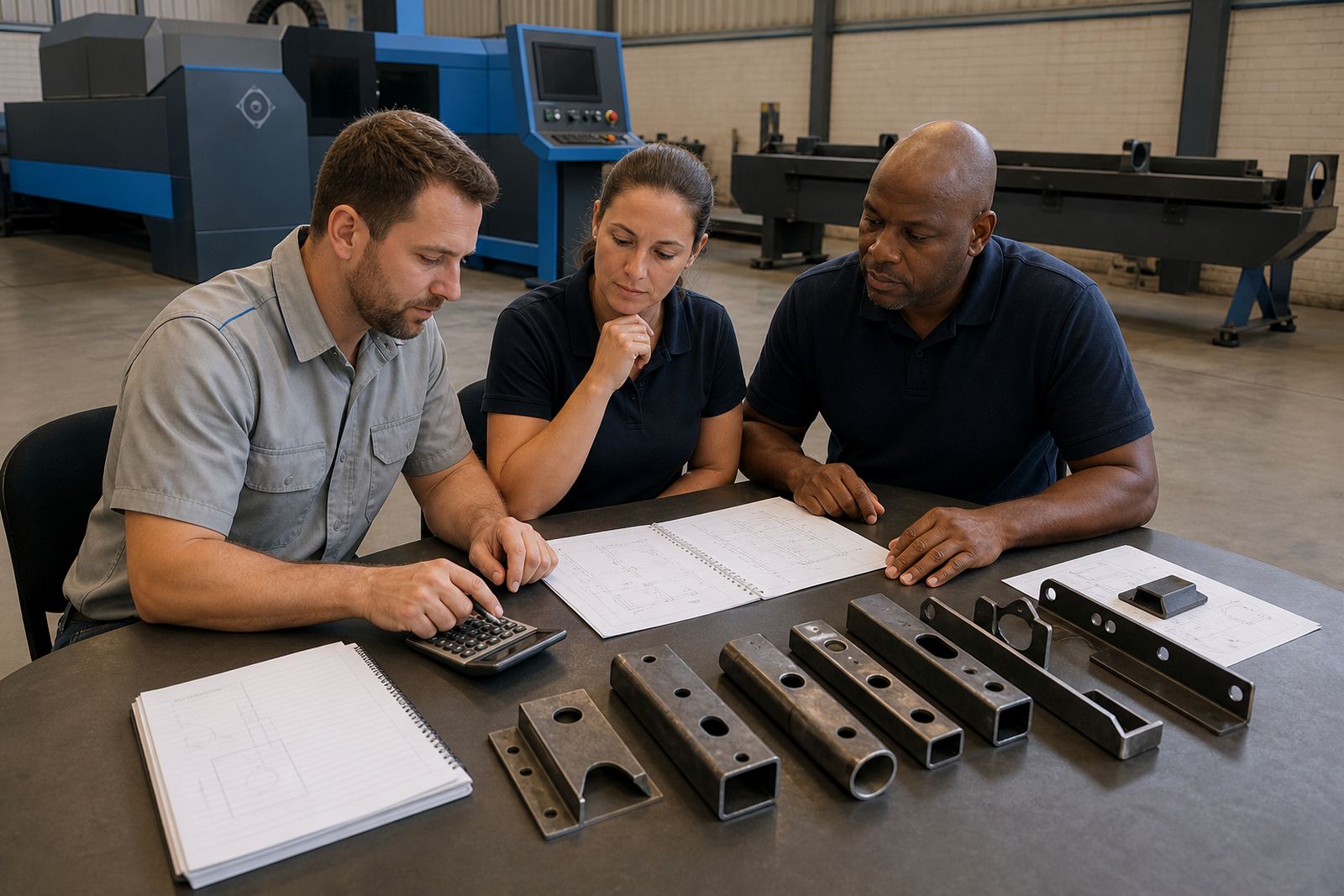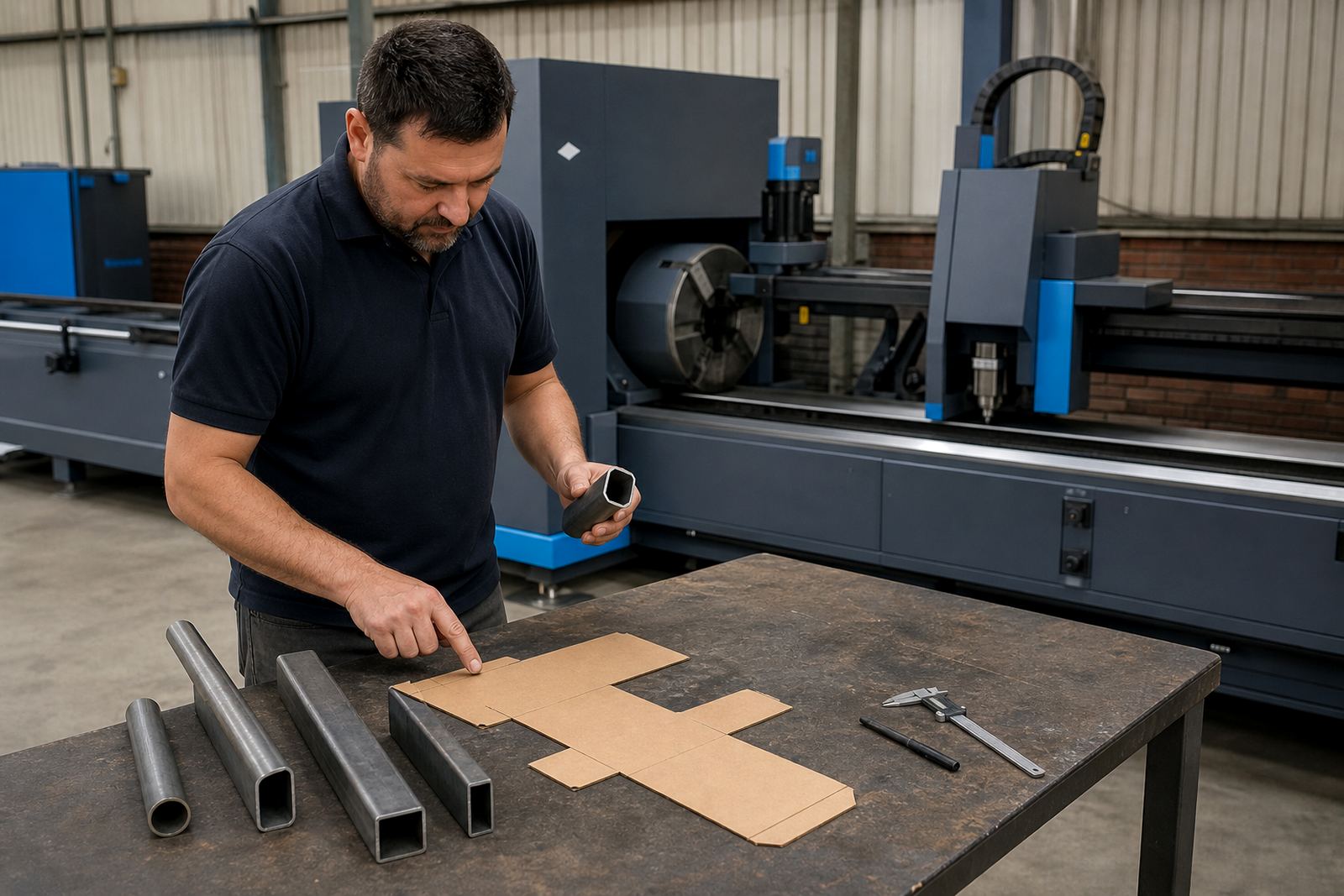
Start with the cut edge you need
The gas choice follows the job, not the other way round. Mild steel, stainless steel and aluminium each behave differently at the nozzle, and round tube, square tube, rectangular tube, angle and channel all carry their own purge, pierce and edge conditions. If the machine has a bevel head, the gas plan must suit angled cuts as well as straight cuts.
Before the machine lands on site, list the materials, thickness bands and the smallest feature sizes you cut often. That gives a proper view of assist gas demand, nozzle sizes and any changeover points between oxygen, nitrogen or compressed air depending on the application.
Storage points that fit the yard and the workflow
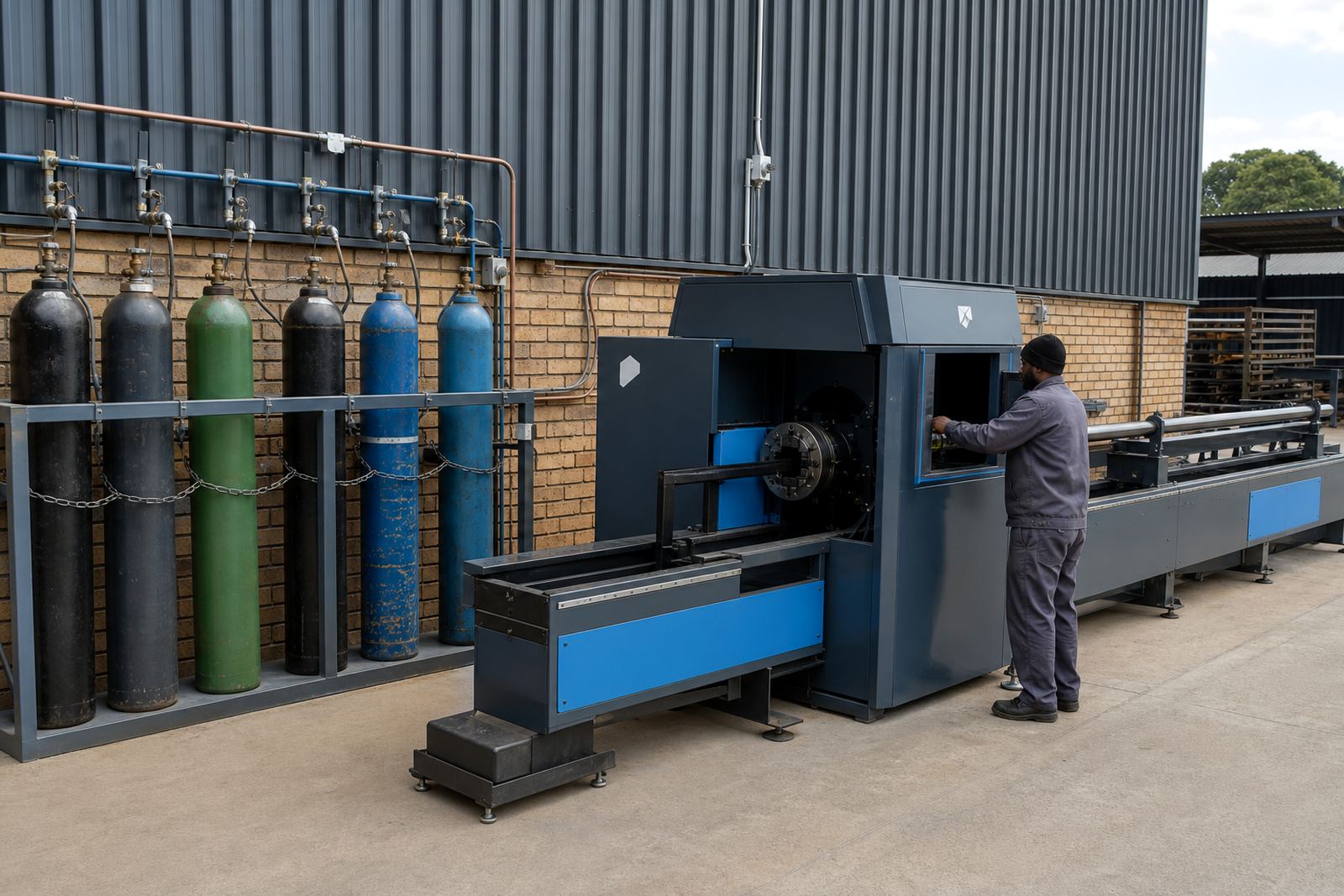
Gas storage needs a sensible position with safe access for deliveries and clear separation from heat, sparks and heavy traffic. In Wadeville and across busy industrial yards, the bottle cage or bulk storage area should allow a forklift or cylinder trolley to move without tight turns or blocked gates.
- Keep cylinders upright and secured against movement.
- Allow space for regulators, isolating valves and changeover sets.
- Leave a clean route from storage to the machine bay.
- Mark the area so drivers and staff do not park in front of it.
For higher running volumes, bulk storage or a larger manifold arrangement may be more practical than frequent cylinder swaps. The right choice depends on duty cycle, space and the cut mix.
Map the assist gas route as a shop utility
The main line should be laid out to avoid sharp bends, low spots and unnecessary length. A poor route can cause pressure drop, moisture carryover and unstable flow at the head, which shows up as rough edges or inconsistent pierce behaviour. Keep the line protected where it crosses walkways or loading paths.
In a plant with more than one machine, separate branches for each line can help control pressure stability and make maintenance easier. If the workshop already has compressed air distribution, the laser gas branch still needs proper sizing, filtration and isolation so the machine gets the flow it was set up for.
Pressure control at the point of use
Assist gas works properly only when the machine sees stable pressure and clean supply conditions. Regulators, filters and gauges should be placed where operators can read them without opening guards or reaching over moving parts. The settings vary with material and thickness, so the setup must be easy to verify during a shift.
- Check the regulator range suits the intended gas and pressure band.
- Fit filtration where moisture or oil contamination is possible.
- Mark each gas line and valve position clearly.
- Test for leaks after installation and after any pipe work changes.
When pressure is drifting, the operator often chases the cut settings instead of the cause. A solid gas control layout saves time and protects nozzle life.
Purge routines for tube and profile work
Tube cutting adds another layer because the inside of the section can trap smoke, dust and spatter. Good purge practice matters on round tube, square tube and rectangular tube, especially when the job calls for clean internal edges or closed profiles with multiple pierce points. On angle and channel, the gas path must support the geometry rather than fight it.
The operator should know how the purge sequence is set, where to check for restrictions and when to stop and inspect the line. If the machine uses nesting software for mixed batches, the gas plan must match the cutting order so the right settings are ready before the sheet or bundle enters the cell.
Safety clearances and workshop discipline
Gas planning is not only a machine topic, it is also a site safety issue. The storage zone, line route and machine bay need clear housekeeping rules so hoses, cables and trolleys do not cross each other. In a busy fabrication shop, that matters during delivery rigging, maintenance visits and operator shift changes.
- Keep ignition sources away from storage and transfer points.
- Train staff on valve isolation and emergency shutdown steps.
- Inspect hose, pipe and fittings for wear, impact damage and leaks.
- Record any change to the gas layout after maintenance or plant moves.
Where municipal rules or site rules set additional separation distances, the installation should follow the stricter requirement. That is especially important in larger Gauteng plants with shared yards and mixed traffic.
Commissioning checks before the first production run
When the machine is installed, test the assist gas setup during commissioning so pressure, flow and safety checks are completed before production starts. The checks usually include valve function, pressure stability, leak testing, nozzle compatibility and cut trials on representative material. This is also the time to verify the bevel head settings, chuck alignment and any tube handling interfaces that affect how the part feeds into the cut zone.
For South African sites from Johannesburg to Durban, Cape Town and Gqeberha, the practical test is the same: does the gas reach the head cleanly, at the right pressure and without unnecessary waste. If the answer is yes, daily production has a much better base to work from.
A short planning list for the job file
Keep one sheet with the essentials before delivery day. It helps the installation team, the operator and the maintenance crew work from the same setup notes.
- Material types and thickness range.
- Preferred assist gases for each cut family.
- Storage position and cylinder or bulk arrangement.
- Line route, isolation points and filtration points.
- Machine bay access for rigging and servicing.
- Any site rules for gas handling and separation distances.
That list gives the site a clean starting point and avoids last minute changes when the machine is already in place.