Start with the material shape, not the drawing count
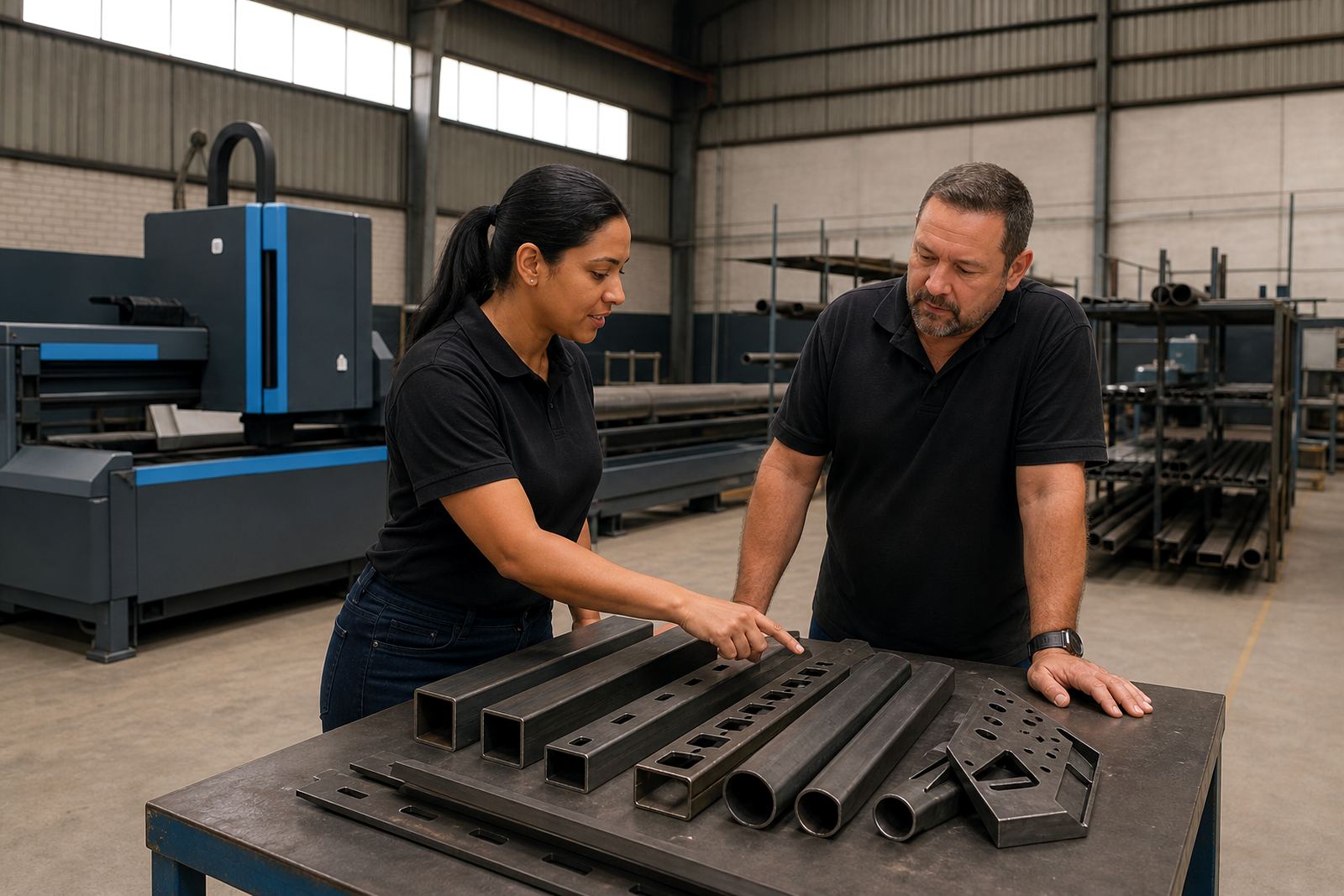
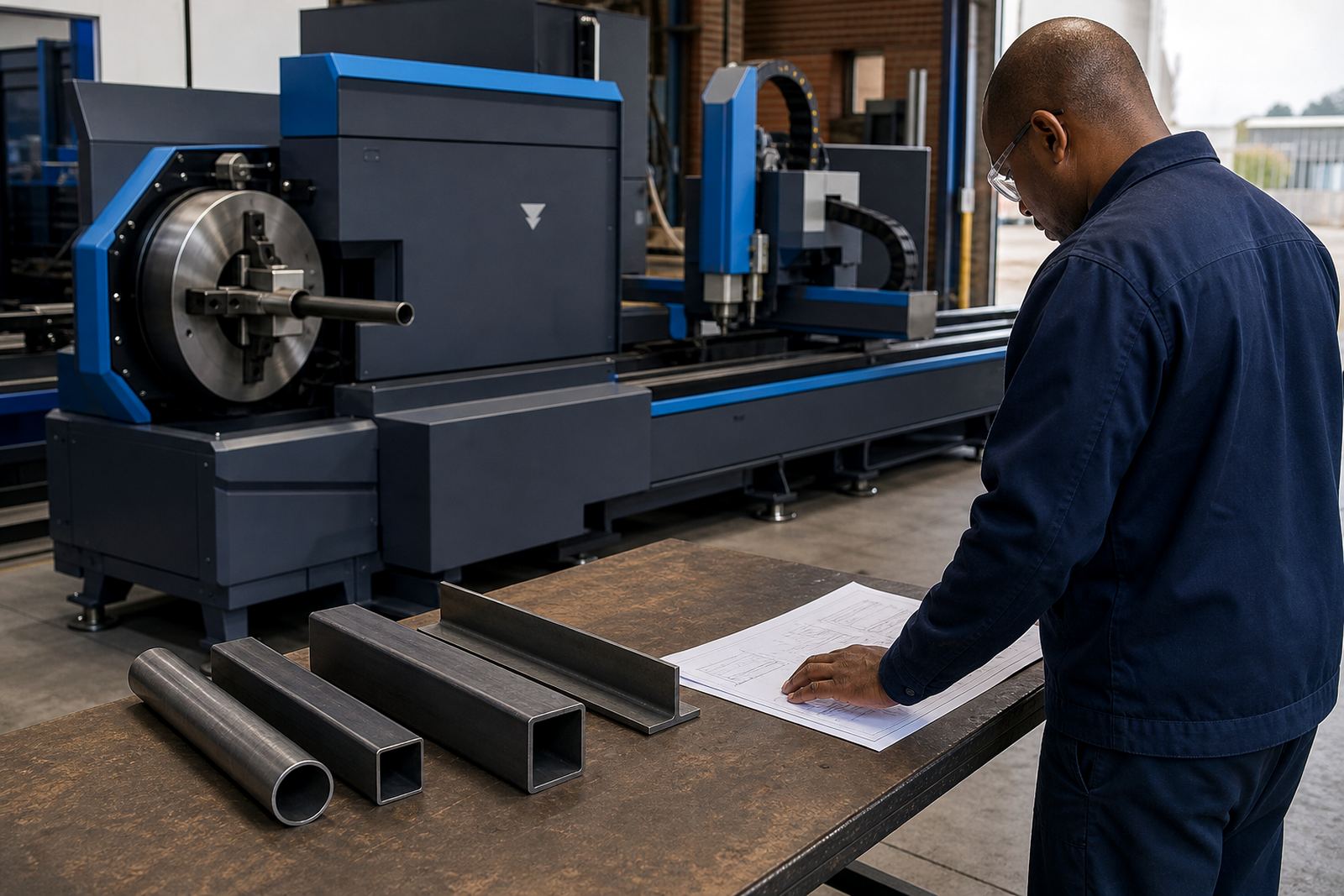
A clean quote begins with the stock profile in front of you. Round tube, square tube, rectangular tube, angle and channel all behave differently on the machine, and each one changes how the nesting is planned. Wall thickness, length, straightness and surface condition all affect how easily the profile runs through the chucks and how stable it stays through the cut.
For short runs, the scrap left in the tube after cutting can matter more than the machine time. A job with many short parts may use one full bar but leave awkward offcuts that cannot be used elsewhere. On longer production runs, the nesting pattern can lift yield enough to make a material quote stronger without pushing labour too hard.
- Check the raw length and section size before pricing the batch.
- Separate straight cuts from bevel cuts, as they do not cost the same.
- Allow for offcuts that are too short for the next job.
- Note any rust, oil or dents that may slow loading and clamping.
Machine time is more than the cutting minutes
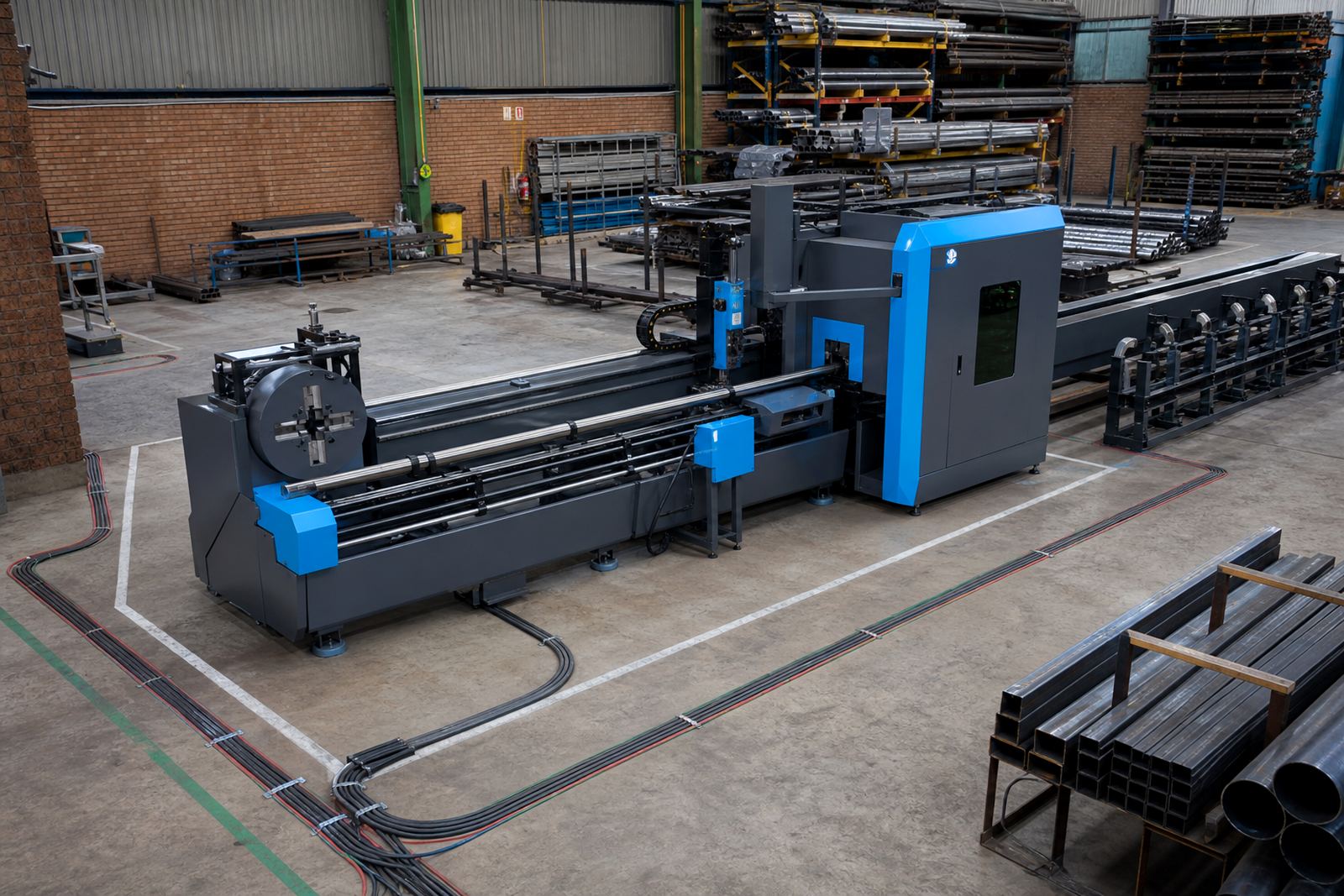
Operators often look at the cut path first, but the real machine cost also includes loading, chuck changes, alignment, probing and part unloading. A job with ten small components can take less laser time than a single long part, yet still cost more because the handling cycle repeats. Bevel heads add another layer, since angled edges need tighter control and often slower movement.
When a fabricator prices work honestly, the machine rate must carry wear on motion parts, optics, chucks and guides. That rate should also absorb the time spent proving the first part and checking dimensions before the batch runs in full. If the parts are complex or nested close to the tube wall, the risk of scrap rises and that should sit in the quote too.
- Include setup time for the first article.
- Add time for clamp changes and chuck alignment.
- Allow slower travel on bevel edges and sharp corners.
- Count part sorting, bundling and marking after cutting.
Labour should reflect who is doing the work
Not every minute on the job belongs to the machine operator. An applications specialist may spend time refining the nesting, a setter may check the chuck grip, and a supervisor may sign off the first parts before the batch continues. Where a job needs repeat runs, the learning from the first order often reduces waste on the second, but the first run still carries the full setup burden.
Training also affects labour cost. A well-trained operator can spot a poor nest, a bent tube or a weak clamp before the machine starts cutting. That saves material and keeps the job from drifting off target. In a smaller shop, the same person may do loading, cutting and packing, so the rate should reflect the full job path rather than only the trigger time at the machine.
- List the roles involved in the job, even if one person covers several tasks.
- Separate setup labour from repeat-run labour.
- Budget for measuring and checking finished parts.
- Include handling and packing where parts must stay clean or labelled.
Nesting choices change the quote fast
Good nesting is not only about fitting as many parts as possible into one tube. It must also respect clamp clearance, lead-in space, heat build-up and the order in which parts drop free. If the nesting software pushes parts too close together, the cut edge can be rougher and the job may need more finishing. If it leaves too much gap, material use gets worse and the quote rises.
The person doing the nest should compare yield, machine stability and post-cut handling. For some tube jobs, a slightly lower yield is worth it because the machine runs cleaner and the parts release more easily. On other jobs, especially large production batches, a small change in nesting can move the cost enough to affect the selling price.
- Check where clamps need clear space.
- Watch for heat distortion on thin wall tube.
- Set part order so dropouts do not foul the next cut.
- Use labels or marks where parts must be sorted later.
Gas, bevels and safety all sit in the job cost
Assist gas choice changes finish, edge condition and consumption. Oxygen, nitrogen and air each suit different materials and thicknesses, and the wrong setting can leave more dross or slower cutting. Gas setup also has a practical cost in hoses, regulators, pressure checks and the time spent confirming the right flow for the material on the table.
Safety work belongs in the quote too. Tube and profile cutting creates sharp edges, hot offcuts and flying slag, so guarding, eyewear, signage and safe lifting should never be treated as free. Where the job includes bevel cuts, the setup must be checked more carefully because the angle changes the way heat and sparks move. A careful shop also budgets for maintenance tasks such as nozzle checks, chuck cleaning and alignment work, because skipped upkeep usually shows up later in scrap or stoppage.
- Match the gas to the material and finish expected.
- Include nozzle, lens and chuck care in the running cost.
- Allow for guarding, handling tools and PPE use.
- Price bevel calibration as a separate activity when needed.
A practical costing sheet for tube work
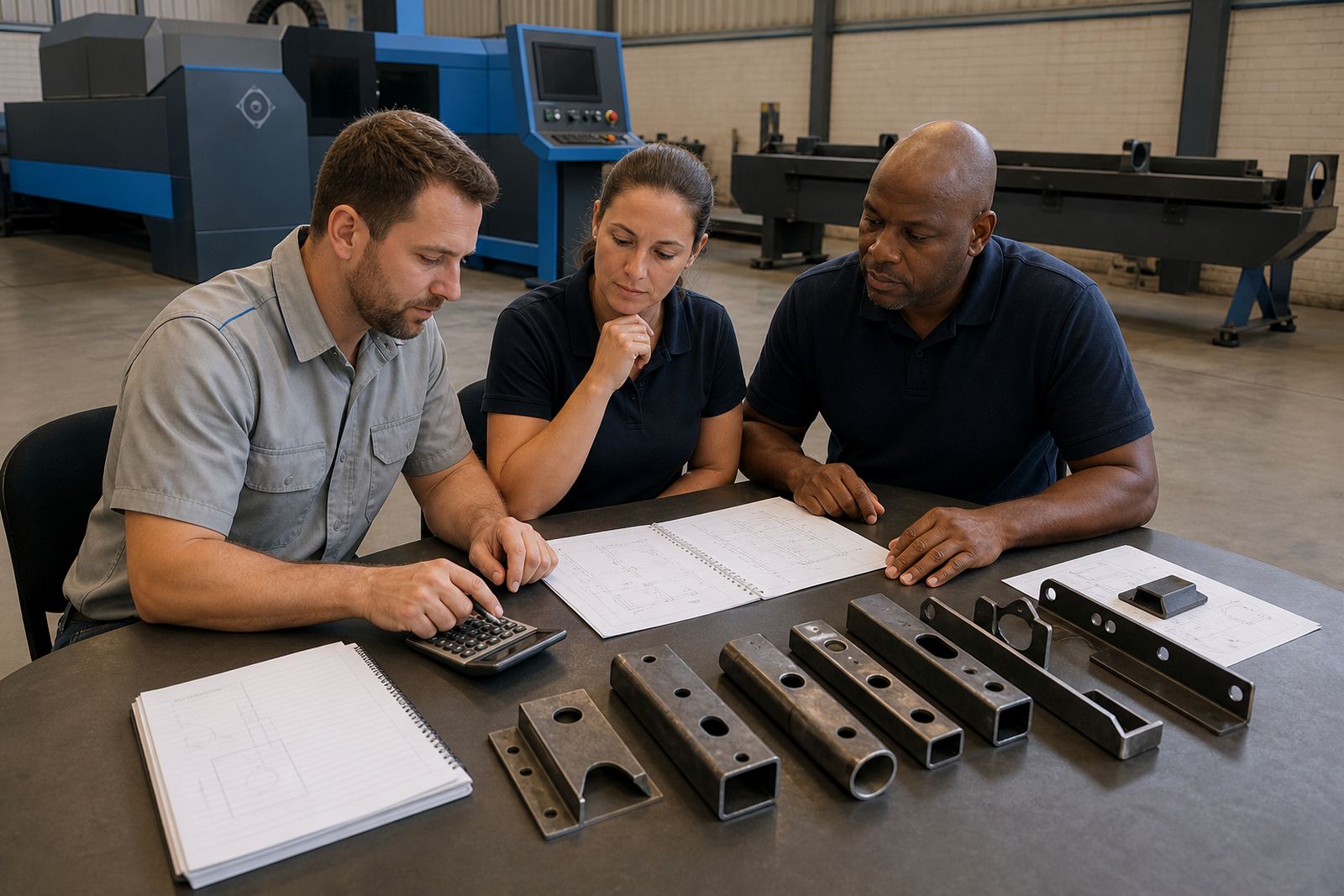
A useful costing sheet keeps the numbers in one place and stops the quote from leaning on guesswork. Start with material, then add machine time, labour, gas, setup, finishing and a margin for risk. For short-run fabrication in Johannesburg, Pretoria, Durban, Cape Town, Gqeberha or smaller centres such as Bloemfontein and Nelspruit, transport and rigging can also sit in the total when the machine or finished parts must move under controlled handling.
When the job is for repeated production, the sheet should show the difference between first-off cost and repeat-run cost. That split helps the sales team explain why the first batch can feel expensive while later batches settle lower once the nest, clamp points and settings are proven. It also helps plant teams plan maintenance, because the service load on a machine running profile and tube work every day is not the same as a light shop job.
- Material cost and expected yield.
- Machine time, setup time and first-part checking.
- Labour for nesting, loading, cutting and sorting.
- Gas use, calibration and maintenance allowances.
- Delivery rigging where the machine must be moved into place.