Start with the floor and the route in
The machine, support tables and loading areas need a level floor with enough working space around each side. In a busy shop in Wadeville or a larger plant in Durban, the route from the gate to the machine position matters just as much as the final bay.
Measure the door openings, turning space and ceiling height before delivery. If the machine has to move through a narrow passage or a shared production floor, clear the route of pallets, offcuts, stored stock and low hanging items.
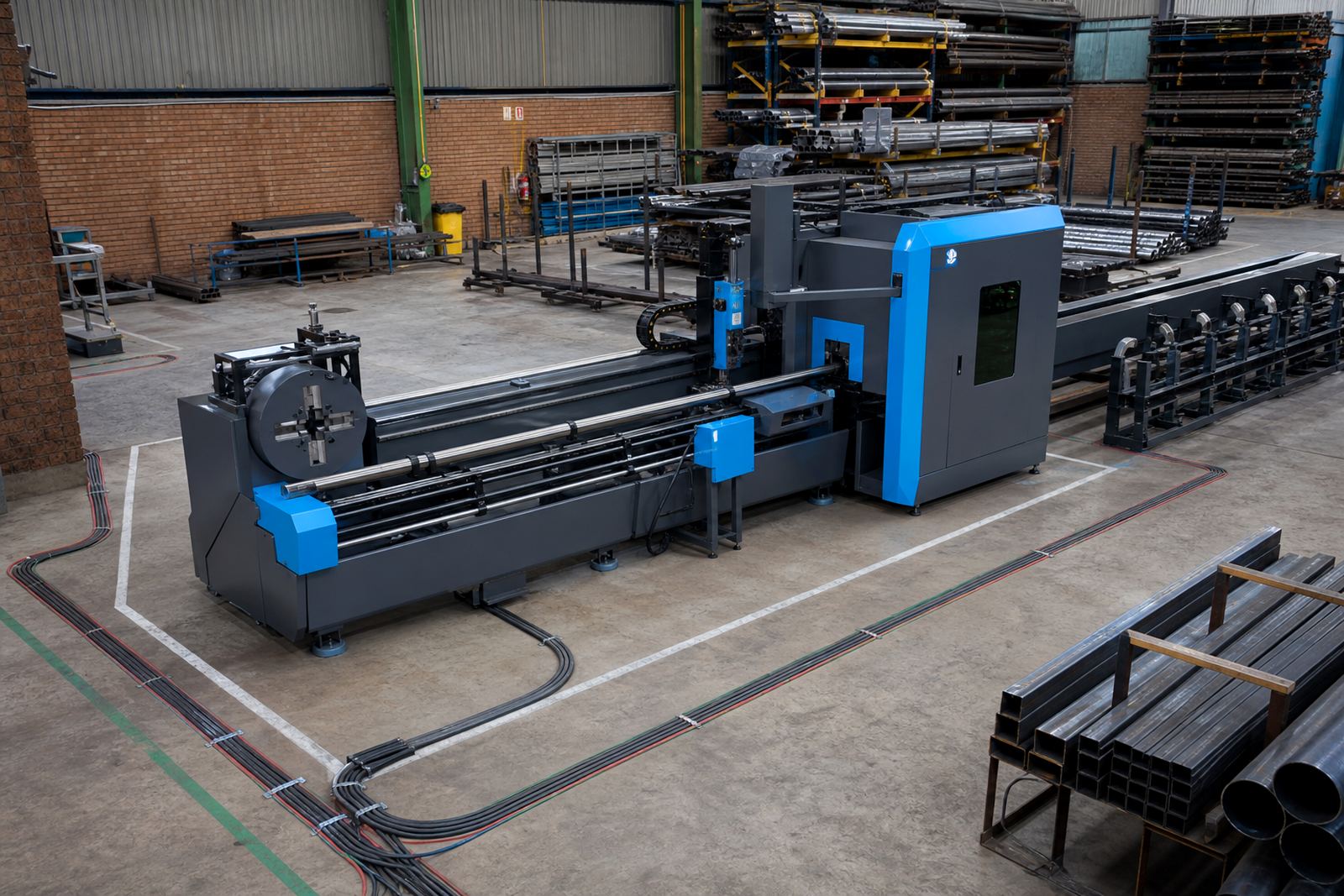
Mark out the machine bay before delivery
Mark the final floor position with tape or chalk so the team can see the footprint clearly. Allow room for the control cabinet, service access, gas lines and tube loading areas, not only the machine body itself.
- Measure the full bay, then add clearance for servicing
- Check that the floor finish is even and free of loose patches
- Keep walking paths clear for operators and rigging gear
- Allow space for finished material, scrap bins and tube bundles
Plan tube stock, offcuts and material flow
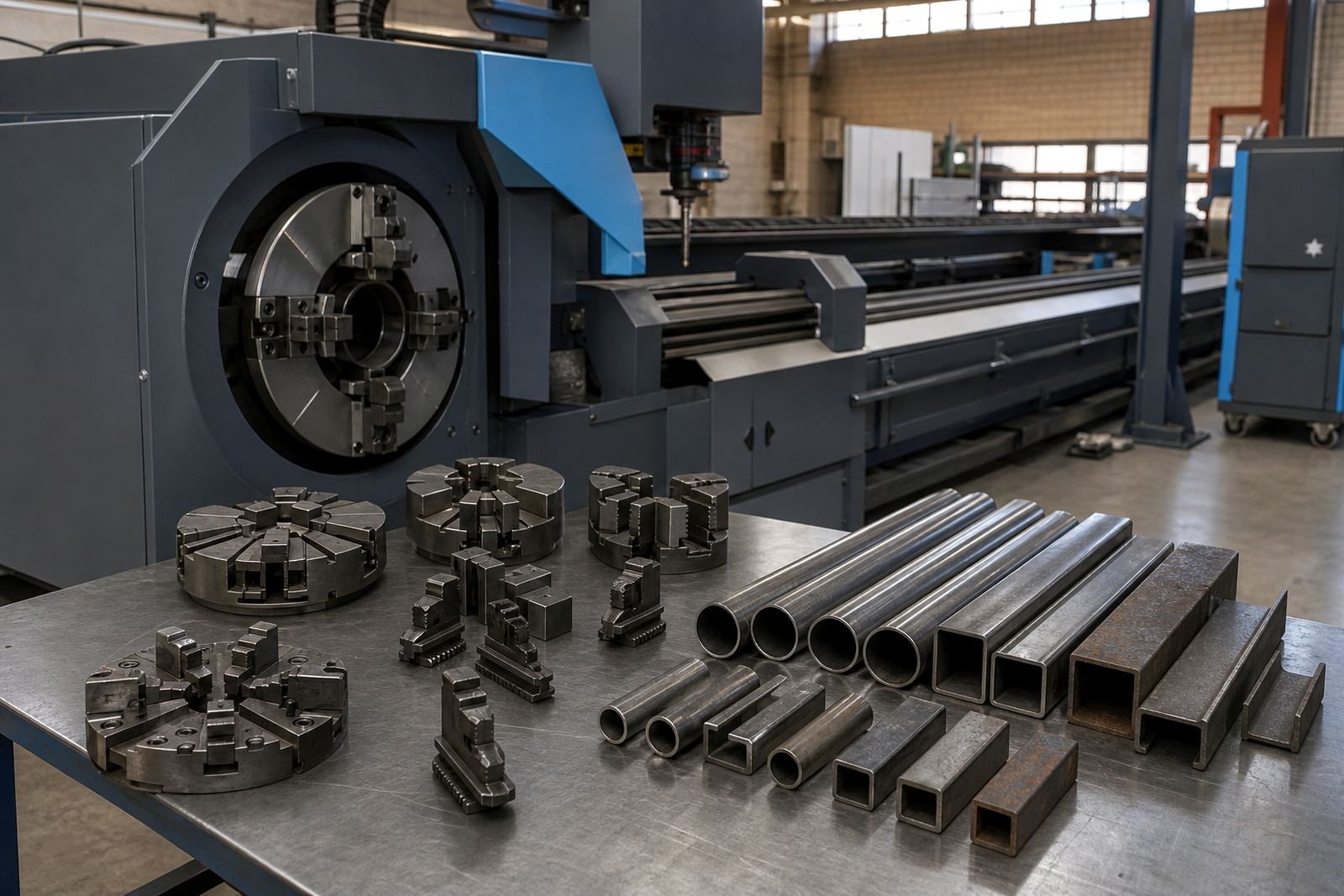
Fibre laser tube cutting works best when round, square and rectangular tube, plus angle and channel, can move in a steady line from receiving to cutting to dispatch. If stock arrives in mixed lengths or grades, set aside labelled areas so operators do not waste time sorting material during production.
Keep the infeed side free of barriers. Long tube packs need a straight path, and the outfeed side should have enough room for cut parts, nesting remnants and inspection benches.
Set up gases, air and extraction points
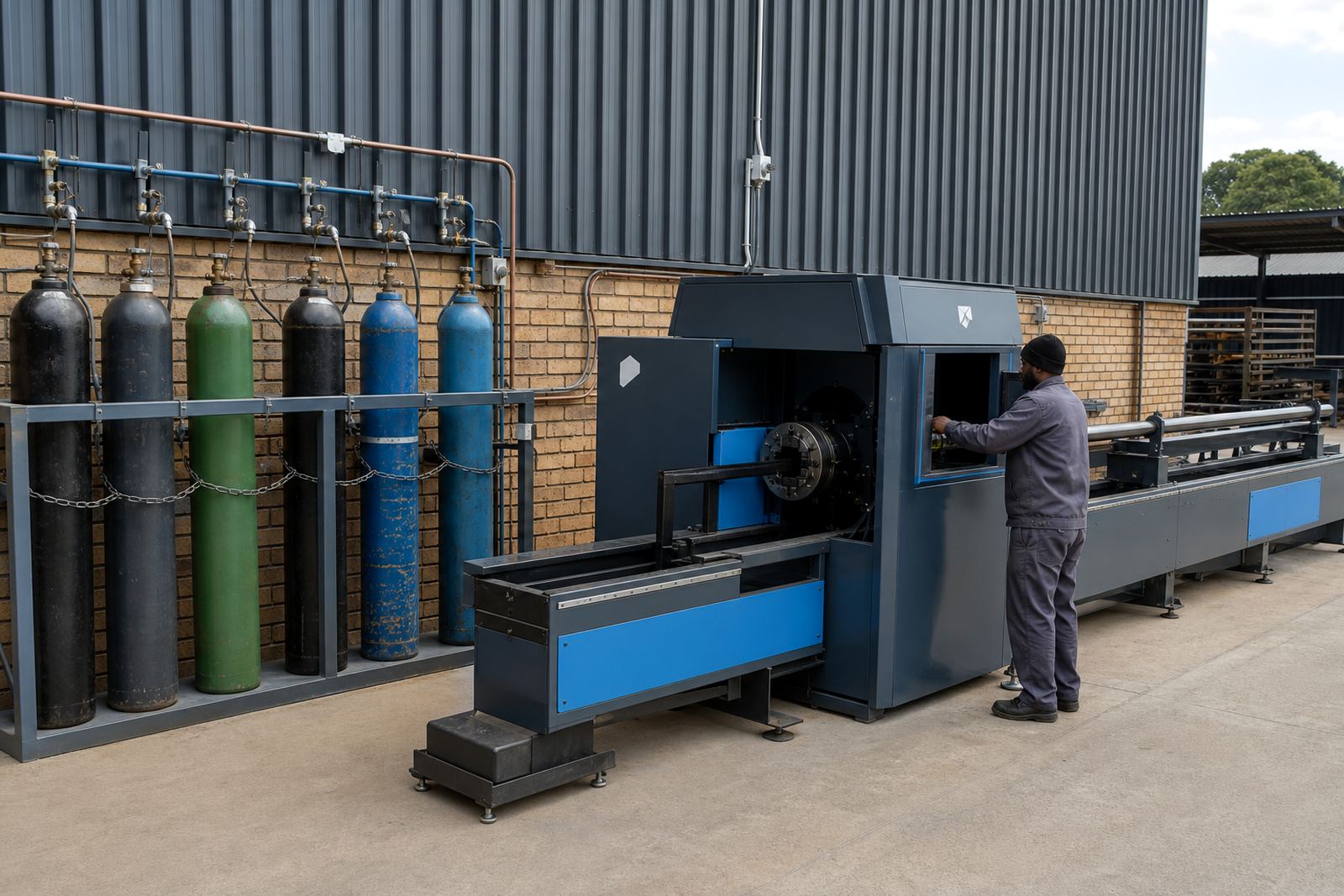
Assist gases need a proper, accessible setup before commissioning starts. The line should be positioned so the installer can connect it cleanly, check pressure control and test for leaks without working around stacked material or tight corners.
Where extraction or fume handling is part of the installation, leave enough space for ducting, filters or collection equipment. Clean air, dry gas and tidy pipe runs help protect cut quality and keep the machine area easier to maintain.
- Confirm the gas source location and access path
- Keep valves, regulators and lines clearly labelled
- Leave room for service access around extraction units
- Protect the area from dust, moisture and grinding debris
Electrical and safety points to clear before installation
The installation team needs a verified electrical point, proper isolation and a safe working area around the machine. If your floor has shared services, overhead cranes or nearby welding work, coordinate those activities so the installation can proceed without interruption.
Safety marking is not a last-minute task. Put up floor markings, warning signs and access control early, especially where forklifts, visitors and production staff share the same bay.
- Verify the power connection, isolator switch and planned cable path.
- Keep fire extinguishers accessible and visible
- Mark no-go zones around moving parts and loading areas
- Brief supervisors on who may enter the installation space
Operator access, software and training room basics
Operator training goes better when the control area is quiet and uncluttered. Set aside a nearby table or counter for notes, part lists and nesting material so the team can work through setup, nesting software and daily checks without crowding the machine.
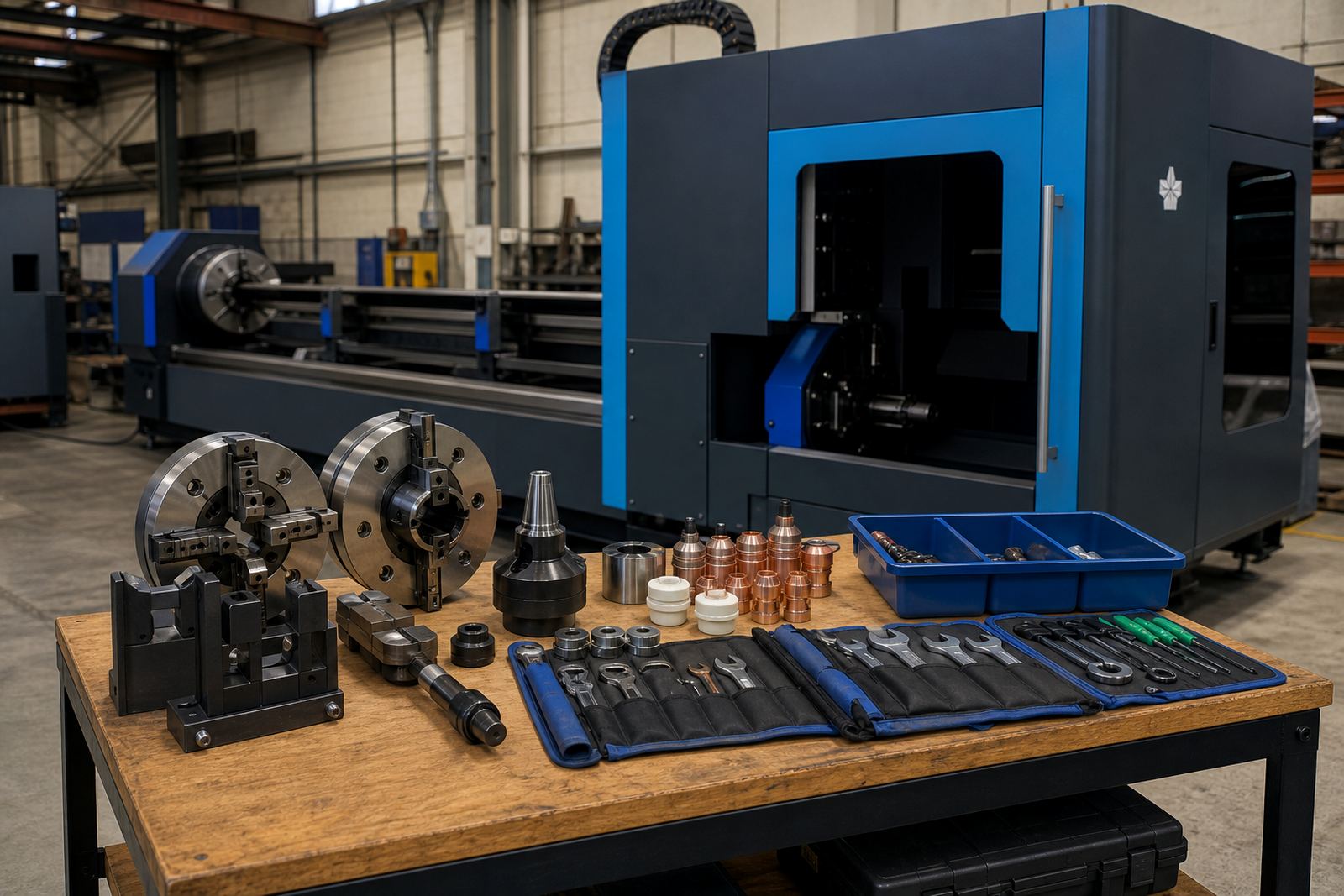
Make sure the operators who will run the machine are present for training. They need to understand chuck alignment, bevel head setup, pierce settings, safe loading and the basic logic behind nesting sheets and tube lengths.
The last walk-through before the rigging team arrives
Walk the floor with the same practical eye you would use on production day. Look for loose cables, uneven patches, blocked exits, unused pallets and anything that can slow down rigging or create a hazard.
A final check list keeps the day organised and helps the installation team work in a clean, prepared space. It also reduces the chance of avoidable damage to the machine, the material or the floor surface.
- Route cleared from gate to machine bay
- Machine position marked and measured
- Gas, power and extraction points identified
- Material stacks labelled and accessible
- Operators scheduled for training
- Safety signs and access control in place
When the bay is ready, installation, commissioning and operator training can move in a steady order. That leaves the machine set up for practical use from the first production run, not for a patchwork of adjustments after delivery.