
Start the budget with the machine’s daily rhythm
Maintenance planning begins with the work pattern, not the invoice. A job shop cutting short runs of round tube, square tube and angle will spend differently from a plant running long shifts on repeat batches of channel and rectangular section.
Build the budget around three buckets: routine service, consumables and downtime cover. Routine service includes cleaning, lubrication, alignment checks and inspection of chucks, beam path components and cutting head condition. Consumables cover the items that wear through use, while downtime cover is the reserve for an unexpected stop, an urgent technician visit or a replacement part that has to be fitted before the next production slot.
For South African fabricators in Wadeville, Germiston and other industrial areas, the real cost is often not just the part itself. A machine that sits idle while a job waits can affect delivery commitments, transport planning and the rest of the workshop schedule.
Consumables that should have a line in the budget
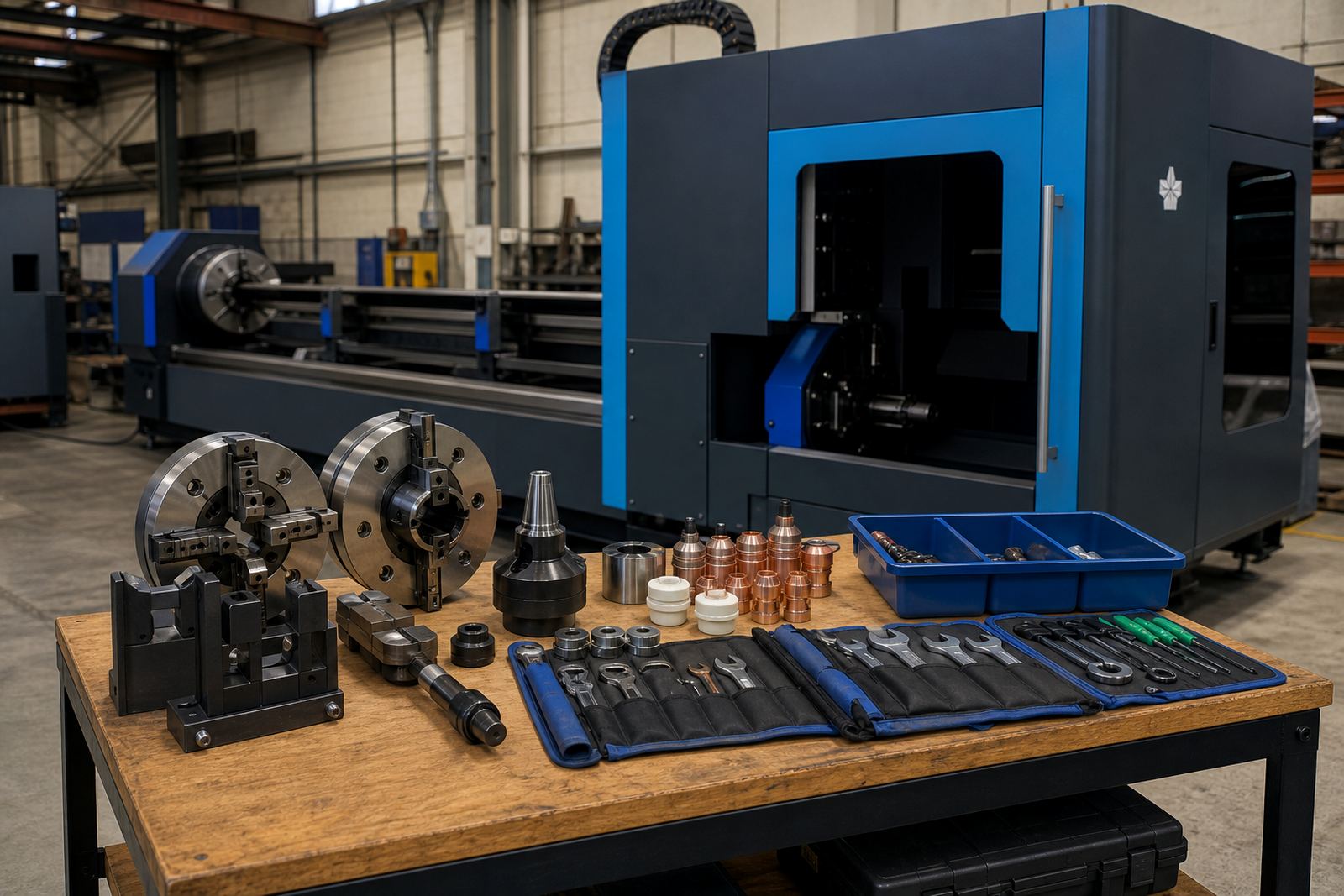
Fibre laser tube systems use a defined set of parts that wear with heat, dust and hours of cutting. The exact list depends on the machine, the cutting head and the material range, but the budget should always make room for recurring replacements.
- Protective windows and lenses that keep the cutting head clear
- Nozzles and related head consumables
- Chuck jaws, grips and contact surfaces where tube is clamped
- Filters, seals and service items in the assist gas path
- Lubricants and cleaning materials used during scheduled servicing
Tube and profile cutting on galvanised material, oily stock or heavy section offcuts can shorten service intervals. Bevel cutting places extra demand on head calibration and component condition too. If the budget ignores these wear points, the first unplanned replacement often lands in the middle of a full production week, which is when it hurts most.
Routine service tasks that pay for themselves
A maintenance plan should list the work that needs to happen at regular intervals, even when the machine appears to be running fine. Many problems start as small alignment drift, loose fittings or poor gas delivery, then show up later as poor cut quality, burrs or repeated alarms.
Planned servicing usually covers chuck alignment, beam path checks, head cleaning, gas line inspections, filter replacement, and a look over cable carriers and hoses. Where bevel heads are fitted, calibration should stay in the service routine so angled cuts remain accurate across different section sizes.
Keep a service log beside the machine record. Note the date, the hours run, the job type and any part replaced. That record helps the applications team and service technician spot patterns, especially where one shift, one material type or one operator habit is causing repeat wear.
Plan for downtime before it interrupts the queue
No machine runs forever without interruption, so the budget should assume stoppage at some point. The practical question is not whether downtime happens, but how much damage it does when it does.
Set aside a maintenance reserve for three situations: planned stoppage during service, minor unplanned repair and major component replacement. That reserve may also need to cover rigging if a part or machine section has to be moved, as well as any specialist set-up work after reinstallation.
Fabricators working across Johannesburg, Pretoria, Durban, Cape Town, Gqeberha, Bloemfontein and Nelspruit usually benefit from a clear list of who can authorise maintenance spend, who logs the fault and who can stop production before damage spreads. The more organised the handover, the less likely a small issue becomes a full shift lost.
Use these checks before the month starts
A monthly budget review keeps maintenance from becoming guesswork. It also helps the production team see where costs are drifting because of poor housekeeping, misuse or delayed service.
- Check machine hours against the service schedule
- Inspect the condition of chucks, jaws and clamps
- Review gas usage and look for waste at the nozzle or line
- Confirm that spare protective windows, nozzles and seals are on hand
- Look at recent cut quality for burrs, taper or bevel variation
- Record any repeat alarms or faults for follow up
If the same fault keeps appearing, the budget should move from reactive repair to planned correction. That might mean more frequent cleaning, a new alignment routine or training for the operator handling the machine on a daily basis.
Operator training as a maintenance saving
Operator skill has a direct effect on maintenance spend. A well-trained operator will load material correctly, keep the chuck area clean, notice gas problems early and avoid damage that comes from poor setup. Training also helps with nesting choices, especially when the job includes mixed tube sizes, short offcuts or profiles that need careful layout to reduce waste.
At LaserTube, installation and operator training sit alongside machine support, because the machine and the people using it need to work together. When the team understands assist gas setup, safe loading, basic chuck care and the signs of wear in the cutting head, the maintenance budget becomes more predictable.
Safety still belongs in the same budget line. Keep guards, interlocks, extraction and local workshop rules in place, then include inspection time for those items in the service cycle. A machine that is looked after properly tends to stay more accurate, and the cutting quality shows it.
A practical budget sheet for fabricators
Use a simple annual sheet, then break it into monthly reserve amounts. Put service visits, spare parts, calibration work, training refreshers and downtime cover into separate lines so the total does not get blurred.
For shops in coastal conditions, especially Durban and Gqeberha, allow for extra attention to corrosion control, cleaning and storage practices around the machine area. Humidity and airborne dust can shorten the life of small components and make routine cleaning more important than it first appears.
Where the machine runs tube and profile work every day, maintenance budgeting should feel like part of production planning. The job list, the wear parts and the support plan belong together, and the numbers make more sense once all three are on paper.