What the chuck does on a tube laser
The chuck grips the workpiece and keeps it centred while the beam cuts through the wall thickness. On tube and profile machines, that grip has to stay firm without crushing thin sections or letting the part drift under rotation.
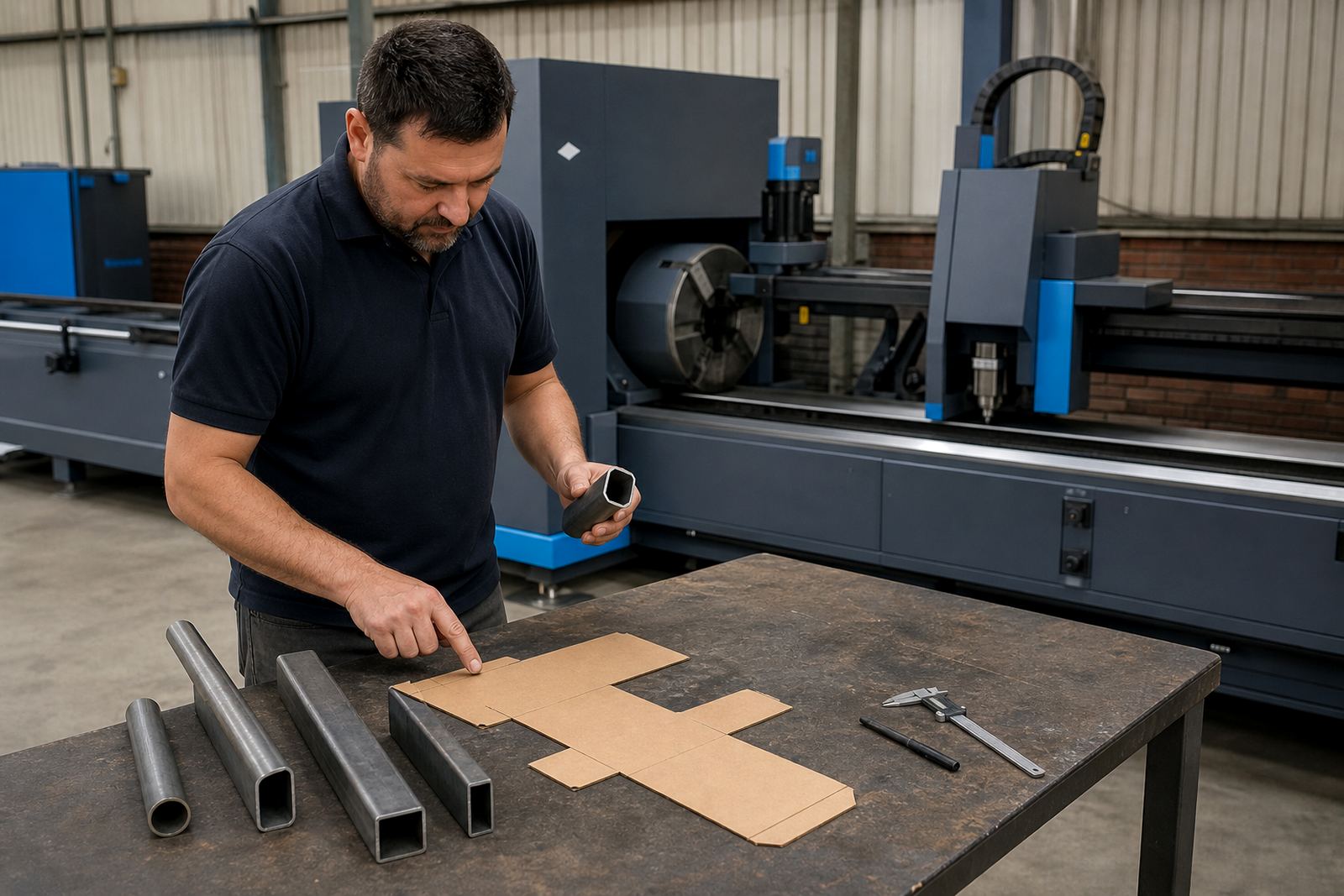
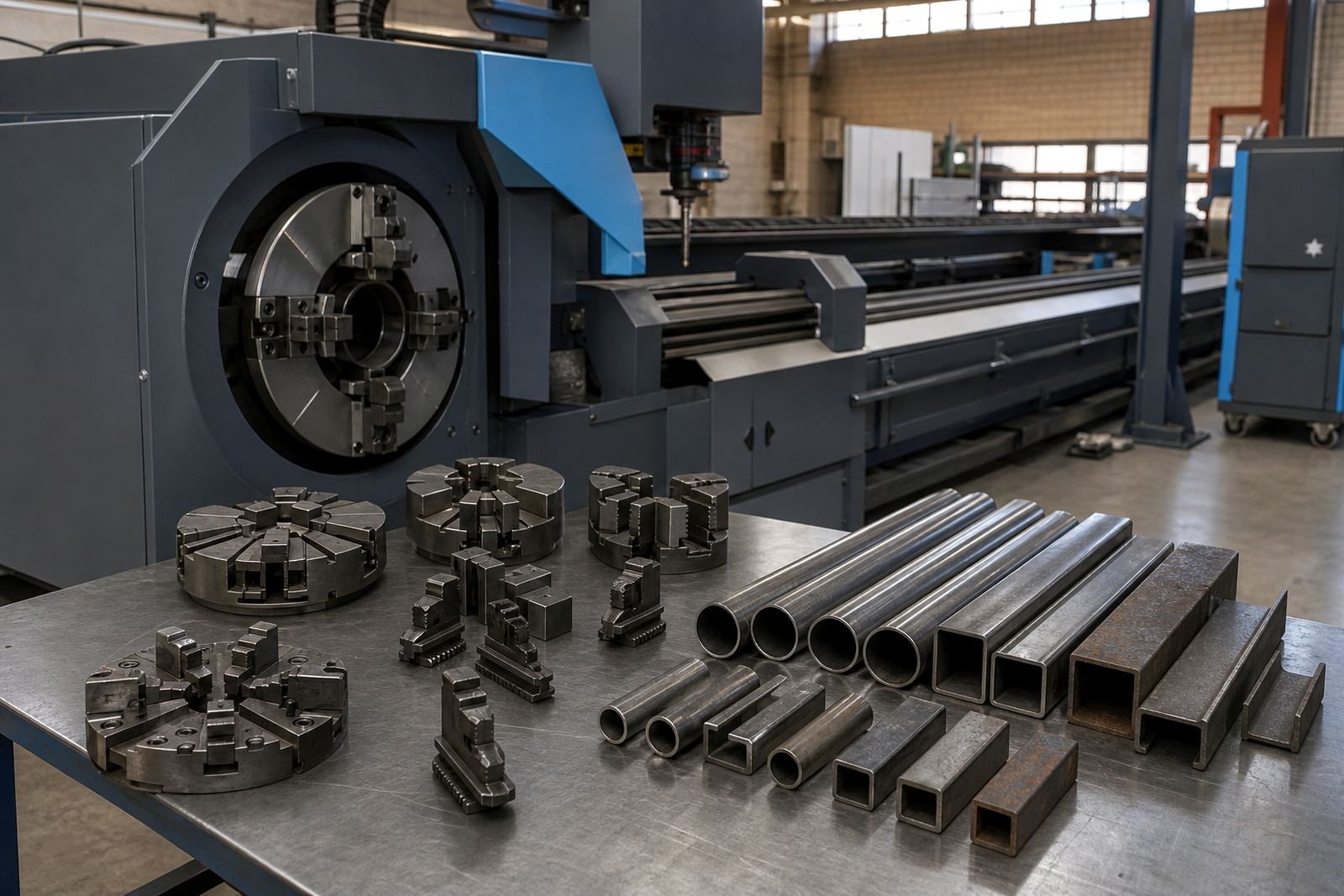
Round tube is usually the easiest shape to hold. Square and rectangular sections need even pressure across the jaws, while angle and channel often need extra care because the section can twist if the setup is loose or the clamping face is not matched to the profile.
Grip range and where it starts to matter
Every chuck has a working range, and the job gets harder when the material sits near the upper or lower edge of that range. A 20 mm shift in size can change how the jaws sit, especially when the stock has scale, light surface rust or slight ovality from the mill.
- Check the smallest and largest section sizes you cut most often.
- Confirm that wall thickness suits the clamping force available.
- Allow for coated, painted or zinc finished material where jaw bite changes.
- Watch for short offcuts that leave too little clamping length.
When a profile sits outside the comfortable grip range, the machine may still hold it but the part can move during acceleration, which shows up as a poor cut line or a slight taper on tight geometry.
Jaw condition, concentricity and runout
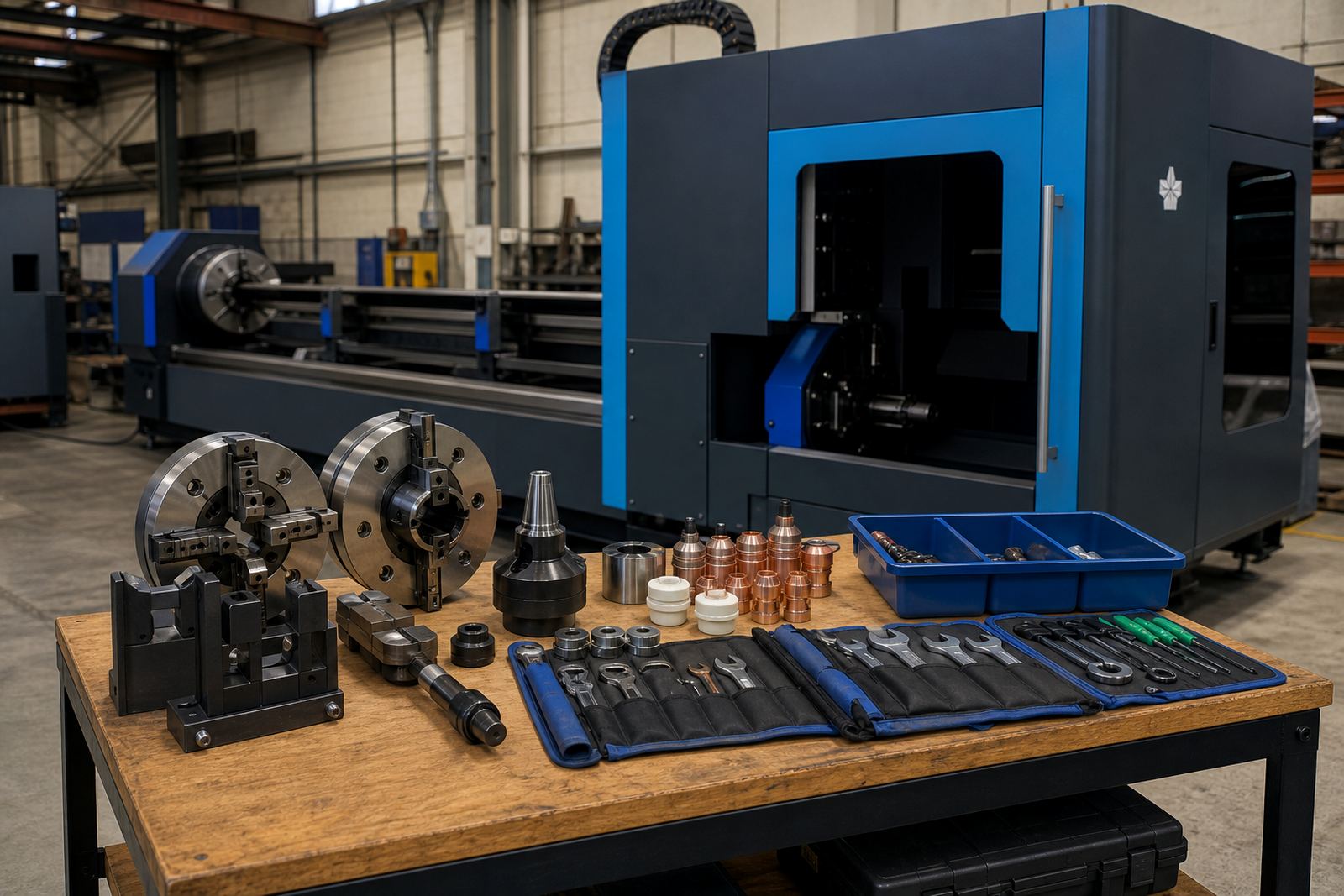
Good chucking starts with clean jaws and a spindle that runs true. Dust, swarf and cut slag build up in the wrong places and can throw the part off centre. If the grip face wears unevenly, the tube may sit out of level in the chuck, shifting the cut line before the programme starts.
Concentricity checks are worth doing before a long run, especially on production work. If the part is not seated squarely, the two ends will not stay in step and the bevel head has to compensate more than it should. That usually shows up as extra finishing work later.
Bevel heads and the effect on clamping
Bevel cutting adds another layer of movement control. As the head tilts, the machine needs stable holding so the angle stays clean across the cut face. Poor chuck grip can leave a bevel that varies from one side of the section to the other, which is hard to hide on welded assemblies.
- Keep jaw faces matched to the profile shape being cut.
- Confirm the chuck closes evenly across all contact points.
- Check that the tube is not lifting when the head changes angle.
- Use test cuts before starting full production on new material sizes.
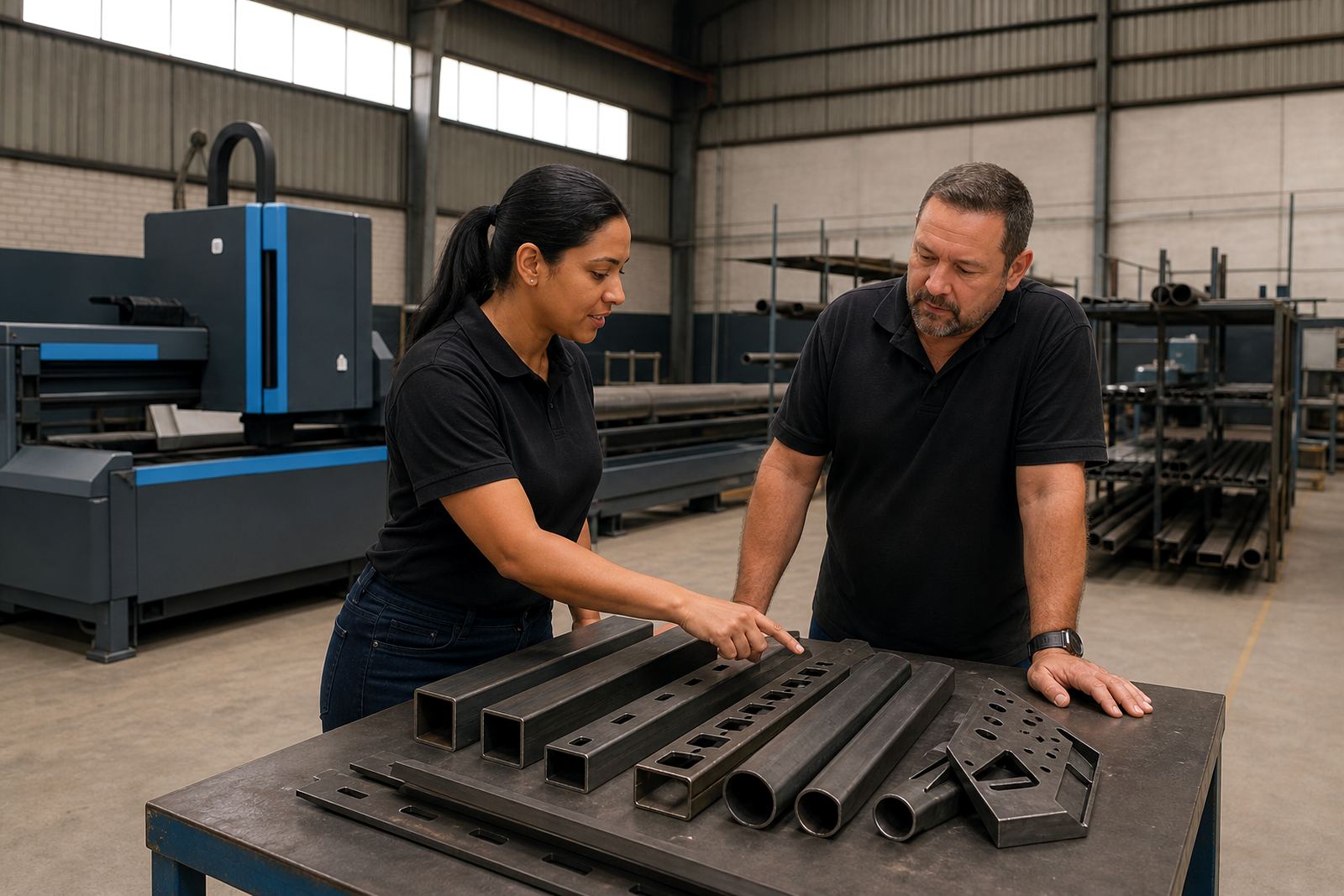
For shops cutting handrails, frames, brackets and structural parts, a steady clamp saves time on grinding and rework.
Assist gases, swarf and clean release
Assist gas choice affects the cut edge, but it also changes what collects around the chuck area. Oxygen, nitrogen or compressed air each leave different levels of residue, and fine debris can build up around the jaws, seals and guide surfaces. If that is left alone, the chuck starts to feel sticky and the release becomes less predictable.
A clean release matters when parts are short or when skeletons need to drop away neatly. Operators should watch for slag at the bite points and clear it before the next nesting run. On some profiles, a small build-up is enough to move the tube by a fraction, which is plenty to spoil the next cut.
A practical chuck check before the shift starts
This quick routine helps keep the machine honest and the parts consistent:
- Clean the jaws and contact faces.
- Inspect for wear, marks or loose fasteners.
- Test clamp action on a sample tube size.
- Check alignment between front and rear chucks.
- Confirm the nesting file suits the section length and profile shape.
- Watch the first part for movement during rotation and cutting.
If the machine is handling mixed tube sizes, keep a note of which jaws were used and how the part sat in the chuck. That small record makes later setup easier, especially on repeat jobs with thin wall stock or awkward sections.
Support that keeps the machine in step
Chuck issues often sit in the middle of a wider machine setup problem. A site assessment can pick up floor condition, loading path, gas supply layout and the space needed for safe tube handling. Installation, commissioning and operator training all feed into better clamping practice because the team learns what a normal setup looks like and what falls outside it.
LaserTube works with metal fabricators across Wadeville, Johannesburg, Pretoria, Durban, Cape Town, Gqeberha, Bloemfontein and Nelspruit on fibre laser tube and profile cutting machines. That support can include chuck alignment, bevel calibration, assist gas setup, nesting training, preventive maintenance and remote diagnostics when a machine starts to drift from its usual cut quality.