Cutting aluminium tube without rough edges
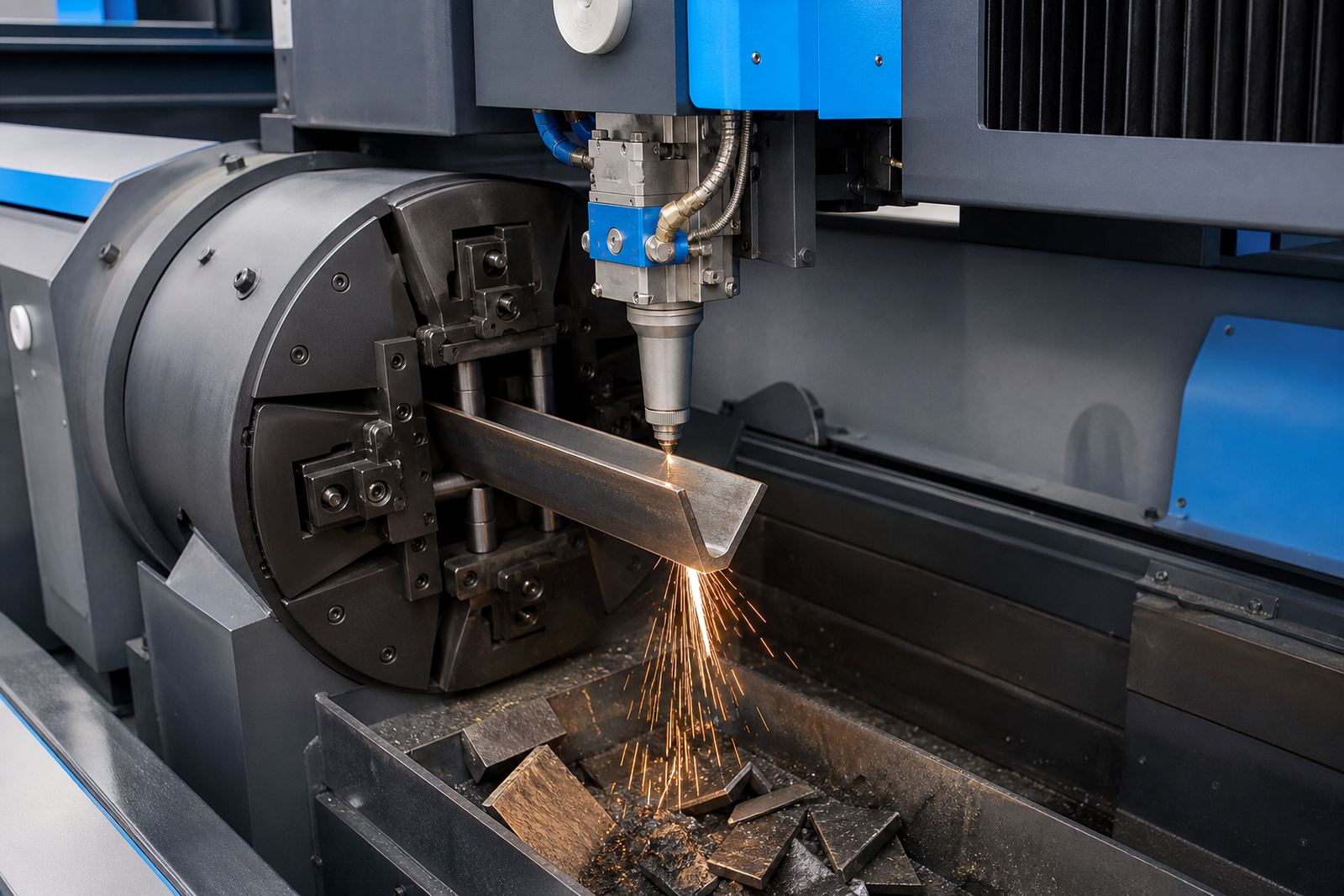
An aluminium tube laser is built for round, square and rectangular sections where repeatable mitres, slotting and profile holes must line up properly. It handles light wall tube, small structural members and formed profile parts that need a tidy edge for welding, powder coating or assembly. On aluminium, the cutting head, gas choice and motion control all matter because the material reflects heat differently and can mark quickly if settings drift.
The machine uses fibre laser energy with a controlled assist gas stream to push molten metal out of the kerf. That gives a finer cut than saw work on many jobs, especially where the part has lots of openings, tabs or close spacing. For fabricators in Johannesburg, Durban or Cape Town, it is useful on railings, display frames, transport fittings and custom aluminium sections that need steady repeatability from one batch to the next.
Tube sizes, clamping and head options
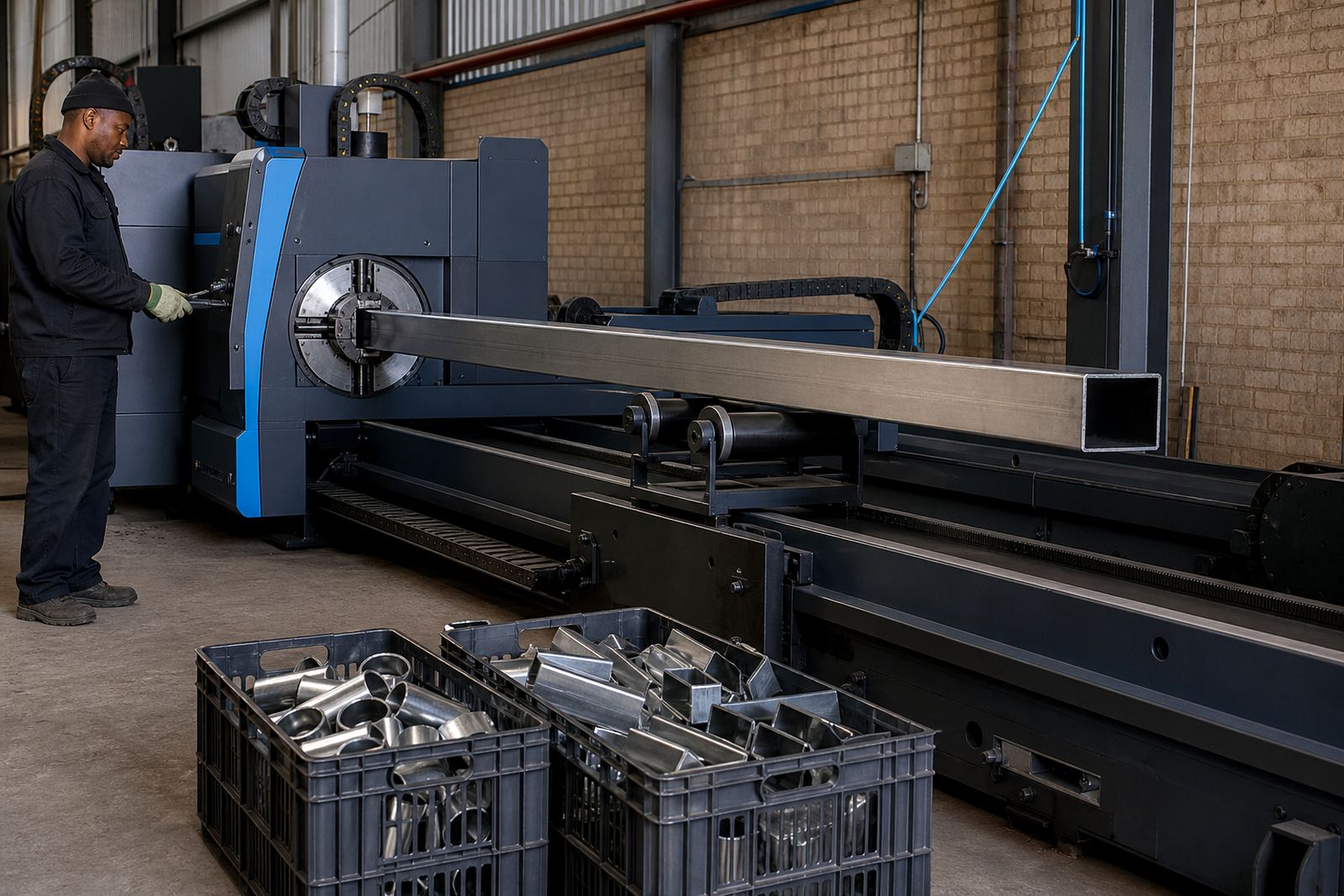
Different aluminium tube lines call for different chuck reach, bed lengths and head travel. A proper setup grips the part without twisting it, then feeds through the cutting zone with enough clearance for loading and unloading. Where the job includes angled ends or compound joints, a bevel head can be specified so the edge is ready for welding with less hand finishing.
- Round tube, square tube and rectangular tube
- Angle iron and channel sections where the machine envelope allows
- Single chuck, dual chuck or extended support layouts
- Standard cut head or bevel cutting head
- Manual or automatic bundle loading support depending on volume
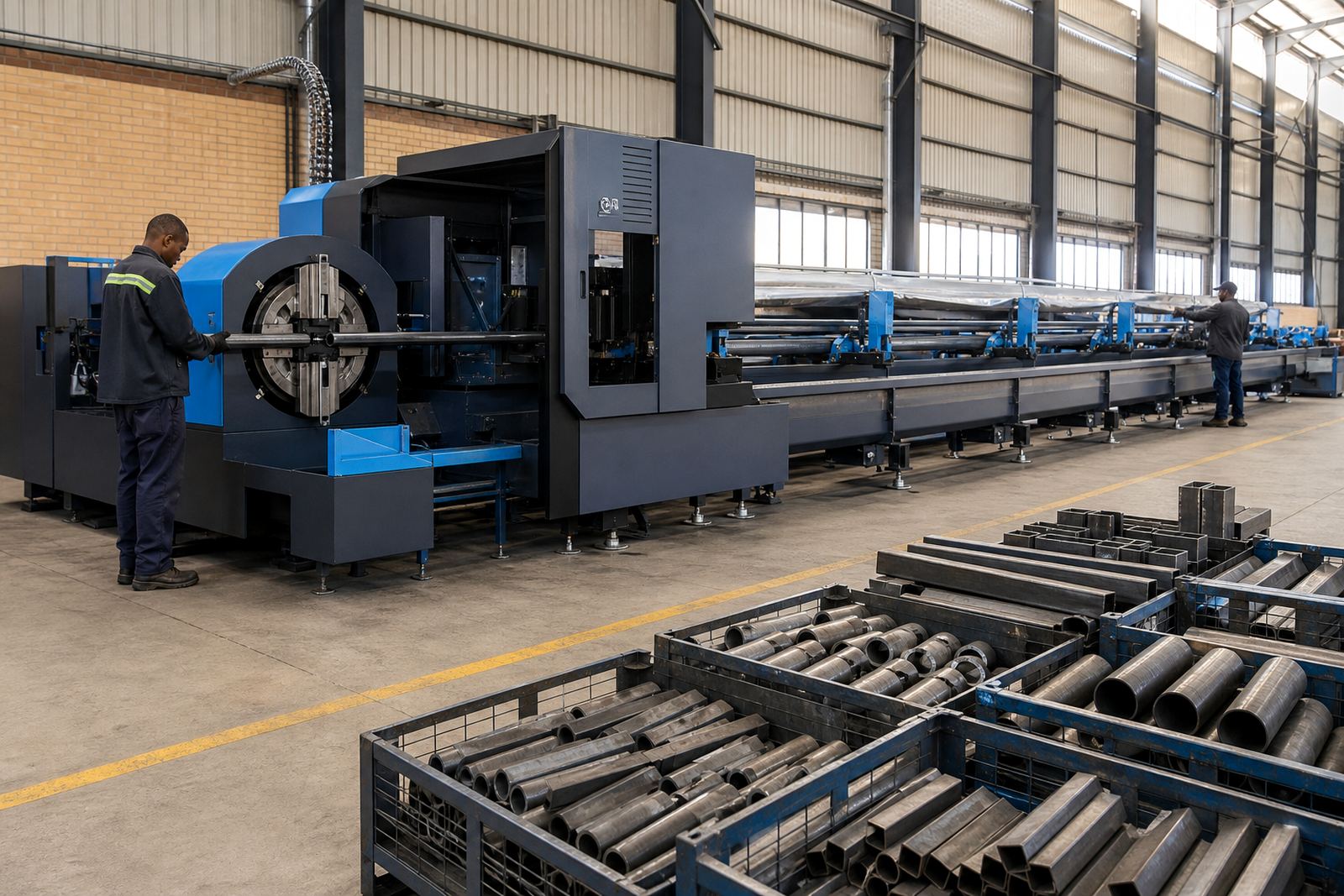
- Bed lengths commonly set for short, medium and long tube work
For lighter aluminium tube, the clamping pressure and support rollers must stay even. If the profile sits poorly in the chuck, the cut can wander or the end can arrive out of square, which is a problem on welded assemblies and jigs.
Where this machine fits on the shop floor
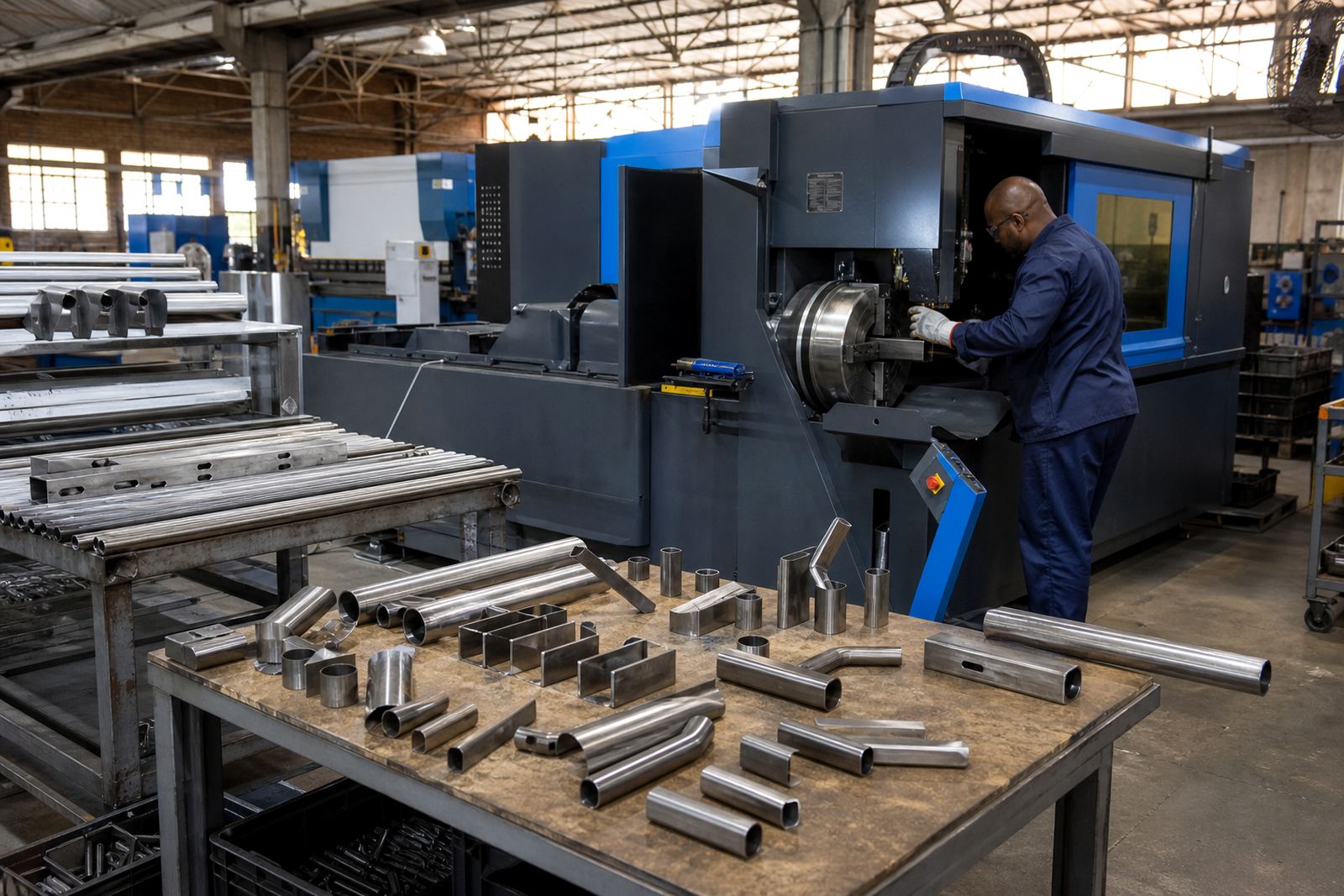
This equipment suits fabrication shops turning out aluminium frames, handrails, architectural trims, light support structures and equipment guards. It also fits production plants that need steady batches of cut tube parts for assembly lines, transport bodies, shopfitting or plant enclosures. In Pretoria or Bloemfontein, where repeated orders are common, nesting and offcut control can make a noticeable difference to material use.
It works well where the job list changes often and operators need to move from one tube size to another with clear setup notes. Aluminium parts are often visible in the finished product, so cut quality, hole position and edge finish carry more weight than on hidden components. This is where stable feed, correct gas and proper alignment keep the parts usable without extra rework.
- Job shops with mixed aluminium tube orders
- Production sites cutting repeated kits for assembly
- Fabricators making visible parts with a neat finish
- Shops that need accurate slotting and mitre cuts
Installation, alignment and commissioning work
Installation starts with a site assessment so the machine layout, access route, gas position and handling space can be planned properly. Delivery rigging matters because tube systems are long, and the bed, chucks and auxiliary units must land square to the floor and service clearances. Our team handles machine installation, commissioning and operator training from Wadeville, Germiston, with work carried out across South Africa.
During commissioning, the chuck alignment, bed levelling, gas setup and head calibration are checked before production parts are cut. A bevel head needs careful calibration so the angle matches the drawing and the cut face stays consistent from part to part. For sites in Durban or Gqeberha, the local air quality and coastal humidity also mean care around storage, seals and machine housekeeping is worth keeping on the daily checklist.
Specs that matter on aluminium tube work
Aluminium needs a cleaner cutting window than many mild steel jobs, so the useful specs are the ones that affect accuracy and finish. Nesting software should support tube layouts, parts rotation, common cut handling and offcut management. The assist gas must suit the aluminium thickness and finish target, while the machine frame, drive system and head motion need enough control for small features and narrow bridge sections.
- Supported materials: aluminium tube and aluminium profile sections
- Tube shapes: round, square, rectangular, angle and channel where configured
- Cutting system: fibre laser with CNC motion control
- Assist gas: suitable inert gas setup for aluminium cutting
- Software: tube nesting, part rotation and collision control
- Options: bevel cutting, chuck extension, support rollers and part collection
For thicker wall sections, the machine configuration must match the wall size and the required edge quality. If the part has tight slot tolerances or folded tabs, the programmer should leave enough compensation for kerf and heat effect, otherwise parts may fight each other at assembly.
Care, setup checks and ordering details
Care on an aluminium tube laser is mostly about alignment, cleanliness and repeat settings. Keep the chuck faces clean, check rollers for wear, watch the lens and protective glass, and clear swarf before it moves into guides or sensors. On plants that run a steady cutting schedule, preventive maintenance, chuck alignment and bevel calibration help keep the machine in shape and the cuts consistent.
When ordering, confirm the tube shapes you cut most often, the smallest and largest section sizes, the wall thickness range, the typical cut lengths and whether bevel work is part of the brief. It also helps to confirm if the work includes long tubes, short offcuts, bundle loading, or repeated part families that need nesting support. If the parts are for welding, mention the joint style and the edge condition needed after cutting.
- Tube size range and wall thickness
- Round, square, rectangular, angle or channel sections
- Need for bevel cutting or straight cuts only
- Required bed length and loading style
- Gas choice, finish target and production volume
- Any special hole patterns, slots or mitres
Key facts
| Material type | Aluminium tube and aluminium profile sections |
|---|---|
| Supported shapes | Round, square, rectangular, angle and channel where configured |
| Cutting method | Fibre laser tube cutting with CNC control |
| Clamping system | Precision chuck handling with alignment control |
| Options | Bevel head, nesting software, support rollers and bundle loading |
| Services | Site assessment, installation, commissioning, training and maintenance |