Tube work that suits furniture frames
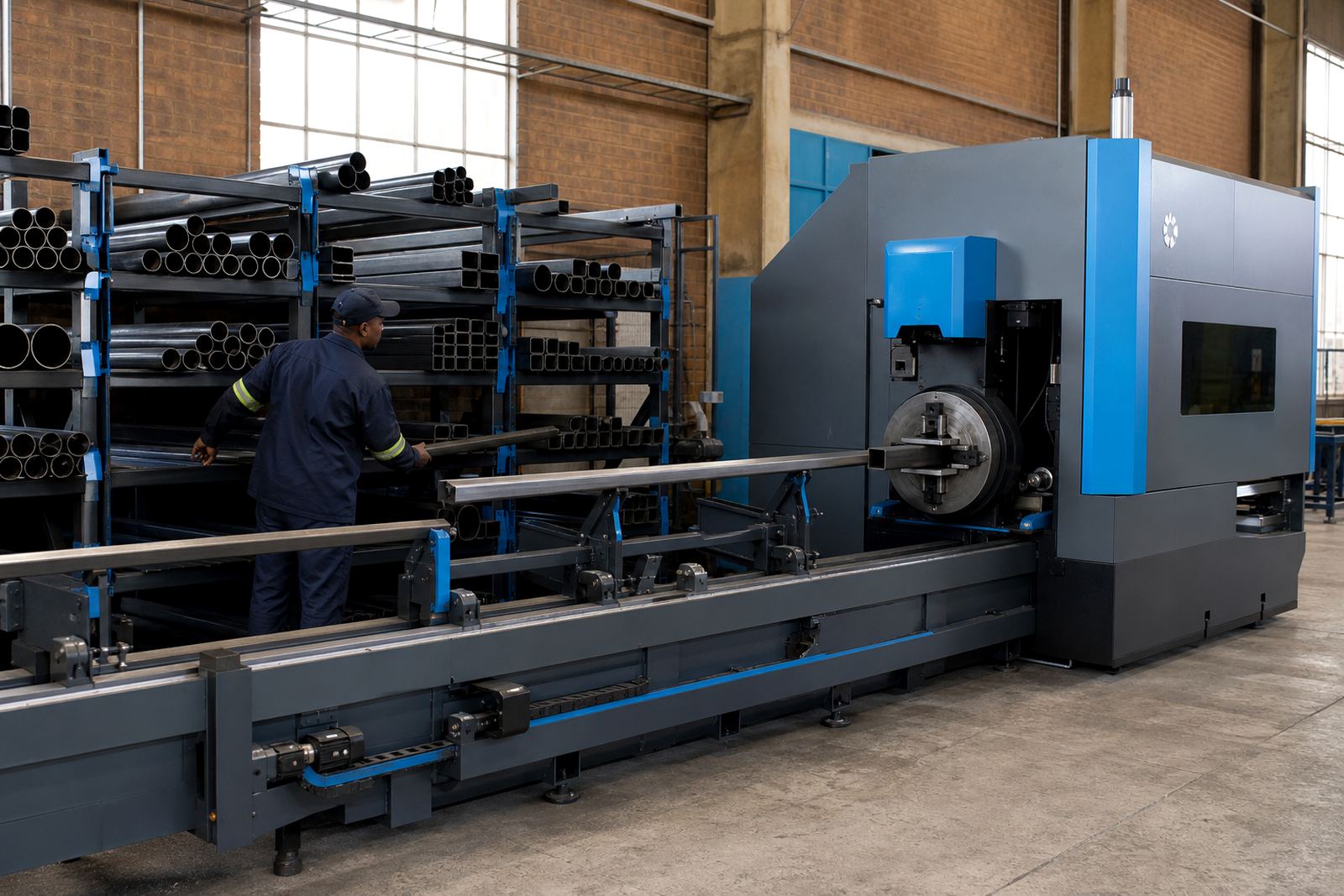
Furniture tube laser cutting is built for repetitive joins, mitres, slots, tabs and cut-outs on light to medium tubular assemblies. In chair and table work, the machine trims tube cleanly enough for jigs, seat frames, bases and support rails, with fewer cut marks than manual methods and better consistency across a batch.
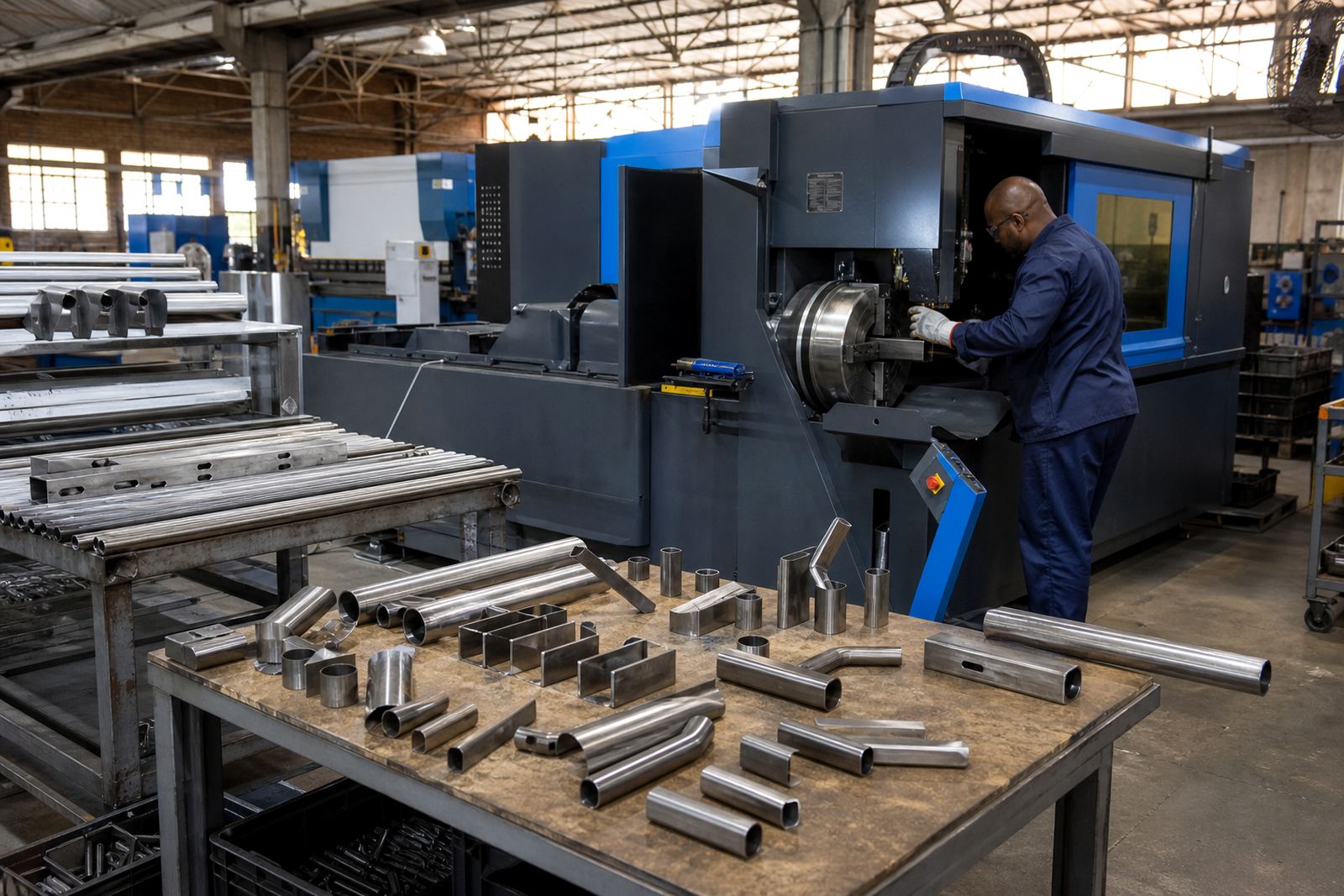
It also handles angle and channel where the job calls for matching brackets, supports or assembly pieces. For fabricators in Johannesburg, Pretoria, Durban, Cape Town and Gqeberha, that means one machine can cover a broad range of workshop work without shifting between separate cutting methods.
- Round tube for chairs, stools and table legs
- Square tube for frames, rails and cross members
- Rectangular tube for base structures and supports
- Angle and channel for braces, mounts and fixings
Cutting format, chucking and edge control
The machine uses rotating chucks to grip and index tube accurately while the cutting head follows the programmed path. For furniture jobs, that grip matters when parts are long, thin or have a mix of round and square stock in the same order. A well set chuck system helps keep the cut line where it should be, especially on repeat runs.
Bevel heads are useful where welded furniture assemblies need angled ends or a better fit into formed joints. In the right setup, the head can cut mitres and shaped ends that save hand finishing later. Tube length capacity, chuck size and the supported profile range should match the workshop's parts list, not just the largest item in the yard.
- Supported tube size range depends on the machine frame and chuck set
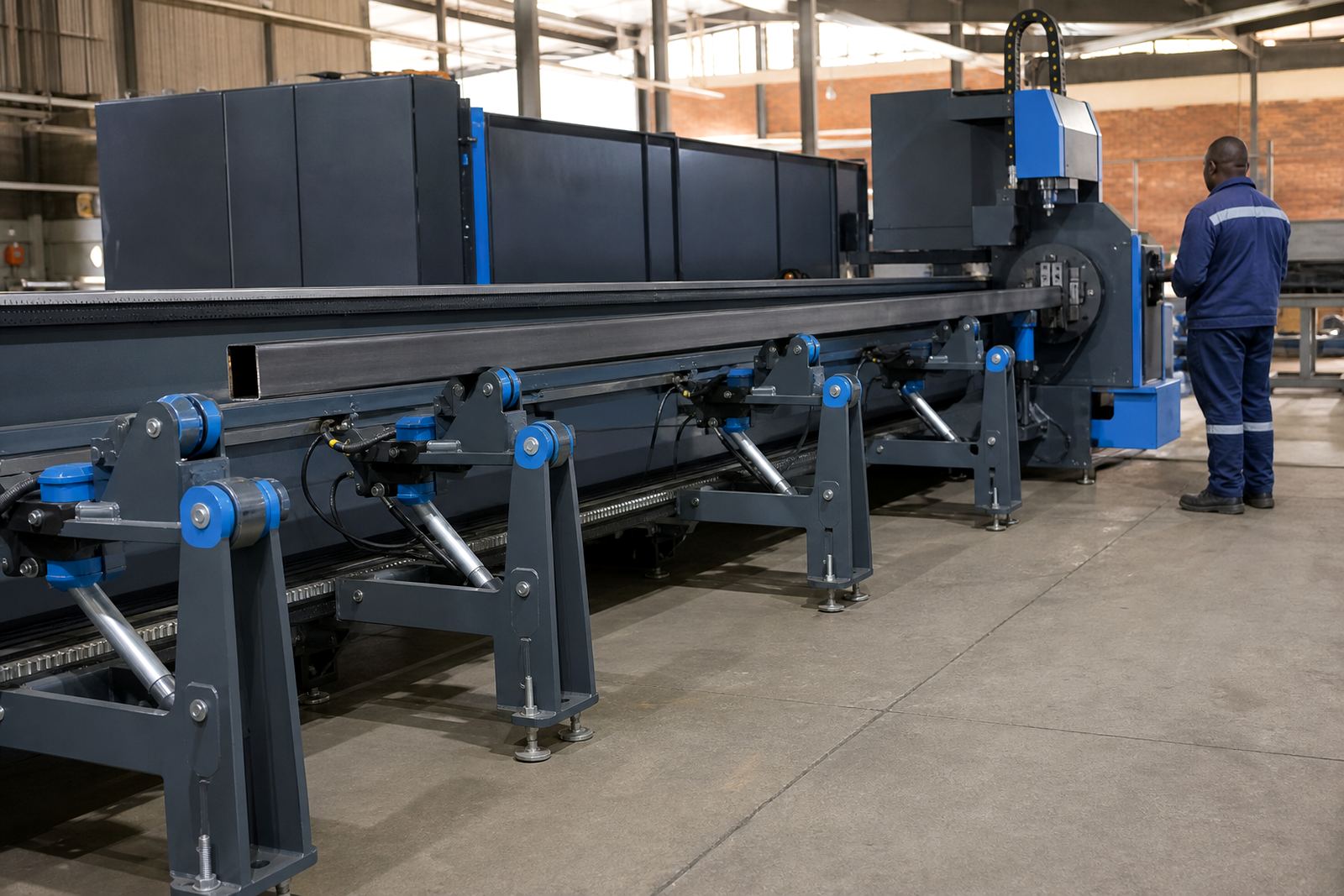
- Longer bed options suit chair rails and extended table members
- Bevel cutting supports angled joins and fitted weld prep
- Laser cutting gives cleaner edges than abrasive cutting on thin wall tube
Where furniture tube lasers earn their place
This type of machine suits metal fabricators making school chairs, office seating, café furniture, display stands, security fixtures and welded tubular products for local projects. It is also practical for contract work where the same frame shape must be repeated with tight part consistency. In a busy plant, the nesting software helps place parts across the tube length so offcuts are used better and scrap is reduced.
For shops in coastal areas like Durban and Gqeberha, a laser line can keep production tidier than open grinding and repeated manual trimming, though the machine area still needs good housekeeping and dust control. If the workshop works with painted, galvanised or mild steel tube, the cutting plan should reflect the coating, wall thickness and the finish expected after welding.
- Chair and stool frames
- Table bases and support legs
- Retail fixtures and display structures
- Welded tubular assemblies for contract fabrication
Installation fit-out and workshop requirements
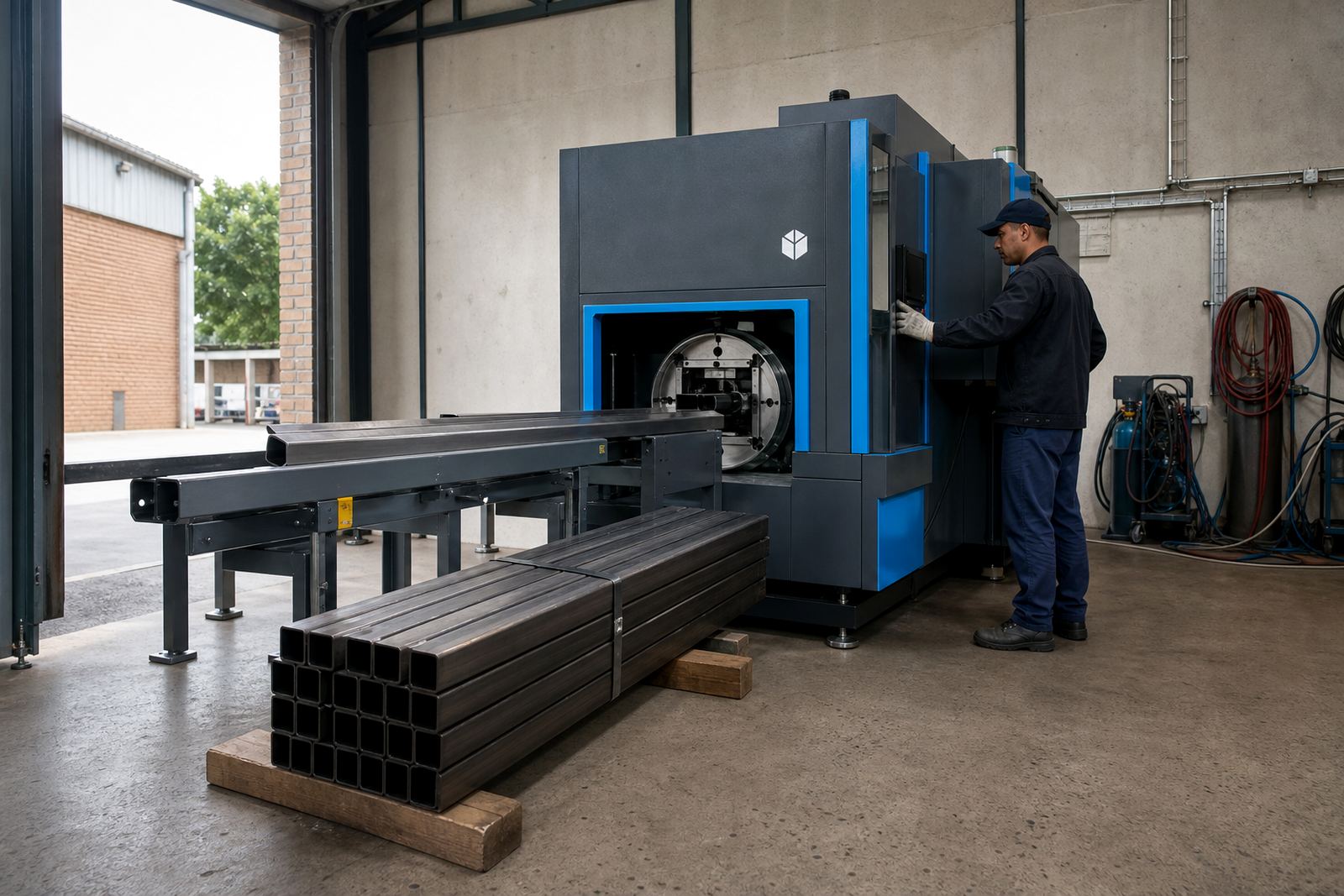
A furniture tube laser needs proper site preparation before delivery rigging and installation. The floor area must allow for loading, unloading, operator movement and safe maintenance access around the machine. Utility planning matters too, especially the electrical supply, compressed air and assist gas arrangement needed for stable cutting on production tube work.
The required finish and the material being cut determine which assist gas to use. Oxygen, nitrogen or air may be used depending on the cut quality, edge condition and the steel specification in use. Our installation team handles machine setting, chuck alignment, beam and motion checks, plus assist gas setup so the line is ready for practical production use.
- Level floor space with room for tube loading and offload
- Electrical supply matched to the machine specification
- Compressed air and line work planned for the shop layout
- Safe access for maintenance, cleaning and daily checks
Training, nesting and day to day care
Operator training covers the loading sequence, clamp handling, program loading, cut checks and basic fault finding. Nesting training helps staff place parts across each tube length with less waste and better yield from standard stock lengths. For furniture work, that is useful when the same part appears in different frame sizes or when left and right hand parts are cut from the same tube.
Care is practical and routine. Keep the chucks clean, inspect nozzle condition, check lens and cutting head condition, monitor gas quality and look out for burrs or heat marks that point to a setup issue. A regular maintenance plan helps protect cut quality and keeps the machine ready for the next production run.
- Daily chuck cleaning and visual inspection
- Routine lens, nozzle and head checks
- Software and program review for repeat jobs
- Preventive maintenance for motion, clamps and alignment
Order details worth confirming first
When ordering a furniture tube laser, the key details are the tube profile range, wall thickness range, maximum stock length, bevel requirements and the material mix you plan to cut. Tell us if the work is mainly mild steel, galvanised stock, or mixed furniture components with different wall gauges. Those details shape the machine configuration more than the price of the cutting head alone.
Confirm the chuck arrangement, loading method, nesting workflow, gas setup and the standard part sizes you expect to run. If the shop plans to move from small batches into longer production runs, include that in the specification from the start so the machine supports the work as volumes increase.
- Round, square and rectangular tube sizes
- Angle and channel profiles to be cut
- Stock length and finished part length
- Wall thickness range and material types
- Bevel cutting needs and weld preparation
- Site conditions for installation and gas supply
Key facts
| Machine type | Fibre laser tube and profile cutting machine |
|---|---|
| Typical profiles | Round tube, square tube, rectangular tube, angle and channel |
| Cutting features | Rotating chucks, nesting software, bevel head option |
| Material use | Furniture frames, tables, chairs and welded tubular assemblies |
| Support services | Site Assessment, Installation, Training and Preventive Maintenance |
| Where we install | Wadeville, Johannesburg, Pretoria, Durban, Cape Town, Gqeberha, Bloemfontein, Nelspruit |