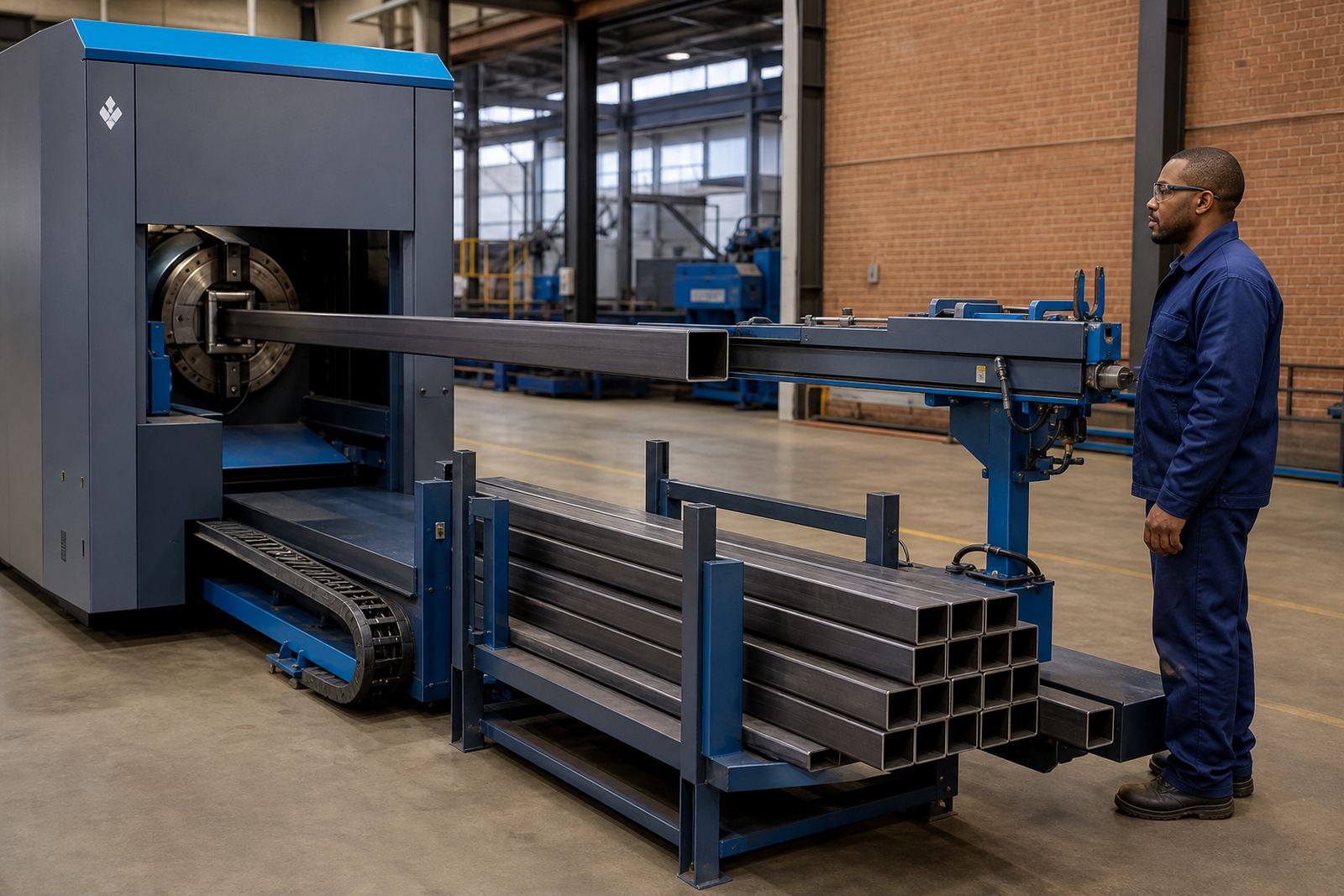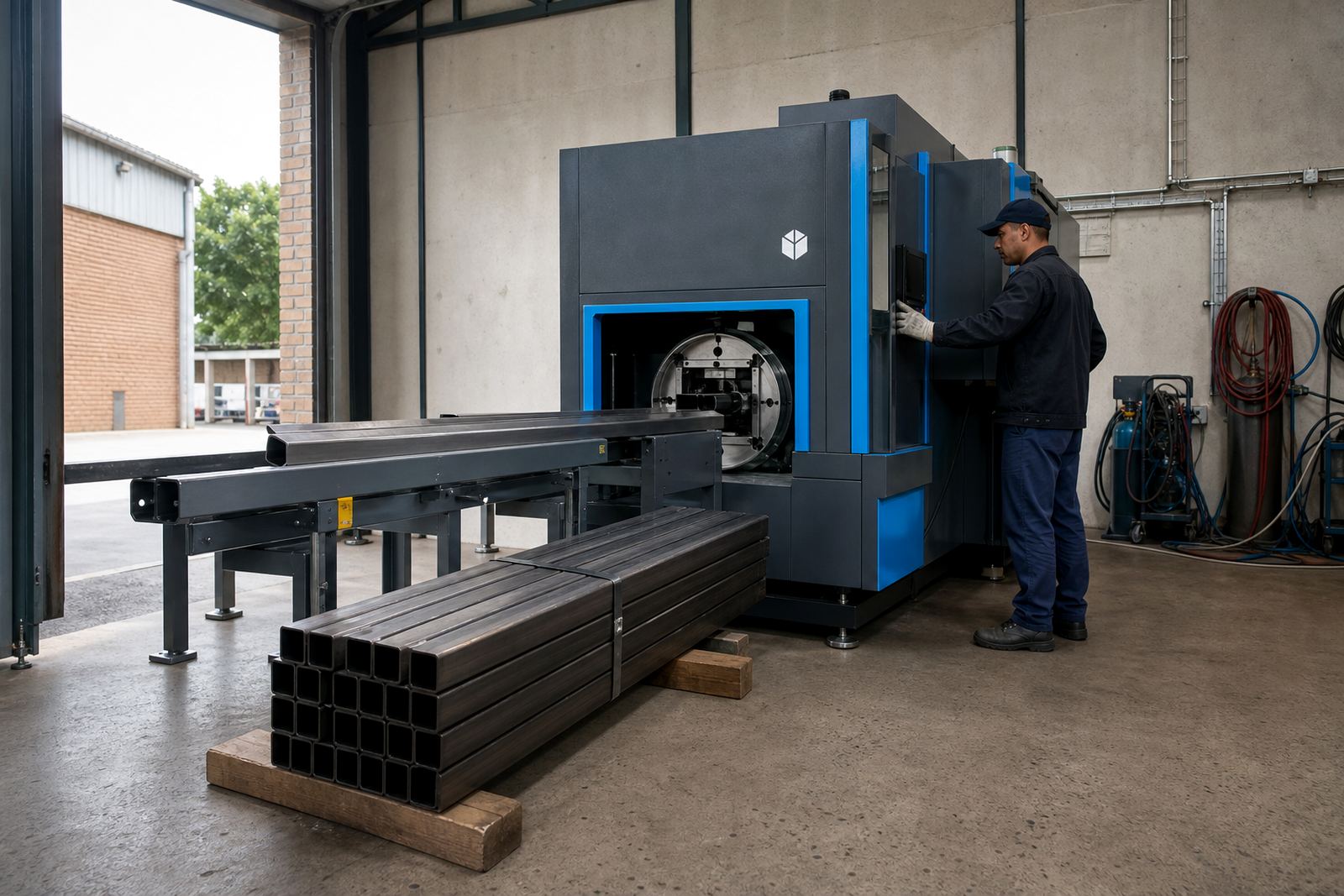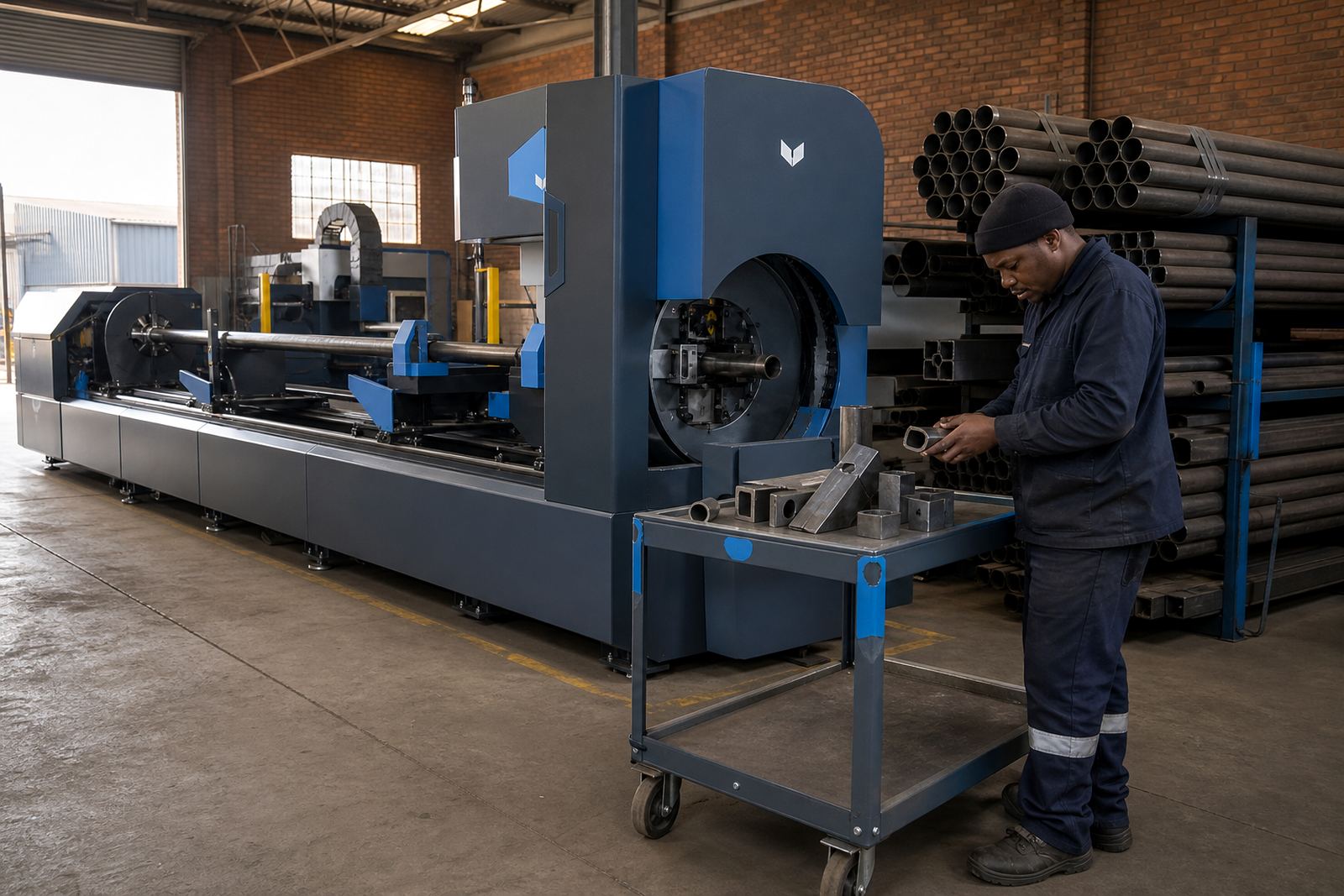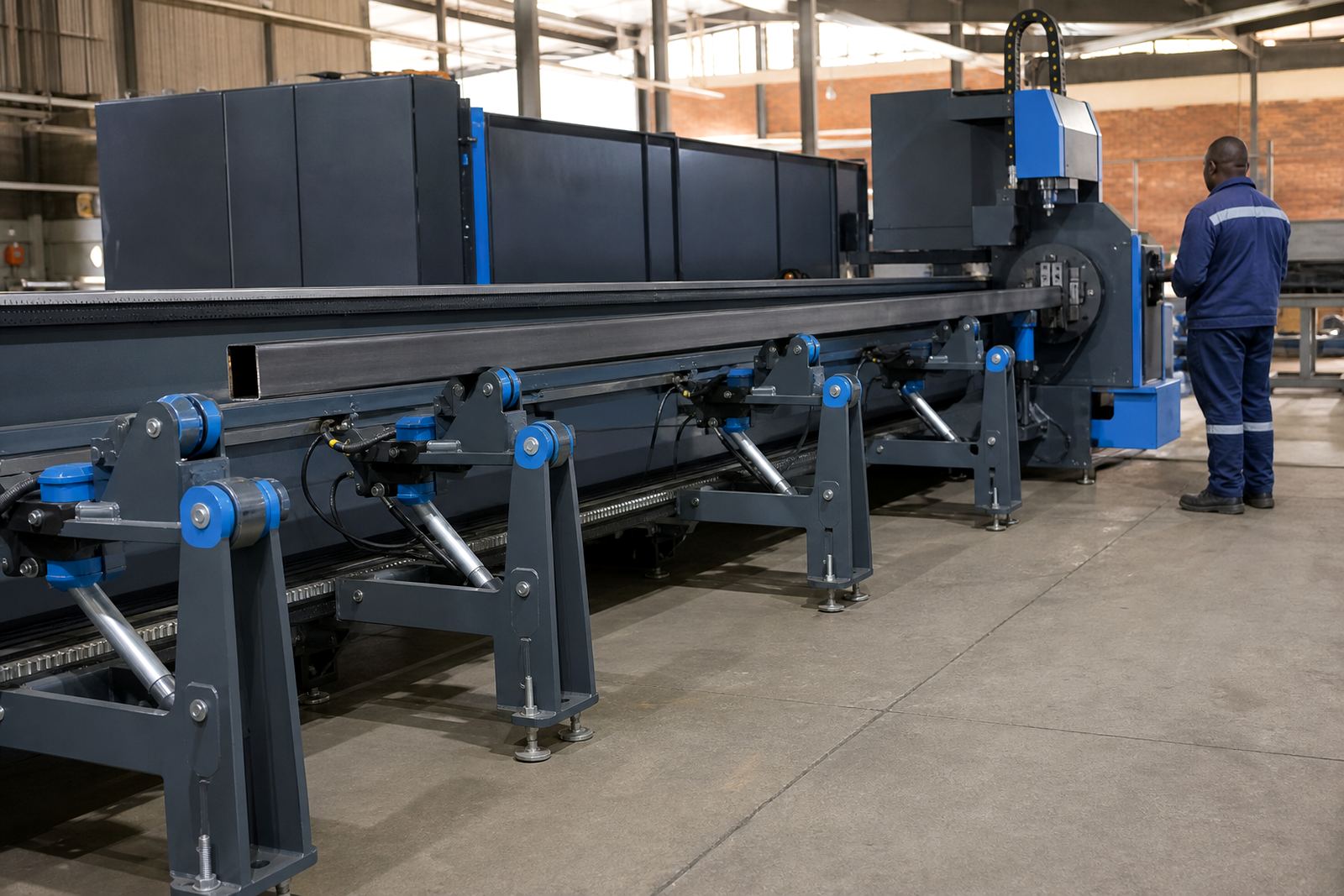
What the stand does on a live cutting line
A servo support stand sits beside or ahead of the cutting zone and lifts the stock to the right height as the machine feeds. On longer lengths, especially lighter wall tube, that support helps the chuck hold true and keeps the part running level through the cut path.
On a tube line, this matters when the job needs repeated holes, end prep, mitres or profile features that must stay consistent across the full batch. The stand follows the motion of the material, which cuts down on sag at the free end and gives the operator a steadier feed.
Tube sizes and support options that matter
Support stands are selected around the stock size, machine bed height and the way material is loaded. A compact stand suits smaller job shop machines, while heavier-duty models are used where longer lengths and larger sections move through production shifts. Height travel, roller type and drive style all affect how the stand behaves with different section shapes.
- Round tube from light wall through heavier sections
- Square and rectangular tube with edge support and centring rollers
- Angle and channel that need steadier carry through entry and exit
- Manual height setting or servo-driven height follow options
- Single-roller or multi-roller top frames for different section loads
Some installations use one support stand near the infeed, while longer lines use more than one position to carry the section cleanly from loading through the cut zone.
Shops that get the most from servo support stands
These stands suit fabricators in Johannesburg, Wadeville, Pretoria, Durban, Cape Town, Gqeberha, Bloemfontein and Nelspruit where the work ranges from short batch runs to longer production work. They are useful in gate fabrication, structural components, trailer parts, racking, handrail work and general steel processing where tube and profile lengths vary through the week.
Coastal workshops often look closely at corrosion protection and roller wear, while inland plants may focus more on high repeat use and consistent alignment under dust and heavier handling. The stand should match the space around the machine, the loading method and the available floor area beside the cutter.
Fitting, power and control in the workshop
A servo support stand forms part of the machine layout and is normally fitted during installation or a line upgrade. It uses electrical power for the drive and control system, and it has to be positioned so the roller top sits at the correct relationship to the chuck, bed and infeed path.
- Correct floor position and level set to match the cutter line
- Power connection for the servo drive and control box
- Integration with the tube feed sequence and machine height settings
- Clear travel space for loading, rotation and part discharge
- Safety guarding or marked exclusion zones where needed
During commissioning, the support is checked against the machine motion so the section does not ride too high or dip too low as the cut starts and finishes. That alignment makes a difference on light sections where vibration shows up quickly.
Care that keeps the rollers honest
Servicing a support stand is straightforward, but it needs to be done on a schedule. Dust, scale and cutting residue can collect on the rollers and guides, especially where tube is handled without clean staging. The drive system should be inspected for bearing wear, loose fixings and any uneven lift movement.
A sensible maintenance routine includes cleaning the roller surface, checking the lift travel, verifying the stand remains square to the cutter, and inspecting cables or sensors if fitted. If the rollers wear unevenly, the section can drift off line and place extra strain on the chuck and nesting path.
Details to confirm before ordering
Support stands are built around the machine and the stock, so the job details need to be clear before sizing is fixed. The support height, lift range and roller layout should be matched to the tube family and the planned cut lengths. If bevel cutting is part of the process, the stand also has to leave enough clearance for the head motion and the material swing.
- Tube and profile range, including round, square, rectangular, angle and channel
- Maximum length, wall thickness and approximate section weight
- Required height range from floor to centre line
- Single support or multi-stand line layout
- Need for servo follow, manual lift or fixed support
- Space available around the infeed and outfeed side
Also note if the stand will work beside a new machine or join an existing line, because the connection points and floor layout can differ quite a lot.
Support on the machine floor after installation
Once the stand is in service, it should be watched during the first production runs and checked again after any change in tube size or cutting programme. A light section and a heavy section do not behave the same, and the operator usually picks up the difference in feed and support feel very quickly.
LaserTube supplies support stands as part of a wider fibre laser tube cutting setup, with site assessment, delivery rigging, installation, commissioning, operator training, nesting training, preventive maintenance, chuck alignment, bevel calibration, assist gas setup, remote diagnostics and breakdown response available across South Africa. Michael Dlamini leads the team at Wadeville, Germiston, with Anika Kajee, Sibusiso Bhengu, Leanne Mabuza, Pieter Visser and Ayanda Mashaba handling the work around the machine line.
When a support stand is matched properly, the tube runs steadier, the cut zone stays calmer, and the machine can keep its line without extra fighting from the material.
Key facts
| Type | Motorised servo support stand for fibre laser tube and profile cutting |
|---|---|
| Supported sections | Round tube, square tube, rectangular tube, angle and channel |
| Control | Servo-driven height follow with adjustable lift settings |
| Typical use | Longer or lighter sections that need steadier feed and less vibration |
| Integration | Fits as part of a tube cutting line with chuck and bed alignment |
| Installation needs | Floor position, power connection, alignment and operator familiarisation |