A landing point that matches the cut flow
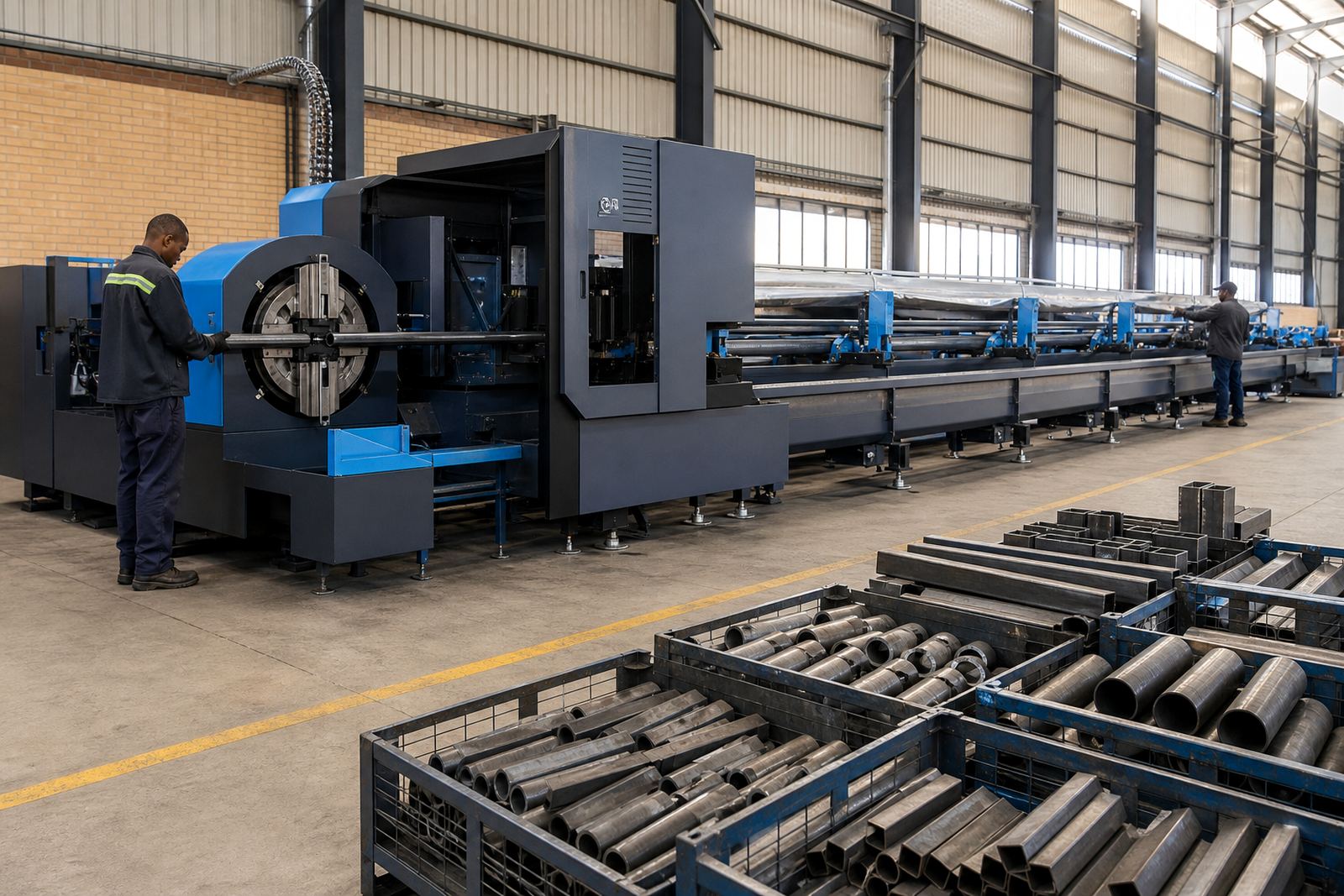
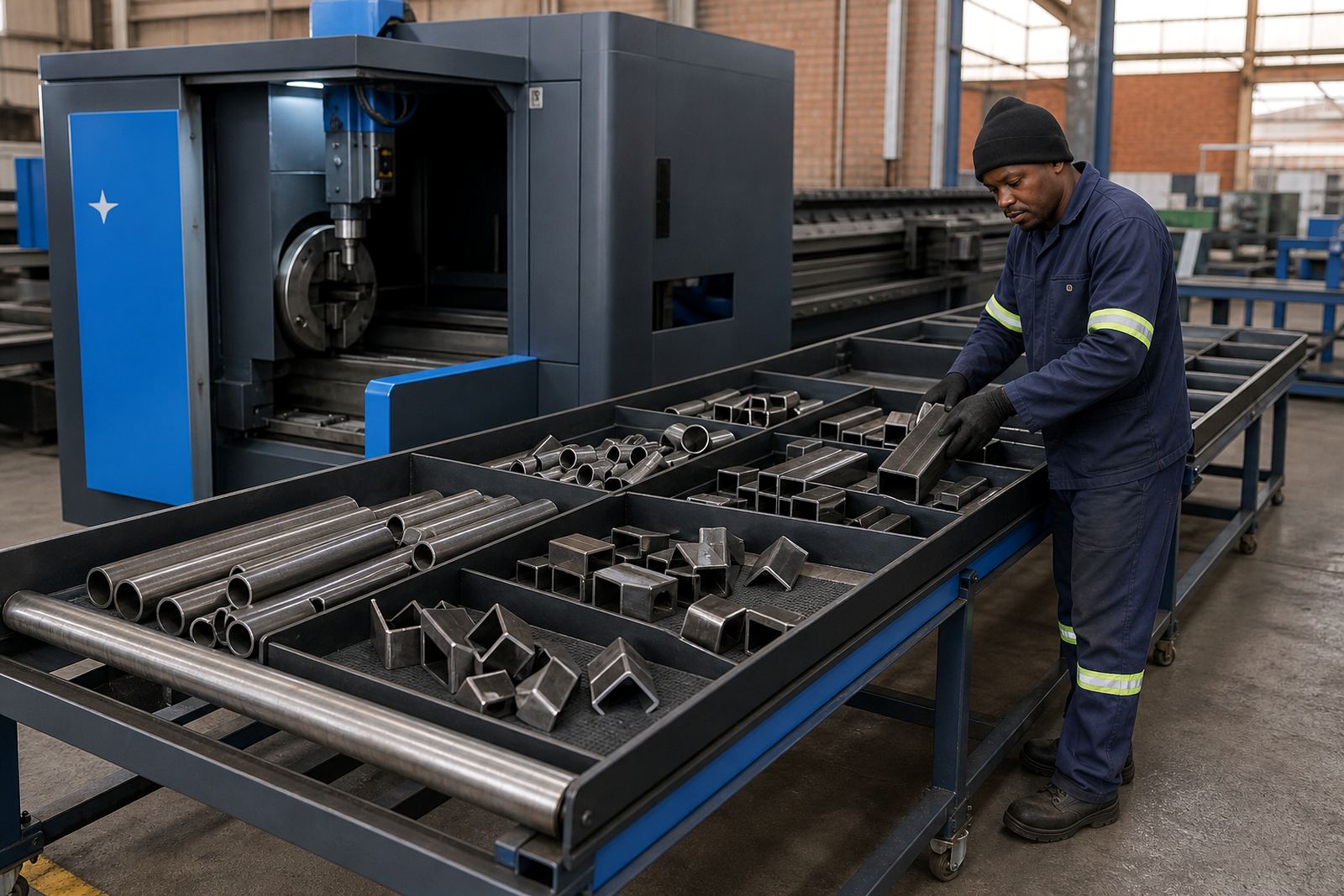
An unloading table sits beside the cutting bed or forms part of the outfeed side, giving operators a controlled area for collecting finished parts. On tube and profile work, that matters when pieces are long, hot, or have sharp cut edges that can snag on each other during removal. A good table keeps the line moving and reduces the carrying distance between cut, inspection and bundling.
For fabricators in Wadeville, Johannesburg and Pretoria, the table is often paired to the tube laser layout so the part path stays practical in a busy bay. In coastal plants around Durban, Cape Town and Gqeberha, the frame and rollers should be selected for corrosion resistance and easy cleaning because cutting fines and humidity work together on exposed steel.
- Supports sorted collection after round tube, square tube and rectangular tube cutting
- Can be set up for angle, channel and mixed profile offload
- Helps separate good parts, scrap and short offcuts before packing
- Reduces manual lifting over the machine side rails and bed area
Sizes and build choices for real workshop layouts
Unloading tables are usually matched to machine length, material flow and the type of parts being made. Short-bed systems suit job shops that cut smaller batches, while longer outfeed sections suit production plants handling repeated tube lengths or nested profile sets. The frame can be supplied as a straight table, roller support section or divided collection zone, depending on how the shop moves parts after cutting.
For most metal fabricators, the important part is not only the overall length but the useful working width and the height relation to the cutting bed. If the table sits too low, parts drop awkwardly. If it sits too high, the operator spends time lifting instead of sorting. That is why the table should be specified around the machine line, the longest workpiece and the way cut parts are packed for dispatch.
- Length matched to the tube laser or profile laser bed
- Working width set for the longest expected part span
- Height aligned to the machine discharge side
- Heavy duty frame options for repeated daily handling
- Roller or flat support surfaces available for different part shapes
Where it fits in tube and profile production
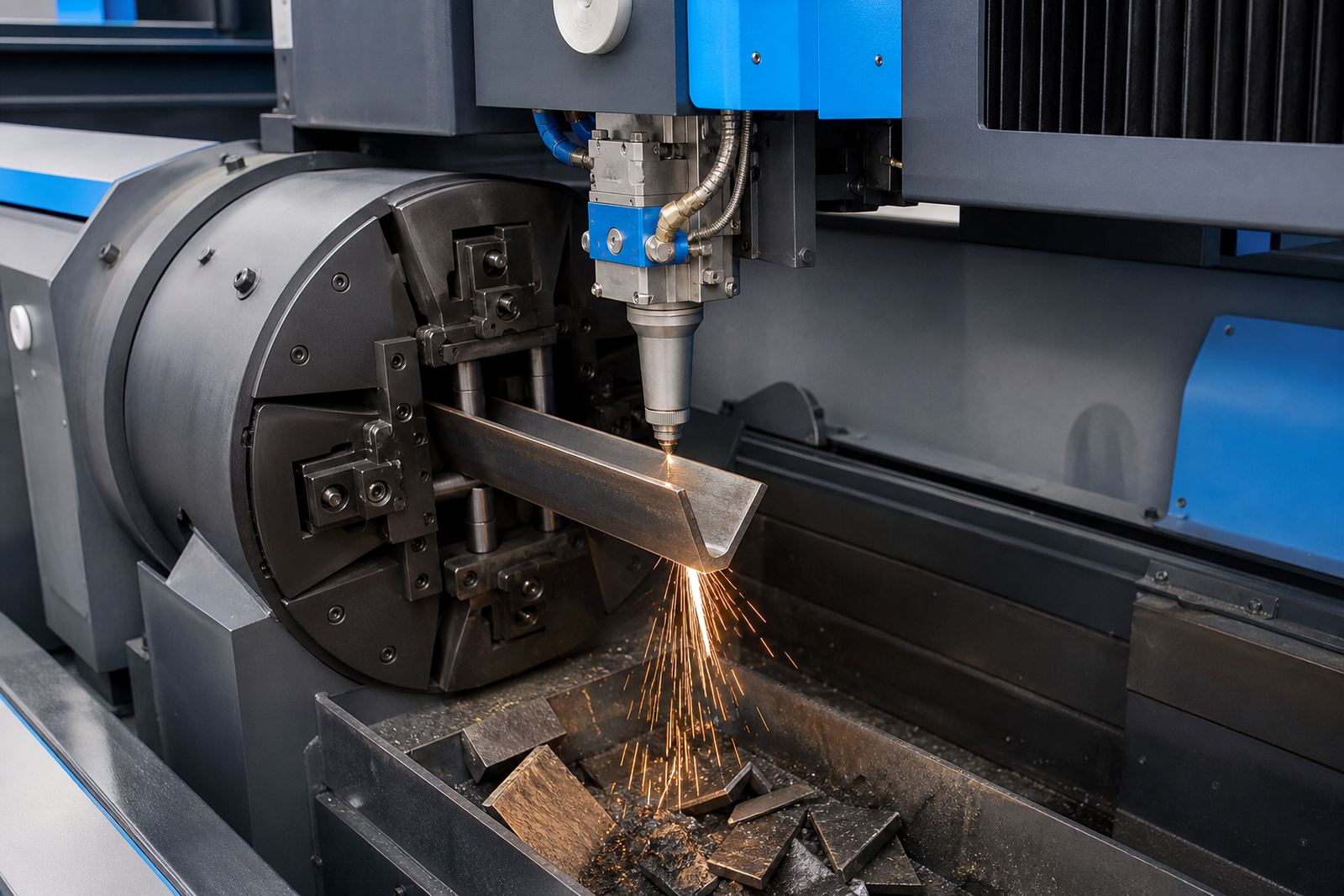
This table suits shops cutting structural tube, handrail components, vehicle brackets, frame sections and general fabricated profiles. It is also useful where nested parts need to be removed in sequence and stacked according to job number, material grade or downstream process. On bevel work, the unloading point needs enough space for parts with angled ends so they do not bind against each other when lifted clear.
Plants using fibre laser tube cutting machines with chucks and bevel heads benefit from a sensible outfeed arrangement because finished pieces are often more varied than plain straight cuts. The same is true where nesting software packs parts tightly across mixed lengths, because the unloading side then has to handle a steady stream of small and large parts without clutter building up around the bed.
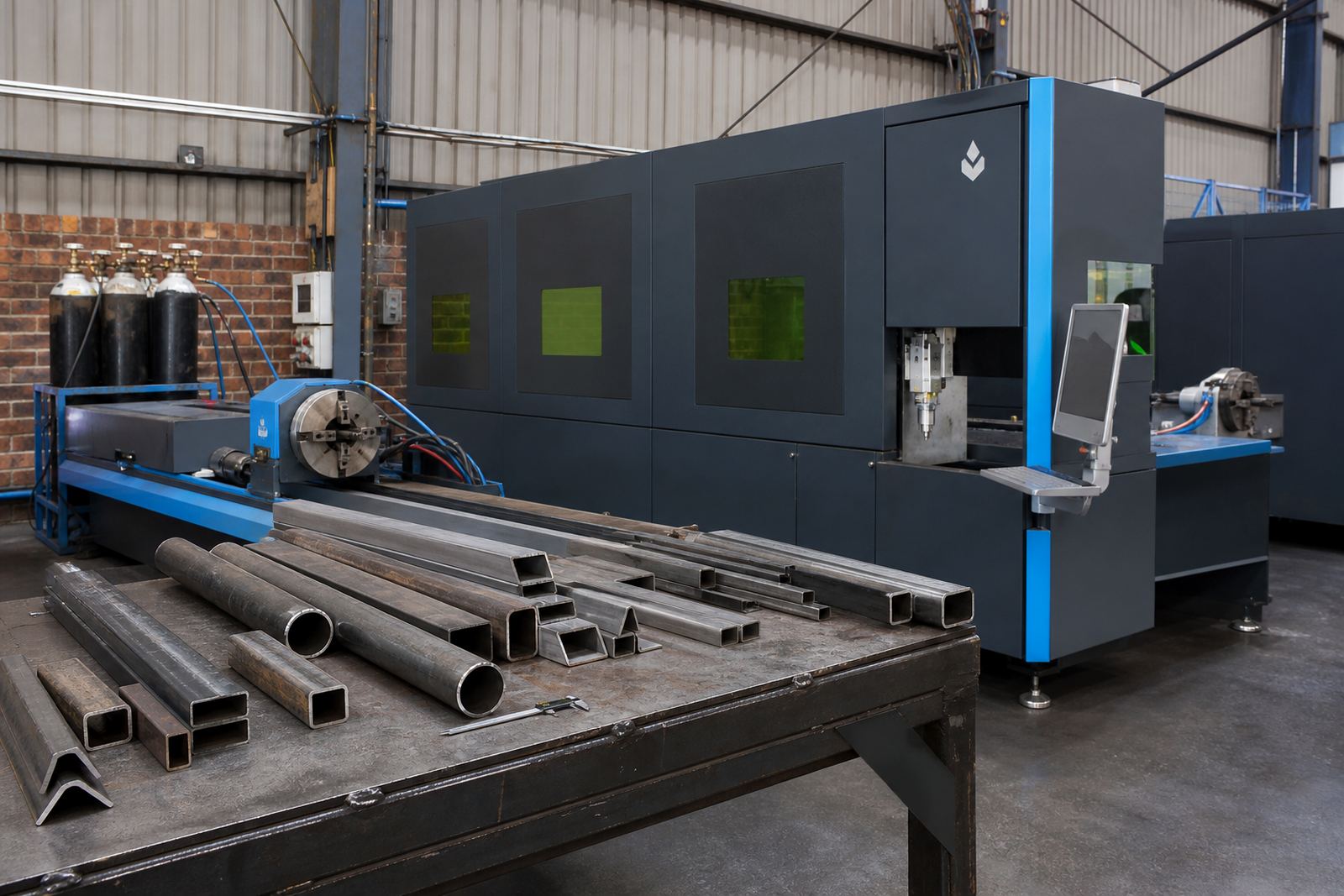
- Suitable for round, square and rectangular tube production
- Works well with angle and channel cutting jobs
- Useful for mixed batch runs and nested part sets
- Fits production lines that need orderly part sorting before welding or drilling
Installation, fitting and floor planning
Installation normally starts with floor position, level, access and the path between the machine and the sorting area. The table must sit square to the cut bed so parts do not twist during transfer, and it should leave enough room for trolleys, bins or pallet movement. In larger Gauteng workshops, a clear route matters because the unloading side often shares space with grinding, marking or kitting.
Where the table is attached to a machine line, the installer checks alignment to the discharge edge and confirms that the operator can reach the full length without stretching across moving sections. If the setup includes sensors, powered conveyors or related handling equipment, those connections are handled as part of the machine installation and commissioning work. On some floors, a fixed anchoring plan is needed so the table stays steady during repeated loading and clearing.
- Level and alignment checks before handover
- Space allowance for part carts and collection bins
- Anchoring or fixing options where floor movement is a risk
- Integration with delivery rigging and machine installation packages
Care that keeps the outfeed area usable
Most unloading tables need basic but regular attention. Cut scale, dust and small offcuts should be removed before they build up under rollers or support bars. If the frame is mild steel, exposed areas should be watched for corrosion, especially near Durban, Cape Town and Gqeberha where air moisture can leave marks quickly. On plants that use oils or marking compounds, the surface should be wiped so parts do not slide unpredictably.
Preventive maintenance usually includes checking fasteners, roller wear, guide condition and any adjustable stops. If the table has moving sections, those points need cleaning and inspection so the outfeed side does not become stiff or noisy. A tidy unloading area also makes operator training easier because the sorting pattern stays consistent from shift to shift.
- Clear swarf and fine dust from support points
- Inspect rollers, stops and frame joints for wear
- Check alignment after any machine relocation
- Keep the part collection zone free of stray offcuts
Details to confirm before ordering
The right unloading table depends on the machine model, the parts being cut and the way the workshop handles finished work. The key is to match the table to the actual output mix, not only to the machine size on paper. That avoids a setup that looks neat but slows down collection or leaves no room for sorting.
Useful details include the longest tube length, the heaviest part weight, the expected mix of round and profile cuts, and whether the table will sit beside a single machine or form part of a larger line. It also helps to note floor slope, turning space and whether the team wants simple hand sorting or a more organised transfer into bins and racks.
- Machine bed length and discharge side layout
- Largest part length and typical wall thickness range
- Expected material mix, including tube and open profile sections
- Preferred support style, roller or flat surface
- Space available for carts, bins and packing tables
- Need for anchoring, corrosion protection or shared line integration
Key facts
| Product type | Matched unloading table for laser cut part collection |
|---|---|
| Compatible work | Round tube, square tube, rectangular tube, angle and channel |
| Typical build | Straight outfeed table, roller support or divided collection zones |
| Common fitment | Beside fibre laser tube and profile cutting machines |
| Floor planning | Level placement, discharge alignment and sorting space |
| Service options | Delivery rigging, installation, commissioning and maintenance support |