Built for bigger tube, not light framing work
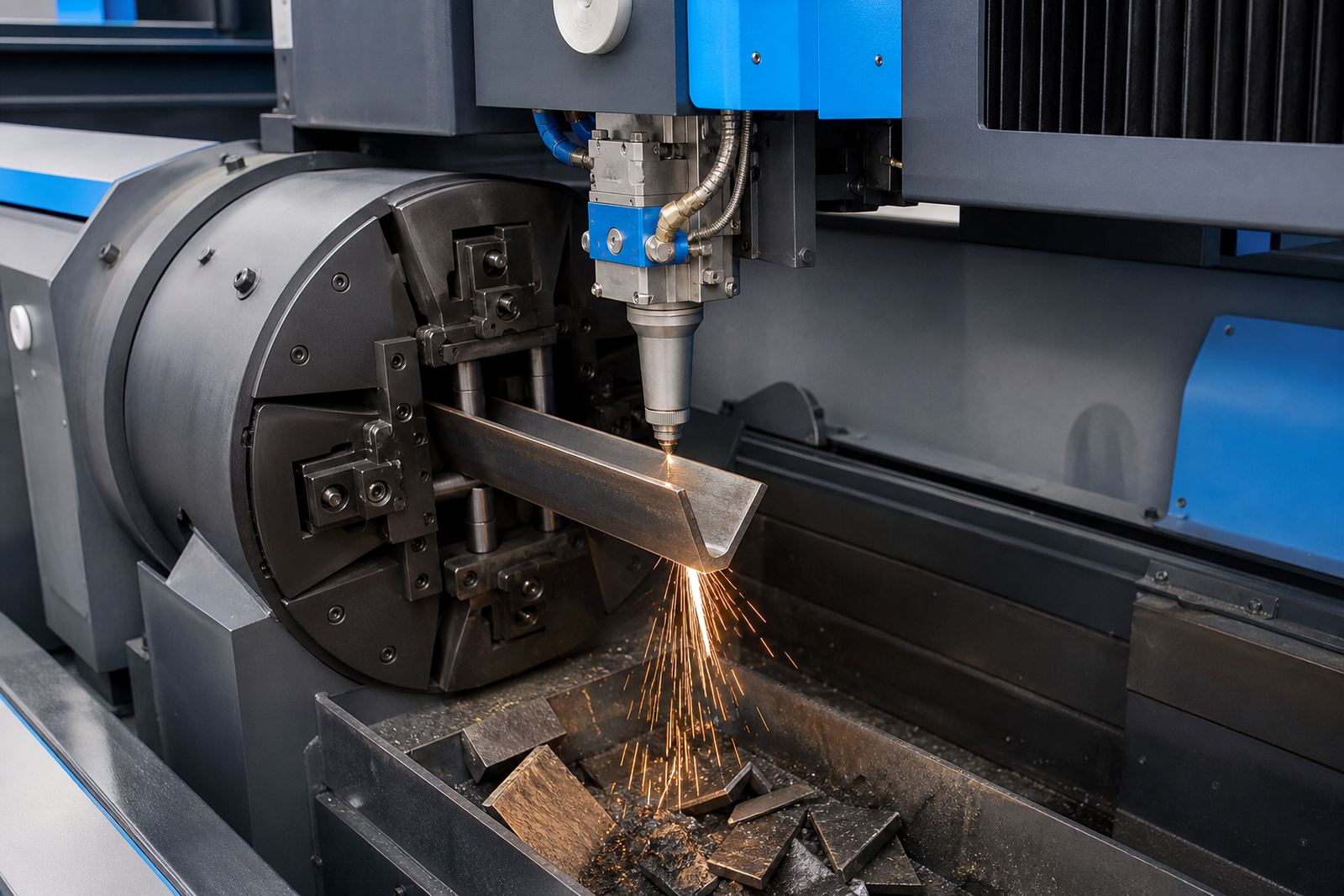
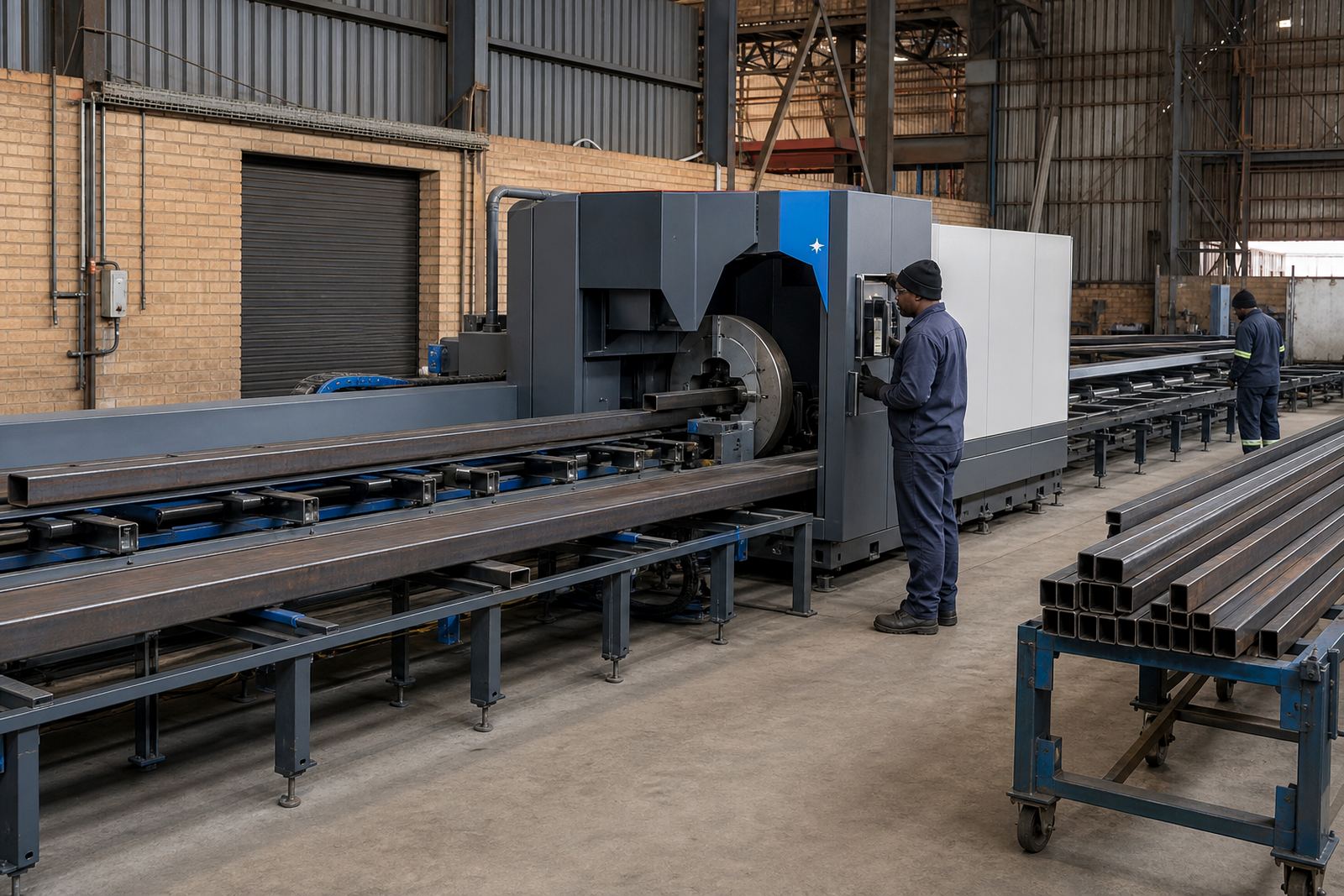
This machine class is set up for large diameter round, square and rectangular tube, plus angle and channel where the job calls for proper tube handling and accurate cut control. The cutting bed, chuck system and support layout are arranged to keep long sections stable while the head moves through the program.
For South African metal fabricators, the real value is in reducing manual marking and hand cutting on oversized material. You get cleaner repeatability on batch work, less rework at fit-up, and better control where holes, cope cuts, slots or mitres must line up across multiple pieces.
- Large tube and profile cutting for heavy section work
- Round, square and rectangular tube handling
- Angle and channel cutting where the program allows
- Consistent support for long lengths and awkward pieces
Sizes, clamping and head options that matter
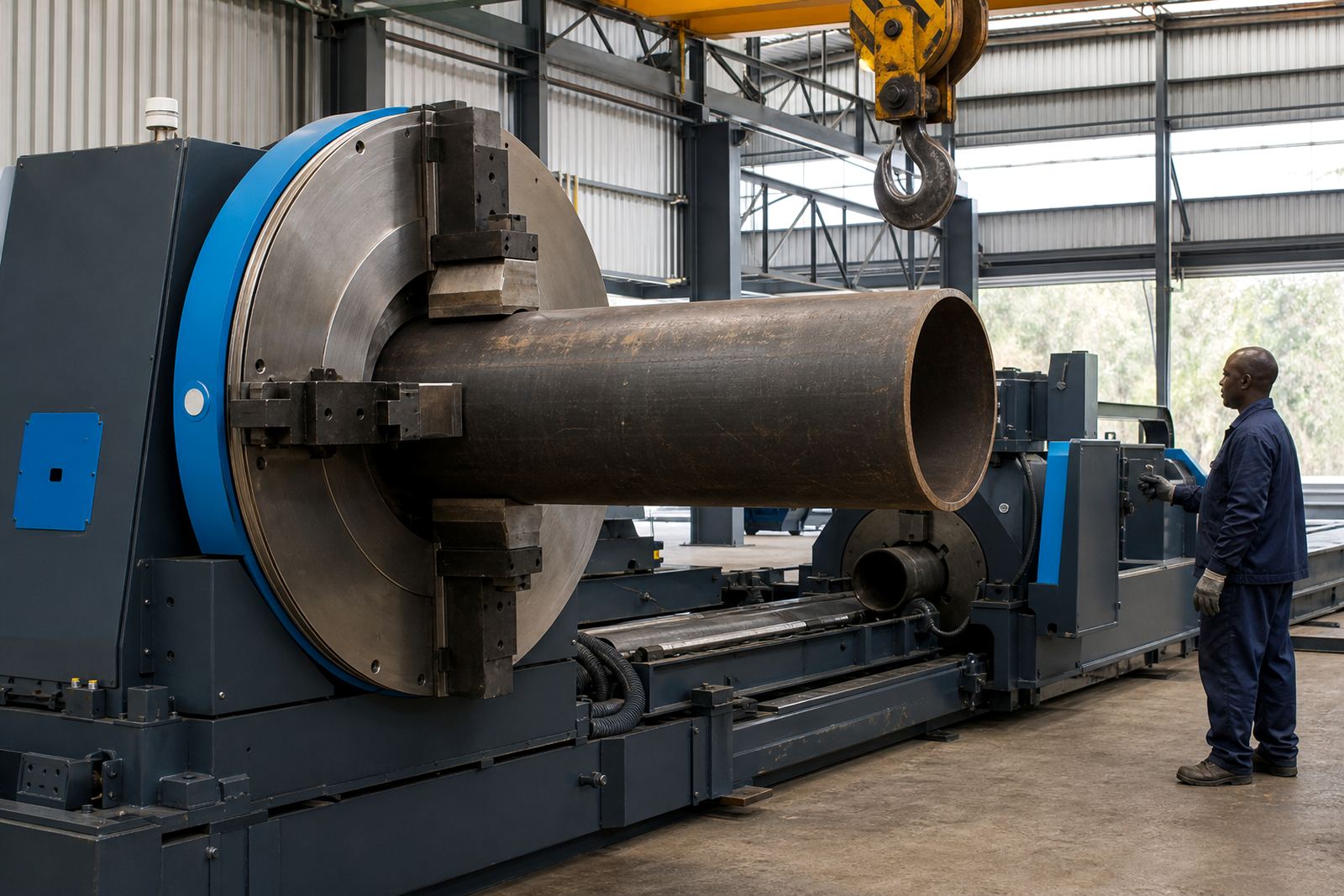
Large Diameter Laser systems are typically selected by the outside diameter or section size range they must carry, together with wall thickness, tube length and bundle loading needs. The chuck arrangement is a major part of the spec, because a larger tube needs stronger grip and controlled rotation without marking the material.
Depending on the machine build, you may look at single, dual or triple chuck layouts, longer infeed and outfeed supports, and a bevel head where angled prep is part of the work. Some jobs need fully straight cuts only, while others call for a controlled bevel to aid weld preparation on thicker tube and pipe.
- Tube capacity by diameter and wall thickness
- Length handling for standard and extended stock sizes
- Chuck type and grip range for the material mix
- Optional bevel cutting for weld prep and joint prep
Where this machine suits the workshop floor
This product suits steel fabricators, truck and trailer builders, structural steel yards, agricultural equipment makers, gate and balustrade shops, and any plant that cuts larger tube in repeat batches. It also fits contractors working on frames, support structures, railings and purpose-built assemblies where profile accuracy saves time at assembly.
In heavier fabrication, tube parts often need to be cut with consistent angles and clean edge quality so the welders can work without forcing parts into place. That matters on long runs, on wide sections and on jobs where a small error grows into a bigger fit-up problem later in the line.
- Production shops with recurring tube part lists
- Custom fabricators handling mixed section sizes
- Yards cutting stock for downstream welding and assembly
- Operations needing better consistency than manual cutting
Installation, floor checks and support gear
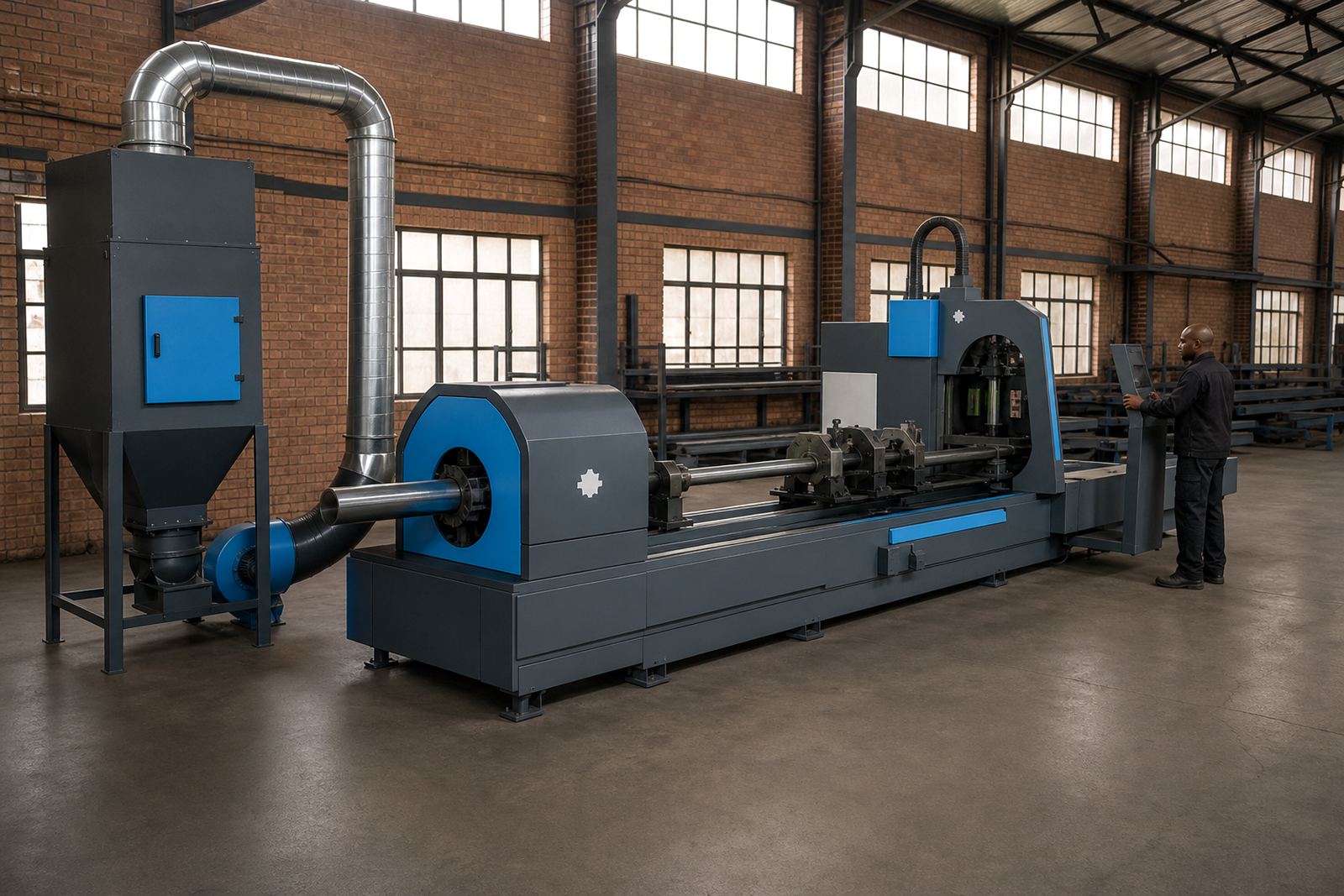
A machine of this size needs proper site assessment before delivery rigging and installation. Floor loading, access paths, clear working space, material storage, exhaust routing and service clearances all need to be checked, especially where the machine sits in a busy fabrication bay.
Power and assist gas setup are part of the installation scope for a fibre laser tube machine. Assist gases may be used for different cutting results depending on the material and thickness, while the gas train, regulators and pipework need to be set out correctly and tested before production starts.
- Site Assessment for layout and access planning
- Delivery Rigging for large and heavy equipment
- Machine Installation and Commissioning
- Assist Gas Setup for the cutting process
Operator habits that protect cut quality
Large tube cutting performs best when operators keep the chucks clean, the supports aligned and the clamp faces free from swarf. Tube surfaces with scale, oil or heavy rust can affect gripping and edge quality, so incoming material checks form part of daily handling.
Training should cover loading sequence, program checks, nesting choices, gas selection and the safe handling of long sections around the machine. On thicker tube or on bevel work, a poor setup can show up fast in the cut face, so a careful start-up routine helps protect both output and tooling life.
- Chuck Alignment for grip consistency
- Bevel Calibration where angled cuts are specified
- Preventive Maintenance on drives, clamps and supports
- Operator Training and Nesting Training for shop staff
What to confirm before ordering
Before a quote or order is finalised, the key details are the tube sizes, material grades, wall thickness range, cut length, bevel requirement and whether the work is mostly round, square, rectangular or mixed profile. It also helps to confirm how material arrives, because bundle loading, single lengths and staged feeding each point to a different machine layout.
You should also note your preferred cut format, the number of chucking points needed, and whether the job calls for manual loading or more automated handling. If your production includes frequent changeovers, the nesting workflow and support arrangement need to match that pace so the machine does not sit idle between batches.
- Largest and smallest section sizes
- Wall thickness range and material types
- Required cut length and bevel angle needs
- Loading method, floor space and handling flow
Keeping large tube cutting steady over time
Care on this machine is practical rather than complicated. Chuck surfaces need regular cleaning, guide components must stay lubricated where specified, and support rollers or beds should be checked for wear so the tube tracks properly through the cutting cycle.
Preventive maintenance helps limit stoppages caused by misalignment, dirty sensors or loose fittings. If a clamp face picks up damage or a support is out of line, the problem usually shows in the cut before it shows anywhere else, so routine checks are worth the time.
LaserTube supports fibre laser tube and profile cutting machines from Wadeville, Germiston, with installation and operator training across Johannesburg, Pretoria, Durban, Cape Town and Gqeberha, plus service support into Bloemfontein and Nelspruit.
Key facts
| Tube types | Round, square and rectangular tube; angle and channel where specified |
|---|---|
| Capacity focus | Large diameter and heavy section tube work |
| Chucking | Single, dual or triple chuck layouts depending on build |
| Cut options | Straight cuts, mitres and optional bevel cutting |
| Process support | Nesting software, assist gas setup and operator training |
| Installation | Site assessment, rigging, commissioning and alignment checks |