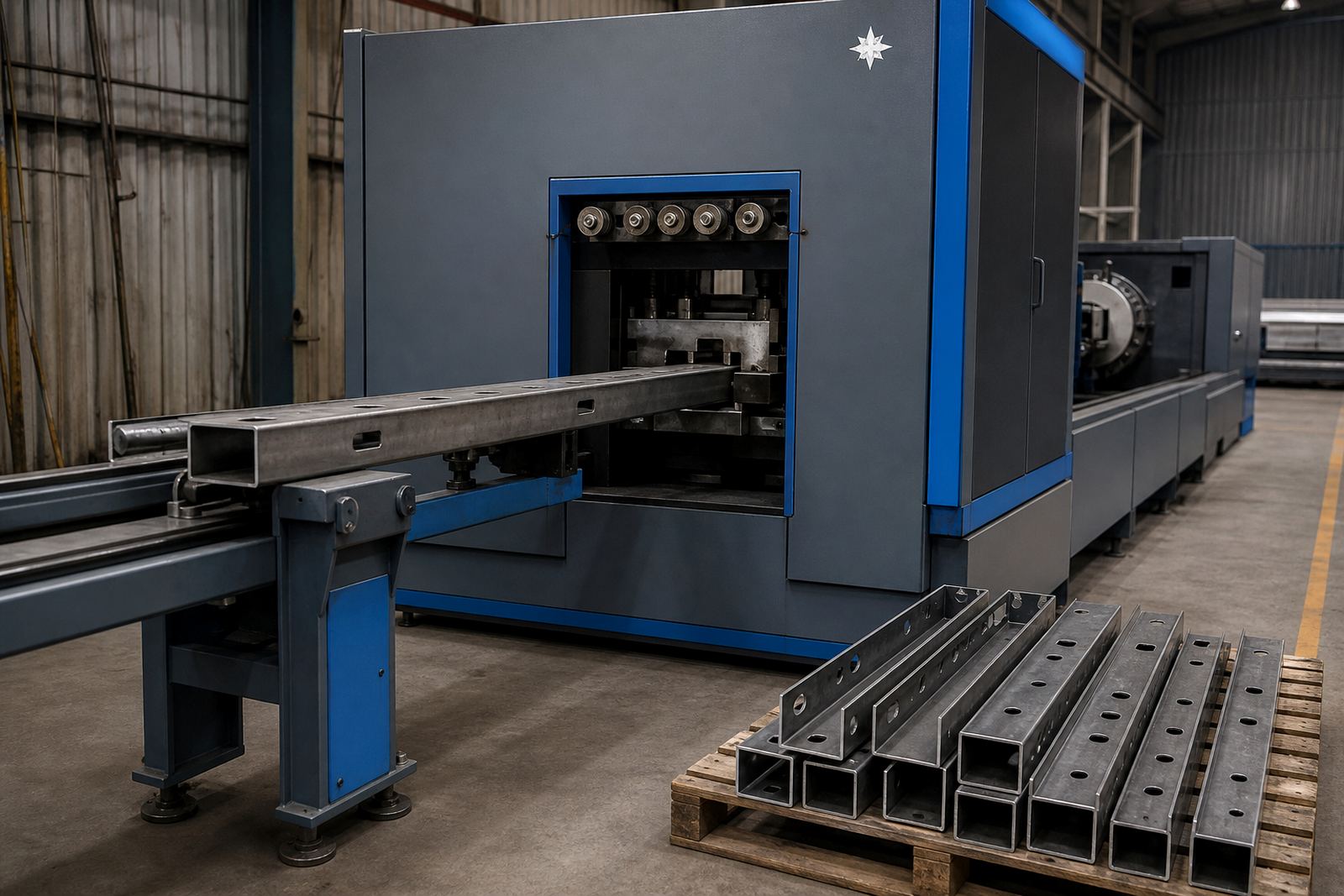
Built for channel profiles and structural fit-up
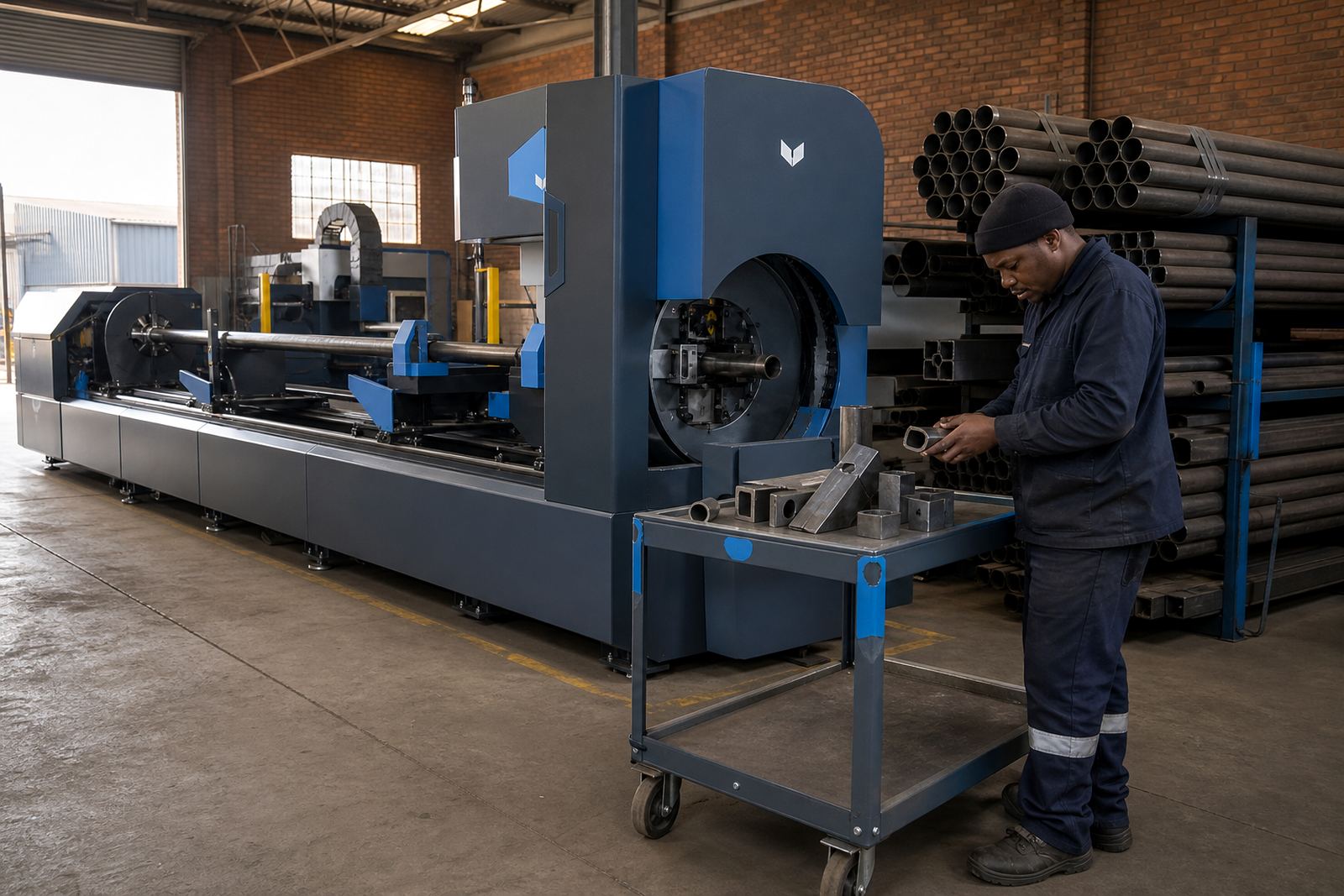
This machine is set up for channel sections used in brackets, supports, rack frames, access structures and fabricated assemblies. It cuts the profile with fibre laser accuracy, so the part comes off the machine ready for welding, drilling or final assembly with less hand dressing at the bench.
Channel work often needs more than a straight cut. Many jobs call for coping, end prep, slotting and marked cut lines that line up with the next operation. With the right chucking and clamping setup, the machine keeps the profile stable through the cut and helps hold consistent length on repeated parts.
- Handles channel sections in mild steel, stainless steel and aluminium
- Handles single parts, short runs and production batches
- Useful where repeat fit-up is important across many identical frames
Tube and profile range options
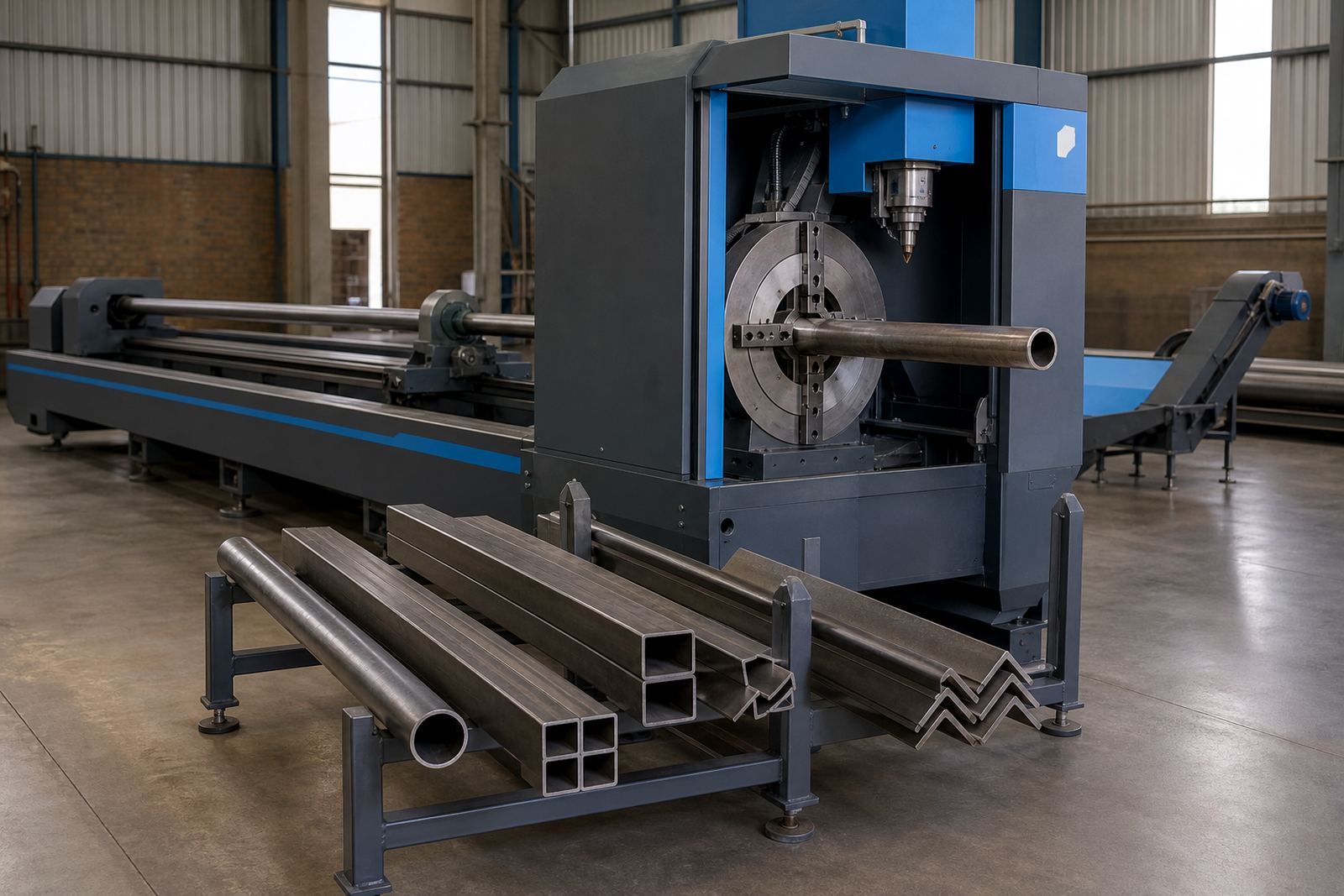
Channel cutting systems are usually supplied in different bed lengths and load ratings to suit the stock sizes you run most often. A smaller machine may suit jobbing work with lighter sections, while a longer bed and heavier chucking system helps on larger profiles and longer production pieces. Round, square and rectangular tube can be loaded on the same platform where the machine is configured for mixed profile work.
Options can include rotary support, automatic loading and unloading, bevel cutting heads, and software tools for nesting and cut-path planning. A bevel head is useful where a welded joint needs a prepared edge instead of a square end. Good nesting software reduces offcuts and helps arrange batches so the machine spends more time cutting and less time waiting on manual layout.
- Typical tube and profile lengths: 6 metres, 9 metres or 12 metres
- Common clamping ranges: light, medium and heavy wall sections
- Optional bevel head for angled prep on selected channel and tube work
Where the machine earns its keep
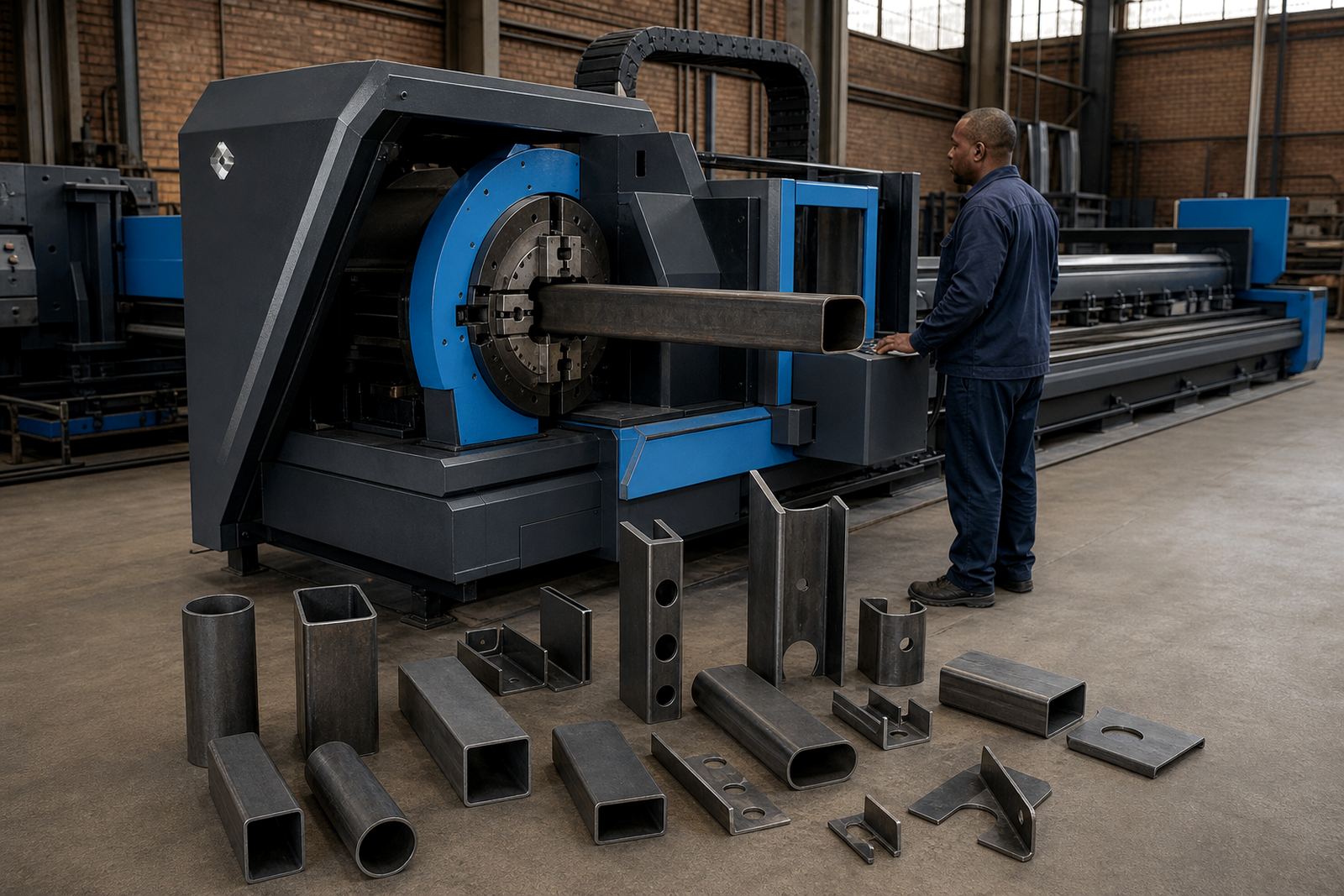
Channel cutting suits fabricators making frames, conveyor supports, handrail assemblies, steel furniture components, trailer parts and plant skids. It is also useful where channel joins tube, plate and angle in the same build, because the laser can place slots, mitres, fishmouths and reference holes in one setup. That helps reduce manual marking and limits the drift that can creep into a long assembly.
In Gauteng, KZN, the Western Cape and the Eastern Cape, many workshops use channel work for repairs as well as repeat production. The machine suits both. It can handle the one-off maintenance bracket that needs a clean repair cut, then move straight on to a batch of matching parts for the next job.
- Frames and skid structures
- Supports, racks and brackets
- Truck body, trailer and maintenance work
- Production parts with repeat hole positions and cut angles
Installation, assist gases and workshop set-up
A channel cutting machine needs the right floor space, clear infeed and outfeed, and a stable layout for loading long sections safely. During site assessment, the installation team checks access for delivery rigging, floor loading, machine orientation and the route for stock arriving and parts leaving. Once installed, the system is commissioned with the cutting head, chucks, gas lines and safety functions set up for daily use.
Assist gases depend on material and cut quality requirements. Oxygen is often used on mild steel for faster cutting through heavier sections, while nitrogen supports cleaner edges on stainless steel and aluminium work. The machine also needs proper extraction, guarding and interlocked safety systems so the cutting area stays controlled while the beam is running.
- Site assessment for space, access and machine placement
- Assist gas setup for the materials you run
- Commissioning of chucks, head alignment and safety checks
Care that keeps cuts consistent
Good care starts with the basics: clean lens protection, aligned chucks, sound gas supply, and a tidy cutting bed. Channel sections carry scale, burrs and mill oil, so the machine needs regular attention to keep cut edges consistent and prevent contamination from building up around the head. Operators should check clamps, rollers and support points before loading a new batch.
Scheduled preventive maintenance makes more sense than waiting for the machine to fail. That includes checking alignment, inspecting wear parts, testing the bevel head where fitted, and keeping software profiles organised so operators do not waste time re-entering cut data. On heavier sections, a small alignment shift can show up as a poor fit at assembly, so routine checks save rework.
- Clean optics and cutting zone regularly
- Check chuck alignment and support rollers
- Inspect gas quality, wear parts and extraction flow
Details to confirm before ordering
To specify the right channel cutting machine, the workshop needs to match the machine to the parts it will actually run. The profile size, wall thickness, cut angles and batch size all influence the bed length, chuck capacity and whether a bevel head is worth adding. It also helps to confirm what materials are most common, because mild steel, stainless steel and aluminium do not all behave the same under the beam.
For a proper quote and specification, it helps to have the following ready:
- Largest channel, tube or angle size you plan to cut
- Material types and wall thickness ranges
- Whether you need bevel cuts, slots, holes or mitres
- Typical part lengths and batch sizes
- Factory space, loading access and crane or forklift details
- Preferred gas setup and any existing extraction or storage constraints
LaserTube works with fabricators across Wadeville, Johannesburg, Pretoria, Durban, Cape Town, Gqeberha, Bloemfontein and Nelspruit, with installation, operator training and support for the machine you place in service.
Key facts
| Cutting type | Fibre laser tube and profile cutting |
|---|---|
| Profile range | Round, square, rectangular tube, angle and channel |
| Supported lengths | Commonly 6 m, 9 m or 12 m configurations |
| Options | Bevel head, automatic loading, nesting software |
| Assist gases | Oxygen and nitrogen, depending on material |
| Services | Site assessment, installation, commissioning, training and maintenance |