Bevel cuts that suit weld prep on real fabrication work
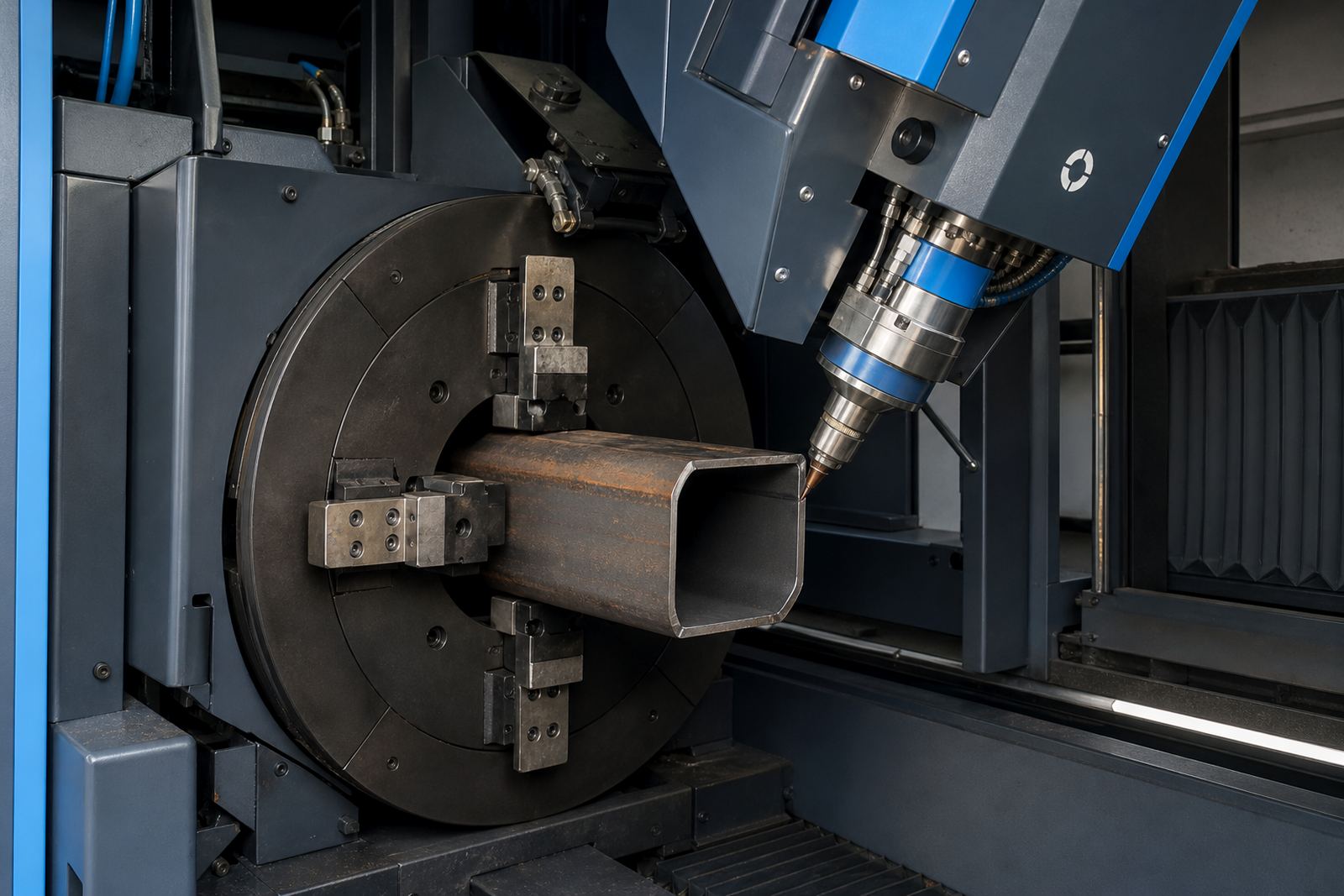
A bevel head laser is built for tube and profile cutting machines that need more than straight square ends. The cutting head tilts to create an angle on the edge, so fabricators can prepare joints for welding, forming or assembly without moving the job to a separate station for manual bevelling.
On structural tube, support frames, handrail sections and process skids, a bevel can help produce a better root gap and joint face. It is also useful where drawings call for mitred corners, angled intersections or a prepped edge that reduces cleanup before welding. The result is a machine that can cut round, square and rectangular tube, plus angle and channel, with more control over the final fit.
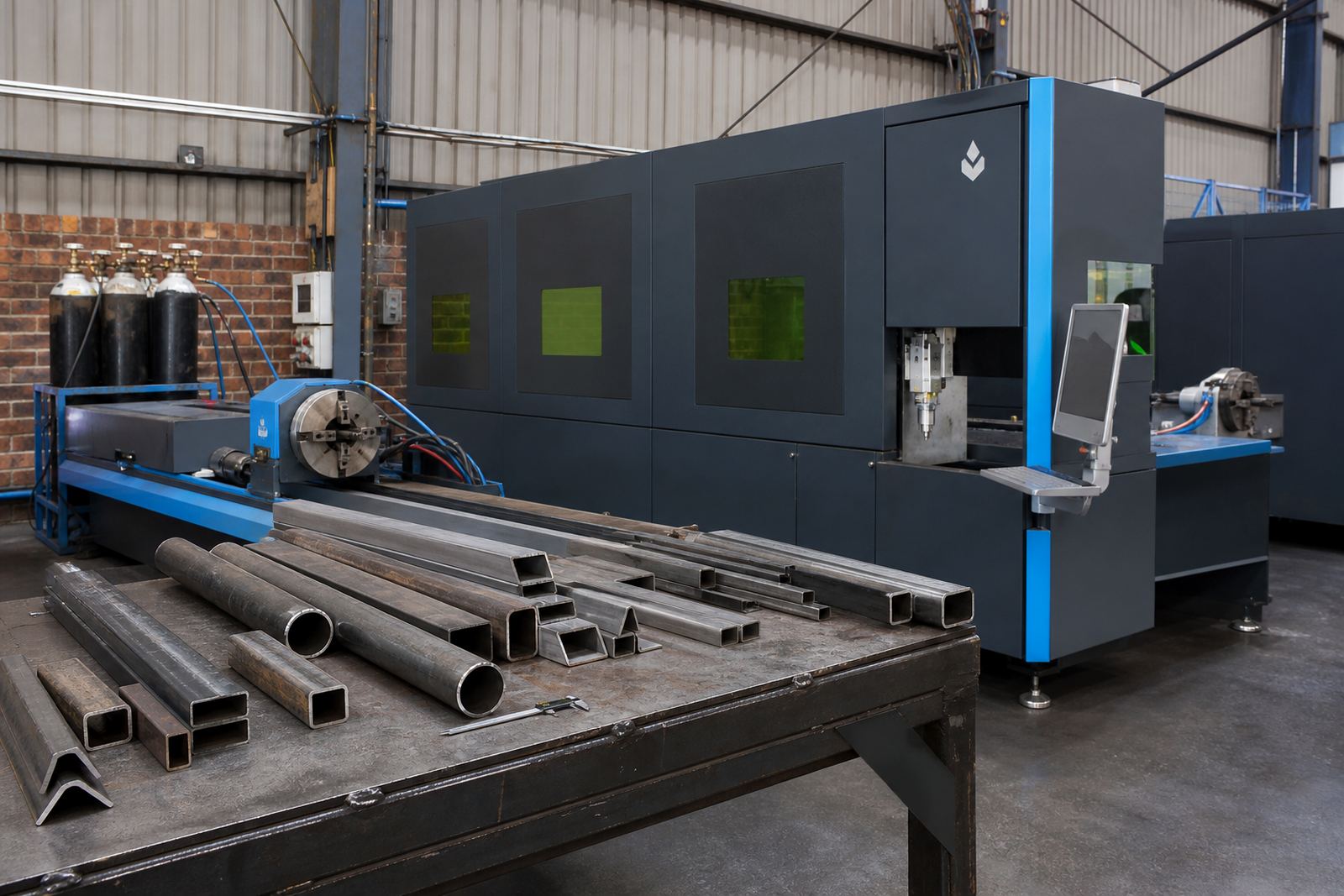
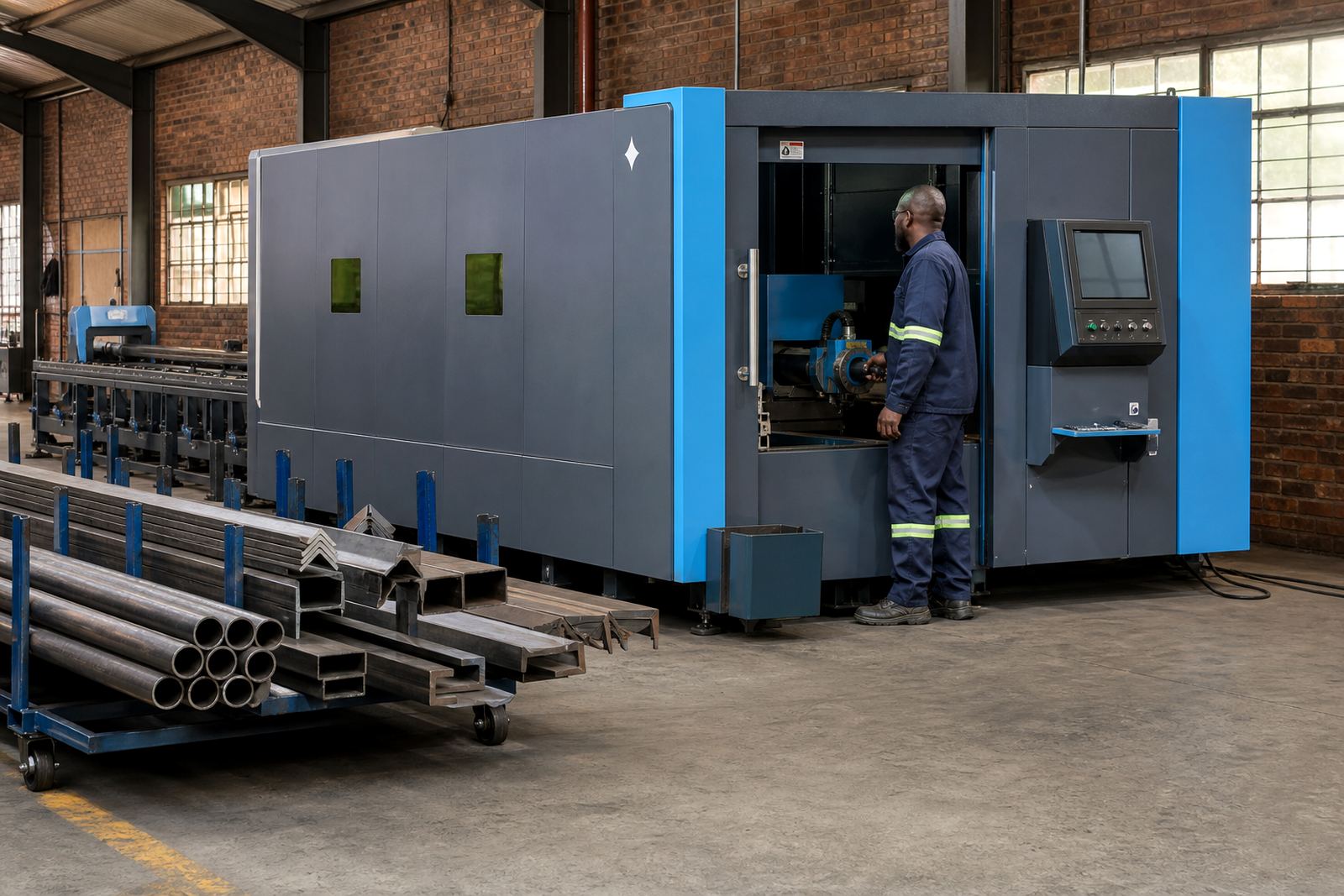
In practice, the bevel head sits as part of a fibre laser tube cutting setup and works with nesting software, chuck positioning and programmed cut paths. The machine operator sets the angle, offsets and cut sequence, then the head follows the programmed profile. For busy shops in Wadeville, Johannesburg and Pretoria, that means less handling between operations and fewer variations from job to job.
Machine sizes and options that affect the cut
Bevel head systems are selected around the tube range, wall thickness, chuck style and the level of angular movement needed on the job. Smaller machines suit job shops that cut shorter lengths and lighter sections, while larger production machines handle longer stock and heavier profiles with wider diameter ranges.
Options usually depend on the work mix. Some plants need a standard bevel range for weld prep, while others need more angle control for complex joints, heavy fabrication or repeat production. Chucks must grip the section firmly without distortion, especially on thin wall tube and longer lengths where runout can affect the cut face.
- Tube capacity: round, square and rectangular tube in the machine’s stated range
- Profile handling: angle and channel where the machine setup allows it
- Bevel range: fixed or programmable angular cutting for weld prep
- Chuck setup: manual, pneumatic or servo driven clamping depending on the machine
- Cut length: from shorter workshop jobs to long production sections
- Control package: nesting, pierce settings and offset management for angled cuts
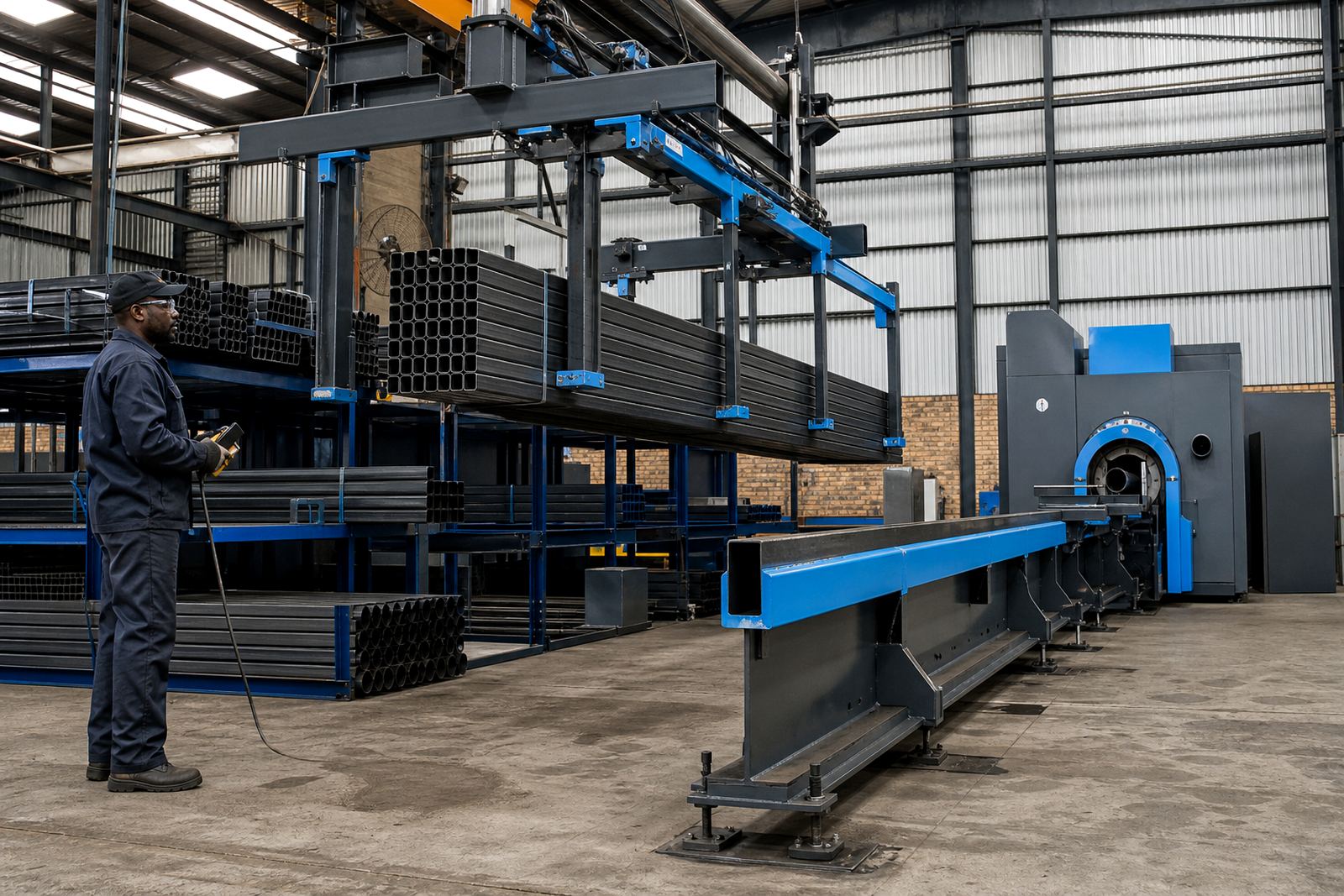
We also look at sheet and tube workflow on mixed plants. Where a fabricator cuts brackets, frames and tube on the same line, the bevel head needs to fit the production pattern, not just the brochure numbers. That includes access for loading, tail support, extraction routing and the final part drop path.
Where a bevel head machine earns its place
This type of machine suits steel fabricators that handle structural work, agricultural frames, truck bodies, fencing systems, plant skids, architectural metalwork and general fabrication with regular weld prep requirements. It also fits contract shops that need repeatable angles on multiple job types without depending on hand grinding for every joint.
Coastal work in Durban, Cape Town and Gqeberha often brings its own set of practical issues, especially on sections that sit for storage before fitting. A cleaner bevel cut helps reduce edge damage during transport and can make assembly easier where site fit-up is tight. Inland plants in Bloemfontein, Nelspruit and the Johannesburg basin often use the same machine for heavier structural parts and quicker changeovers between jobs.
Typical uses include:
- Weld preparation on tube frames and skid builds
- Angled joints on handrails, balustrades and stair work
- Profile cutting on channel and angle for fabrication assemblies
- Repeat production of prepped ends for batch work
- Parts that need cleaner fit-up before welding or bolting
Install, rigging and setup on site
Bevel head tube laser machines need careful site assessment before delivery. Floor loading, crane access, machine footprint, material storage, extraction route and safe operator movement all matter before the unit arrives at the workshop. In Wadeville and across Gauteng, that planning usually starts with the actual bay, not a generic drawing.
Installation includes rigging, positioning, levelling, alignment and commissioning. The bevel head must be checked against the motion system, software offsets and chuck centring so the angle cut lands where it should. Assist gas setup is part of the commissioning process as well, because cut quality on tube and profile work depends on the right gas, pressure and flow for the material and thickness.
For shops using oxygen, nitrogen or compressed air in different applications, the gas train needs to be arranged safely and logically. Pipework, regulators, filters and changeover arrangements should suit the material mix and the production pace. Safety checks cover enclosure access, interlocks, extraction, emergency stops and operator movement around the load and unload area.
Training that covers more than the start button
Operator training on a bevel head machine needs to include more than basic running. A good setup covers material loading, chuck alignment, bevel angle selection, cut sequence, nesting logic, pierce behaviour and the checks that matter before a batch goes out to the floor. It also helps to train for common errors, because angled cuts reveal setup mistakes faster than straight cuts do.
Training can also include nesting training for mixed tube and profile work. That matters where the machine is cutting both production runs and one-off jobs, because the operator has to balance material use, tail length and the order of operations around the bevel path. When the team understands those settings, the machine spends less time waiting on corrections and more time cutting parts that fit.
- Bevel angle setup and offset control
- Chuck alignment and clamping checks
- Nesting for mixed tube and profile jobs
- Assist gas selection for the material and thickness
- Basic cut quality checks on the first part and batch sample
Leanne Mabuza coordinates training, while Ayanda Mashaba handles applications support on cut paths, material behaviour and job setup. That combination is useful for plants that run multiple shifts or rotate operators across different machines.
Care, servicing and cut quality over time
Bevel heads need regular attention because the tilt mechanism, lens path, nozzles and motion settings all affect the edge. Routine cleaning, alignment checks and scheduled maintenance help keep the bevel angle consistent and prevent small faults from showing up as poor fit-up on the welding table.
Preventive maintenance should include chuck alignment, bevel calibration, gas checks, nozzle condition and inspection of the head movement. On production plants, it is worth tracking the most common thicknesses and section sizes through the machine, because that gives a better picture of wear patterns and service needs. A head that cuts tube cleanly on Monday can drift if the setup is ignored through a long run.
Service support from Wadeville covers breakdown response, remote diagnostics where suitable, and practical guidance on machine wear, consumables and cut issues. Pieter Visser handles service work, while Sibusiso Bhengu leads installation and mechanical fit-up, including alignment on the machine base and the head assembly.
Details to confirm before ordering the bevel head package
Bevel head systems need proper specification before the order is signed off. The machine has to suit the tube range, the sections being processed and the edge quality expected by the fabrication team. A clear job brief prevents mismatches between the cutting head, the chuck arrangement and the software package.
Useful details to confirm include the material mix, wall thickness range, the longest and shortest sections, whether the work includes round tube only or also square, rectangular, angle and channel, and the bevel angles required for weld prep. It also helps to note whether the plant needs manual or automated loading support, and whether the shop has existing gas infrastructure that can be tied into the new machine layout.
- Tube and profile sizes to be cut
- Material types and thickness range
- Bevel angle range required for the job
- Chuck type and part handling method
- Gas supply arrangement and pressure range
- Software needs for nesting, offsets and cut libraries
Michael Dlamini oversees the business, with support from Anika Kajee on sales and project coordination. Clients in Johannesburg, Pretoria, Durban, Cape Town, Gqeberha, Bloemfontein and Nelspruit can send the section sizes, material mix and bevel requirements for the machine proposal.