Bundled stock feeding for repeat tube runs
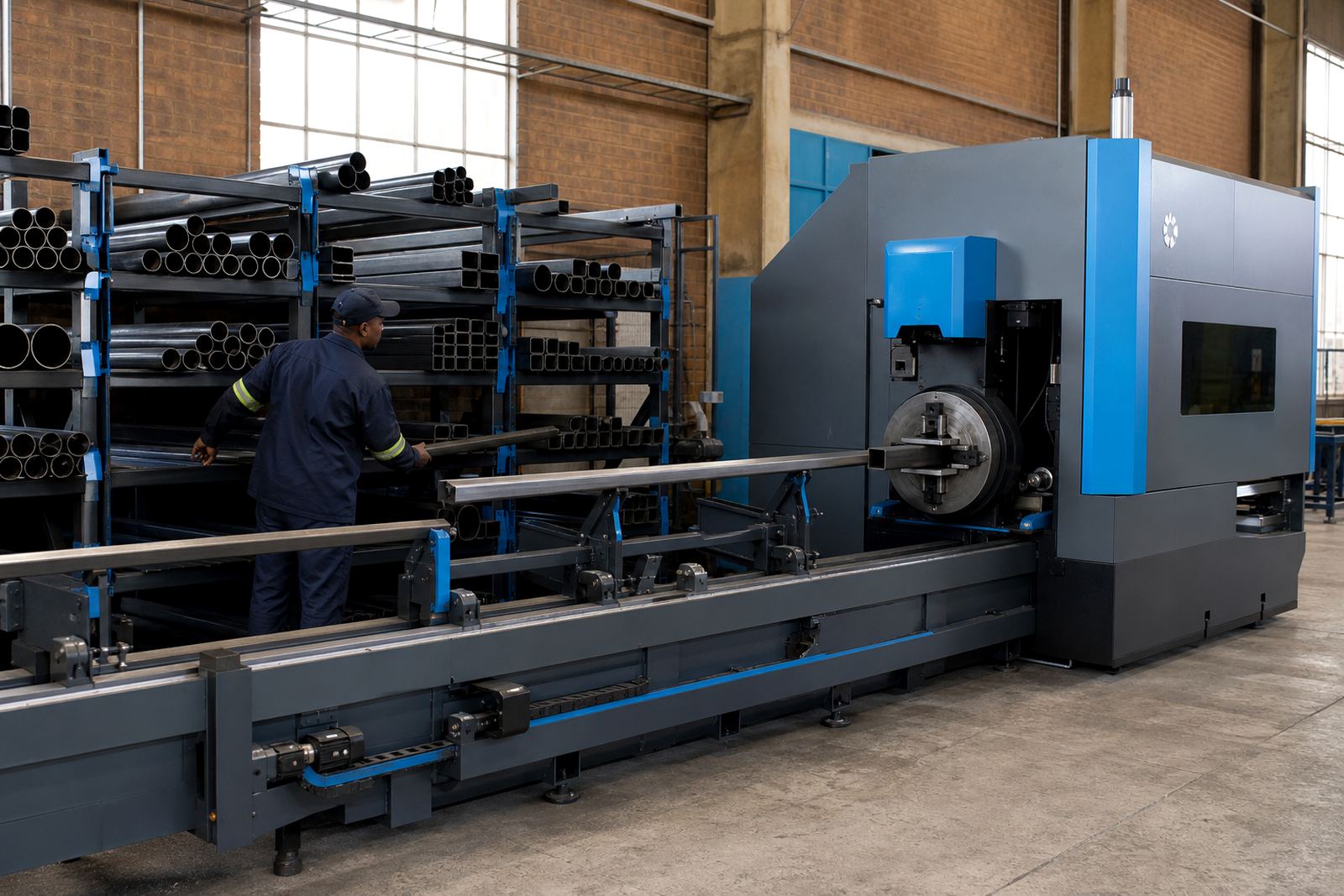
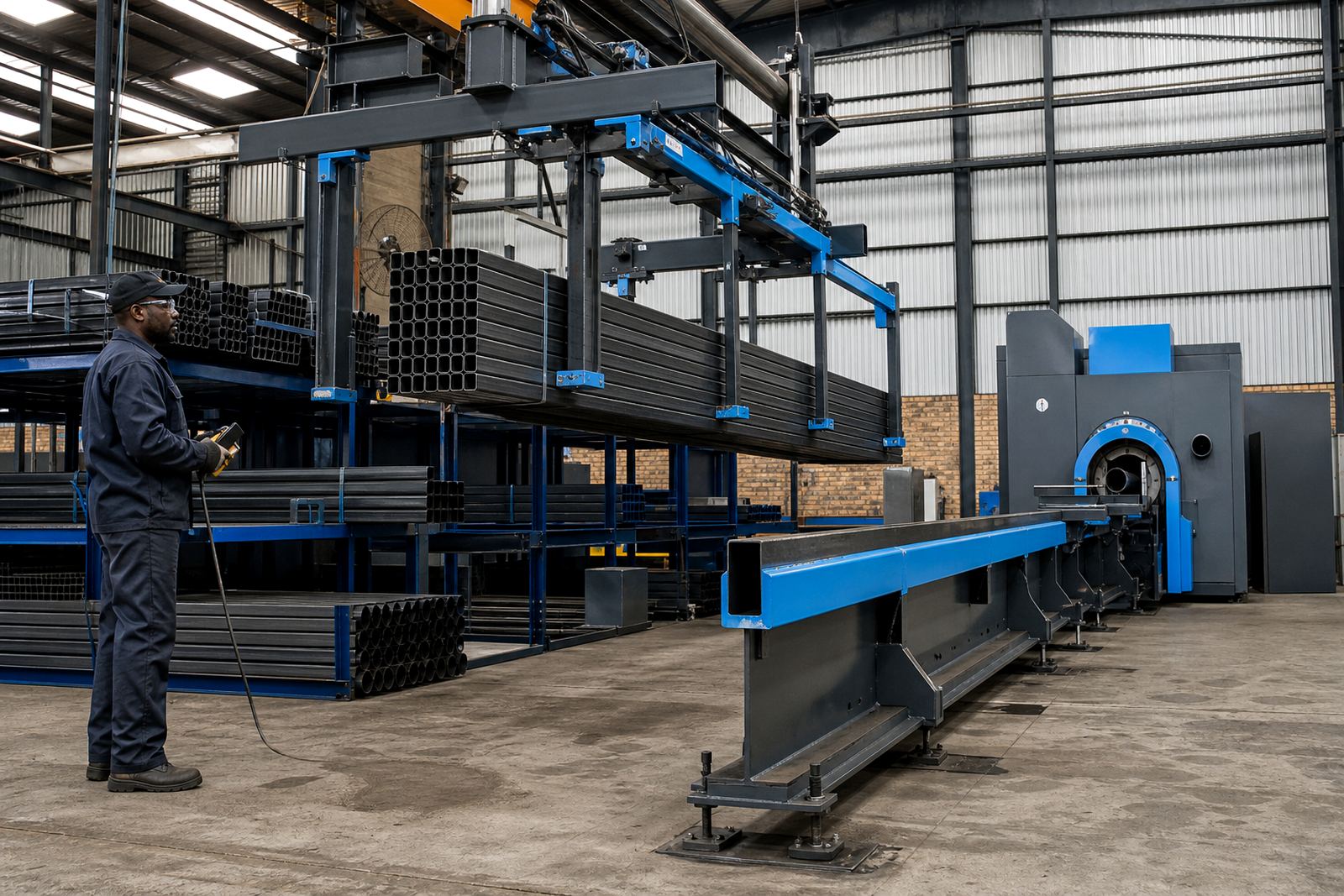
A bundle loader is the infeed side of a fibre laser tube cutting line that stores and presents grouped lengths of tube or profile stock to the loading station. It is used where the same sections are cut in batches, so the machine can draw from a packed bundle without constant manual lifting and repositioning.
On production jobs, the loader supports round, square and rectangular tube, plus angle and channel where the machine setup allows those profiles through the chucking and support system. The loader keeps stock aligned for transfer into the main cutting bed, which helps the cutting cycle stay orderly on longer runs.
For shops in Wadeville, Germiston and other industrial areas, it is a practical fit when the same part set is repeated through the week. The loader also suits plants that want cleaner material flow between cutting lists, offcut control and downstream sorting.
Loader sizes, stock range and layout choices
Bundle loaders are usually matched to the tube dimensions, bundle weight and the available floor space beside the laser line. The loading table, chain bed or transfer system is selected around the longest stock length, the typical bundle diameter or width, and the way the operator will stage material at the machine.
- Tube lengths commonly handled: 6 m and 8 m stock, with other lengths depending on the line layout
- Section shapes: round tube, square tube, rectangular tube, angle and channel
- Bundle handling: single bundle or staged bundles where the feed system supports it
- Loading direction: left or right side infeed, based on the machine bay and operator flow
- Support method: roller support, chain transfer or guided loading rails
Some systems are paired with auto load arms for lighter or medium sections, while heavier bundled stock often needs a sturdier transfer arrangement and stronger guarding. The right layout depends on the tube range, the crane or forklift access, and how close the loader sits to the main cutting enclosure.
What the bundle loader adds to a cutting cell
The loader is most useful where production repeats the same families of parts and the cutting list does not change much from shift to shift. It helps reduce handling interruptions, especially when the machine is set up for long tube runs, nested profiles or mixed section orders that would otherwise need frequent manual feeding.
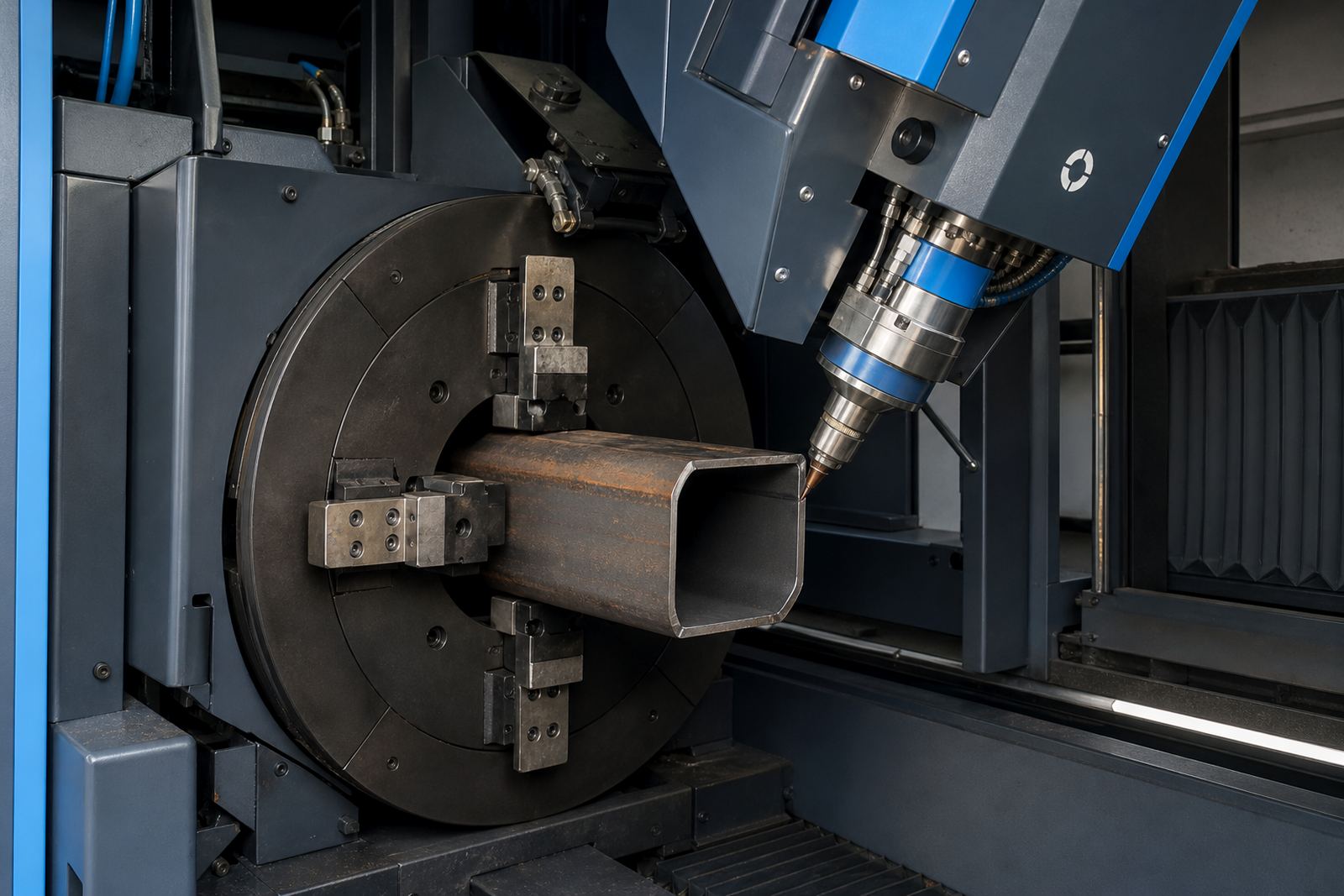
In a fibre laser line, the bundle loader works alongside the chuck system, nesting software and support rollers. The loader presents the stock, the chuck grips and rotates it for cutting, and the software arranges parts to save material across each length. Where bevel heads are fitted, the tube still needs accurate presentation so the cutting head can move cleanly through the programmed angles.
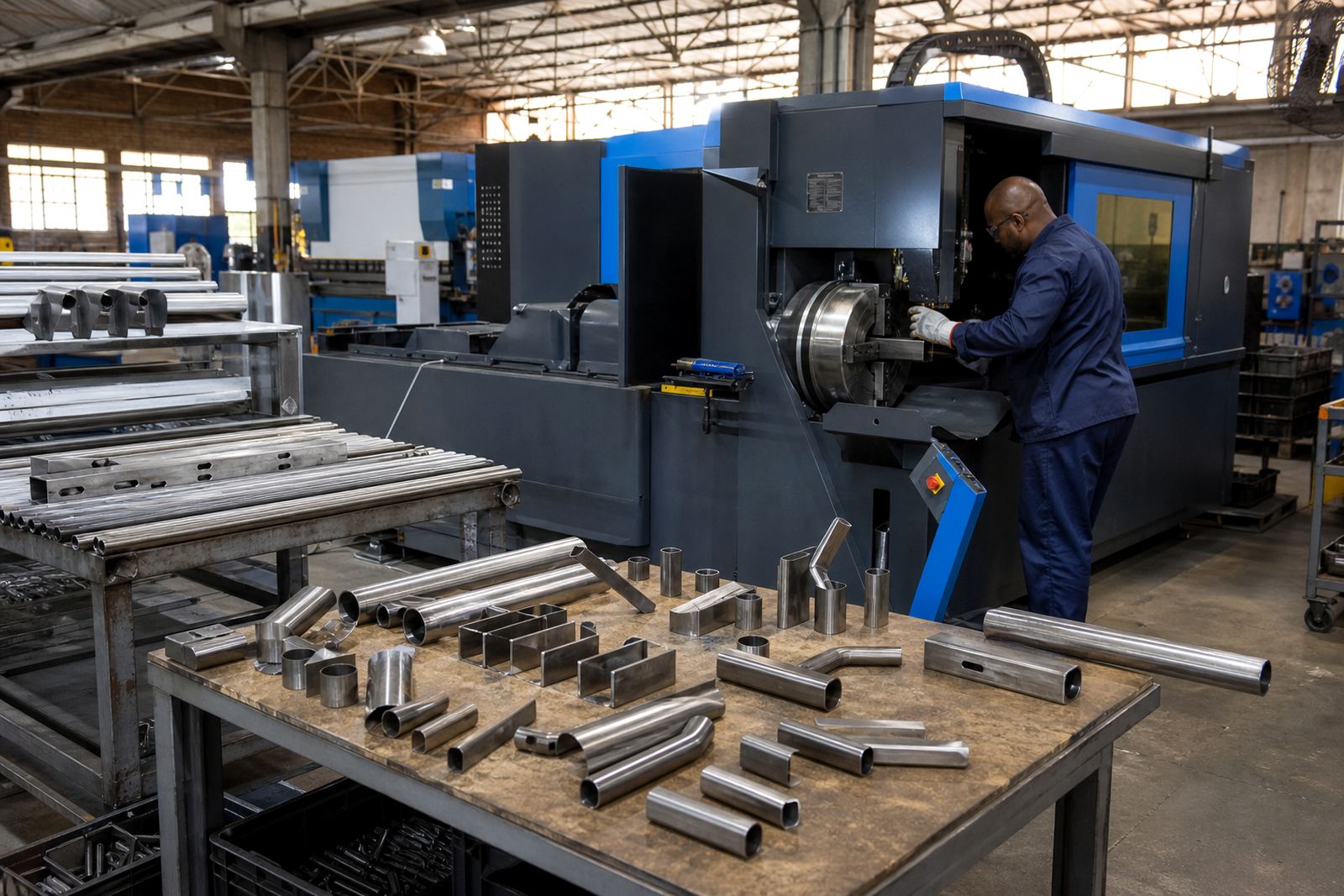
This setup suits fabrication shops producing balustrade members, structural frames, agricultural parts, trailers, transport equipment and general steelwork. It is also a solid fit for plants that need repeatable loading on a single machine rather than constant changeovers between different machines.
Fitting, site checks and integration points
A bundle loader needs a proper site assessment before installation. The team checks floor bearing, crane access, forklift route, the machine envelope, infeed and outfeed clearances, and how the loader aligns with the tube laser bed. If the floor is uneven or the line is tucked into a tight bay, the transfer system has to be set carefully so stock does not twist on entry.
- Electrical supply to suit the loader drive and control system
- Air supply where the machine line uses pneumatic functions
- Clear access for delivery rigging and positioning of loader sections
- Guarding and walkways around the infeed area
- Alignment with the main chuck centreline and tube support path
During installation, the loader is levelled, linked to the control interface and tested with representative tube sizes. The operator and maintenance team need to see how to stage bundles, clear a misfeed and keep the loading zone safe during production. In coastal conditions, especially around Durban and Gqeberha, the exposed steel parts and rollers need regular attention where humidity is high.
Keeping the loader steady in daily use
Bundle loaders work best when the rails, rollers and transfer surfaces stay clean and true. Mill scale, cut dust and offcut fragments can build up around the loading path, so the infeed should be checked as part of the normal machine routine. The same goes for sensors, guide arms and any clamping surfaces that touch the stock before it moves into the chuck.
Preventive maintenance usually covers lubrication where specified, fastener checks, wear inspection on rollers or guides, and testing that the loader stops and starts cleanly with the control system. Where the shop runs long production lists, it is worth checking that bundle straps, spacer blocks and stock supports are consistent, because uneven bundles can throw the infeed out of line.
If the loader forms part of a full fibre laser line, chuck alignment and bevel calibration should stay on the maintenance schedule as well. A loader that feeds poorly can affect cut quality, so the condition of the infeed matters as much as the head and software settings.
Ordering details for the right bundle loader setup
When ordering, the useful details are practical ones from the shopfloor. The machine supplier will need the tube section range, the typical bundle size, the longest stock length, the floor layout and the production mix. If the line will handle both tube and profile cutting, say so clearly because the loader, supports and chucking arrangement must suit the full range.
- Longest stock length and shortest regular length
- Tube and profile range, including round, square, rectangular, angle or channel
- Bundle weight and how the stock is delivered to site
- Available floor area beside the laser line
- Whether the machine needs bevel cutting or standard straight cutting only
- Control interface requirements and any nesting software link
LaserTube supplies fibre laser tube and profile cutting machines to metal fabricators across South Africa, with installation, operator training and support from Wadeville, Germiston. Clients in Johannesburg, Pretoria, Durban, Cape Town, Gqeberha, Bloemfontein and Nelspruit can arrange a bundle loader demo through the contact form.
Key facts
| Machine type | Bundle loader for fibre laser tube and profile cutting lines |
|---|---|
| Tube range | Round, square, rectangular tube, plus angle and channel where the line allows |
| Stock lengths | Commonly 6 m and 8 m, depending on line design |
| Feed system | Guided transfer, roller support or chain-based loading arrangement |
| Integration | Works with chucking, nesting software and tube laser control |
| Use case | Repeated production programmes with bundled stock |
| Base | Wadeville, Germiston |