One machine for tube, profile and joint work
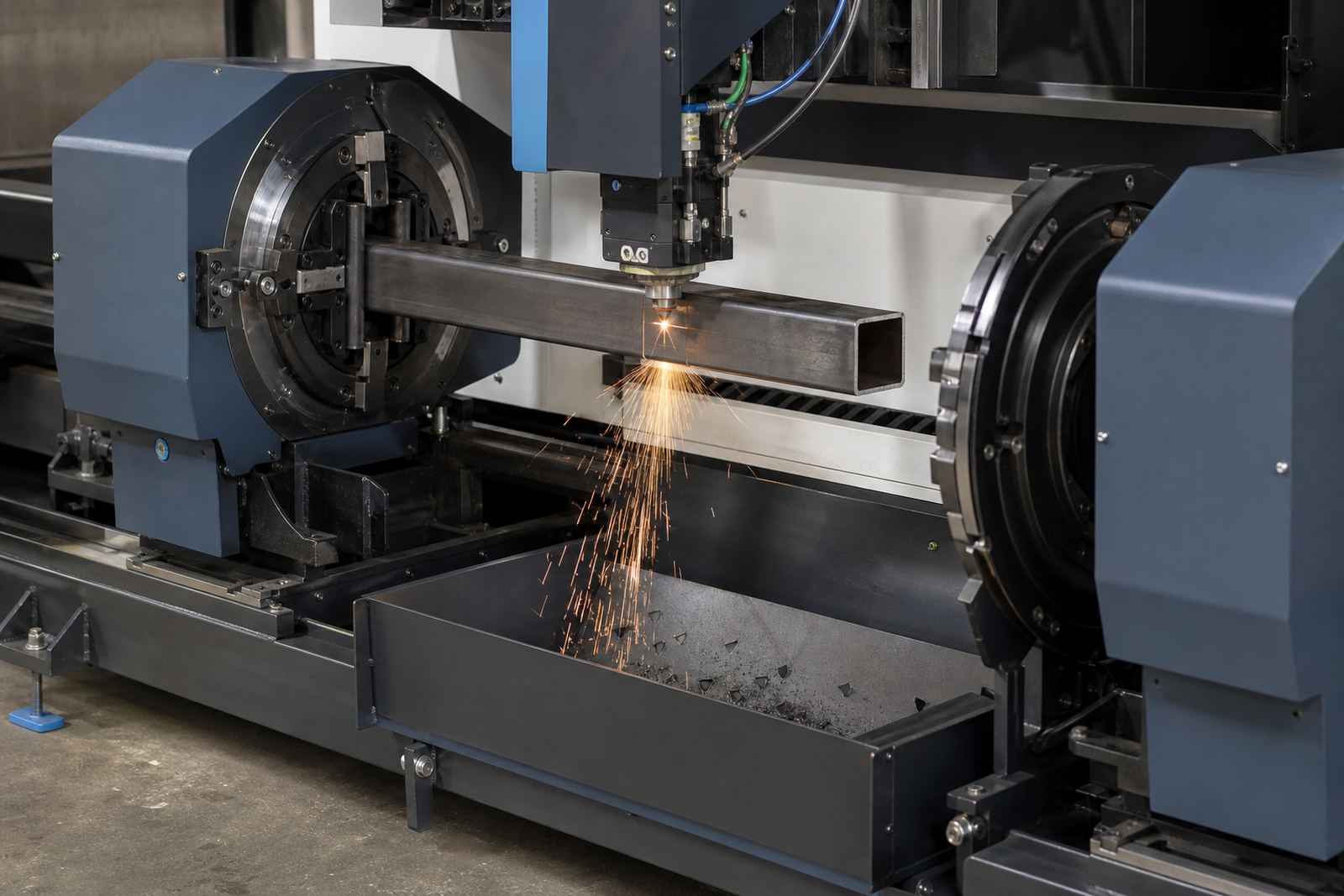
This Mixed Profile Laser is built for tube and profile cutting where one shift may move from round tube to square hollow sections, then on to angle or channel. The machine combines rotary handling with a laser cutting head, so cutouts, slotting, mitres and profile ends can be produced in one clamping setup instead of moving material between separate stations.
For South African fabricators, that matters on shop floors where mixed work comes in from balustrades, structural members, trailers, racking and general steel fabrication. A single platform keeps cut geometry consistent across different section shapes, and it reduces the manual marking that often slips when the same profile is handled more than once.
- Processes round, square and rectangular tube
- Handles angle and channel on suitable fixtures
- Supports holes, slots, fishmouths and mitred ends
- Useful for mixed batches and repeat production runs
Chucks, supports and size range
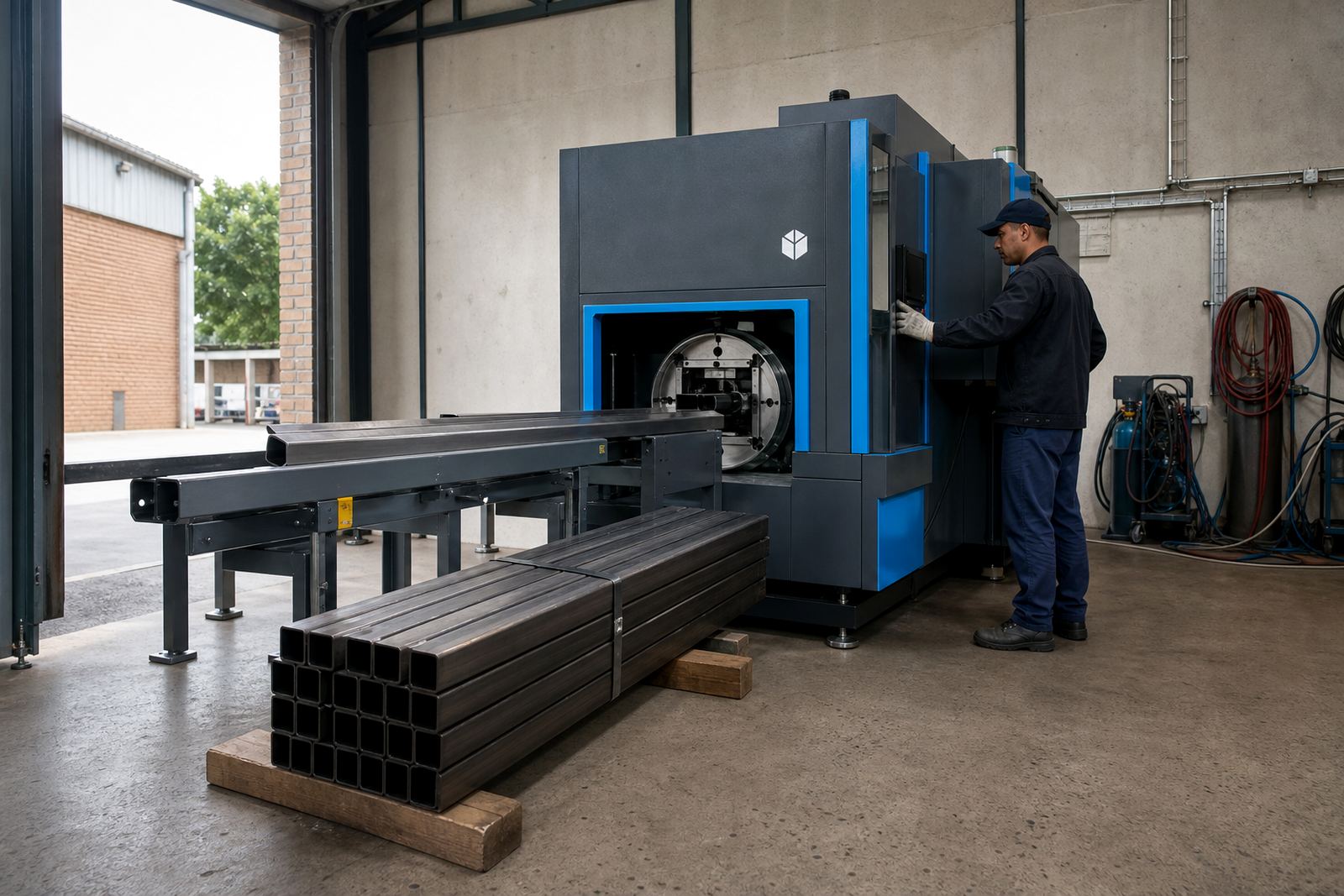
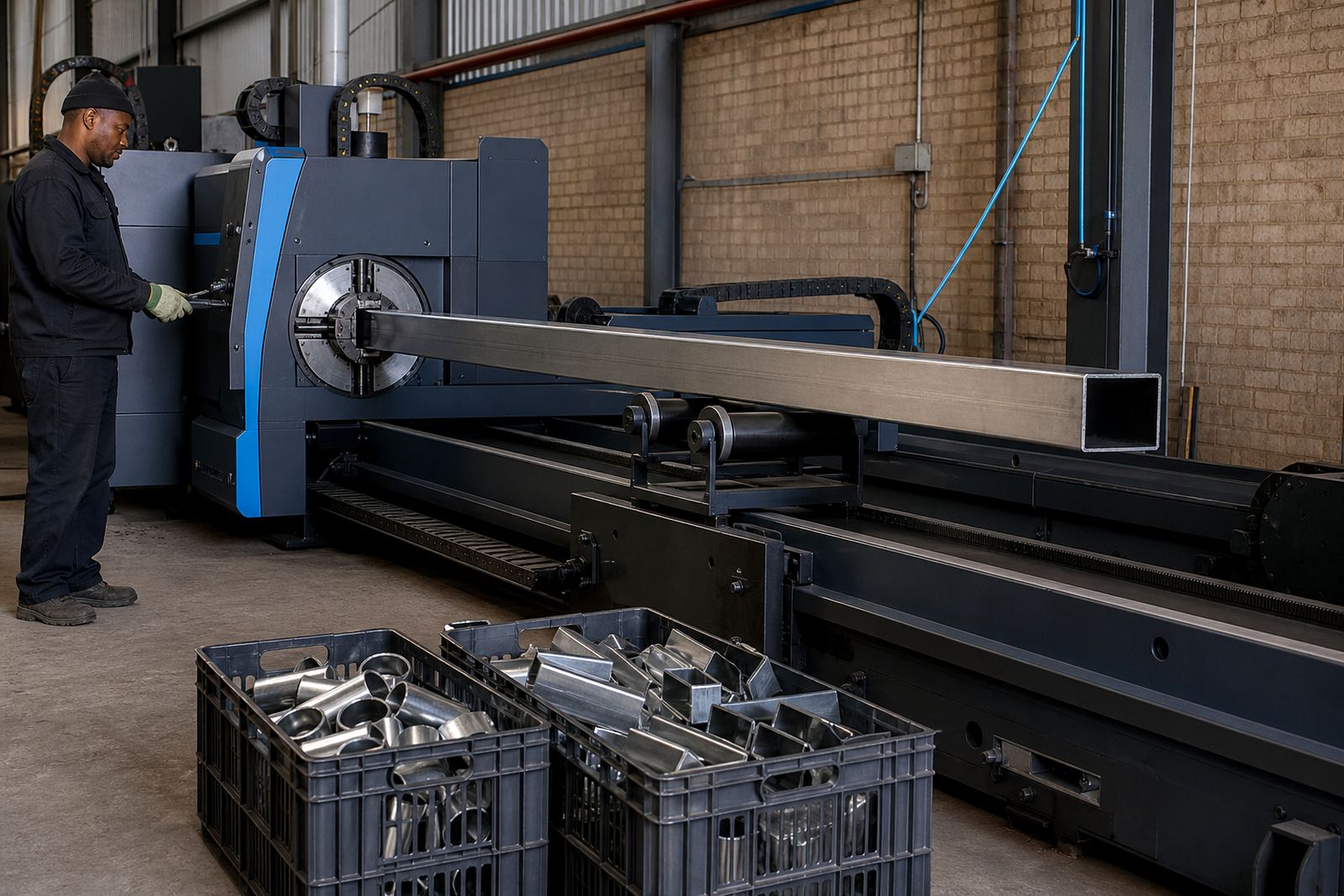
The working end of the machine depends on how the tube is held and rotated. A chuck system grips the section while the carriage indexes the cut positions, and support beds help keep longer lengths stable through loading and cutting. For heavier wall sections or long spans, correct support spacing matters because the tube must stay straight enough for the laser path to land where the nesting software placed it.
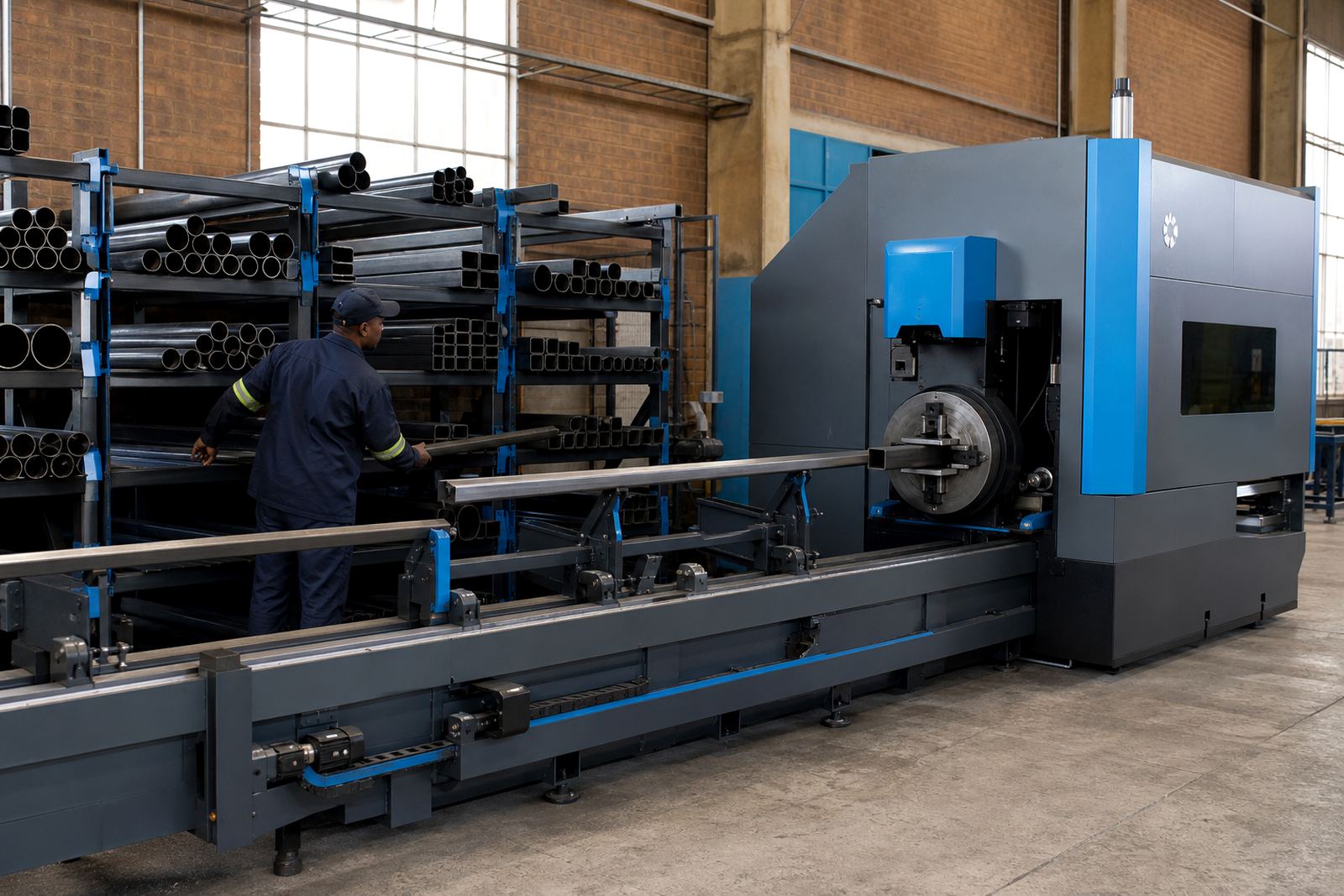
Size options vary by machine build, but mixed profile systems are commonly specified by tube length, maximum section size and the weight they can carry through the bed. Typical fabricator requests include shorter production beds for compact shops, and longer feed lengths for structural work or serial production. Where angle and channel are part of the mix, the clamping arrangement and anti-collision clearance need checking before order confirmation.
- Tube length capacity from compact to extended beds
- Section capacity set by the chuck and bed design
- Rotary support for controlled indexing and stable cuts
- Fixture choice matters for angle, channel and open sections
Bevel heads and cut accuracy on thicker work
Mixed profile cutting often needs more than straight 90 degree cuts. A bevel head allows angled edge preparation for weld joints, especially on structural frames, pipe assemblies and parts that must fit neatly before final welding. Where the application calls for it, bevel calibration should be checked against the wall thickness, the joint angle and the material grade being processed.
Cut accuracy also depends on the quality of the nesting file, the straightness of the stock and the gas settings used on the job. On mild steel, stainless steel or aluminium, the operator has to balance edge finish, dross control and heat input. A well set machine leaves less grinding later, which helps on time-sensitive batches and parts that need to fit first time on the welding table.
- Bevel cutting for joint prep and weld fit-up
- Calibration linked to wall thickness and angle settings
- Useful for end prep on structural and fabrication parts
- Finish quality depends on gas, focus and feed settings
Nesting software and assist gas setup
The software side is where most of the material saving starts. Nesting software lays out cut paths across each tube length so the machine uses stock efficiently and keeps part spacing sensible for the cut sequence. For mixed profile work, the program also has to manage section rotation, cut order and the position of pierce points, otherwise the next part can be affected by the one before it.
Assist gas setup is equally important. Depending on the material and required finish, we may use oxygen, nitrogen or air, and each gas changes cutting speed, edge quality and consumable wear in different ways. Gas delivery, pressure control and line cleanliness should be set up correctly from the start, especially on work where long production runs make inconsistency easy to spot.
- Nesting for material yield and sensible cut order
- Gas choice depends on steel, stainless or aluminium
- Pressure control affects edge finish and cut stability
- Operator training should cover file prep and gas settings
Where this machine fits on a real shop floor
Mixed Profile Laser suits fabricators that want one system for tube, section and profile work without moving between separate tools. It is a practical fit for gates, trailers, agricultural frames, shelving, light structural work, equipment guards and general metal fabrication. Shops with regular repeat work benefit from the same machine because part programming can be stored and used across batches.
In Wadeville, Germiston and other industrial areas around Johannesburg, Pretoria, Durban, Cape Town, Gqeberha, Bloemfontein and Nelspruit, the machine is often chosen where the mix of work changes from week to week. A job shop may need short runs with many different part shapes, while a production plant may need the same profile repeated with fewer manual steps and tighter control over fit-up.
- Suited to job shops and production plants
- Good for varied batch work and repeated part files
- Handles fabrication, structural and utility steel work
- Useful where one machine must cover several section types
Installation, setup and ongoing care
Set-up begins with delivery access, machine positioning and a clear route for tube loading, followed by commissioning, chuck alignment and test cuts across the beam path and safety systems. The floor must suit the machine footprint, the stock flow and the loading side, with enough space for tube lengths and safe movement around the bed. If the machine includes a bevel head, that section needs its own calibration and sample cuts before production begins.
Care is mostly about keeping the cutting path true and the clamping side in good order. Routine attention includes chuck checks, jaw wear inspection, guide rail cleaning, lens protection, software backups and verification of the loading sequence. Operators also need refreshers on nesting, material loading and cut sequencing, since a mixed profile machine gives steady results when the setup remains unchanged across shifts.
- Site assessment before placement and rigging
- Commissioning includes alignment and safety checks
- Preventive maintenance protects accuracy and uptime
- Training covers loading, nesting and daily checks
Details to confirm before ordering
Before a mixed profile machine is specified, the key details are the tube and section sizes, material types, production mix and the longest stock length you plan to feed. It also helps to confirm whether the work includes bevels, how much automation is needed for loading and unloading, and whether the shop wants more focus on speed or edge finish. Those points shape the chuck design, bed length, laser power and software package.
For a proper fit, the ordering notes should also cover site access, floor loading, power provision, gas storage and the level of operator experience on site. If the machine is going into a new bay or replacing older kit, the existing workflow and maintenance access should be checked too. That keeps the installation practical and reduces surprises when the first production batch starts.
- Tube sizes, wall thickness and section mix
- Material types and expected batch sizes
- Need for bevel cutting or standard straight cuts
- Available floor space, access routes and gas arrangement
- Operator experience and training requirements
Key facts
| Product type | Fibre laser tube and profile cutting machine for mixed sections |
|---|---|
| Section range | Round, square and rectangular tube, plus angle and channel |
| Cutting features | Straight cuts, slots, holes, mitres and bevel options |
| Handling system | Rotary chuck clamping with support beds and indexed rotation |
| Typical materials | Mild steel, stainless steel and aluminium |
| Setup support | Installation, commissioning, operator training and preventive maintenance |