What an open section laser does on the shop floor
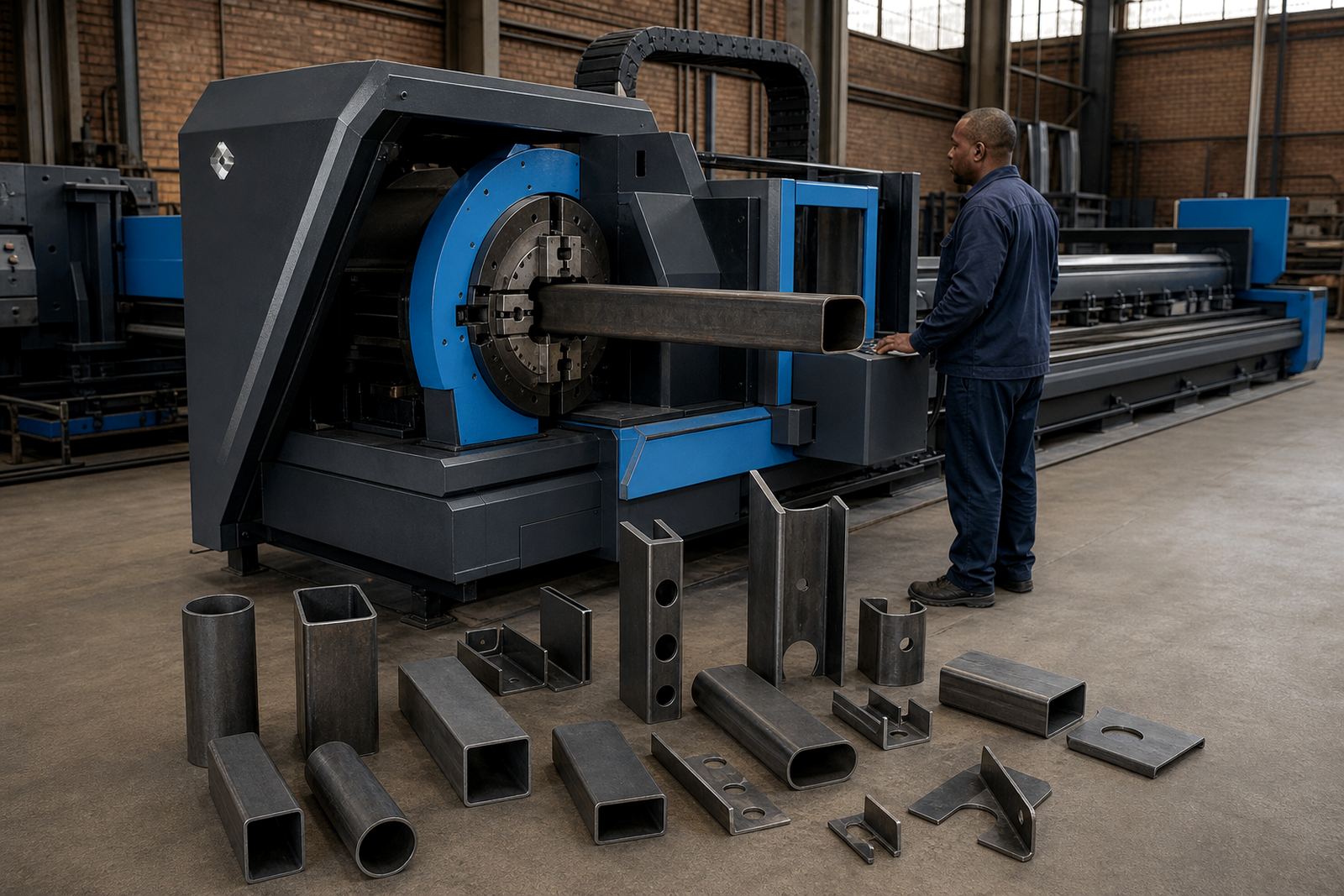
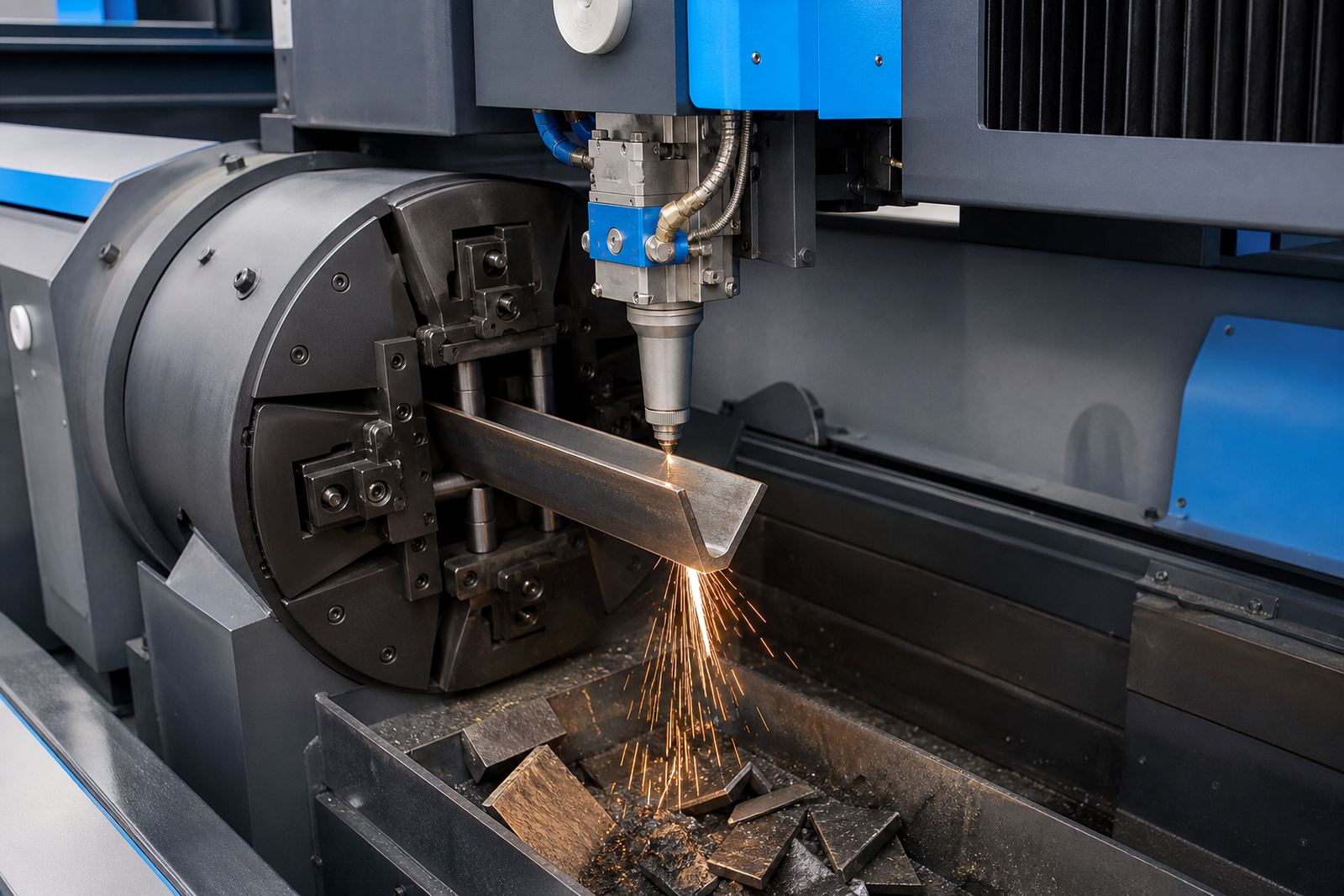
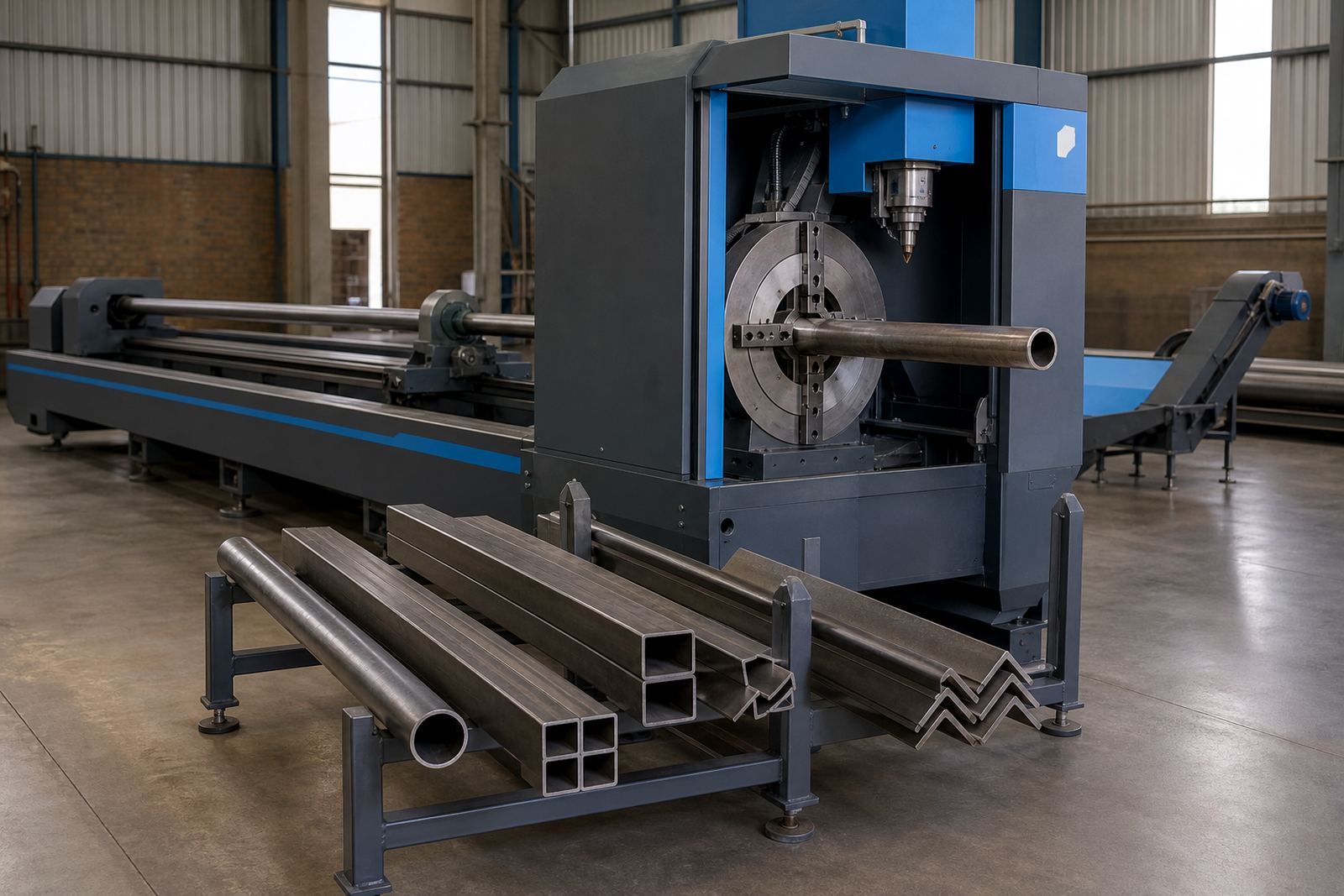
An open section laser cuts round, square and rectangular tube, plus open profiles such as angle, channel and flat bar with formed features. The machine holds the work in rotating chucks, then feeds the section through a cutting zone where a fibre laser head follows the programmed path for holes, slots, mitres, copes and end prep.
For many fabricators this removes a pile of drilling, sawing and marking. Parts leave the machine ready for the next operation with less handling between stages, which helps on repetitive jobs and mixed batches alike. It also gives a steadier fit-up on assemblies where hole position and end trim have to line up first time.
- Round, square and rectangular tube cutting
- Angle and channel profiling
- Holes, slots, coping and mitre cuts
- Batch work and mixed part nests
- Fibre laser cutting for clean edge finish
Machine sizes and options that matter
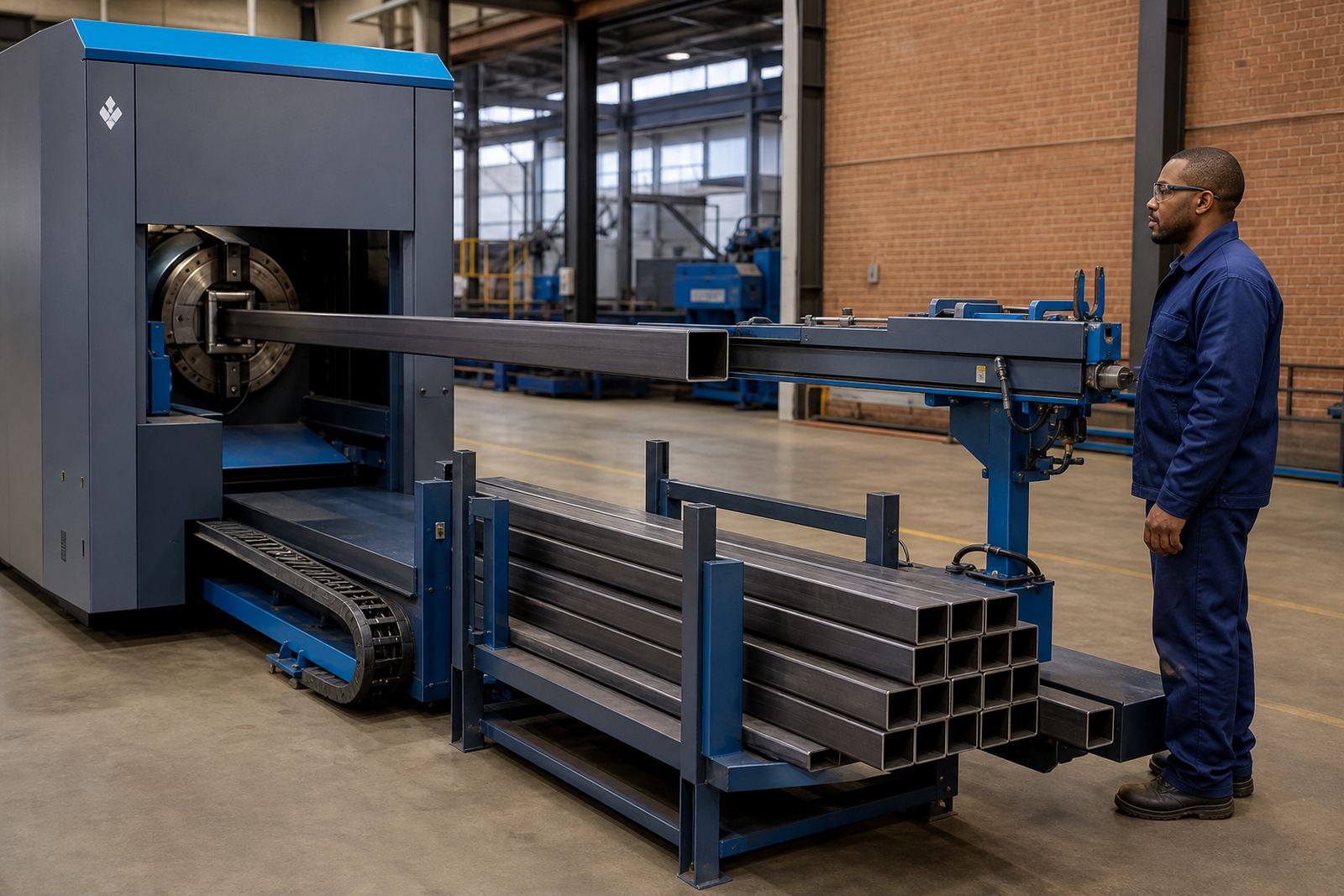
Open section machines are specified around the longest section length, the maximum diameter or section size, and the wall thickness that needs to be processed on a normal job. Typical shop requirements range from compact systems for short runs to longer bed machines for production lines and larger structural work. Tube loading and unloading can be manual, semi-automatic or set up with support tables and conveyors, depending on the volume.
Key options include single or dual chuck handling, automatic clamping, a bevel cutting head for weld prep, and nesting software that arranges parts to use material well. Some users need bundle loading, while others prefer a simpler footprint with manual feeding and straightforward changeovers. On stainless, mild steel and aluminium work, the selected laser setting and gas setup should match the thickness range and cut quality expected.
- Bed lengths commonly set for production and jobbing work
- Chuck systems for stable rotation and accurate indexing
- Bevel heads for weld preparation on thicker sections
- Nesting software for efficient material use
- Assist gas selection for the material and finish required
Where this cutting method fits best
Open section laser cutting suits metal fabricators that need accurate, repeatable section parts rather than rough cut lengths. It fits into furniture manufacturing, automotive-related fabrications, balustrade parts, racking, trailer work, plant frames and general steel fabrication. In a Gauteng job shop it helps when small batches keep changing, while in Durban or Cape Town production plants it suits steady output with tighter part control.
The machine is especially useful where angle and channel need notching or coping for clean welding, or where tube parts need precise holes for fixings and inserts. Coastal humidity in Durban, Gqeberha and Cape Town makes consistent storage and care important, especially on machines that sit in mixed workshop conditions. Parts that go straight into assembly usually benefit from less grinding and less rework after cutting.
- Structural and light fabrication
- Furniture and racking components
- Trailer, enclosure and frame work
- Brackets, copes and end preparations
- Mixed batch production with frequent drawing changes
Installation, rigging and startup requirements
An open section laser needs careful site assessment before it lands in the workshop. Floor loading, access through roller doors, lifting routes, machine level, extraction space and gas cylinder or gas supply positions all need to be checked. If the line includes automatic loading or longer beds, rigging planning becomes more important because the machine sections have to move safely through narrow bays, overhead obstructions and shared yard space.
Electrical supply, compressed air and assist gas provision must be in place to suit the machine chosen. In South African workshops that handle steel, stainless and aluminium, the gas setup is usually matched to cut quality, edge condition and thickness range. Commissioning should cover axis movement, chuck timing, cutting parameters, focus setup, interlocks and a short test run on real material before production starts.
Training the operators and setting the cut path
Operator training covers machine start-up, loading practice, tube support, program selection, gas checks and basic fault finding. Good nesting habits matter because open section work often carries many small parts across a bar or tube length, and poor layout can waste material or leave unstable remnants. Training should also cover how to read a drawing, set a cutting sequence and check whether a bevel cut needs a different clamp position or clearance.
For a team moving from sawing and manual marking to laser cutting, the most useful habits are steady measuring, clean material handling and careful part identification after cutting. Marking errors or loose clamps can travel through the whole batch, so the operator needs a consistent routine. Nesting training helps teams handle tight nests, common line cuts and part rotation without creating unnecessary scrap.
Care that keeps the machine cutting cleanly
Routine care keeps the cutting edge tidy and the machine reliable. Lenses, protective windows, nozzle condition, chuck jaws, guide rails and filters all need regular checking. The beam path and cutting head area should stay free of dust and spatter, and the machine bed should be cleared so offcuts do not affect movement or create a hot build-up under the section.
Preventive maintenance also covers chuck alignment, bevel calibration, lubrication, motion checks and gas delivery inspection. If a machine starts leaving burrs, changing hole size or drifting on mitres, those signs usually point to wear, alignment or parameter issues that need attention before they turn into scrap. Workshops in dusty industrial areas and coastal towns often benefit from a firmer maintenance routine because air quality and humidity can influence wear.
- Inspect optics and protective windows regularly
- Check chuck alignment and jaw wear
- Keep filters and regulators in working order
- Clean the cutting bed and collection areas
- Review cut quality before each production run
Order details to confirm before the machine is specified
To size an open section laser correctly, the key details are the section types you cut, the longest lengths, the maximum outside dimensions, the wall thickness range and the material mix. It also helps to know whether the machine will handle angle, channel and tube in the same shift, or whether one profile family dominates the work. If bevel cutting is needed, the weld prep angle and the material thickness should be set out clearly.
Tell the supplier how many parts you run in a batch, whether short offcuts will be loaded, and whether nesting software needs to support a high changeover rate. Installation planning should include workshop access in places like Wadeville, Johannesburg, Pretoria, Durban, Cape Town, Gqeberha, Bloemfontein and Nelspruit, because rigging space and machine length affect the route into the bay. That information helps set the machine format, the chuck arrangement and the right support system for your floor plan.
Key facts
| Cutting range | Round, square and rectangular tube, angle, channel and related open profiles |
|---|---|
| Typical material | Mild steel, stainless steel and aluminium, according to the machine configuration |
| Handling system | Rotating chuck support with manual or automated loading options |
| Cut features | Holes, slots, mitres, copes, notches and bevel preparation |
| Software | Nesting and part programming for mixed batch production |
| Support services | Site assessment, rigging, installation, commissioning, training and maintenance |