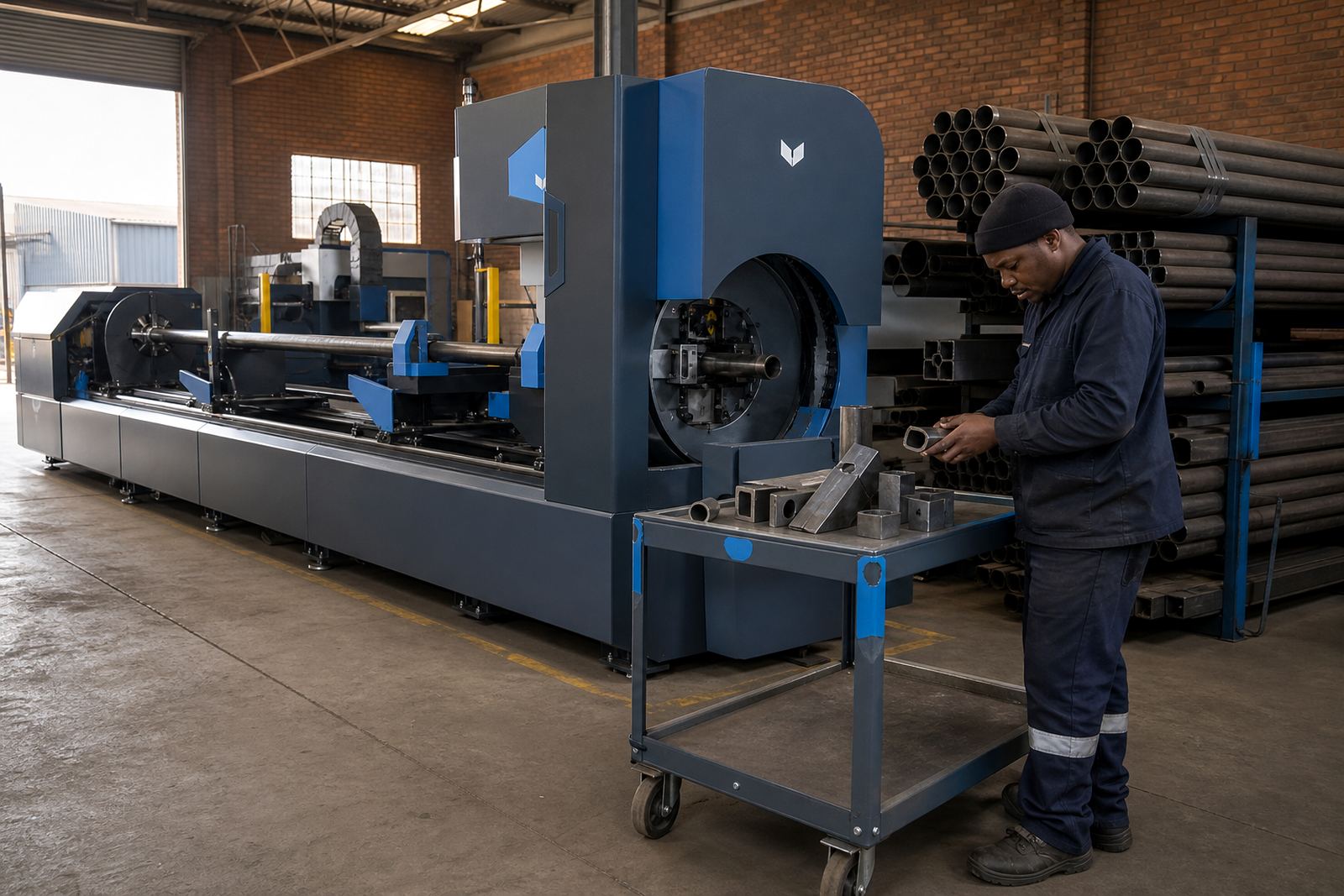
Round tube work without the rough edges
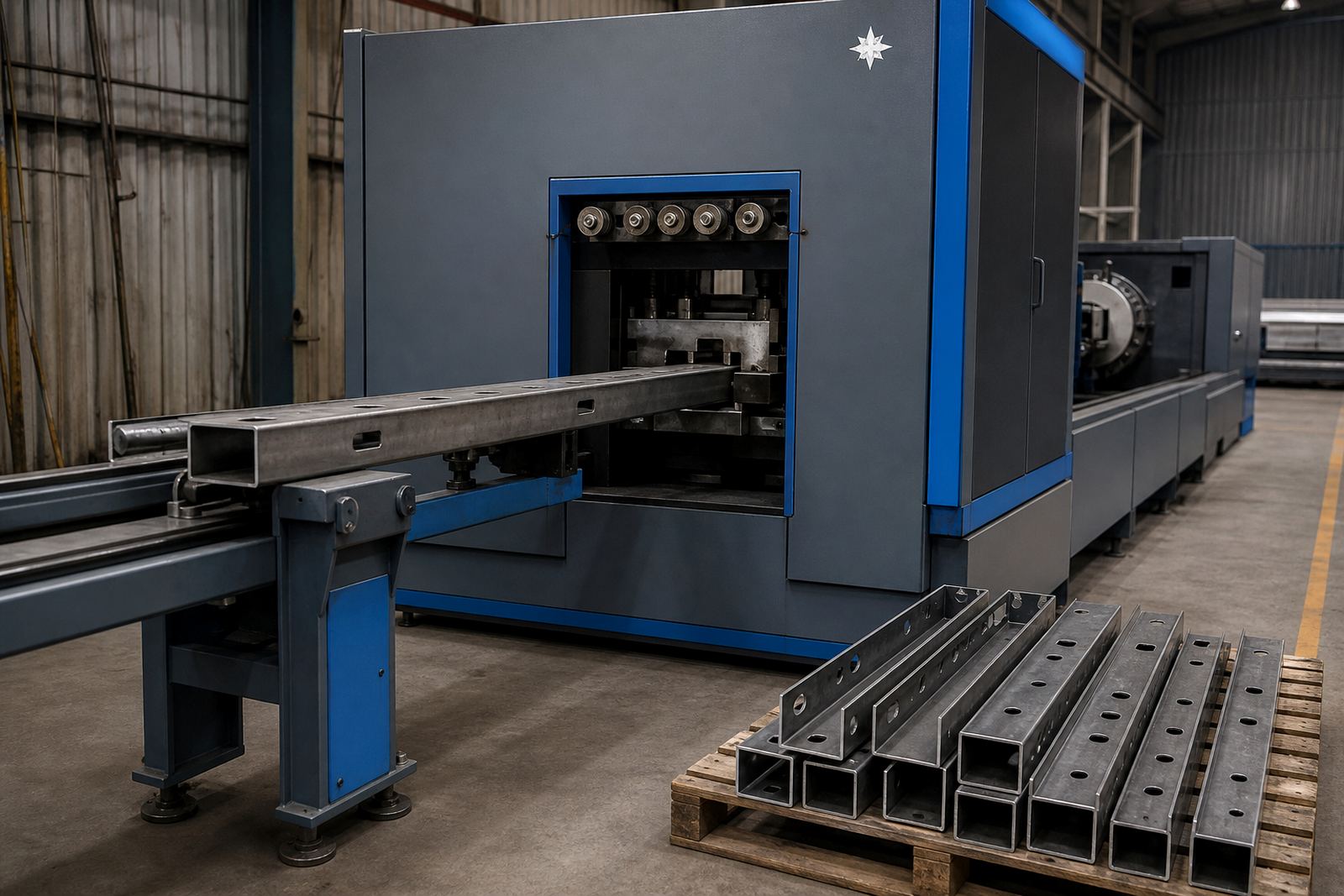
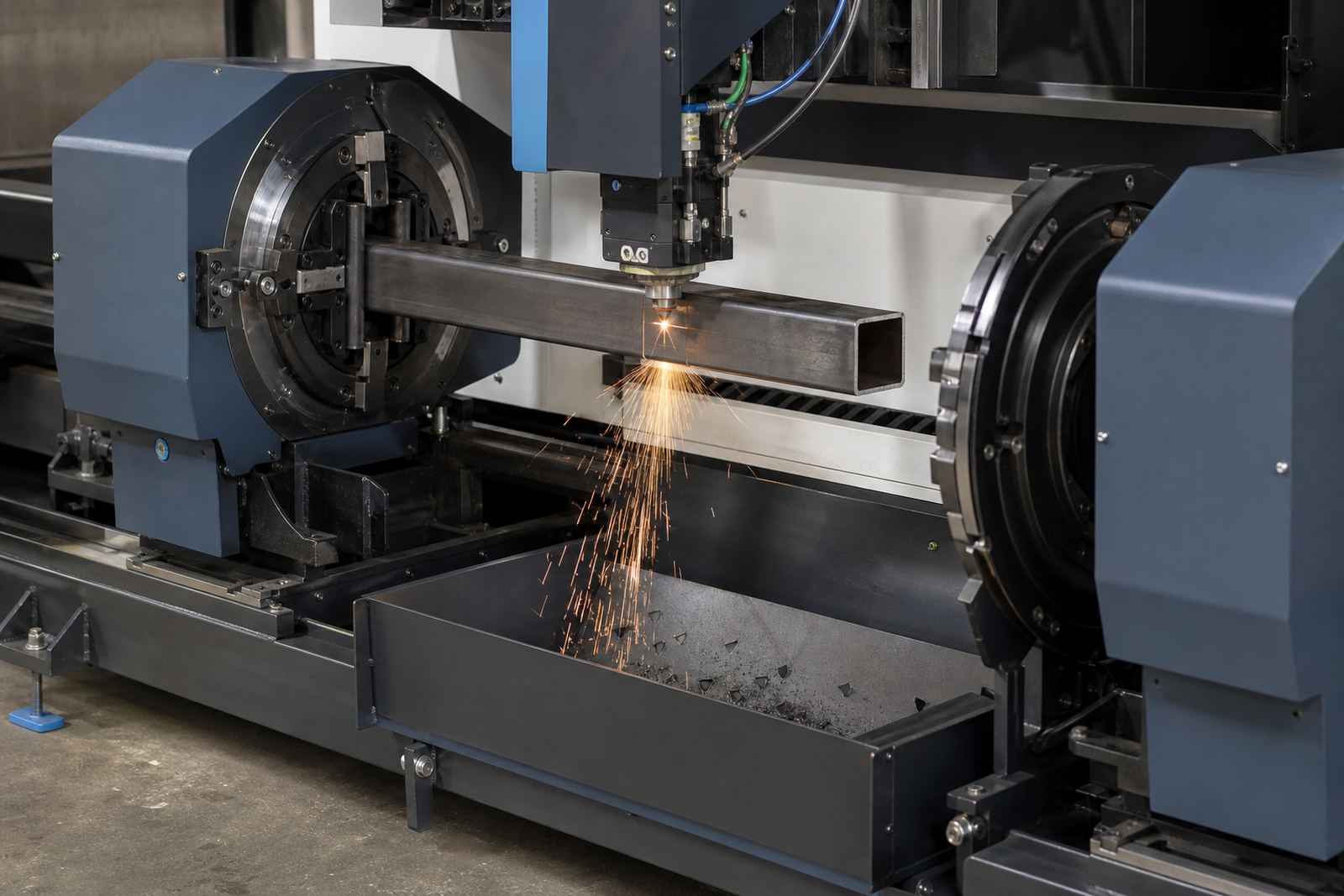
This entry machine is set up for round tube cutting on mild steel and other common fabrication material, with a focus on repeatable parts for railings, barrier frames, scooter and cart frames, display stands, and workshop fabrications. The cutting head tracks the tube while the chuck system grips and rotates the length, so the cut path stays consistent even on smaller batches with varied part lengths.
For shops moving from drilling, sawing or hand marking, the change is usually in fit-up and finish. Holes, mitres, slots and end profiles can be cut in one setup, which cuts down on secondary grinding and rework. On round tube jobs, the machine is at its best when the drawings are clean and the tube sizes stay within the clamping range.
- Round tube cutting for 20 mm to 220 mm outside diameter, depending on the machine build
- Typical material lengths from 3 m to 6.5 m, with longer bed options available
- Laser source power matched to wall thickness and cut speed targets
- Automatic chucking and tube rotation for consistent part placement
Sizes, chucking and cutting heads that suit the job
Entry Round Laser configurations are usually chosen around the tube sizes most often run in the workshop. A smaller shop may work with 3 metre lengths and lighter wall thicknesses, while a busier fabricator may need a longer bed for bundling and less handling. Chuck selection matters as much as bed length, because a tube that slips or flexes will throw off the cut and waste material.
The machine can be supplied with a standard cutting head for straight profile work, or with a bevel head where the job needs angled ends or welded joints that benefit from a prepared edge. For round tube, bevel cutting is useful on handrail returns, fabrication joints and frames that need cleaner fit-up. Nesting software is part of the setup so parts can be spaced for better material use, with lead-ins and lead-outs adjusted to suit tube wall thickness.
- Single chuck or dual chuck options, depending on tube handling needs
- Auto-loading and support options for straighter feeding on longer stock
- Bevel head option for angled cuts and joint preparation
- Nesting software for tube parts, offcuts and shorter remnant use
Where this starter machine fits on the floor
This model suits fabrication shops in Wadeville, Johannesburg, Pretoria, Durban, Cape Town and Gqeberha that work mostly on round tube and want a practical machine for day-to-day production. It is a good fit for handrail contractors, gate makers, light steel fabricators, steel furniture workshops and plants that need short-run tube parts without moving to a large multipurpose cutting line.
It also works well where the part mix is steady and the team wants a machine that is easier to learn than a full profile line. The operator can focus on loading, clamping, part checking and simple nesting routines while the machine handles the cut accuracy. If the workshop already has fabrication benches, welding bays and material handling routines, this entry model can slot into that flow without forcing a full rework of the floor layout.
- Handrails and balustrade sections
- Light frames, guards and support structures
- Tube components for trailers, cages and display units
- Short production runs with repeated part shapes
Installation, layout and access details that need planning
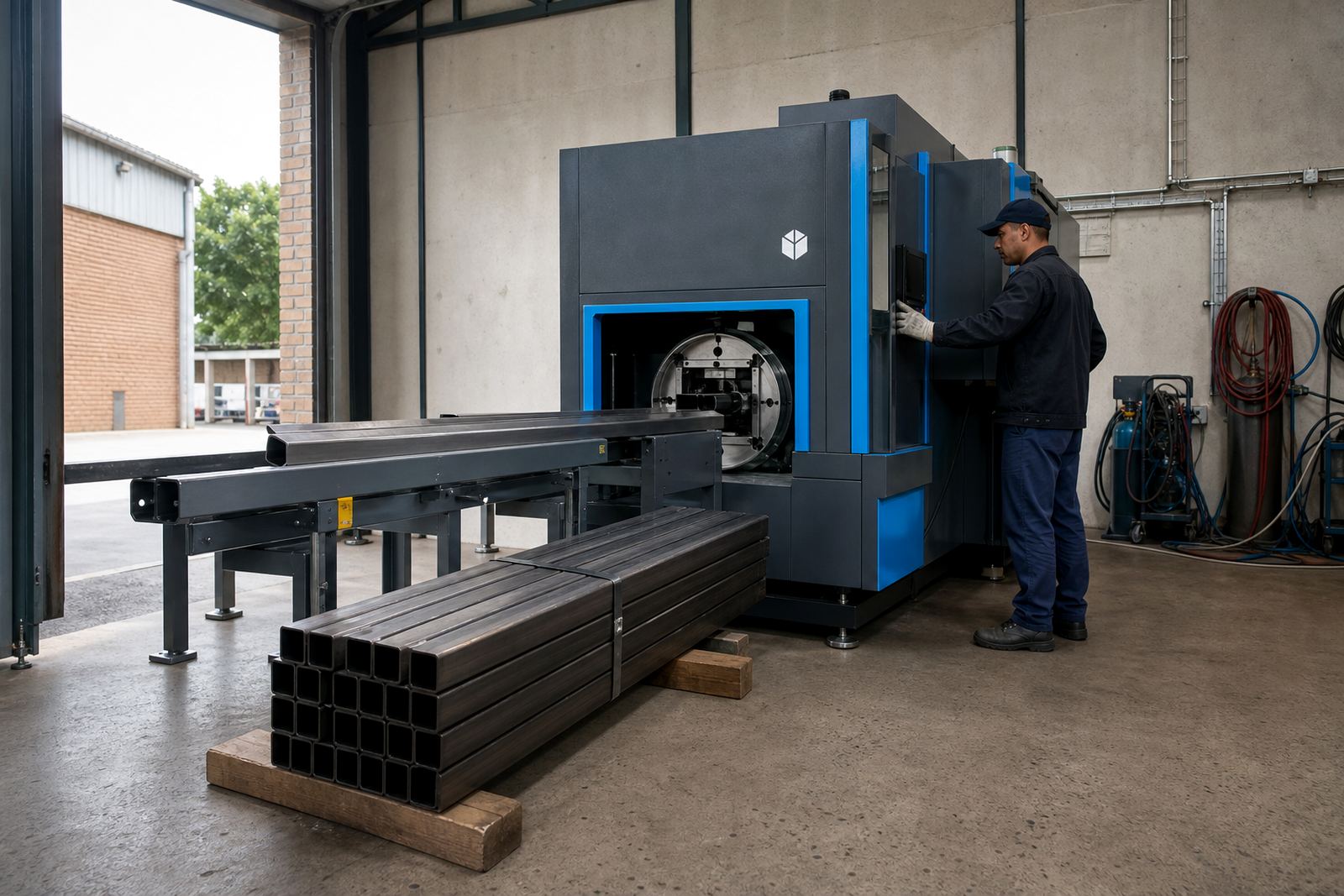
Fibre laser tube cutting depends on correct installation, stable alignment and the right services on site. A machine of this type needs a prepared floor, suitable lifting access, level positioning and clear space for stock feeding, offcut removal and operator movement. During site assessment, the team checks door widths, floor loading points, access for rigging and the route for moving the machine into place.
Assist gas setup is part of the installation because cut quality changes with gas type, pressure and line condition. Oxygen, nitrogen or air may be used depending on the material, edge finish and thickness range. Power supply sizing also has to match the laser source, controls, chiller and ancillary systems, so the machine runs inside the plant’s electrical limits and safety rules. A proper extraction and safety arrangement helps with fumes, reflections and the handling of cut scrap.
- Site assessment for access, floor space and rigging path
- Delivery rigging and machine placement
- Assist gas setup for the planned material range
- Electrical and safety checks before commissioning
What the operator learns during training
Operator training covers the practical work a fabricator needs on a round tube machine. That includes loading and checking tube, zeroing the job, reading the cut sequence, adjusting basic settings, and checking finished parts for squareness, burrs and fit. Training also covers nesting routines so the operator can place jobs in a sensible order and use offcuts where the material allows it.
Leanne Mabuza works with operators on the daily habits that keep the machine steady, while Ayanda Mashaba handles application set-up for tricky parts, wall thickness changes and new tube profiles. The aim is to leave the team comfortable with the controls, the cut list and the checks that matter before a batch goes out the door. That practical base helps prevent scrap caused by loose chucking, poor gas flow or incorrect nesting.
- Basic machine controls and job loading
- Nesting and part placement on tube lengths
- Cut quality checks and edge inspection
- Routine cleaning and daily inspection points
Care, alignment and service points that keep cuts steady
Round tube cutting stays accurate when the machine is kept clean, aligned and checked before the shift builds up. Chucks need regular inspection, especially where the workshop runs oily tube, galvanised stock or heavy dust. Lens and nozzle care matters as well, because spatter and residue can affect edge finish and cut consistency. On humid coastal sites such as Durban and Gqeberha, corrosion checks and cabinet care deserve a bit more attention.
Preventive care covers chuck alignment, bevel calibration where fitted, and a check of gas lines, filters and moving components. Pieter Visser handles service support and remote diagnostics, while Sibusiso Bhengu looks after installation quality and machine set-up. If a fault appears during production, the aim is to isolate whether it is a chuck issue, a cutting parameter problem or a service item before parts start piling up on the floor.
- Daily cleaning of the cutting area and tube supports
- Weekly check on chuck grip and alignment marks
- Inspection of nozzles, optics and gas delivery lines
- Scheduled preventive maintenance for stable running
What to check before ordering the machine
Before an order is finalised, the key point is to match the machine to the tube work you actually run. That means checking the largest and smallest tube diameters, the most common wall thickness, the standard lengths arriving at the shop, and whether the job mix includes only round tube or also square, rectangular, angle or channel parts. If bevel cuts are needed, that should be confirmed early so the right head and software options are included.
It also helps to set out the loading method, the kind of gas supply planned, and the finish expectations for end cuts, slots and welded joints. Michael Dlamini and the LaserTube team work from Wadeville, Germiston with installation and operator training across South Africa, and first-time buyers usually start with a call or the contact form. That keeps the order lined up with the shop’s actual material flow, rather than with a guess about what the floor can handle.
- Tube diameter range and wall thickness range
- Bed length and loading method
- Cutting head choice, including bevel if needed
- Power supply, assist gas and floor space available
Key facts
| Machine type | Entry fibre laser tube cutter for round tube work |
|---|---|
| Tube capacity | Round tube from light sections up to medium diameters, depending on build |
| Tube length | Common options from 3 m to 6.5 m |
| Cutting features | Straight cuts, slots, holes and shaped end profiles |
| Options | Dual chucking, bevel head, auto-loading and nesting software |
| Services | Site assessment, installation, commissioning, training and maintenance |