What the chuck package does on a tube line
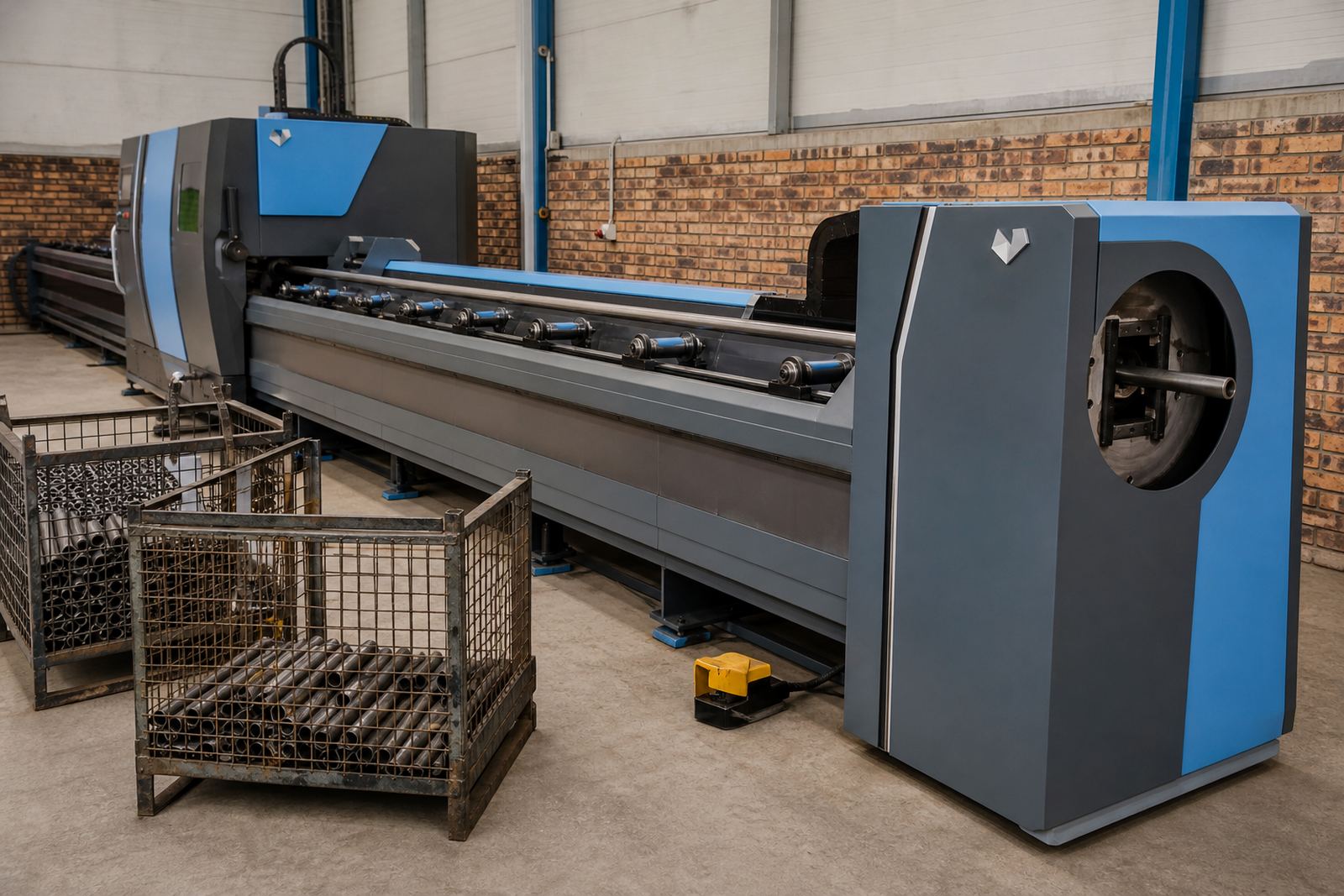
The chuck package is the clamping and rotation set that carries tube or profile through the cutting cycle. It holds the stock at one or both ends, depending on the machine layout, and keeps the piece aligned while the cutting head moves around holes, slots, mitres and copes. On fibre laser tube machines, that grip has to stay even through short parts, long lengths and mixed batches, because tube can shift if the jaws are not matched to the section.
A proper package is selected for the material mix on the shop floor, not only for the largest size on paper. Mild steel, stainless steel and aluminium all behave a bit differently under clamp pressure, and thin wall tube needs a gentler hold than heavy structural profile. In practice, the package must suit the stock range, grip stability and part accuracy you need from the line.
- Holds round, square and rectangular tube with controlled rotation.
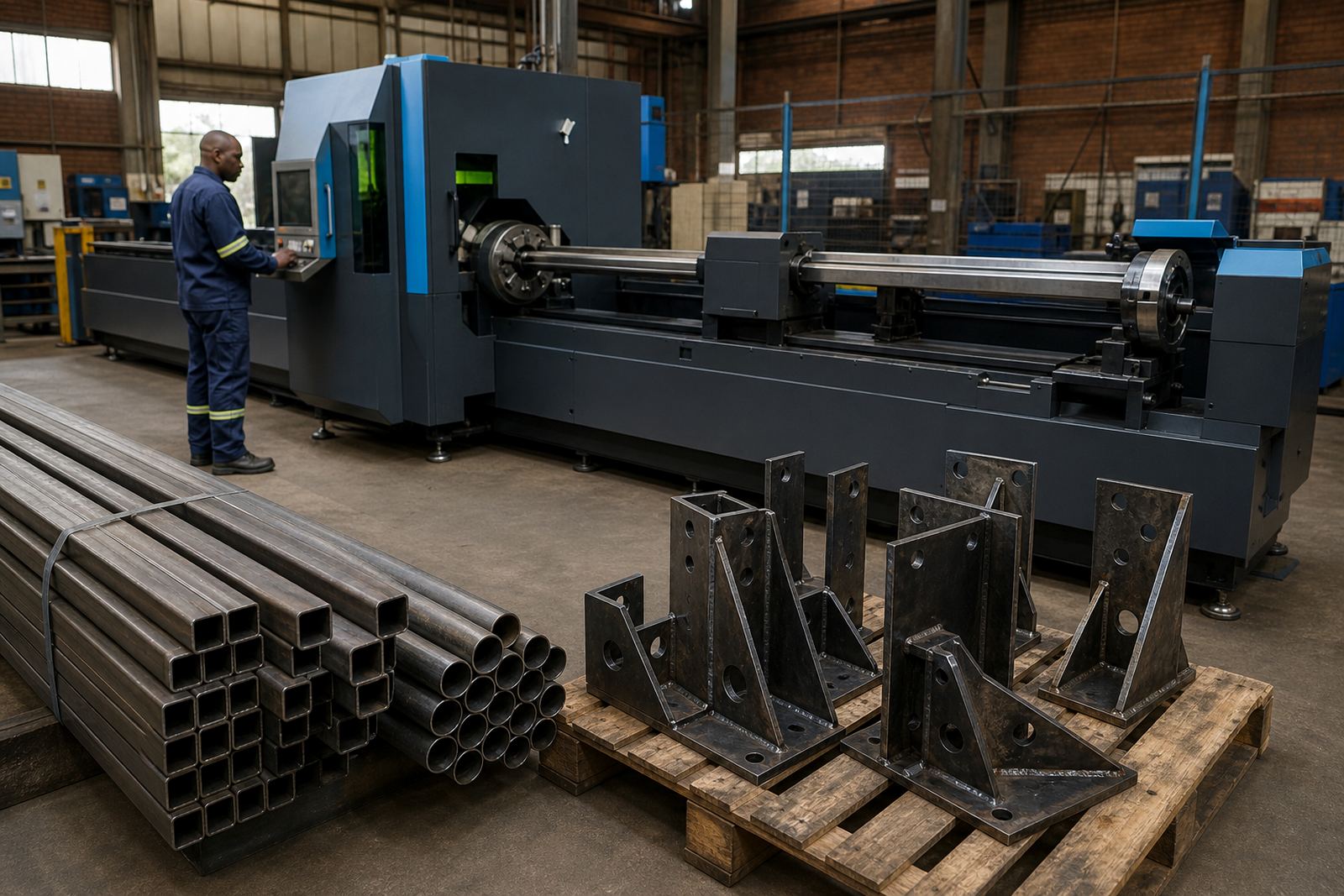
- Can be matched to angle, channel and formed profile work.
- Supports short offcuts, longer bars and mixed jobbing runs.
- Helps protect finished faces from clamp slip and jaw marks.
Chuck sizes and grip options that suit the work
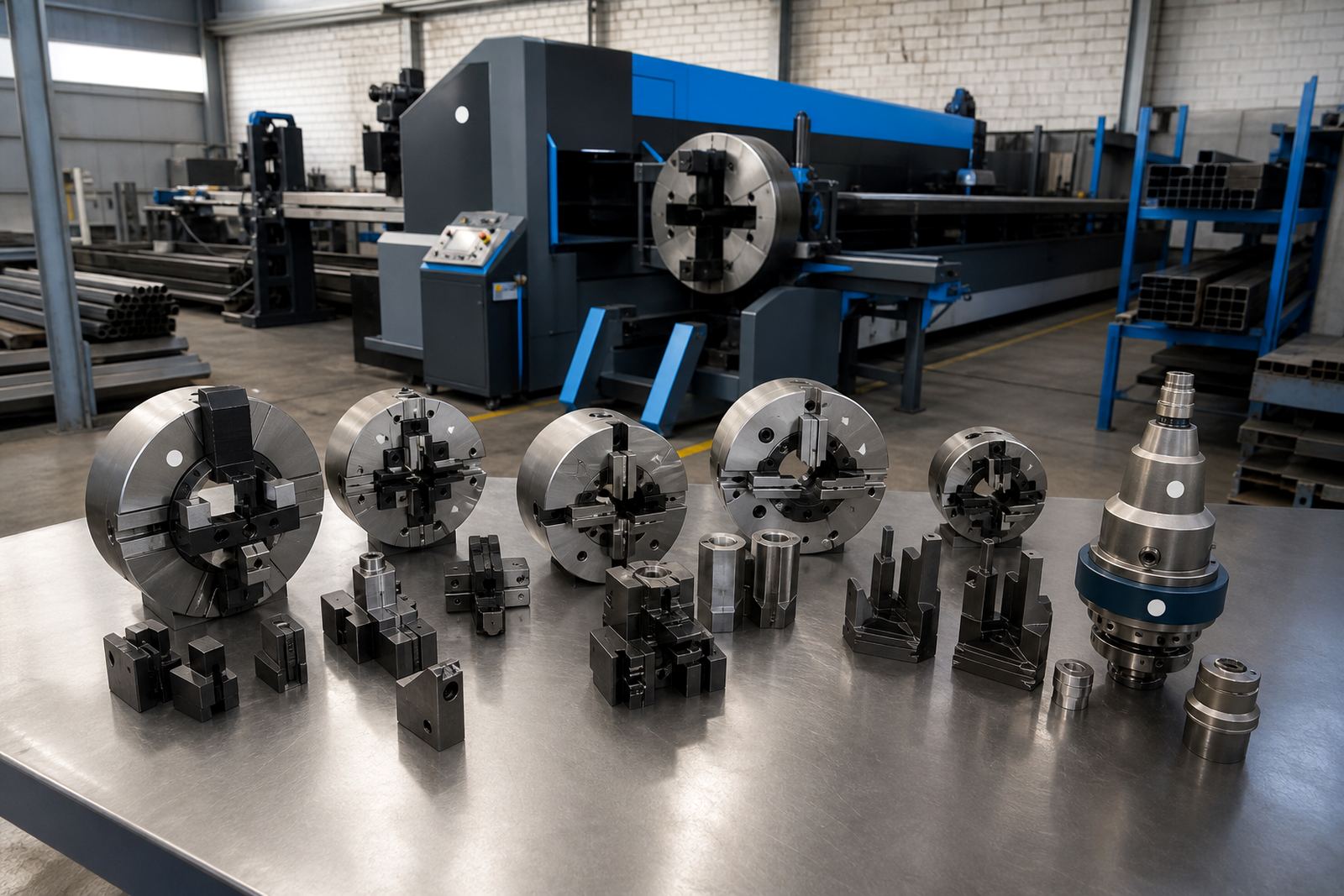
Chuck diameter and jaw style are chosen around the real tube range, not just the headline machine size. A small job shop cutting furniture frames may need a different grip pattern to a plant processing racking, trailers or structural parts. The jaw face, stroke, clamping force and rotation duty all matter when the stock changes from thin wall decorative tube to heavier sections.
Common options include a single chuck for simpler work, or a front and rear chuck pair for longer stock and better support. Larger machines may use a floating rear unit to help centre material before cutting starts. For mixed profile work, the package can be set up to manage square tube, rectangular tube, open section and heavier angle with less handling between loads.
- Jaw sets can be matched to round tube, square tube and rectangular tube.
- Options may include soft jaws, hard jaws or shaped grip inserts.
- Longer beds often use paired chucks for better stock control.
- Higher duty setups suit repetitive production with changing tube sizes.
When a bevel head changes the chuck setup
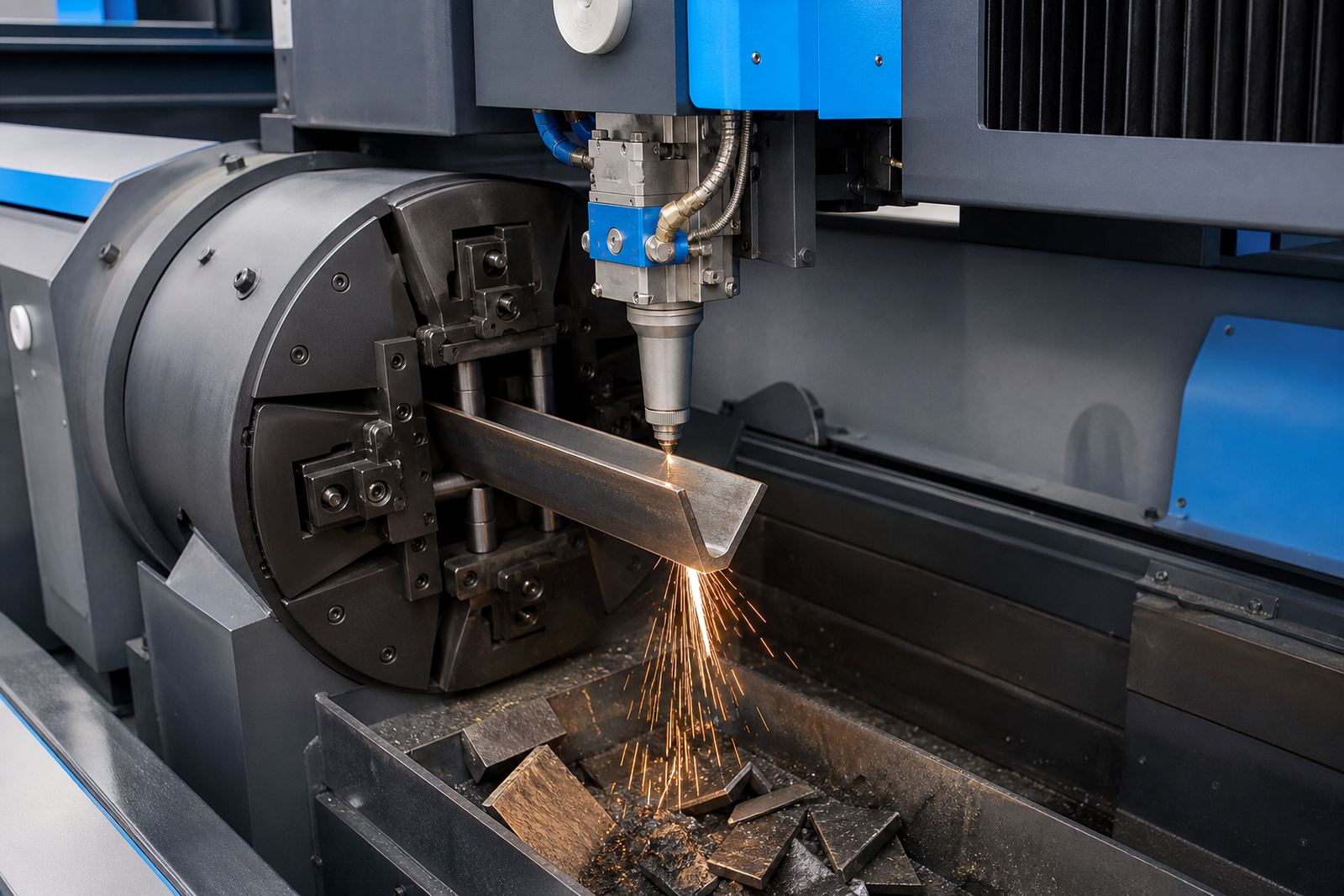
Where a machine is fitted with a bevel head, the chuck package has to work with the added cutting angle and the extra head movement. Bevel cutting on tube and profile is common for weld prep, mitred joins and assembly work that needs cleaner fit-up. That means the clamp arrangement must keep the section steady while the head leans into the cut and the nest places angled features close to the end of the part.
On some jobs the chuck package also needs more clearance for flanges, tabs, slots or heavy wall sections that pass near the head path. Good setup avoids a situation where the chuck holds well, but the part is too close to the head for a clean cut. Our team checks the machine layout, the stock range and the end use of the parts before the chuck package is matched to the application.
Installation, alignment and fitting on site
Proper fitting is as important as the chuck hardware. During installation, the chuck axis, tail support, clamping pressure and rotation repeatability must be checked against the machine frame. If the jaws sit off line, the tube can track slightly out of centre and that affects cut length, hole position and edge quality. That is especially noticeable on longer runs where a small offset becomes a bigger issue by the last part in the batch.
We handle site assessment, delivery rigging, machine installation and commissioning for fabricators in Wadeville, Johannesburg, Pretoria, Durban, Cape Town and Gqeberha, with support across South Africa. Where the package is tied into assisted systems, the fit-out may also include machine power connections, air line checks and assist gas setup for the full cutting cell. The aim is a chuck package that runs cleanly with the machine, the nesting software and the cutting schedule.
- Chuck alignment is checked against the machine bed and rotation path.
- Jaw pressure is set to suit wall thickness and profile shape.
- Tail support and loading position are matched to tube length.
- Commissioning includes test cuts on actual stock sizes.
Care, wear checks and daily handling
Chucks take regular load, so care has to be practical and consistent. Jaws collect dust, scale, offcuts and fine swarf, and that build-up changes the contact face over time. A short cleaning routine helps protect grip repeatability, while a visual check for wear or chipped jaw edges can stop small faults from becoming part movement or poor concentricity. On coastal sites, humidity can also affect exposed metal surfaces, so light corrosion control matters.
Preventive maintenance should cover jaw wear, lubrication points, clamp travel, sensor condition and the general condition of any rotating parts linked to the chuck package. If a machine runs mixed batches, the jaws may need more frequent checking because the grip point changes more often. Sibusiso Bhengu handles installation work, while Pieter Visser supports service and maintenance planning for these systems.
- Keep jaws clean and free of swarf before loading stock.
- Check for jaw wear where thin wall tube is used often.
- Watch for corrosion on exposed surfaces in humid areas.
- Include clamp travel checks in planned maintenance.
Details to confirm before ordering a chuck package
Ordering works best when the tube range and production pattern are clear. We need the material types, the smallest and largest profiles, wall thicknesses, standard bar lengths and the main cut features. It helps to know whether the line cuts mostly round tube, square tube, rectangular tube, angle or channel, plus whether the parts are short, long or heavily nested. The more exact the stock picture, the better the chuck package can be matched.
It also helps to confirm the machine model, bed length, rotation duty and whether the setup uses one chuck or paired chucks. If bevel work is part of the mix, say so early, because it affects clearance and jaw selection. Anika Kajee handles sales discussions, Ayanda Mashaba supports application checks, and Leanne Mabuza assists where training on loading, clamping and nesting is needed.
- Largest and smallest tube or profile size.
- Wall thickness and material mix.
- Single chuck or front and rear chuck arrangement.
- Need for bevel cutting, long stock support or high duty output.
Key facts
| Chuck type | Single chuck, paired chuck or support-driven tube handling package |
|---|---|
| Compatible stock | Round, square and rectangular tube, plus angle and channel |
| Typical size range | Matched to the machine and tube range on the job |
| Grip control | Jaw pressure and clamp travel set for section wall and finish |
| Integration points | Machine drive, loading path, assist gas setup and control system |
| Support services | Site assessment, installation, commissioning, training and maintenance |