Built for mild steel tube and section work
This machine handles the sort of mild steel work that fills a fabrication bay: round tube, square tube, rectangular tube, angle iron and channel, with clean end cuts and cut outs for weld prep. It is used where parts must fit first time, especially on repeated batches and mixed jobs that move between short lengths and longer production runs.
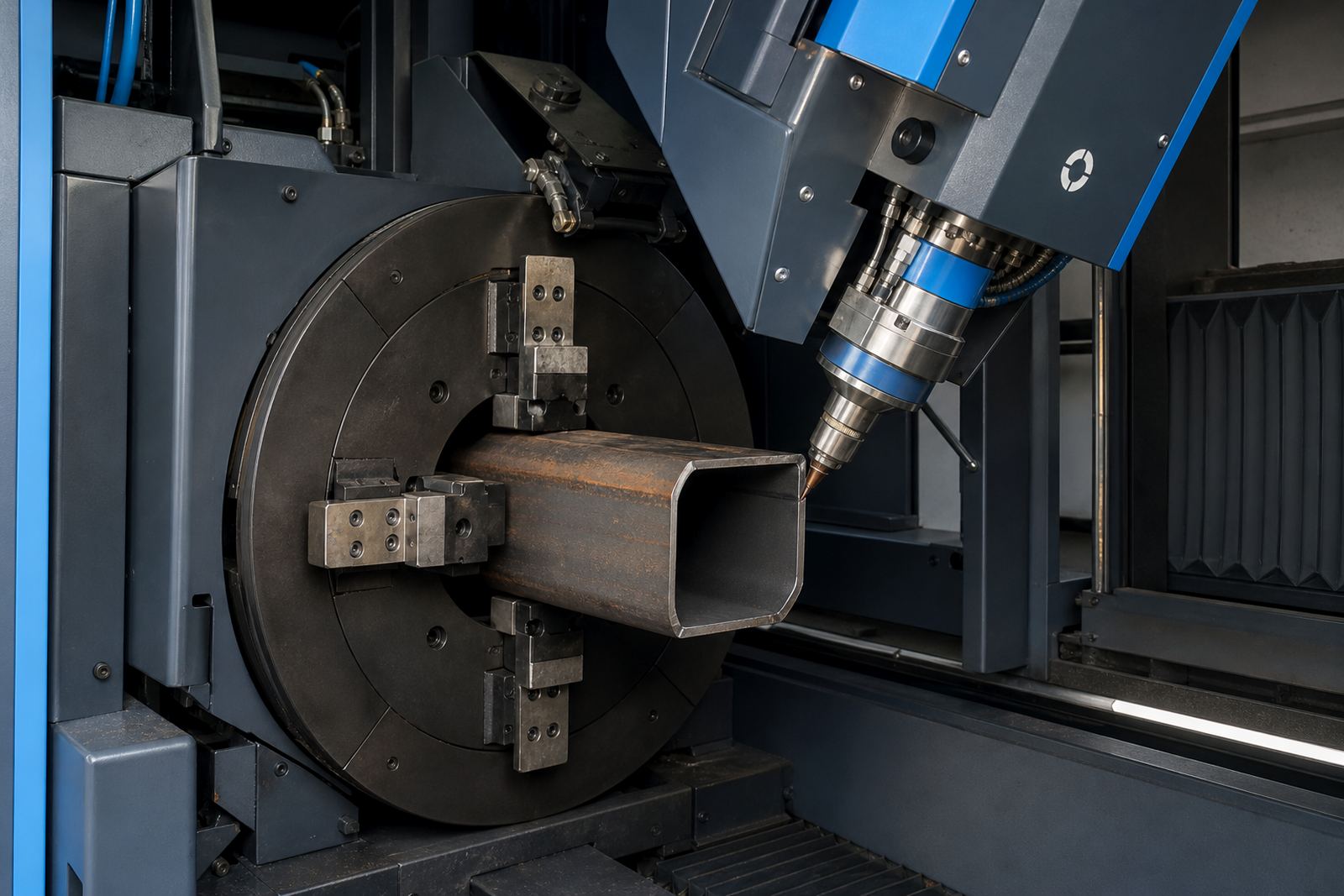
The cutting head is guided by CNC control, while the tube is held in chucks that grip, rotate and index the profile through the cut path. On jobs that need angled ends, slotting, fishmouths or intersection cuts, the machine follows programmed paths accurately and keeps the cut edge ready for fit up. For many workshops, that means less grinding and a steadier handover to welding.
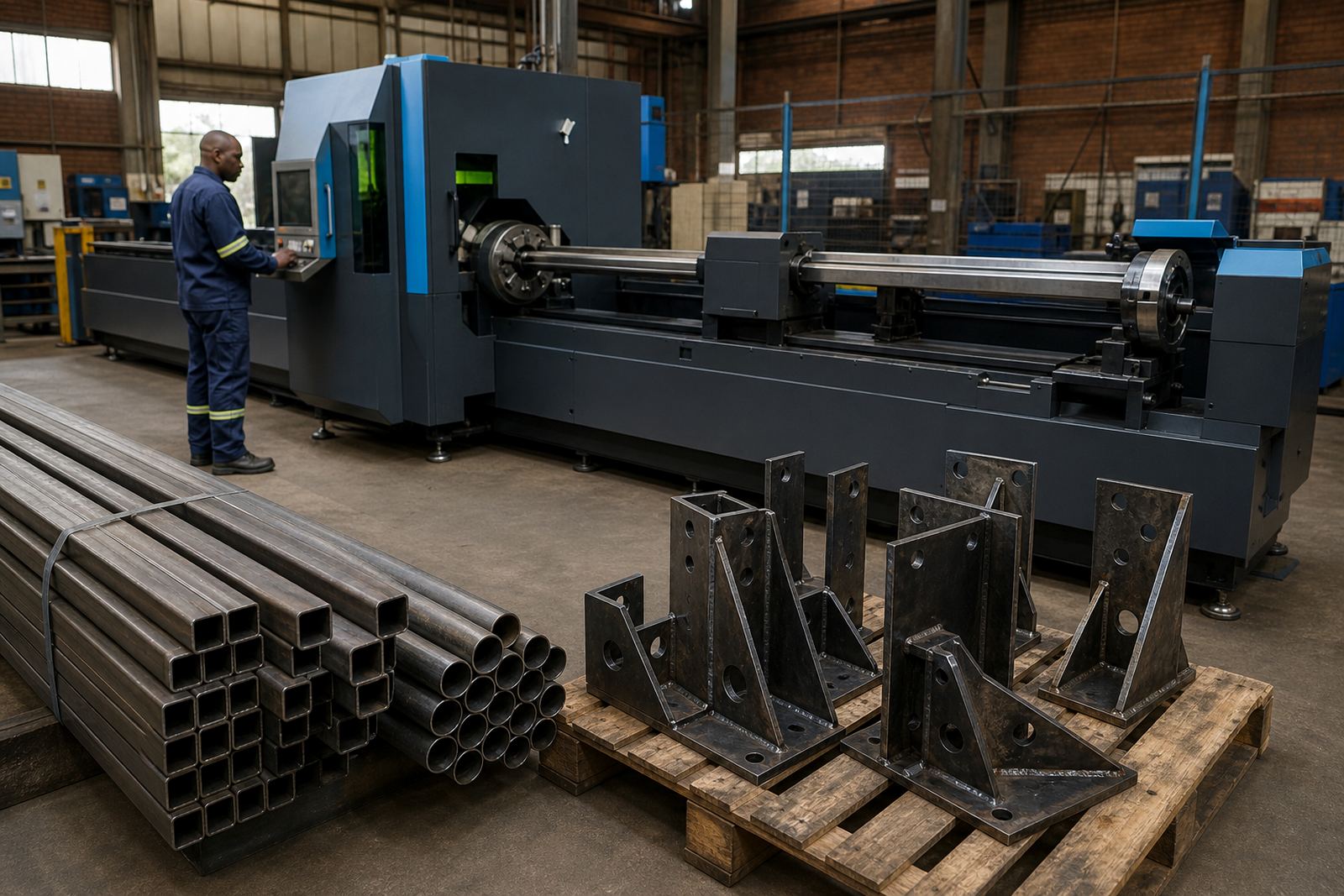
Typical mild steel tube and profile work includes furniture frames, balustrade parts, shelving structures, agricultural fittings, trailer components and general shop fabricated steelwork. In Gauteng and along the coast, the same machine is often used for both short-run custom work and steadier production, as long as the material sizes are kept within the machine envelope.
Sizes, chucks and cutting head options
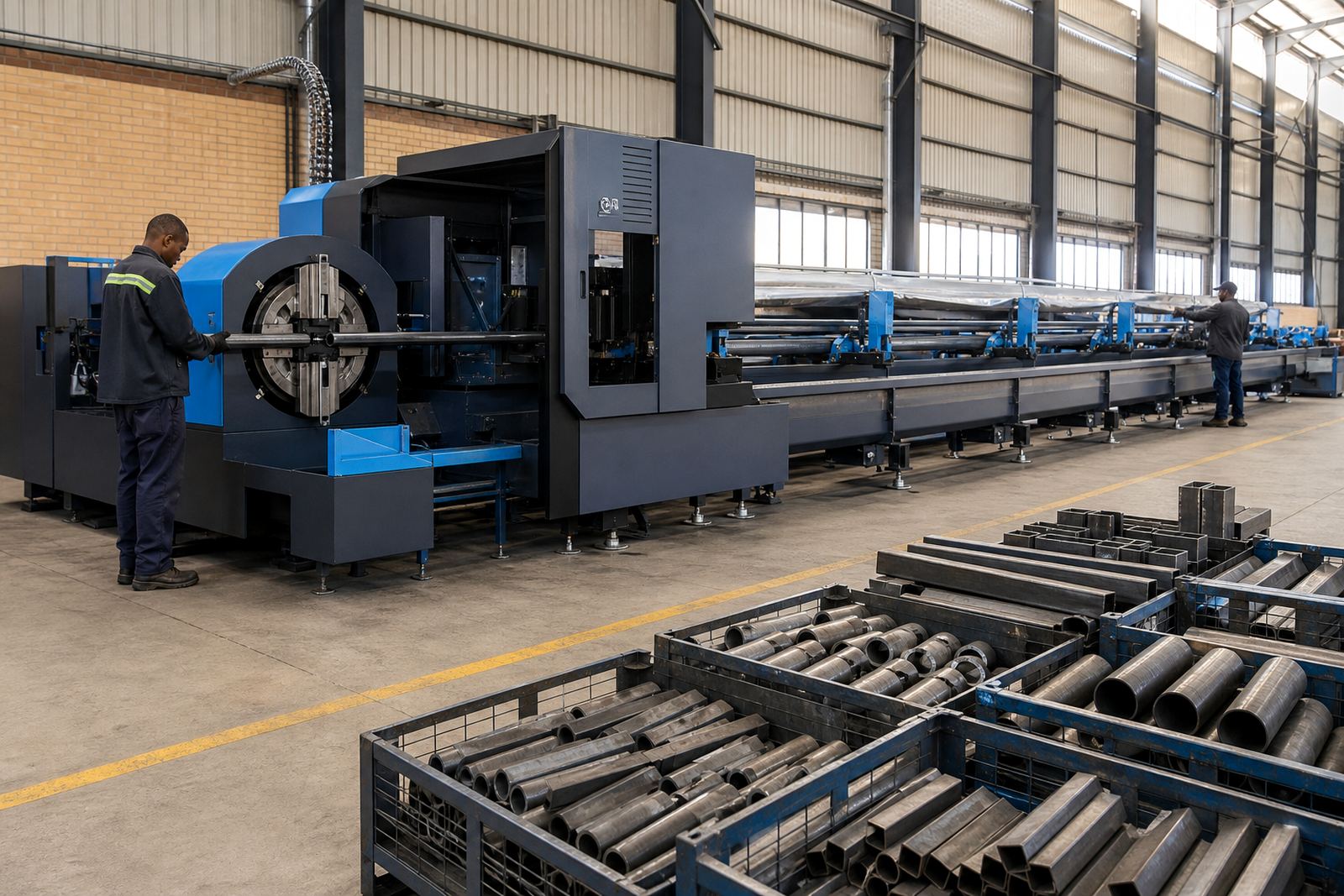
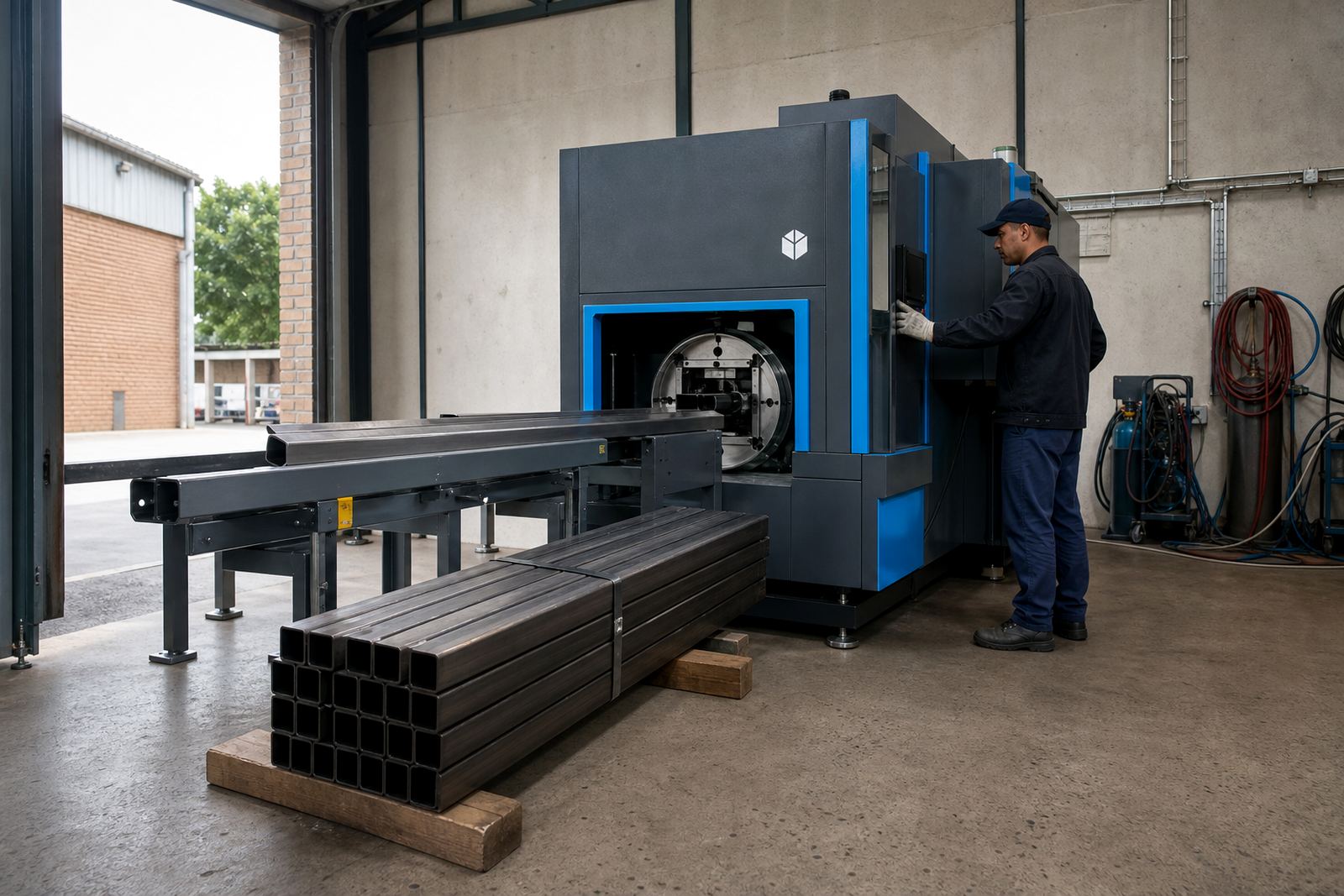
Mild Steel Laser machines are commonly specified by the tube size range, loading length and how much rotation and support the bed provides. Depending on the build, the machine can be arranged for manual, semi-automatic or automatic loading, with different chuck arrangements for lighter profiles or heavier sections. A steady support system matters on longer tube, otherwise the part can whip or shift during rotation.
Bevel cutting is often added where joints must open out for welding. A bevel head lets the machine cut chamfers on tube ends and profile faces, which helps on fabrication that needs cleaner weld access or a specific joint angle. For busy shops, this option is worth discussing early, because it affects the machine layout and the training needed at commissioning.
- Round tube, square tube and rectangular tube cutting
- Angle and channel profiling for welded assemblies
- Single chuck or dual chuck layouts, depending on length and weight
- Bevel head options for weld prep and angled joints
- Automatic nesting software for part yield and batch planning
- Support systems for long lengths and heavier mild steel sections
Where a mild steel tube laser earns its floor space
This product suits metal fabricators that need a dependable cutter for common mild steel work without moving to a full plate line. It fits job shops that take custom frames, production plants that run repeat parts, and maintenance teams that need accurate section cutting for repairs and replacements.
In Johannesburg and Pretoria, the machine is often used where volume, fit and consistency matter across different job sizes. In Durban, Cape Town and Gqeberha, corrosion control and storage discipline matter as much as the machine setup, because mild steel stock and cut parts can pick up surface rust in humid conditions if they sit open to the air for too long. A dry offload area, organised bundle storage and a sensible cutting sequence all help keep work moving.
For shops in Bloemfontein, Nelspruit and the wider inland market, the same machine suits structural fabrication where weather is less punishing but consistency still matters on long members and repeated cutting lists. The main point is to match the machine envelope to the longest stock, the thickest wall and the heaviest part you intend to run regularly.
Cutting setup and safety on mild steel
The machine uses fibre laser cutting for mild steel, with assist gas selected to suit the cut quality and edge condition required. Nitrogen is used where a cleaner, oxide free edge is needed, while oxygen can suit some mild steel cutting work where speed and cost balance are more important. The gas setup, regulators, lines and storage arrangement must be planned properly, especially where multiple machines share a bay.
Safety needs to be built around the actual layout. That includes guarding, enclosed cutting zones, extraction, interlocks, torch height control and a sensible loading routine for tube bundles and finished parts. Where the machine is installed close to welding, grinding or overhead handling, the aisle widths and transfer points should be checked before delivery.
- Correct gas type for the material and edge finish target
- Safe cylinder or supply arrangement for the workshop layout
- Fume extraction and enclosure checks around the cutting bay
- Loading and unloading space for long tube bundles
- Clear access for maintenance panels and service points
Installation, commissioning and operator training
LaserTube handles site assessment, delivery rigging, machine installation and commissioning from our base in Wadeville, Germiston. For a mild steel laser, the installation work normally includes levelling, electrical and gas interface checks, chuck alignment, beam path setup, test cuts and verification of the first production parts. Where the machine has a bevel head or extended bed, the physical layout needs extra attention during placement.
Operator training covers the control screen, job loading, basic nesting, cut parameter selection, chuck handling and routine checks before a shift starts. Nesting training is especially useful where the same tube sizes are processed in mixed lengths, because better part packing can reduce offcuts and wasted stock. We also cover practical issues like monitoring cut quality, understanding dross or edge pull, and recognising when the head or assist gas settings need adjustment.
For teams with maintenance staff, preventive checks help extend machine life and keep the cut quality steady. That includes chuck alignment, bevel calibration, nozzle condition, lens care, guide surface cleaning and inspection of the gas setup. Remote diagnostics and breakdown response are available when a problem needs technical attention on site or through the control system.
Care that keeps cut quality steady
Mild steel cutting machines do best when they are kept clean, aligned and dry. Tube scale, dust and fine swarf can collect around the chucks and support zones, so those areas should be checked often. The cutting head optics also need regular care, and the lens stack must stay free of contamination from handling or poor air quality in the workshop.
On coastal sites, stored tube and finished parts should be managed with more care because humidity can mark exposed mild steel quickly. That does not mean the machine itself needs special treatment, but the stock handling and finished part storage do. If the workshop runs a lot of short parts, a disciplined sorting and tagging routine helps prevent mix ups and keeps the next batch moving without wasted time.
Preventive maintenance is less disruptive than waiting for a fault to spread through the system. A practical schedule normally covers bearings, chucks, axis movement, gas flow, safety checks and cutting consistency, with service intervals based on actual production hours rather than guesswork.
Details to confirm before ordering
Before a Mild Steel Laser is specified, the workshop needs to confirm the sizes it will cut most often, the longest stock length, the thickest wall and whether bevel work forms part of daily production. It also helps to know the type of jobs, because a shop making gate frames and handrails will need a different setup from one cutting sections for plant equipment or trailer work.
- Tube shapes to be processed, including round, square, rectangular, angle and channel
- Maximum and minimum diameter or profile size needed on the machine
- Wall thickness range for regular mild steel jobs
- Required cutting length and bed length preference
- Need for bevel cutting, loading automation or extra support equipment
- Gas arrangement, workshop space and access for installation rigging
- Any nesting workflow, part marking or batch sorting requirements
Mild steel shops anywhere in South Africa can reach LaserTube on the contact form. From Wadeville, Germiston, we work with fabricators in Johannesburg, Pretoria, Durban, Cape Town, Gqeberha, Bloemfontein and Nelspruit, with the same focus on fit, handling and production use on the shop floor.
Key facts
| Cutting material | Mild steel tube and profile sections |
|---|---|
| Profiles | Round tube, square tube, rectangular tube, angle and channel |
| Head options | Standard cutting head with bevel head options |
| Support system | Chuck based tube handling with profile support |
| Assist gas | Nitrogen or oxygen, depending on cut requirement |
| Services included | Site assessment, installation, commissioning, training and maintenance |