A smaller footprint for mixed tube work
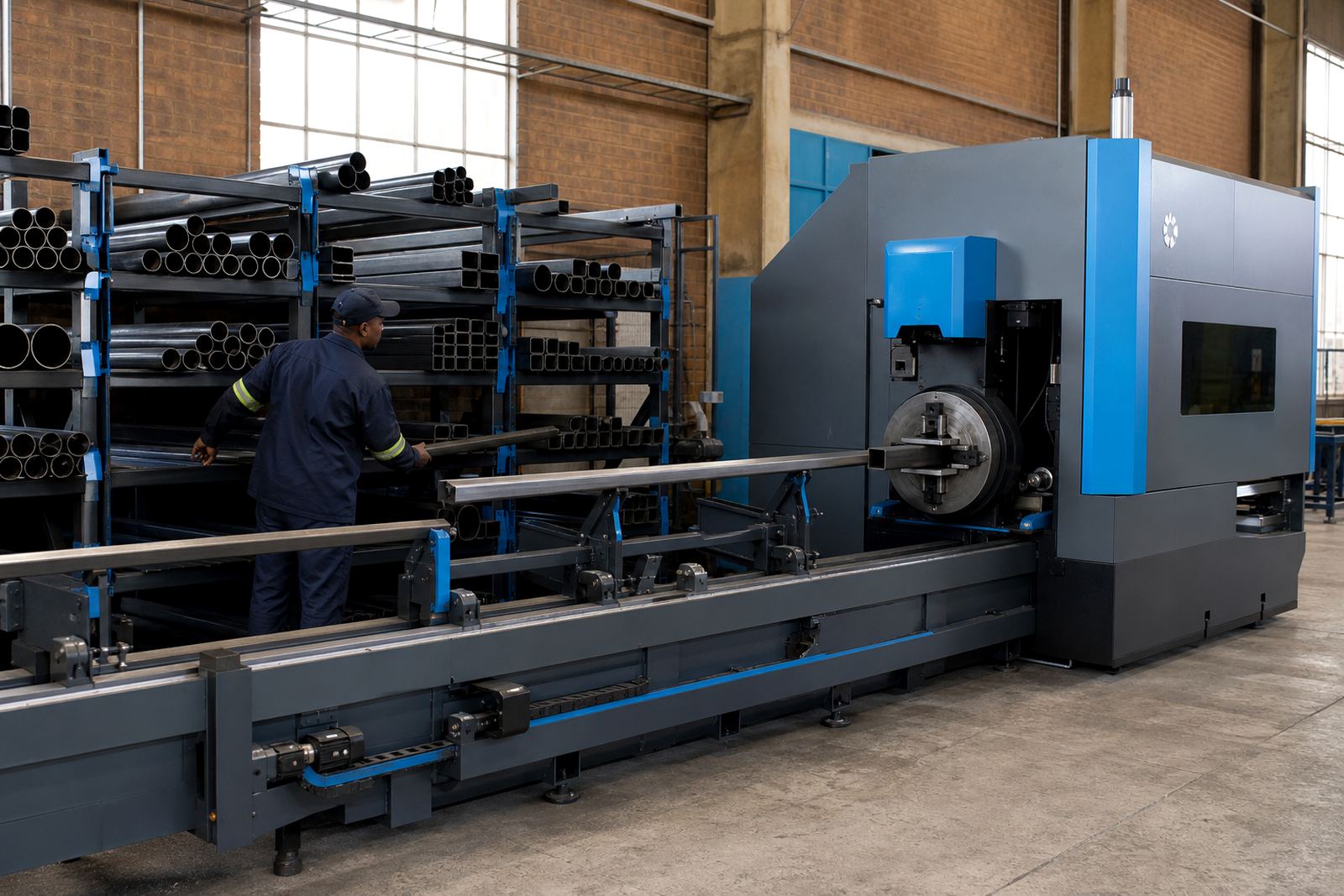
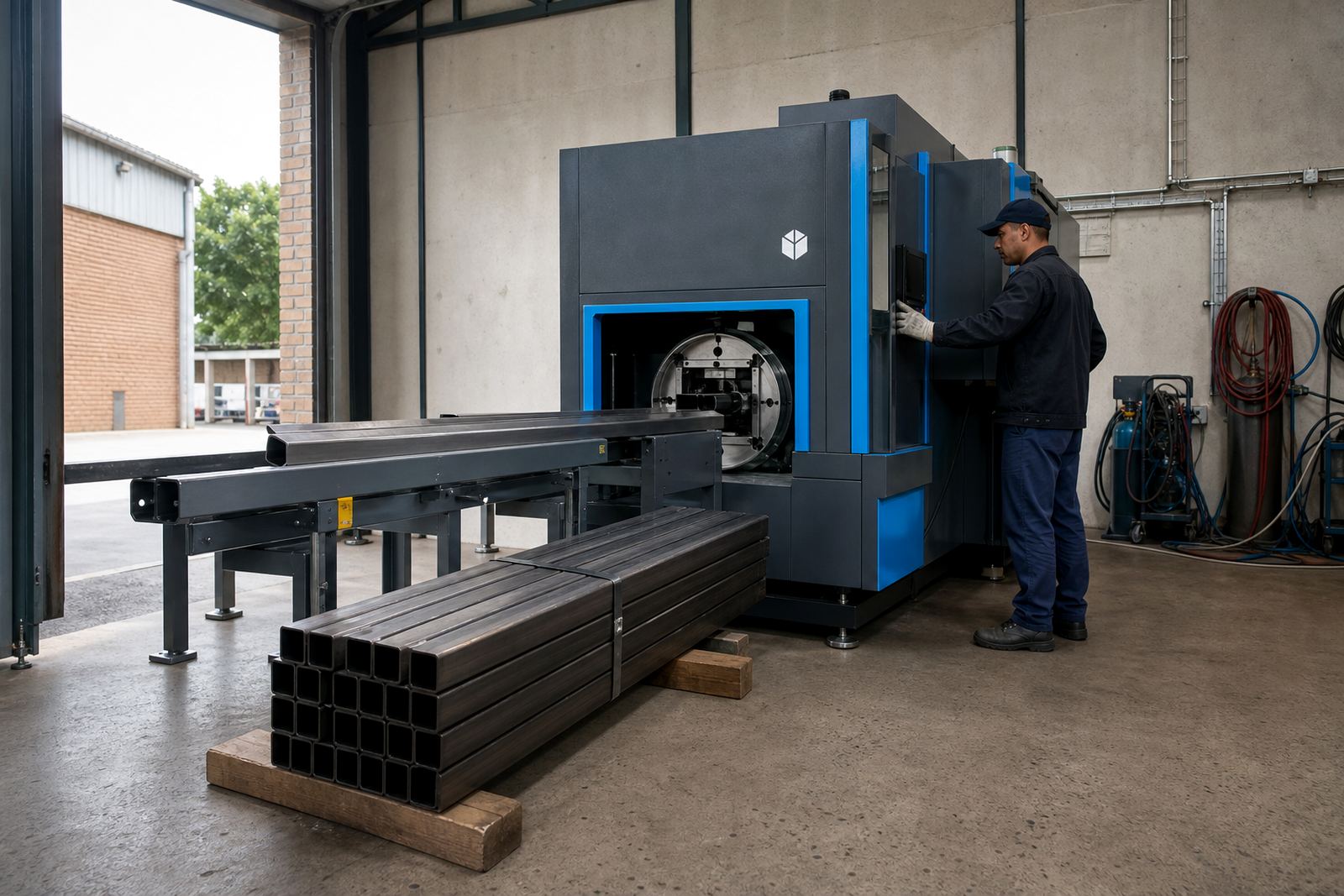
This compact fibre laser tube cutting machine is built for shops that work with changing order books and limited floor space. It suits round, square and rectangular tube, plus angle and channel, where the same shift can hold handrail parts, frames, brackets and short production runs without swapping between too many processes.
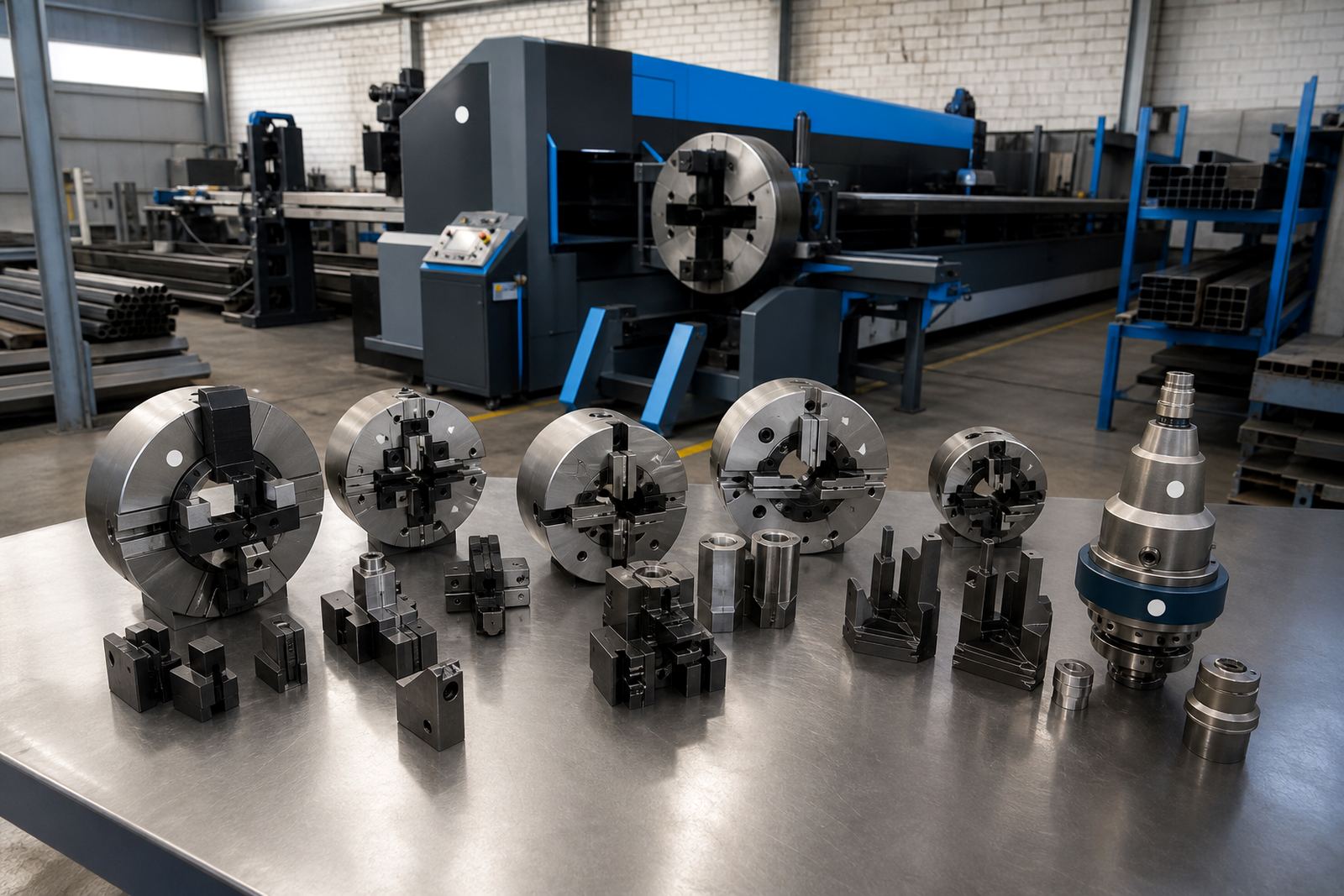
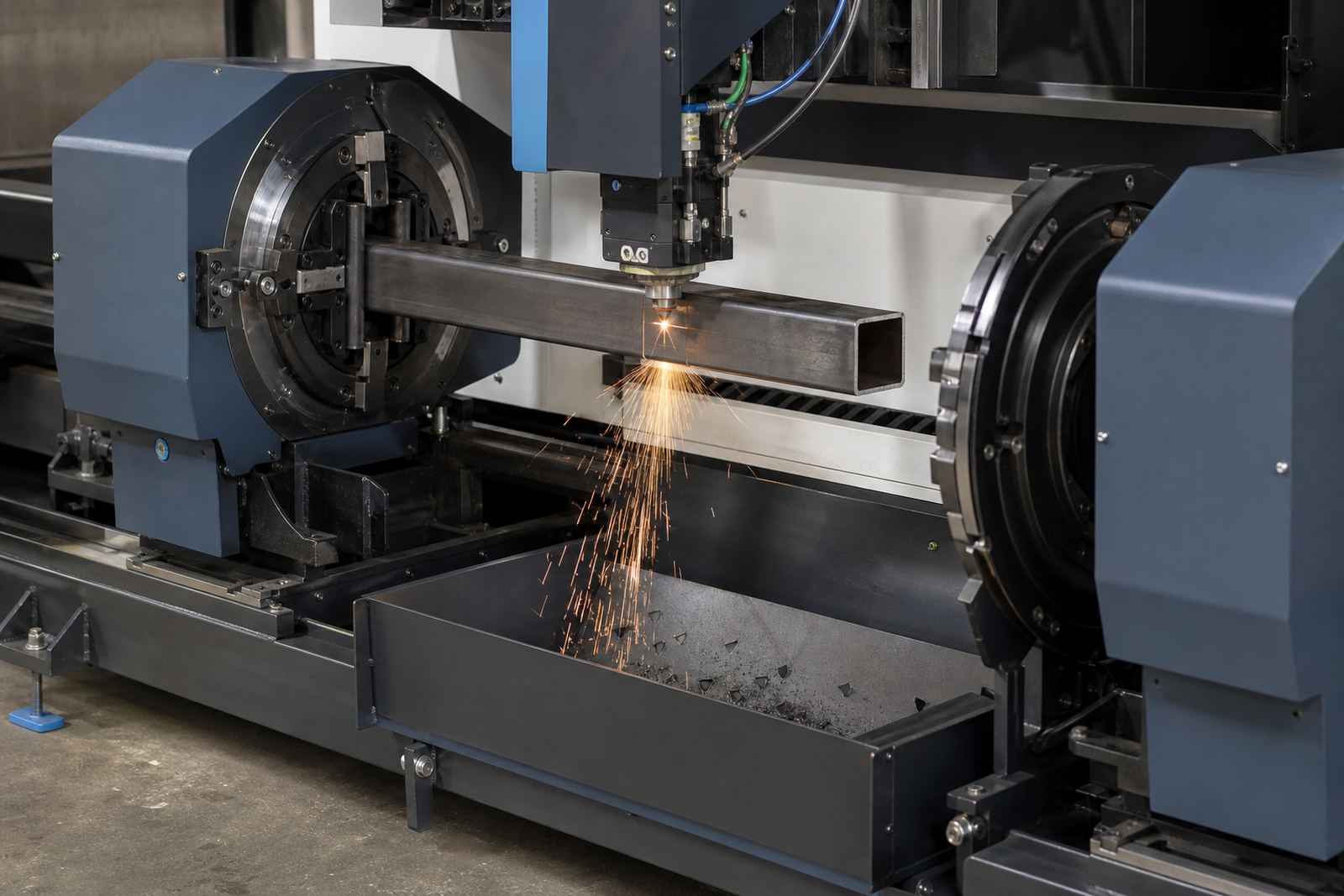
The machine uses rotary chuck clamping to hold profiles securely while the cutting head follows programmed paths with good edge control. For fabricators in Wadeville, Germiston and across Gauteng, that matters when the floor is tight and the jobs still need to leave the shop square, clean and ready for welding or assembly.
- Compact body size for smaller cutting bays
- Suitable for mixed daily batches and shorter part runs
- Works with common structural tube and profile sections
- Supports nesting software for better material use
Parts, sizes and cutting choices that shape the machine
Compact tube lasers are usually specified around the largest tube diameter or profile size you plan to process most often, not only the biggest job that may show up once in a while. Common setups cover small to mid-size tube work, with single chuck or dual chuck layouts depending on the loading method and part length you need to handle. Some jobs need a standard 2D cut, while others call for a bevel head to prepare weld edges on joins that need a better fit-up.
On the software side, nesting needs to match your real tube mix, wall thicknesses and cut sequence. The operator should be able to load drawings, place parts on stock lengths and set lead-ins, pierce points and bridge tabs where needed. That keeps offcuts usable and reduces time spent reworking parts at the bench.
- Round, square and rectangular tube processing
- Angle and channel cutting for structural fabrication
- Single or dual chuck arrangements
- Optional bevel cutting for selected weld prep work
- Stock length handling matched to shop layout
Where this machine fits on a real shop floor
The Compact Tube Laser suits small to medium fabrication shops that cut many different parts in one week, but do not want a full-size production line. It works well for gate frames, display structures, light structural work, agricultural fittings, transport components and general steel fabrication where the profile mix changes often. Shops in Johannesburg, Pretoria, Durban, Cape Town and Gqeberha use this kind of machine when manual sawing and drilling are taking too much time off the floor.
It is also practical for plants that need one machine to cover both repeat parts and specials. The cutting path is controlled from software, so the same machine can process short tube pieces, nested frames and angled profile sections with fewer handling steps. For many fabricators, that means a cleaner flow between design office, machine bay and welding area.
- Small shops with limited machine bay space
- Fabricators moving from manual cutting to programmed cutting
- Mixed batch work with changing part shapes
- Production plants needing a compact secondary cutter
Installation, gas and support around the machine
A compact fibre laser tube cutter still needs proper installation, levelling and safe positioning before production starts. Power supply checks, extraction routing, assist gas connection and material loading space all need to be planned before delivery rigging begins. The machine also needs enough room for tube feed length, finished part discharge and safe access around the chuck area.
Assist gases are part of the cutting process and must match the material and edge quality required. Oxygen, nitrogen and air each have different uses, and the operator needs to know which gas setting suits each job. During commissioning, the cutting parameters, gas pressure, nozzle position and focal settings are checked against the actual tube and profile stock in the shop. That avoids a machine being set up for one material mix and then struggling with another.
- Site assessment before delivery and rigging
- Machine installation and commissioning
- Assist gas setup for the intended material range
- Operator and nesting training on the installed machine
- Remote diagnostics and breakdown response where needed
Daily care that keeps cuts consistent
Like any fibre laser cutting machine, the Compact Tube Laser needs regular checks if it is going to stay accurate on mixed work. Chucks should be inspected for grip, wear and alignment, while the cutting head needs clean optics, correct height setting and proper protection against spatter and dust. If the machine is cutting coated material or working close to the coast, condensation and surface contamination need more attention, especially in Durban and other humid areas.
Preventive care should include linear motion checks, chuck alignment, bevel calibration where fitted, and inspection of gas lines, filters and cable runs. Operators should also keep the loading area clear and watch for bent stock, loose scale and bad clamping habits. Small faults at the start of the day usually show up later in the cut, so the machine room needs the same discipline as the welding bay.
- Clean optics and guarding regularly
- Check chuck grip and alignment
- Inspect lines, filters and seals
- Keep rails and moving parts free of dust and swarf
- Use preventive maintenance on a fixed schedule
Order details worth confirming before the machine lands
Before a compact tube laser is selected, the shop should confirm the longest stock length, the widest profile, the heaviest section and the most common material grades. Wall thickness also matters, because thicker tube changes cutting speed, gas use and the type of support needed on the chuck side. If the job mix includes angle or channel, the machine layout should be checked for profile rotation, clamp clearance and part drop-off space.
It helps to confirm whether the machine will handle only tube, or tube and open profiles in the same bay. The nesting workflow should also match the way drawings are prepared in the office, because file handover, part naming and remnant use affect how the machine is run day to day. For installations outside Wadeville, delivery access, floor loading and lifting points should be checked before the rigging crew arrives.
- Largest tube or profile size needed
- Longest stock length and finished part length
- Material types and wall thickness range
- Need for bevel cutting or open-profile cutting
- Bay space, floor area and access available
Key facts
| Machine type | Compact fibre laser tube cutting machine |
|---|---|
| Workpiece range | Round, square and rectangular tube, angle and channel |
| Loading style | Single or dual chuck layout depending on configuration |
| Cutting options | 2D cutting, nesting software and optional bevel head |
| Services included | Delivery rigging, installation, commissioning and training |
| Area served | Supplied and installed from Wadeville for shops in Gauteng, Durban, Cape Town and Gqeberha |